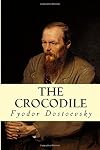
The Crocodile
by Fiódor Dostoiévski
On This Page
Description
A true story of how a gentleman of a certain age and of respectable appearance was swallowed alive by the crocodile in the Arcade, and of the consequences that followed.Tags
Recommendations






















Member Reviews
Wonderful Century Press Limited Edition.
As for the work, meh. Absurd satire of 19th Century Russia that is lost on me. Man, eaten whole by a crocodile, has some thoughts. His friend is horrified, and all eyes turn towards the wife...
As for the work, meh. Absurd satire of 19th Century Russia that is lost on me. Man, eaten whole by a crocodile, has some thoughts. His friend is horrified, and all eyes turn towards the wife...
O Crocodilo:
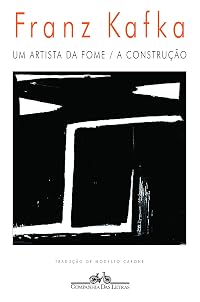
Para os que pensam que foram os comunistas a inventar a burocracia russa, Dostoievski já a satirizava muitos anos antes. O Crocodilo me parece mais próximo de Kafka do que do próprio Dostoievski, toda essa gama de elementos burocráticos oriundos de um elemento insólito: fazer-se engolir por um crocodilo permanecendo vivo e enredado pelas situações de fora, o próprio homem era funcionário público e burocratizava a si mesmo dentro do crocodilo.
É quase uma versão menos bem acabada de A Metamorfose de Kafka.
Notas de Inverno sobre Impressões de Verão:
Um diário de viagem para quem estuda a fundo Dostoievski, as notas sobre a burguesia parisiense dariam orgulho a Proust.
Para os que pensam que foram os comunistas a inventar a burocracia russa, Dostoievski já a satirizava muitos anos antes. O Crocodilo me parece mais próximo de Kafka do que do próprio Dostoievski, toda essa gama de elementos burocráticos oriundos de um elemento insólito: fazer-se engolir por um crocodilo permanecendo vivo e enredado pelas situações de fora, o próprio homem era funcionário público e burocratizava a si mesmo dentro do crocodilo.
É quase uma versão menos bem acabada de A Metamorfose de Kafka.
Notas de Inverno sobre Impressões de Verão:
Um diário de viagem para quem estuda a fundo Dostoievski, as notas sobre a burguesia parisiense dariam orgulho a Proust.
A humorous read bordering on (and into) the absurd. A man is eaten by a crocodile and lives in his stomach. He communicates with the outside world freely (via voice only). His life continues on, but one wonders how long he can maintain such an existence. It reminded me of something that Kafka would have written, but only more humorous. As I read, I wondered if The Crocodile influenced the writing of Metamorphosis by Kafka. A good book (very short, only 78 pages with notes and appendix), not life changing, but worth the read.
قصة جميلة من الكوميديا السوداء فيها اسقاطات واضحة جدا لكن مع الاسف ما اكتملتش الصورة لان دوستو العزيز ما اكملش كتابتها ودا افقدها العمق اللي كنا هنشوفه واضح جدا في القصة لو كملت للآخر
مواطن بائس في زيارة يتفرج فيها على تمساح حي ويبتلعه التمساح ومن هنا تبدأ الحكاية من التعايش مع الموقف دا من الجميع وردود الافعال من اقرب الناس اليه لحد المسؤولين في البلد والمشاهير
خسارة كبيرة انها لم تكتمل واسلوب دوستو الساخر show more غني عن التعريف خصوصا فيما يخص اسقاطاته على وضع البلد السياسي والاقتصادي والاجتماعي كمان
شكرا صديقة القراءة الدوستويفسكية كالعادة داليا نور الدين على المشاركة في القراءة الغير مكتملة show less
مواطن بائس في زيارة يتفرج فيها على تمساح حي ويبتلعه التمساح ومن هنا تبدأ الحكاية من التعايش مع الموقف دا من الجميع وردود الافعال من اقرب الناس اليه لحد المسؤولين في البلد والمشاهير
خسارة كبيرة انها لم تكتمل واسلوب دوستو الساخر show more غني عن التعريف خصوصا فيما يخص اسقاطاته على وضع البلد السياسي والاقتصادي والاجتماعي كمان
شكرا صديقة القراءة الدوستويفسكية كالعادة داليا نور الدين على المشاركة في القراءة الغير مكتملة show less
It’s not that I didn’t like this short story from Dostoevsky, it’s just that it’s incomplete, and comes across as a fragment of an idea. The period in which Dostoevsky wrote this was one of great personal and economic strife, and he was finding an outlet for his increasing dislike of progressive European ideals. Clearly, the crocodile that swallows a man only to have him continue philosophizing within its belly is meant to be an absurd satire on these ideals, but it isn’t all that well developed. Dostoevsky himself said that it was the first part to a comic story that he never finished, and it shows. Frankly, it was more interesting to me to read his rebuttal to the claim that the man represented Nikolai Chernyshevsky, which show more he did years later in ‘Diary of a Writer’ and which was excerpted in the afterward. That would have been rather heartless indeed, despite their ideological differences, since Dostoevsky knew first-hand just how cruel and unfair imprisonment for political reasons was, but his account, which includes personal anecdotes with Chernyshevsky, seems believable. Regardless, this work is for Dostoevsky diehards only. show less
Not typical of Dostoevsky. The story was a bit silly and ridiculous. Made me think there must be some sort of social commentary to be read between the lines. If so, it was lost on me.
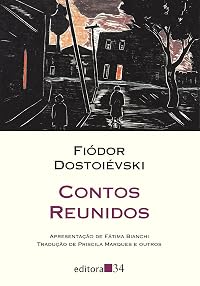
Depois do irônico conto O Crocodilo, Dostoiévski expõe suas Notas de Inverno sobre Impressões de Verão, relatos de sua viagem a vários países da Europa no verão de 1862. Mordaz e interessante, esse livro mostra a origem de vários temas do autor, como o célebre Palácio de Cristal das Memórias do Subsolo.
Members
- Recently Added By
Lists

Books You Can Read in a Weekend
7 works; 1 member
Talk Discussions
Past Discussions
Century Press - The Crocodile in Fine Press Forum (November 2024)
Author Information

One of the most powerful and significant authors in all modern fiction, Fyodor Dostoevsky was the son of a harsh and domineering army surgeon who was murdered by his own serfs (slaves), an event that was extremely important in shaping Dostoevsky's view of social and economic issues. He studied to be an engineer and began work as a draftsman. show more However, his first novel, Poor Folk (1846), was so well received that he abandoned engineering for writing. In 1849, Dostoevsky was arrested for being a part of a revolutionary group that owned an illegal printing press. He was sentenced to be executed, but the sentence was changed at the last minute, and he was sent to a prison camp in Siberia instead. By the time he was released in 1854, he had become a devout believer in both Christianity and Russia - although not in its ruler, the Czar. During the 1860's, Dostoevsky's personal life was in constant turmoil as the result of financial problems, a gambling addiction, and the deaths of his wife and brother. His second marriage in 1887 provided him with a stable home life and personal contentment, and during the years that followed he produced his great novels: Crime and Punishment (1886), the story of Rodya Raskolnikov, who kills two old women in the belief that he is beyond the bounds of good and evil; The Idiots (1868), the story of an epileptic who tragically affects the lives of those around him; The Possessed (1872), the story of the effect of revolutionary thought on the members of one Russian community; A Raw Youth (1875), which focuses on the disintegration and decay of family relationships and life; and The Brothers Karamazov (1880), which centers on the murder of Fyodor Karamazov and the effect the murder has on each of his four sons. These works have placed Dostoevsky in the front rank of the world's great novelists. Dostoevsky was an innovator, bringing new depth and meaning to the psychological novel and combining realism and philosophical speculation in his complex studies of the human condition. (Bowker Author Biography) show less

Fyodor Dostoyevsky has a Legacy Library. Legacy libraries are the personal libraries of famous readers, entered by LibraryThing members from the Legacy Libraries group.
Some Editions
Series
Belongs to Publisher Series
Work Relationships
Is contained in
Has the adaptation
Common Knowledge
- Canonical title
- The Crocodile
- Original title
- Крокодил
- Original publication date
- 1865
Classifications
- Genres
- Fiction and Literature, General Fiction
- DDC/MDS
- 891.73 — Literature & rhetoric Asian Literature East Indo-European and Celtic literatures Russian and East Slavic languages Russian fiction
- LCC
- PG3326 .K6 — Language and Literature Slavic languages and literatures. Baltic languages. Albanian language Slavic. Baltic. Albanian Russian literature Individual authors and works 1800-1870 Dostoyevsky
- BISAC
Statistics
- Members
- 242
- Popularity
- 133,974
- Reviews
- 10
- Rating
- (3.39)
- Languages
- 11 — English, Finnish, French, German, Greek, Italian, Portuguese (Brazil), Russian, Spanish, Swedish, Turkish
- Media
- Paper, Audiobook, Ebook
- ISBNs
- 51
- ASINs
- 7