
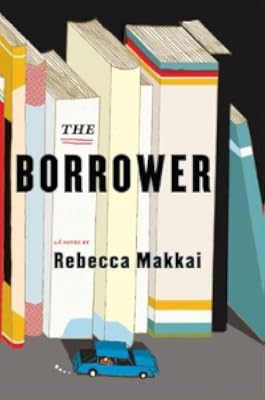
The Borrower
by Rebecca Makkai
On This Page
Description
Lucy Hull, a young children's librarian in Hannibal, Missouri, finds herself both a kidnapper and kidnapped when her favorite patron, ten-year-old Ian Drake, runs away from home. The precocious Ian is addicted to reading, but needs Lucy's help to smuggle books past his overbearing mother, who has enrolled Ian in weekly antigay classes with celebrity Pastor Bob. Lucy stumbles into a moral dilemma when she finds Ian camped out in the library after hours with a knapsack of provisions and an show more escape plan. Desperate to save him from Pastor Bob and the Drakes, Lucy allows herself to be hijacked by Ian. The odd pair embarks on a crazy road trip from Missouri to Vermont, with ferrets, an inconvenient boyfriend, and upsetting family history thrown in their path. But is it just Ian who is running away? Who is the man who seems to be on their tail? And should Lucy be trying to save a boy from his own parents? show lessTags
Recommendations





Member Reviews
The Borrower opens quietly and then takes off at a surprising clip. Lucy, a children’s librarian, discovers her favorite patron, ten-year-old Ian, sleeping in the library with a backpack full of belongings—and suddenly finds herself facing a moral crossroads. Ian is sensitive, bookish, and clearly out of place in his hyper-evangelical home. When circumstances force Lucy to choose between strict responsibility and what she feels is the child’s best interest, the novel shifts from ethical contemplation into an unexpected adventure.
Rebecca Makkai’s debut balances tenderness with tension, asking hard questions about guardianship, belief, and the limits of good intentions. The road-trip plot keeps things moving, but the real strength show more of the novel lies in its characters—especially Lucy, whose flaws and doubts make her choices both troubling and deeply human. Thoughtful, funny, and quietly daring, The Borrower is a coming-of-age story for both child and adult, and an impressive debut filled with heart, humor, and moral complexity. show less
Rebecca Makkai’s debut balances tenderness with tension, asking hard questions about guardianship, belief, and the limits of good intentions. The road-trip plot keeps things moving, but the real strength show more of the novel lies in its characters—especially Lucy, whose flaws and doubts make her choices both troubling and deeply human. Thoughtful, funny, and quietly daring, The Borrower is a coming-of-age story for both child and adult, and an impressive debut filled with heart, humor, and moral complexity. show less
Listened to the audio for first 6 discs (of 8); finished in print.
A unique story (26-year-old librarian and 10-year-old patron go on a road trip that is halfway between a runaway and a kidnapping) with common themes: the effect of family history on one's present actions, how much people can change (if at all), the power of story.
Lucy Hull works as a children's librarian in Hannibal, Missouri; Ian Drake is one of her favorite patrons, a voracious reader. Lucy helps Ian read books his religious mother wouldn't approve of (witches, wizards, etc.), and worries when she discovers that Ian is being sent to classes under the auspices of the Glad Heart Ministry (one of those pray-away-the-gay organizations). When Ian runs away to the library show more and Lucy discovers him there, he refuses to go home - so they run away instead.
Lucy's family is Russian, and though she thought she knew her family history, truer versions are revealed in the course of her and Ian's road trip, first at a stop at her parents' in Chicago, then at a family friends' house in Pittsburgh. It is a history of righteous anger, of false perceptions, of running away.
Quotes
But I was caught up in the cliche of it, the scripts you choose from when someone dies... (63)
It makes me wonder what kinds of fiction I'm capable of, by nature and nurture. (131)
My father, God bless him, pretended to believe me. He can believe anything he wants. (140)
...some of the dizziness and fuzzy-headedness I'd been feeling all day had to do with that realization, the idea that the rug of my family history might have just been yanked out from under me. (151)
"I think when we have false assumptions about the world, we make the wrong decisions." (186)
I felt that I needed to rewind my life to the beginning and watch it again, to see what I had missed. (188)
"This is a nation of runaways. Every person comes from somewhere else." (188)
"...but every year you see that what you thought you understood a year ago, no, wait, it is ten times worse." (225)
We actually were right. We just cared more about being right than about doing what was right. And we cared more about being right than about our own lives. (226)
I thought what a wonderful children's book that would make: a library haunted by friendly old librarians. (242)
Growing up...my younger self must have set some strange, romantic standards of adulthood: in one's twenties, one is to leave everything behind and start over. (264)
"The problem with you is you read and you read, but you don't listen to anything someone says with the mouth." (276)
I'd forgotten that all the runaway stories end like this. Everyone goes home. (281)
It was the universal revelation of adolescence, that the adults around you do not have all the answers - and like all children growing slowly and painfully into their mature selves, he'd realize it again and again over the next few years. But in Ian it was more than a simple disillusionment. It might well be what would save his life. (288)
You think you can't go home again? It's the only place you can ever go. (301)
I had failed to understand that one reason you can't change who you are is that you can't change where you're from. (301)
...all I knew were novels. It gave me pause, for a moment, that all my reference points were fiction, that all my narratives were lies. (319)
But books, on the other hand: I do still believe that books can save you. (320) show less
A unique story (26-year-old librarian and 10-year-old patron go on a road trip that is halfway between a runaway and a kidnapping) with common themes: the effect of family history on one's present actions, how much people can change (if at all), the power of story.
Lucy Hull works as a children's librarian in Hannibal, Missouri; Ian Drake is one of her favorite patrons, a voracious reader. Lucy helps Ian read books his religious mother wouldn't approve of (witches, wizards, etc.), and worries when she discovers that Ian is being sent to classes under the auspices of the Glad Heart Ministry (one of those pray-away-the-gay organizations). When Ian runs away to the library show more and Lucy discovers him there, he refuses to go home - so they run away instead.
Lucy's family is Russian, and though she thought she knew her family history, truer versions are revealed in the course of her and Ian's road trip, first at a stop at her parents' in Chicago, then at a family friends' house in Pittsburgh. It is a history of righteous anger, of false perceptions, of running away.
Quotes
But I was caught up in the cliche of it, the scripts you choose from when someone dies... (63)
It makes me wonder what kinds of fiction I'm capable of, by nature and nurture. (131)
My father, God bless him, pretended to believe me. He can believe anything he wants. (140)
...some of the dizziness and fuzzy-headedness I'd been feeling all day had to do with that realization, the idea that the rug of my family history might have just been yanked out from under me. (151)
"I think when we have false assumptions about the world, we make the wrong decisions." (186)
I felt that I needed to rewind my life to the beginning and watch it again, to see what I had missed. (188)
"This is a nation of runaways. Every person comes from somewhere else." (188)
"...but every year you see that what you thought you understood a year ago, no, wait, it is ten times worse." (225)
We actually were right. We just cared more about being right than about doing what was right. And we cared more about being right than about our own lives. (226)
I thought what a wonderful children's book that would make: a library haunted by friendly old librarians. (242)
Growing up...my younger self must have set some strange, romantic standards of adulthood: in one's twenties, one is to leave everything behind and start over. (264)
"The problem with you is you read and you read, but you don't listen to anything someone says with the mouth." (276)
I'd forgotten that all the runaway stories end like this. Everyone goes home. (281)
It was the universal revelation of adolescence, that the adults around you do not have all the answers - and like all children growing slowly and painfully into their mature selves, he'd realize it again and again over the next few years. But in Ian it was more than a simple disillusionment. It might well be what would save his life. (288)
You think you can't go home again? It's the only place you can ever go. (301)
I had failed to understand that one reason you can't change who you are is that you can't change where you're from. (301)
...all I knew were novels. It gave me pause, for a moment, that all my reference points were fiction, that all my narratives were lies. (319)
But books, on the other hand: I do still believe that books can save you. (320) show less
Rebecca Makkai's novel The Borrower comes out in June of this year, and my opinion of this book can be summed up in two words: Buy it.
The tale of a highly intelligent librarian in her mid-twenties, who, though not exactly possessing the degrees requisite to do her job does it far more competently than anyone else there, "borrows" a ten-year-old boy. Technically, narrator Lucy Hull commits kidnapping that crosses several state lines for reasons that are somewhat idealistic.
It is interesting to see the narrative from the side of the villain - which is how Miss Hull describes herself in the beginning of the narrative. I particularly like that this is one villain you don't want to get caught. I didn't necessarily agree with everything she show more believed - I just didn't want her to get caught. At the end of the narrative, I wasn't sure that I even agreed with Miss Hull's assessment of herself as a villain.
All-in-all, an extremely entertaining & intelligent read that explores many aspects of the concept of "borrowing." Seriously, buy it. show less
The tale of a highly intelligent librarian in her mid-twenties, who, though not exactly possessing the degrees requisite to do her job does it far more competently than anyone else there, "borrows" a ten-year-old boy. Technically, narrator Lucy Hull commits kidnapping that crosses several state lines for reasons that are somewhat idealistic.
It is interesting to see the narrative from the side of the villain - which is how Miss Hull describes herself in the beginning of the narrative. I particularly like that this is one villain you don't want to get caught. I didn't necessarily agree with everything she show more believed - I just didn't want her to get caught. At the end of the narrative, I wasn't sure that I even agreed with Miss Hull's assessment of herself as a villain.
All-in-all, an extremely entertaining & intelligent read that explores many aspects of the concept of "borrowing." Seriously, buy it. show less
At twenty-six, Lucy is much younger and less qualified than her coworkers at the library, but she took the job she was offered so that she wouldn’t have to rely on her father’s money, which he obtained largely through dealings with the Russian mafia. She dislikes most of her coworkers and has few friends, but one of the bright spots in her life is an eccentric, precocious ten-year-old named Ian who frequents the library. Ian reads voraciously, and Lucy allows him to secretly check out books that his hyper-evangelical family forbids him from reading, but she becomes concerned for his safety when he delivers her an origami creation folded out of a printed email from his mother to the pastor in charge of a conversion therapy group for show more young boys. When she closes up the library one night and finds Ian camped out among the shelves, he demands that she drive him to visit a grandmother that may or may not exist, and Lucy makes a split-second decision that will change both of their lives irreversibly. The two embark on a haphazard road trip that begs the question: who is really running away, and from what?
I’ll start by saying that my review is probably a little biased by the fact that I am planning on having a library career, and by the fact that I was very much a dramatic, flamboyant, obsessive reader like Ian when I was a kid (though, thankfully, my parents aren’t evangelicals). I can see why someone who can’t relate in those ways might not enjoy the book, or might find the plot uninteresting, but I really enjoyed it. At times it felt a little unrealistic, but then again, it’s fiction. The characters are all likable (except the ones we aren’t meant to like) and easy to root for, and I liked that, while it deals with difficult topics, the overall narrative isn’t depressing or painful to read. It strikes a good balance of being hopeful without being trite or sappy, and realistic without being pessimistic or heartbreaking.
I really enjoyed the narration. The novel is narrated by Lucy, but in the style of being written from her perspective in the future, looking back at the events. She includes little lists and asides, including small chapters that reference children’s books. This could put some readers off, and I can see how it could be irritating; personally, I thought it was fun and added to the theme of the novel. I generally dislike quirks like that in books, but I found Lucy to be a likable and interesting narrator, and the little asides added to her character. The writing was clear without being simplistic, and it made the story easy to follow and interesting.
I did have a few issues: it always bothers me when characters refuse to communicate clearly and directly, even when that’s part of the plot, so I kept becoming irritated that Lucy doesn’t just ask Ian straight out what’s going on at home and what he needs. It also bothered me that everyone, not only Ian’s bigoted parents, assumes he is gay because of the way he acts and speaks. He’s ten! Ten year olds are flamboyant, dramatic, et cetera, just as a rule. There’s nothing wrong with knowing one’s sexuality at an early age, but Ian never makes any indication that he actually is gay. Even with the absolute best intentions, assuming you know the sexuality of a child is… weird. I don’t think this ruins the book at all, and it is set in the early 2000s, so it makes sense, but I do think it’s important to think about. show less
I’ll start by saying that my review is probably a little biased by the fact that I am planning on having a library career, and by the fact that I was very much a dramatic, flamboyant, obsessive reader like Ian when I was a kid (though, thankfully, my parents aren’t evangelicals). I can see why someone who can’t relate in those ways might not enjoy the book, or might find the plot uninteresting, but I really enjoyed it. At times it felt a little unrealistic, but then again, it’s fiction. The characters are all likable (except the ones we aren’t meant to like) and easy to root for, and I liked that, while it deals with difficult topics, the overall narrative isn’t depressing or painful to read. It strikes a good balance of being hopeful without being trite or sappy, and realistic without being pessimistic or heartbreaking.
I really enjoyed the narration. The novel is narrated by Lucy, but in the style of being written from her perspective in the future, looking back at the events. She includes little lists and asides, including small chapters that reference children’s books. This could put some readers off, and I can see how it could be irritating; personally, I thought it was fun and added to the theme of the novel. I generally dislike quirks like that in books, but I found Lucy to be a likable and interesting narrator, and the little asides added to her character. The writing was clear without being simplistic, and it made the story easy to follow and interesting.
I did have a few issues: it always bothers me when characters refuse to communicate clearly and directly, even when that’s part of the plot, so I kept becoming irritated that Lucy doesn’t just ask Ian straight out what’s going on at home and what he needs. It also bothered me that everyone, not only Ian’s bigoted parents, assumes he is gay because of the way he acts and speaks. He’s ten! Ten year olds are flamboyant, dramatic, et cetera, just as a rule. There’s nothing wrong with knowing one’s sexuality at an early age, but Ian never makes any indication that he actually is gay. Even with the absolute best intentions, assuming you know the sexuality of a child is… weird. I don’t think this ruins the book at all, and it is set in the early 2000s, so it makes sense, but I do think it’s important to think about. show less
A 26-year-old children's librarian inadvertently kidnaps her favorite 10-year-old patron, whom she suspects is being brainwashed by one of those evangelical ministers who promises to cure people of homosexuality, and takes off on a cross-country adventure with him. Is she a revolutionary, or just an adolescent mess?
I'm still trying to sort out exactly how I feel about this book, but I think I can safely say that it's amazing.
Lucy is a 26-year-old coasting through life -- her job as a children's librarian is the result of an alumni connection and her only friend is another library employee who is apparently in love with her. Her only goal in life is to not be like her father, a Russian immigrant with obvious underworld ties. She's likable and relatable, although I wanted to shake her many times, sometimes for her lack of motivation and sometimes because of her lack of restraint.
The premise of the book is that Ian, one of the library's young patrons, runs away from home and then persuades/forces Lucy to take him on a cross-country trip. Of course, show more there's more to the story than that. Lucy has already come under fire from Ian's fundamentalist Christian mother for giving the boy books that do not contain "the breath of God," and she's discovered that Ian is enrolled in anti-gay classes.
As Lucy's poor (albeit well-intentioned) choices snowball out of control, she learns new things about her own family and friends that make her question many of her assumptions about her life. You know from the beginning that everything won't turn out well. If common sense doesn't dictate that, the prologue gives a good clue. And yet, this book was impossible for me to put down. I had to see it to it's final, painful (although not completely hopeless) conclusion.
The story in itself is excellent and thought-provoking. What pushes this book over the top is all the literary references, from Nabokov allusions to emulations of various well-loved children's books: If You Give a Librarian a Closet, an untitled addition which could be called "The Very Hungry Librarian", etc. show less
Lucy is a 26-year-old coasting through life -- her job as a children's librarian is the result of an alumni connection and her only friend is another library employee who is apparently in love with her. Her only goal in life is to not be like her father, a Russian immigrant with obvious underworld ties. She's likable and relatable, although I wanted to shake her many times, sometimes for her lack of motivation and sometimes because of her lack of restraint.
The premise of the book is that Ian, one of the library's young patrons, runs away from home and then persuades/forces Lucy to take him on a cross-country trip. Of course, show more there's more to the story than that. Lucy has already come under fire from Ian's fundamentalist Christian mother for giving the boy books that do not contain "the breath of God," and she's discovered that Ian is enrolled in anti-gay classes.
As Lucy's poor (albeit well-intentioned) choices snowball out of control, she learns new things about her own family and friends that make her question many of her assumptions about her life. You know from the beginning that everything won't turn out well. If common sense doesn't dictate that, the prologue gives a good clue. And yet, this book was impossible for me to put down. I had to see it to it's final, painful (although not completely hopeless) conclusion.
The story in itself is excellent and thought-provoking. What pushes this book over the top is all the literary references, from Nabokov allusions to emulations of various well-loved children's books: If You Give a Librarian a Closet, an untitled addition which could be called "The Very Hungry Librarian", etc. show less
I think this will be a love it or hate it book. The main character, Lucy Hull is a children's librarian in Hannibal, MO. It is the 1990s and as Gen X-er, Lucy lacks ambition and direction and her moral compass is somewhat relative. This is what some will hate. However, she does have a deep sense of justice and compassion and true to the 90s, political correctness and tolerance. When one of the children who regularly attends her library programs (Ian Drake) is "bullied" by his evangelical parents and forced to attend a gay rehab-type program, Lucy gets personally involved. The Borrower title works on several levels....Lucy also comes to terms with her own family's shady Russian immigrant past and with these two story lines weaving show more together like DNA, Lucy grows up. I really enjoyed the riffs on children's books throughout, and while I sometimes wanted to shake Lucy, (and she doesn't ask for anyone's love or understanding), I liked the humor and the commentary and ridiculousness of many of the plot's situations. Overall, very original, refreshing and thought-provoking. show less
Members
- Recently Added By
Published Reviews
ThingScore 75
The novel bogs down for a long time in the middle with an excess of plot, but the moving final chapters affirm the power of books to change people’s lives even as they acknowledge the unbreakable bonds of home and family.
Smart, literate and refreshingly unsentimental.
Smart, literate and refreshingly unsentimental.
added by vancouverdeb
In her bracingly tough-minded tale of a discontented librarian who hits the road with a maladjusted 10-year-old, Rebecca Makkai tips her hat to a shelf-load of children's literature, offering sly echoes of everything from "Charlotte's Web" by E.B. White to "Where's Spot?" By Eric Hill, while crafting her own distinctive sound in a first novel definitely not for kids. Makkai avoids almost all show more the pitfalls of debut fiction, including sentimentality and undigested autobiography, and though her plotting isn't as deft as her characterizations, the wonderfully nuanced closing pages more than make up for the occasional longueurs that precede them....Yet every conflicted word Lucy utters in Makkai's probing novel reminds us that literature matters because it helps us discover ourselves while exploring the worlds of others. show less
added by vancouverdeb
Lists

Books Read in 2014
2,343 works; 89 members

Books Read in 2013
1,630 works; 51 members

Top Five Books of 2013
1,562 works; 721 members

Books Read in 2016
110 works; 1 member

Novels with librarian as major character
16 works; 5 members
Talk Discussions
Past Discussions
The Borrower by Rebecca Makkai - Jun 2011 LTER in Reviews of Early Reviewers Books (October 2011)
Author Information

12+ Works 7,072 Members
Rebecca Makkai is an author, based in the Chicago area. She holds as MA from Middlebury College's Bread Loaf School of English and a BA from Washington and Lee University. She was an elementary Montessori teacher for twelve years before becoming a writer. She is on the MFA faculties of Sierra Nevada College and Northwestern University. And she is show more the Artistic Director of StoryStudio Chicago. She has had her short fiction published in such anthologies as The Pushcart Prize XLI, The Best American Short Stories, The Best American Nonrequired Reading, New Stories from the Midwest, and Best American Fantasy. She has a short story collection entitled Music for Wartime. She won the 2017 Pushcart prize for short fiction. Her first novel was entitled The Borrower. Her other novels include The Hundred-Year House and The Great Believers. She won the 2019 Andrew Carnegie Medal for fiction with her novel, The Great Believers. (Bowker Author Biography) show less
Some Editions
Awards and Honors
Notable Lists
Common Knowledge
- Canonical title
- The Borrower
- Original title
- The Borrower
- Original publication date
- 2011-06-13
- People/Characters
- Lucy Hull; Ian Drake
- Important places
- Hannibal, Missouri, USA; Chicago, Illinois, USA; Vermont, USA
- First words
- I might be the villain of this story. Even now, it's hard to tell.
- Last words
- (Click to show. Warning: May contain spoilers.)Let's say that it does.
- Blurbers
- Russo, Richard; Tinti, Hannah; Brockmeier, Kevin; Baker, Tiffany
Classifications
Statistics
- Members
- 1,451
- Popularity
- 16,096
- Reviews
- 141
- Rating
- (3.41)
- Languages
- 9 — Dutch, English, French, German, Italian, Polish, Portuguese, Russian, Spanish
- Media
- Paper, Audiobook, Ebook
- ISBNs
- 24
- ASINs
- 13
