The Adults
by Alison Espach
On This Page
Description
In her ruefully funny and wickedly perceptive debut novel, Alison Espach deftly dissects matters of the heart and captures the lives of children and adults as they come to terms with life, death, and love. At the center of this affluent suburban universe is Emily Vidal, a smart and snarky teenager, who gets involved in a suspect relationship with one of the adults after witnessing a suicide in her neighborhood. Among the cast of unforgettable characters is Emily's father, whose fiftiesth show more birthday party has the adults descending upon the Vidal's patio; her mother, who has orchestrated the elaborate party even though she and her husband are getting a divorce; and an assortment of eccentric neighbors, high school teachers, and teenagers who teem with anxiety and sexuality and an unbridled desire to be noticed, and ultimately loved.. show less
Tags
Recommendations










Member Reviews
The Short of It:
Sharp. Witty. Acerbic.
The Rest of It:
Fourteen-year-old Emily Vidal and her family host a cocktail party to celebrate her father’s 50th birthday. Everyone in the neighborhood is there despite the oppressive heat and as the guests float in and out of the house, it’s clear to Emily that being an adult is as droll as say… watching paint dry. That is, until she sees her father in a passionate embrace with their next door neighbor, Mrs. Resnick. That night, her parents tell her that they are getting a divorce. It’s said in a very straight-forward manner; a one-two punch to the gut delivered without hesitation. Emily is not surprised after what she’s seen.
Weeks later, Emily invites a group of insipid girls over show more for a sleepover and in the early morning hours, while getting a glass of water and gazing out her kitchen window, Emily witnesses the suicide of Mr. Resnick as he hangs himself from a tree next door. Her inability to react, to prevent what is about to happen is both alarming and expected. In shock, she drops a glass which shatters across the floor and screams for her father.
The title of this book alone is worthy of discussion. Who are the adults Espach is referring to? Is she talking about Emily’s parents? Her bitter mother, Gloria or her philandering father, Victor? Could she be referring to the Resnicks next door? Another broken family that finds its way into Emily’s immediate circle? Early in the story, I’d say yes. That as we get to know Emily and what makes her tick, we are also given unpleasant glimpses of the adults that form who she is.
With that, let’s talk about Emily. At fourteen, she is wise beyond her years but every now and then her naivety is displayed for all to see. She’s witty, smart and beautiful but at the same time childish and demanding but not in an obnoxious way. Not at all like the friends she hangs out with. They are living caricatures with big heads and a lot of unnecessary banter spewing forth from their mouths. They talk about sex and having sex with various members of the male population, including a teacher by the name of Jonathan.
Emily’s affair with Jonathan is both disturbing and logical. The fact that I just wrote that surprises me, but it’s true. Jonathan’s decision to hook-up with Emily is cringe-worthy but he’s also pretty good to her (if you can forget that he is molesting a child) and although she holds it together fairly well, she is devastated by her parent’s divorce and the distraction of a forbidden romance is what holds her together. But their time together is awkward. There is a lot of fumbling and a lot of sex and although it’s clear that Emily is young and inexperienced, Jonathan doesn’t really pick up on these clues so there are many pages of Emily questioning why he’s so hairy or why he sometimes loses his erection. Her best friend Janice claims to have also slept with Jonathan so it’s not like Emily can just go and ask her about things so she thinks out loud and figures stuff out along the way.
As Emily’s high school years come to a close, I expected the story to end but instead, Espach launches into Emily’s adult life. In college and living in Prague with her father and her half-sister Laura, Emily has once again hooked up with Jonathan and it’s weird. Very weird, because now she is of age, but Jonathan is much older and not nearly as attractive as he used to be. To me, I didn’t need to see Emily as an adult to understand her. Espach’s decision to take us into adulthood was a bold one, but it didn’t work. For one, Emily hasn’t grown all that much. She is essentially the same person and because of this, the relationship between her and Jonathan is even more awkward and forced.
The difference between me loving this one and not loving it, is that jaunt into Emily’s adulthood. I don’t know. I guess I wanted to keep her young in my mind. Isn’t that how it is with high school anyway? You want to hold on to what’s dear and even though her relationship with a teacher was scandalous and perverted, to Emily… it was dear and because of that, I was okay with it. What could have been a great book, was in the end, just good.
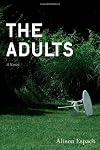
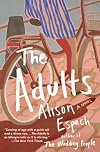
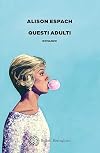
Cover note: Don’t let the cover fool you. This paperback cover makes you think it’s for the Young Adult crowd but I’d argue against that. It really does not fall into that category at all.
For more reviews, visit my blog: Book Chatter. show less
Sharp. Witty. Acerbic.
The Rest of It:
Fourteen-year-old Emily Vidal and her family host a cocktail party to celebrate her father’s 50th birthday. Everyone in the neighborhood is there despite the oppressive heat and as the guests float in and out of the house, it’s clear to Emily that being an adult is as droll as say… watching paint dry. That is, until she sees her father in a passionate embrace with their next door neighbor, Mrs. Resnick. That night, her parents tell her that they are getting a divorce. It’s said in a very straight-forward manner; a one-two punch to the gut delivered without hesitation. Emily is not surprised after what she’s seen.
Weeks later, Emily invites a group of insipid girls over show more for a sleepover and in the early morning hours, while getting a glass of water and gazing out her kitchen window, Emily witnesses the suicide of Mr. Resnick as he hangs himself from a tree next door. Her inability to react, to prevent what is about to happen is both alarming and expected. In shock, she drops a glass which shatters across the floor and screams for her father.
The title of this book alone is worthy of discussion. Who are the adults Espach is referring to? Is she talking about Emily’s parents? Her bitter mother, Gloria or her philandering father, Victor? Could she be referring to the Resnicks next door? Another broken family that finds its way into Emily’s immediate circle? Early in the story, I’d say yes. That as we get to know Emily and what makes her tick, we are also given unpleasant glimpses of the adults that form who she is.
With that, let’s talk about Emily. At fourteen, she is wise beyond her years but every now and then her naivety is displayed for all to see. She’s witty, smart and beautiful but at the same time childish and demanding but not in an obnoxious way. Not at all like the friends she hangs out with. They are living caricatures with big heads and a lot of unnecessary banter spewing forth from their mouths. They talk about sex and having sex with various members of the male population, including a teacher by the name of Jonathan.
Emily’s affair with Jonathan is both disturbing and logical. The fact that I just wrote that surprises me, but it’s true. Jonathan’s decision to hook-up with Emily is cringe-worthy but he’s also pretty good to her (if you can forget that he is molesting a child) and although she holds it together fairly well, she is devastated by her parent’s divorce and the distraction of a forbidden romance is what holds her together. But their time together is awkward. There is a lot of fumbling and a lot of sex and although it’s clear that Emily is young and inexperienced, Jonathan doesn’t really pick up on these clues so there are many pages of Emily questioning why he’s so hairy or why he sometimes loses his erection. Her best friend Janice claims to have also slept with Jonathan so it’s not like Emily can just go and ask her about things so she thinks out loud and figures stuff out along the way.
As Emily’s high school years come to a close, I expected the story to end but instead, Espach launches into Emily’s adult life. In college and living in Prague with her father and her half-sister Laura, Emily has once again hooked up with Jonathan and it’s weird. Very weird, because now she is of age, but Jonathan is much older and not nearly as attractive as he used to be. To me, I didn’t need to see Emily as an adult to understand her. Espach’s decision to take us into adulthood was a bold one, but it didn’t work. For one, Emily hasn’t grown all that much. She is essentially the same person and because of this, the relationship between her and Jonathan is even more awkward and forced.
The difference between me loving this one and not loving it, is that jaunt into Emily’s adulthood. I don’t know. I guess I wanted to keep her young in my mind. Isn’t that how it is with high school anyway? You want to hold on to what’s dear and even though her relationship with a teacher was scandalous and perverted, to Emily… it was dear and because of that, I was okay with it. What could have been a great book, was in the end, just good.
Cover note: Don’t let the cover fool you. This paperback cover makes you think it’s for the Young Adult crowd but I’d argue against that. It really does not fall into that category at all.
For more reviews, visit my blog: Book Chatter. show less
This book follows the life of Emily Vidal, who we first meet as a teenager in Fairfield, Connecticut. The only daughter in a wealthy family, she's lived a fairly sheltered life and is pretty naïve. Her concerns are by and large typically teenaged - trying to fit in with the girls at her high school, having a crush on her similarly aged neighbor Mark, etc. This all changes when in quick succession she learns that her parents are divorcing, her father is having an affair with Mark's mother, and then Mark's father dramatically commits suicide right before Emily's eyes. With her unresolved daddy issues, Emily begins a sexual affair with her high school English teacher, a dysfunctional relationship that continues to haunt her as she ages, show more just as her tenuous relationship with her father is constantly renegotiated.
This book was a random find, spied upon the shelves of my local library, with no prior knowledge of it or personal recommendation. However, the description of a "ruefully funny and wickedly perceptive" ... "chronicle of a modern young woman's struggle to grow up" sounded intriguing so I decided to give it a try. I was sorely disappointed with it and only finished reading it due to my perverse need to see books through to their end, despite how poorly written or dissatisfying they may be. That being said though, I did almost give up on this book on several occasions, given how bad I found it.
When I dislike a book as much as I did this one, it's hard to know where to begin in reviewing it. A huge part of my sour taste with this book was due to the characters; there simply isn't anything redeemable about any of them. A book doesn't always need to have likable or relatable characters to make it interesting (see for instance, The Dinner, which I overall enjoyed despite its rather nasty characters), but it helps if the characters have some sort of je ne sais quoi that keeps you compelled to read about them. That was entirely lacking here. Nearly every character here - and certainly all the main ones - was shallow and selfish, entirely self-absorbed way beyond the average person. The high school students are among the worse people I have heard described -- vulgar, violent, and completely unaware how many more opportunities they've been given compared to other people throughout the country (let alone around the world). Their parents are, of course, little better with their superficial concerns about parties and appearances and apparent disregard for their children's troubling hijinks. It would be one thing if Espach was skewering people with these characterizations, but if there was satire at work here, I completely missed it.
Meanwhile, I had zero sympathy for Emily by at least half way through the book (and very little for her before that). 'Struggling to grow up' seems apt, because I don't think she's managed to achieve that, even by the end of the novel when she's well into her 20s. Yes, all of us are still working to figure out things all throughout life, but she is particularly uncaring and selfish in a childish way still, and it doesn't seem to me that she's learned one iota from her experiences. Emily's relationship with her father is a driving force in her life, whether or not she recognizes, and it's yet another tell about her character that her father moving out of the house is a far more traumatic event in her life than witnessing her close neighbor kill himself. The suicide seems to roll right off her shoulders almost immediately while she - almost subconsciously - mulls about her father's affair and other issues for the rest of her life, allowing her to make suspect choices again and again. She idolizes her father, even to the point of remaining blind to the possible role her father may have played in the neighbor's desire to commit suicide.
Her dysfunctional daddy issues lead her into a dysfunctional sexual relationship with her high school teacher, a man in his mid-20s, when she is only 15. This relationship - as disturbing as it is - is one she comes back to several times even as an adult. This troubling relationship is described in explicit detail over and over again for a large part of the book. As I've mentioned before, I'm not prudish and I don't have a problem with authors writing about sex when it serves a purpose to the story or characterizations, but most of the sex scenes here are simply gratuitous smut. It gets to the point where it's almost insulting to the reader: Yes, these two characters have a relationship built almost entirely by sex. We get it. We don't need a good third of the book to be an explicit description of the sex acts of a 15-year-old with a grown man. It's unnecessary and frankly bordering on child pornography.
A weird interlude in the book takes place after Emily's college years (which are completely brushed over by the way) when she goes to live with her father in Prague. At this point, it almost seems like things could be getting better for the characters. Emily is still floundering, but she's at least somewhat aware of her limitations and working on making decisions. Her father has a new girlfriend who isn't as entirely awful as the other characters, and some things are revealed about him that show maybe he isn't as bad as previously thought before. But, of course, these characters can't help but be true to themselves and immediately ditch anything good in their lives in favor of their previous dysfunctions. Still, that brief time period was probably the most interesting part of the book, where the author was able to write in a slightly more appealing way.
Speaking of writing, it's hard to sum up this author's style. She certainly has some talent, although it's not yet strong enough to shoulder the difficult task of making a story about unlikable people a good read. While the novel is largely told chronologically, Espach likes to occasional make jumps forward and backward in time. These passages are sometimes successful but can often be jarring instead. She tries to tie together themes but the protagonist's overall lack of self-awareness makes her few moments of clarity meaningless. Any attempts at beautiful language are lost in between long, explicit passages about the sexual encounters that Emily has. And, again, if Espach is trying to be "ruefully funny and wickedly perceptive," she's mostly failed. There's a rare line or observation that sizzles, but these are so few and far between that this book isn't worth reading for those. In fact this book in many ways reminded me of a fictionalized version of Her Last Death, but more poorly written.
The one saving grace for the audiobook version is that Tavia Gilbert is an expert reader, doing a marvelous job at various voices and accents. Still, that wasn't enough to keep me focused on this audiobook for long, often opting to switch over and try my luck at the radio (frequently playing the same Taylor Swift song on four different stations) rather than listen to this book for long swaths at a time. I honestly found the world created by Espach here and the characters she peopled it with to be entirely depressing, and I'm glad to be done with this book. show less
This book was a random find, spied upon the shelves of my local library, with no prior knowledge of it or personal recommendation. However, the description of a "ruefully funny and wickedly perceptive" ... "chronicle of a modern young woman's struggle to grow up" sounded intriguing so I decided to give it a try. I was sorely disappointed with it and only finished reading it due to my perverse need to see books through to their end, despite how poorly written or dissatisfying they may be. That being said though, I did almost give up on this book on several occasions, given how bad I found it.
When I dislike a book as much as I did this one, it's hard to know where to begin in reviewing it. A huge part of my sour taste with this book was due to the characters; there simply isn't anything redeemable about any of them. A book doesn't always need to have likable or relatable characters to make it interesting (see for instance, The Dinner, which I overall enjoyed despite its rather nasty characters), but it helps if the characters have some sort of je ne sais quoi that keeps you compelled to read about them. That was entirely lacking here. Nearly every character here - and certainly all the main ones - was shallow and selfish, entirely self-absorbed way beyond the average person. The high school students are among the worse people I have heard described -- vulgar, violent, and completely unaware how many more opportunities they've been given compared to other people throughout the country (let alone around the world). Their parents are, of course, little better with their superficial concerns about parties and appearances and apparent disregard for their children's troubling hijinks. It would be one thing if Espach was skewering people with these characterizations, but if there was satire at work here, I completely missed it.
Meanwhile, I had zero sympathy for Emily by at least half way through the book (and very little for her before that). 'Struggling to grow up' seems apt, because I don't think she's managed to achieve that, even by the end of the novel when she's well into her 20s. Yes, all of us are still working to figure out things all throughout life, but she is particularly uncaring and selfish in a childish way still, and it doesn't seem to me that she's learned one iota from her experiences. Emily's relationship with her father is a driving force in her life, whether or not she recognizes, and it's yet another tell about her character that her father moving out of the house is a far more traumatic event in her life than witnessing her close neighbor kill himself. The suicide seems to roll right off her shoulders almost immediately while she - almost subconsciously - mulls about her father's affair and other issues for the rest of her life, allowing her to make suspect choices again and again. She idolizes her father, even to the point of remaining blind to the possible role her father may have played in the neighbor's desire to commit suicide.
Her dysfunctional daddy issues lead her into a dysfunctional sexual relationship with her high school teacher, a man in his mid-20s, when she is only 15. This relationship - as disturbing as it is - is one she comes back to several times even as an adult. This troubling relationship is described in explicit detail over and over again for a large part of the book. As I've mentioned before, I'm not prudish and I don't have a problem with authors writing about sex when it serves a purpose to the story or characterizations, but most of the sex scenes here are simply gratuitous smut. It gets to the point where it's almost insulting to the reader: Yes, these two characters have a relationship built almost entirely by sex. We get it. We don't need a good third of the book to be an explicit description of the sex acts of a 15-year-old with a grown man. It's unnecessary and frankly bordering on child pornography.
A weird interlude in the book takes place after Emily's college years (which are completely brushed over by the way) when she goes to live with her father in Prague. At this point, it almost seems like things could be getting better for the characters. Emily is still floundering, but she's at least somewhat aware of her limitations and working on making decisions. Her father has a new girlfriend who isn't as entirely awful as the other characters, and some things are revealed about him that show maybe he isn't as bad as previously thought before. But, of course, these characters can't help but be true to themselves and immediately ditch anything good in their lives in favor of their previous dysfunctions. Still, that brief time period was probably the most interesting part of the book, where the author was able to write in a slightly more appealing way.
Speaking of writing, it's hard to sum up this author's style. She certainly has some talent, although it's not yet strong enough to shoulder the difficult task of making a story about unlikable people a good read. While the novel is largely told chronologically, Espach likes to occasional make jumps forward and backward in time. These passages are sometimes successful but can often be jarring instead. She tries to tie together themes but the protagonist's overall lack of self-awareness makes her few moments of clarity meaningless. Any attempts at beautiful language are lost in between long, explicit passages about the sexual encounters that Emily has. And, again, if Espach is trying to be "ruefully funny and wickedly perceptive," she's mostly failed. There's a rare line or observation that sizzles, but these are so few and far between that this book isn't worth reading for those. In fact this book in many ways reminded me of a fictionalized version of Her Last Death, but more poorly written.
The one saving grace for the audiobook version is that Tavia Gilbert is an expert reader, doing a marvelous job at various voices and accents. Still, that wasn't enough to keep me focused on this audiobook for long, often opting to switch over and try my luck at the radio (frequently playing the same Taylor Swift song on four different stations) rather than listen to this book for long swaths at a time. I honestly found the world created by Espach here and the characters she peopled it with to be entirely depressing, and I'm glad to be done with this book. show less
Qualcosa è andato storto tra me e questo libro: sebbene non possa assolutamente dire che sia scritto male o che non contenga alcuni passaggi illuminati, ho fatto fatica ad arrivare alla fine. Cosa è successo? È il classico caso di un libro d’esordio imperfetto?
La mia impressione è che si sia trattato di una storia piuttosto banale che Espach, per quanto talentuosa, non sia riuscita a rendere memorabile. La mia noia, infatti, è dipesa dalla prevedibilità della trama, aggravata dal fatto che a un certo punto sembra trascinarsi per pagine e pagine senza apparente motivo e che i guizzi di Espach vanno perdendosi in un’inutile diluizione di contenuti.
Capisco perché a molte persone sia piaciuto, anche tanto, ma io non sono riuscita show more ad andare oltre al fatto che si tratta dell’ennesimo romanzo di formazione di una ragazza statunitense di buona famiglia, con l’importanza di mantenere le apparenze, con le amiche con le quali non si trova troppo bene e con il solito professore inappropriato (per usare un eufemismo).
Se mi capiterà tra le mani, penso che proverò a leggere altro di Espach. Magari nei suoi successivi lavori, datati molto più tardi di questo, è migliorata e ha limato via gli elementi che non ho apprezzato in Questi adulti. show less
La mia impressione è che si sia trattato di una storia piuttosto banale che Espach, per quanto talentuosa, non sia riuscita a rendere memorabile. La mia noia, infatti, è dipesa dalla prevedibilità della trama, aggravata dal fatto che a un certo punto sembra trascinarsi per pagine e pagine senza apparente motivo e che i guizzi di Espach vanno perdendosi in un’inutile diluizione di contenuti.
Capisco perché a molte persone sia piaciuto, anche tanto, ma io non sono riuscita show more ad andare oltre al fatto che si tratta dell’ennesimo romanzo di formazione di una ragazza statunitense di buona famiglia, con l’importanza di mantenere le apparenze, con le amiche con le quali non si trova troppo bene e con il solito professore inappropriato (per usare un eufemismo).
Se mi capiterà tra le mani, penso che proverò a leggere altro di Espach. Magari nei suoi successivi lavori, datati molto più tardi di questo, è migliorata e ha limato via gli elementi che non ho apprezzato in Questi adulti. show less
Though the writing was witty and the plot kept me interested, I was ultimately a little disappointed at the end of this. How is Emily different at the end of this book? What's going to happen to her? It's kind of unsatisfying for a book to follow a character from age 14 to 30 and then just stop when the character's on the verge of maybe figuring some stuff out. Hmph.
I did like the twist with Mr. Basketball at the end. It almost made me wish the book were from his perspective, but I guess that would just make it a kind of modern day [b:Lolita|7604|Lolita|Vladimir Nabokov|http://photo.goodreads.com/books/1327871906s/7604.jpg|1268631], right? The part where he said, "I didn't want a child or a wife and I got what I wanted," was like a gut show more punch.
The things I'll take away from this book:
1. It horrifies me how fast some kids grow up. Stay young and innocent as long as you can, friends. Do not enter into some tragic romance when you're just a kid.
2. Prague sounds really cool.
3. Don't leave a plastic spoon by the stove.
4. The "What can you do with a _____?" game Emily and her dad played. show less
I did like the twist with Mr. Basketball at the end. It almost made me wish the book were from his perspective, but I guess that would just make it a kind of modern day [b:Lolita|7604|Lolita|Vladimir Nabokov|http://photo.goodreads.com/books/1327871906s/7604.jpg|1268631], right? The part where he said, "I didn't want a child or a wife and I got what I wanted," was like a gut show more punch.
The things I'll take away from this book:
1. It horrifies me how fast some kids grow up. Stay young and innocent as long as you can, friends. Do not enter into some tragic romance when you're just a kid.
2. Prague sounds really cool.
3. Don't leave a plastic spoon by the stove.
4. The "What can you do with a _____?" game Emily and her dad played. show less
I’ve had The Adults on my reading list for a while so of course I picked it up when I spotted it at the thrift store. I wasn’t exactly sure what to expect when I started reading, but I loved it. The book as a whole was so captivating. Emily’s character was great and she kept my attention the entire time.
Alison Espach’s writing style sort of reminded me of Janet Fitch’s White Oleander which I also loved. All around a great book and a new favorite.
Alison Espach’s writing style sort of reminded me of Janet Fitch’s White Oleander which I also loved. All around a great book and a new favorite.
Interesting as a coming of age novel that doesn’t resort to an overly clichéd ending. Modern prose, which took a bit of time for me to get used to, with little episodes of non-chronological additions within the largely linear story. I loved how it looked at what being "an adult" means at different stages in life. At points I was a little frustrated with the problems-of-privilege themes, and the teenage-teacher affair won't be for everyone, but overall it is a solid first novel.
Full of startlingly true observations, made more so by how casually they're stuffed into sentences. Excellently written, heartbreaking and memorable.
Members
- Recently Added By
Author Information

9 Works 3,726 Members
Common Knowledge
- Canonical title
- The Adults
- Original publication date
- 2011-02-01
- People/Characters
- Emily Vidal
- Important places
- Fairfield, Connecticut, USA; Prague, Czech Republic
- Blurbers
- Kyle, Aryn; Block, Stefan Merill; Wayne, Teddy; Davis, Kathryn
Classifications
Statistics
- Members
- 300
- Popularity
- 106,485
- Reviews
- 18
- Rating
- (3.37)
- Languages
- English, Italian
- Media
- Paper, Audiobook, Ebook
- ISBNs
- 11
- ASINs
- 4