This Burns My Heart
by Samuel Park
On This Page
Description
Caught between tradition and modernity in 1960s South Korea, a woman in an unhappy marriage struggles to give her daughter a good life.Tags
Recommendations













Member Reviews
In 1963, Soo-ja is denied the first big, important choice in her life: she wants to go and become a diplomat, and her father forbids it. So Soo-ja makes the choice she can, and marries Min, who has deceived her on many levels. Other than her daughter Hana, Soo-ja's life with Min and her in-laws is hard and dreary: they wish Hana had been a boy, and attempt to get money out of Soo-ja's father, who owns a factory.
And every few years (1960-1973), Soo-ja runs into Yul, who also asked her to marry him - after she was engaged to Min but before they were married - now a doctor, and married himself. The two of them yearn for each other, but Soo-ja cannot leave Min because he won't let Hana go with her.
Finally, when Soo-ja goes home to grieve show more her father's death (and learn that he wasn't entirely honest with her, either, leaving her carrying a lot of unnecessary guilt), Min takes Hana and goes to his parents in California, where they have set up with Soo-ja's family's money. Soo-ja goes after them, and at last, Min realizes the extent of her sacrifices over the years and sets her and Hana free. They return to Korea and Soo-ja reunites with Yul.
See also: Pachinko by Min Jin Lee
Quotes
"It is a losing proposition to always be right when it comes to little things, but then be wrong on the big things." (Soo-Ja's appa, 50)
What is the statute of limitations on resenting those we love? (51)
Regret and pangs of conscience are feelings we assign to others to make the world seem a little more fair, to even things out a little and provide consolation. In reality, those who do wrong to us never think about us as much as we think about them... (109)
...the pain inside her was so big, the only way to bear it was to give a slice of it to every single person in the world. (123)
Chamara...there is no other word for it, no way to translate it. It is not a word. It is a way to console yourself. (145)
"When I was younger, I thought there was only room for one person at a time in your heart. And each time you met someone new, you evicted the one who was there before. But now I realize that there are multiple rooms, and your old love doesn't leave. It sits there, waiting." (Yul to Soo-ja, 182)
"...all my life I've waited for you to stand up and take charge. It is exhausting to me, all the fighting we have to do, just so you won't feel bad about yourself." (Soo-ja to Min, 211)
We're only given one life, and it's the one we live, she had thought; how painful now, to realize that wasn't true, that you would have different lives, depending on how brave you were, and how ready. (245)
"I deceived you. And I can never give back what you lost, but I can stop making you lose." (Min to Soo-ja, 294) show less
And every few years (1960-1973), Soo-ja runs into Yul, who also asked her to marry him - after she was engaged to Min but before they were married - now a doctor, and married himself. The two of them yearn for each other, but Soo-ja cannot leave Min because he won't let Hana go with her.
Finally, when Soo-ja goes home to grieve show more her father's death (and learn that he wasn't entirely honest with her, either, leaving her carrying a lot of unnecessary guilt), Min takes Hana and goes to his parents in California, where they have set up with Soo-ja's family's money. Soo-ja goes after them, and at last, Min realizes the extent of her sacrifices over the years and sets her and Hana free. They return to Korea and Soo-ja reunites with Yul.
See also: Pachinko by Min Jin Lee
Quotes
"It is a losing proposition to always be right when it comes to little things, but then be wrong on the big things." (Soo-Ja's appa, 50)
What is the statute of limitations on resenting those we love? (51)
Regret and pangs of conscience are feelings we assign to others to make the world seem a little more fair, to even things out a little and provide consolation. In reality, those who do wrong to us never think about us as much as we think about them... (109)
...the pain inside her was so big, the only way to bear it was to give a slice of it to every single person in the world. (123)
Chamara...there is no other word for it, no way to translate it. It is not a word. It is a way to console yourself. (145)
"When I was younger, I thought there was only room for one person at a time in your heart. And each time you met someone new, you evicted the one who was there before. But now I realize that there are multiple rooms, and your old love doesn't leave. It sits there, waiting." (Yul to Soo-ja, 182)
"...all my life I've waited for you to stand up and take charge. It is exhausting to me, all the fighting we have to do, just so you won't feel bad about yourself." (Soo-ja to Min, 211)
We're only given one life, and it's the one we live, she had thought; how painful now, to realize that wasn't true, that you would have different lives, depending on how brave you were, and how ready. (245)
"I deceived you. And I can never give back what you lost, but I can stop making you lose." (Min to Soo-ja, 294) show less
This Burns My Heart is the story of Soo-Ja, a woman in post-war Korea who is having to forgo the life she desires to fit in with the customs and culture of her country. After a hasty marriage, Soo-Ja is soon trapped in a life of virtual servitude to her in-laws. As her life turns out vastly different to what she had imagined when younger, she continues to run into a man who she had quickly fallen in love with right before she got married. In Yul, she sees a life that could have been, full of love and comfort. Soo-Ja must decide whether to pine after that which she wishes she had or make the best of what she does have.
I absolutely loved this book! There was such beauty and grace to Soo-Ja. Never did she wallow in misery, even while show more wondering how her life would have been different if she had married someone else. She understood that her life was made by her choices. Soo-Ja had wonderful perspective on everything. I also really enjoyed the aspects of Soo-Ja's wants versus tradition. In a culture steeped in tradition, Soo-Ja knew there were certain expectations made of her. Although they did not make her life easy, she did the best she could to satisfy those traditions and make her own life as she saw fit. She was a beautiful example of adapting and making the best of all situations.
The writing was outstanding. Everything flows so well, and you get a real sense of who all the characters are. I was so moved by this book. This is the kind of book that makes you feel so many things, but in the end I was incredibly uplifted. I am recommending this book as highly as I possibly can. It has been my favorite book so far this year, and I am sure it will be on many "best of" lists to come.
Galley provided by publisher for review. show less
I absolutely loved this book! There was such beauty and grace to Soo-Ja. Never did she wallow in misery, even while show more wondering how her life would have been different if she had married someone else. She understood that her life was made by her choices. Soo-Ja had wonderful perspective on everything. I also really enjoyed the aspects of Soo-Ja's wants versus tradition. In a culture steeped in tradition, Soo-Ja knew there were certain expectations made of her. Although they did not make her life easy, she did the best she could to satisfy those traditions and make her own life as she saw fit. She was a beautiful example of adapting and making the best of all situations.
The writing was outstanding. Everything flows so well, and you get a real sense of who all the characters are. I was so moved by this book. This is the kind of book that makes you feel so many things, but in the end I was incredibly uplifted. I am recommending this book as highly as I possibly can. It has been my favorite book so far this year, and I am sure it will be on many "best of" lists to come.
Galley provided by publisher for review. show less
This review first appeared on my blog: http://www.knittingandsundries.com/2011/09/this-burns-my-heart-by-samuel-park-bo...
In 1960, Soo-Ja Choi is a 22-year-old college student in Daegu, South Korea, the pretty daughter of a well-off family. She has applied and been accepted for a diplomat training program with the Foreign State Department; however, her parents absolutely forbid her to go.
As a dutiful daughter, Soo-Ja realizes that she cannot openly defy her parent's wishes, and chooses to allow Min-Lee, the son of an industrialist, to continue to court and marry her. Having manipulated herself into an engagement to fulfill her own purposes, by chance she finds herself assisting Yul-Bok Kim, the leader of a student protest group, in his show more search for a 12-year-old demonstrator who has gone missing. Yul eventually declares himself to her, but her own honor as well as that of her family are now tied in with her going through with her impending marriage to Min-Lee.
The novel then takes the reader through the faithless marriage of Soo-Ja, betrayed by her husband and treated like a servant by her husband's family. We can see how an early choice can determine the rest of one's life, and for Soo-Ja, we wonder how things would have gone if she had made a different choice.
Soo-Ja is morally strong - a wonderful character that you will cheer on and hope for. In spite of the life she is forced to live, she continues to find her own way. She is able to help a friend escape a physically abusive marriage, even though she can't escape her own emotionally abused one. Her daughter Hana is her life, and if she attempts to leave, she will lose her own daughter in the process.
This glimpse into the Korean culture is more than just that - it is a telling story of the triumph of strength over weakness, of adversity making one stronger, of a love that was meant to be.
I SO wanted to smack Min-Lee; what a horrible, weak, loser. I don't think his behavior can be explained away by cultural differences, either. His own father knew he was weak and no good.
My OWN heart burned for Soo-Ja, and I became emotionally attached to her, in spite of, or maybe even because of, the cultural differences. What I ended up with was a truer appreciation for our own culture where women aren't forced to irrevocably live with the consequences of choosing the wrong husband, and for second chances.
QUOTES
She turned to her daughter and looked at her not as her child, but as a fellow woman. "If you find someone weak - a man different from your father - somebody who will let you make decisions; of course, you'll have to let him think he's the one in charge. You're eager to go to Seoul. I'm eager for you to get married. Perhaps there can be a compromise."
"...I thought I'd forget you with time, and I haven't. When I was younger, I thought there was only room for one person at a time in your heart. And each time you met someone new, you evicted the one who was there before. But now I realize that there are multiple rooms, and your old love doesn't leave. It sits there, waiting."
The life she had could not be that different form the one she could've had, she had thought. I am the same person, surely the story unfolds roughly the same way? Each decision she made couldn't be that important, couldn't change her life that much, right? Otherwise she'd drown in the multiple possibilities of who she could've been and was not.
Writing: 4 out of 5 stars
Plot: 4.5 out of 5 stars
Characters: 4.5 out of 5 stars
Reading Immersion: 4 out 5 stars
BOOK RATING: 4.25 out of 5 stars show less
In 1960, Soo-Ja Choi is a 22-year-old college student in Daegu, South Korea, the pretty daughter of a well-off family. She has applied and been accepted for a diplomat training program with the Foreign State Department; however, her parents absolutely forbid her to go.
As a dutiful daughter, Soo-Ja realizes that she cannot openly defy her parent's wishes, and chooses to allow Min-Lee, the son of an industrialist, to continue to court and marry her. Having manipulated herself into an engagement to fulfill her own purposes, by chance she finds herself assisting Yul-Bok Kim, the leader of a student protest group, in his show more search for a 12-year-old demonstrator who has gone missing. Yul eventually declares himself to her, but her own honor as well as that of her family are now tied in with her going through with her impending marriage to Min-Lee.
The novel then takes the reader through the faithless marriage of Soo-Ja, betrayed by her husband and treated like a servant by her husband's family. We can see how an early choice can determine the rest of one's life, and for Soo-Ja, we wonder how things would have gone if she had made a different choice.
Soo-Ja is morally strong - a wonderful character that you will cheer on and hope for. In spite of the life she is forced to live, she continues to find her own way. She is able to help a friend escape a physically abusive marriage, even though she can't escape her own emotionally abused one. Her daughter Hana is her life, and if she attempts to leave, she will lose her own daughter in the process.
This glimpse into the Korean culture is more than just that - it is a telling story of the triumph of strength over weakness, of adversity making one stronger, of a love that was meant to be.
I SO wanted to smack Min-Lee; what a horrible, weak, loser. I don't think his behavior can be explained away by cultural differences, either. His own father knew he was weak and no good.
My OWN heart burned for Soo-Ja, and I became emotionally attached to her, in spite of, or maybe even because of, the cultural differences. What I ended up with was a truer appreciation for our own culture where women aren't forced to irrevocably live with the consequences of choosing the wrong husband, and for second chances.
QUOTES
She turned to her daughter and looked at her not as her child, but as a fellow woman. "If you find someone weak - a man different from your father - somebody who will let you make decisions; of course, you'll have to let him think he's the one in charge. You're eager to go to Seoul. I'm eager for you to get married. Perhaps there can be a compromise."
"...I thought I'd forget you with time, and I haven't. When I was younger, I thought there was only room for one person at a time in your heart. And each time you met someone new, you evicted the one who was there before. But now I realize that there are multiple rooms, and your old love doesn't leave. It sits there, waiting."
The life she had could not be that different form the one she could've had, she had thought. I am the same person, surely the story unfolds roughly the same way? Each decision she made couldn't be that important, couldn't change her life that much, right? Otherwise she'd drown in the multiple possibilities of who she could've been and was not.
Writing: 4 out of 5 stars
Plot: 4.5 out of 5 stars
Characters: 4.5 out of 5 stars
Reading Immersion: 4 out 5 stars
BOOK RATING: 4.25 out of 5 stars show less
Contemplating this review, I started off thinking that This Burns My Heart has all the hallmarks of great historical fiction. It takes place in an exotic location (South Korea) in an interesting time period (1960s). It has an ambitious female protagonist, Soo-Ja Choi, who wants to do great things. There is plenty of conflict for Soo-Ja — with her parents, her culture, her husband. The world outside South Korea is changing rapidly, while her culture seems mired in the past, smothering her. But after three attempts to read the book and 175 pages, I just found myself asking, “so what?”
There is no doubt that Korean culture in this time period was repressive and male-dominated. As a woman, Soo-Ja has some freedom, but she is still show more ruled by her father and eventually by her husband. Her first attempt to escape her father, by applying for diplomatic school, is thwarted. Her second attempt is more successful, at least at first. She decides to marry a rather shiftless young man that she can control, someone she will be able to manipulate to get her own way. Her father agrees to the union, but things do not turn out the way she planned.
So what? She made a mess of her own life, and while I understand that she was trying to find a way to do something better for herself, she picked a pretty lousy way to do it. It has the potential to hurt a lot of people. That’s not shocking; people have been screwing up their lives for centuries. This book just didn’t seem to have anything new to say about it.
Postwar South Korea should be an interesting place, but the book doesn’t really give me its flavor. There are some small details, tidbits about festivals and bean cakes, a walk through the market, but I never felt like I was there. When I compare it to something like The Thousand Autumns of Jacob de Zoet, where I felt completely immersed in the sights and sounds and smells of 18th century Japan, this could have been South Korea, or it could have been Chinatown.
I really wanted to like this book, but I never felt swept away to another era, the way you do in great historical fiction. There’s nothing wrong with the book: the writing is fine, the story has potential, but it didn’t grab me. Three attempts was enough for me. show less
There is no doubt that Korean culture in this time period was repressive and male-dominated. As a woman, Soo-Ja has some freedom, but she is still show more ruled by her father and eventually by her husband. Her first attempt to escape her father, by applying for diplomatic school, is thwarted. Her second attempt is more successful, at least at first. She decides to marry a rather shiftless young man that she can control, someone she will be able to manipulate to get her own way. Her father agrees to the union, but things do not turn out the way she planned.
So what? She made a mess of her own life, and while I understand that she was trying to find a way to do something better for herself, she picked a pretty lousy way to do it. It has the potential to hurt a lot of people. That’s not shocking; people have been screwing up their lives for centuries. This book just didn’t seem to have anything new to say about it.
Postwar South Korea should be an interesting place, but the book doesn’t really give me its flavor. There are some small details, tidbits about festivals and bean cakes, a walk through the market, but I never felt like I was there. When I compare it to something like The Thousand Autumns of Jacob de Zoet, where I felt completely immersed in the sights and sounds and smells of 18th century Japan, this could have been South Korea, or it could have been Chinatown.
I really wanted to like this book, but I never felt swept away to another era, the way you do in great historical fiction. There’s nothing wrong with the book: the writing is fine, the story has potential, but it didn’t grab me. Three attempts was enough for me. show less
Soo-Ja comes from a wealthy and traditional family in post-war South Korea and has her heart set on becoming a diplomat. She applies and is accepted by the school, but her father tells her that no self respecting family would ever consent to allow a daughter to move to Seoul and disgrace her family, thus crushing her dreams. She is now 22 and finishing school and is soon named an old maid when a suitor, Min, follows her and quickly proposes. She also meets another man, Yul, a medical student, to whom she is instantly attracted but feels he cannot move her to Seoul and follow her diplomatic dreams. She marries Min on the pretext that he is from a wealthy family and can take to Seoul where she can control him and follow her dreams. Things show more unravel on Soo-Ja's wedding night when Min confesses that he lied to her in order to get her to marry him. There is no money, he is a loser and she is destined to live a traditional life while her heart breaks. Soo-Ja shows incredible strength which only seems to grow as she is abused by her in laws, where they trick her family out of money, force her to do back breaking work and almost break her spirit.
She suddenly wakes up when she runs into Yul and his wife at her hotel business and a small spark is rekindled between the two of them. I was cheering for Soo-Ja through much of the story and I felt so emotionally connected to her that I was sad when the story ended. Of course, I disliked Min, but overall, the tradition that controlled these characters made me understand his actions a bit better and made him a bit more sympathetic. The relationship between Yul and Soo-Ja also made you root for them to reconnect. Yul's wife Eun-Mee quickly becomes a match for Min in the low integrity department when she stays one step ahead of Soo-Ja and ruins Soo-Ja chances for financial prosperity by borrowing money from a friend that Soo-Ja had planned on asking. You need to read the story to find out how it ends.
This story of reconnection and true love is a wonderful debut and I would love to read more from this author.
It reminded me of when I first read Lisa See's work and how she combined history with incredibly believable characters and a storyline that was truly plausible. show less
She suddenly wakes up when she runs into Yul and his wife at her hotel business and a small spark is rekindled between the two of them. I was cheering for Soo-Ja through much of the story and I felt so emotionally connected to her that I was sad when the story ended. Of course, I disliked Min, but overall, the tradition that controlled these characters made me understand his actions a bit better and made him a bit more sympathetic. The relationship between Yul and Soo-Ja also made you root for them to reconnect. Yul's wife Eun-Mee quickly becomes a match for Min in the low integrity department when she stays one step ahead of Soo-Ja and ruins Soo-Ja chances for financial prosperity by borrowing money from a friend that Soo-Ja had planned on asking. You need to read the story to find out how it ends.
This story of reconnection and true love is a wonderful debut and I would love to read more from this author.
It reminded me of when I first read Lisa See's work and how she combined history with incredibly believable characters and a storyline that was truly plausible. show less
I just finished this book and loved it. The story takes place in Korea in the 1960s. The main character Soo-Ja makes a decision in her early twenties that leaves her questioning, even many years later, how different her life could have been if she had acted differently.
Soo-Ja is in love with one man, but marries another. Being young and naive, she assumes that all will work out. When things don't go well, she focuses on trying to create a good life for her daughter and tries to forget about "what could have been." The books leaves you wondering if each decision you make is so important that your life could be completely different or if life just leads you to who you are no matter what path you choose.
I have read several books by Lisa show more See and Amy Tan, yet I myself enjoying this one more. It always seems that these stories have struggle and sadness, but I found that I liked the authors writing style and I admired the character of Soo-Ja. The plot was engaging and kept you hoping for that happy ending. I am definitely hoping that Samuel Park keeps writing more novels. show less
Soo-Ja is in love with one man, but marries another. Being young and naive, she assumes that all will work out. When things don't go well, she focuses on trying to create a good life for her daughter and tries to forget about "what could have been." The books leaves you wondering if each decision you make is so important that your life could be completely different or if life just leads you to who you are no matter what path you choose.
I have read several books by Lisa show more See and Amy Tan, yet I myself enjoying this one more. It always seems that these stories have struggle and sadness, but I found that I liked the authors writing style and I admired the character of Soo-Ja. The plot was engaging and kept you hoping for that happy ending. I am definitely hoping that Samuel Park keeps writing more novels. show less
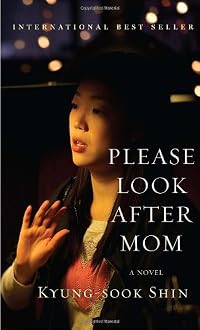
I enjoyed the writing style, particularly the portrayal of the different characters, their personalities, and their actions, although I found myself growing frustrated with some of them as I read. I didn't like this one quite as much as another novel about Koreans that I recently read (Please Look After Mom), but it was definitely worth a read.
Members
- Recently Added By
Published Reviews
Protagonist Soo-Ja's story will enthrall in this first-rate literary effort.
added by 1morechapter
Author Information

3 Works 359 Members
Awards and Honors
Distinctions
Common Knowledge
- Canonical title
- This Burns My Heart
- Original publication date
- 2011-07-12
- Dedication
- For my parents Ryung Hee and Kwang Ok Park
- First words
- "You tricked me," she says, lying over a silk mat on the gold-colored floor, her husband next to her.
- Last words
- (Click to show. Warning: May contain spoilers.)The streets seemed to widen in front of Soo-Ja and Hana, and the two of them held hands tighter as they kept walking, joining the rest of Seoul.
- Blurbers
- Waters, Sarah
Classifications
Statistics
- Members
- 207
- Popularity
- 157,847
- Reviews
- 11
- Rating
- (3.76)
- Languages
- English, Norwegian (Bokmål)
- Media
- Paper, Ebook
- ISBNs
- 5
- ASINs
- 3