On This Page
Description
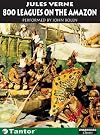
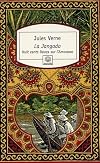
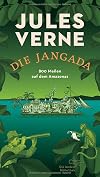
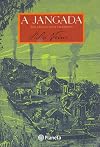
Penned by science fiction luminary Jules Verne, Eight Hundred Leagues on the Amazon is a pulse-pounding adventure novel that will enthrall and engage fans of the action fiction genre. The tale follows the journey of a South American landowner who is forced by circumstances to flee his home by raft on the Amazon River..
Tags
Recommendations























Member Reviews
The 21th Extraordinary Voyage is the first one to take place on a river. The setting is the Amazon, the fabulous fluvial system that is by far the largest in the world by discharge volume of water. This is also the first novel in the series to be fully set in South America (we had explored South America, albeit further south, with "In Search of the Castaways", but not for the whole novel).
First read or reread?: I had read it as a kid and, even though I liked it, it was not among my favorite Vernes.
What is it about?: A Brazilian man called Joam Garral lives on a thriving plantation with his family, in Peru, by the upper Amazon. When his daughter is set to marry a Brazilian army surgeon named Manuel Valdez, the couple decide to have their show more wedding in Brazil, in a city called Belém at the mouth of the river at the Atlantic Ocean, so that Manuel's invalid mother can attend. Joam seems strangely reluctant to leave his plantation and set foot in Brazil, but eventually he decides to do so and confront the dark secrets in his past. The Garral family and their workers build a giant jangada (a Brazilian timber raft) to ride down the Amazon River towards their destination, carrying a large amount of trade goods from the plantation.
Before introducing the heroes, the novel starts with a couple of chapters from the point of view of the villain, which was a nice way to arouse our interest, since the first half of the novel is kind of slow.
The building of the raft (so large that it's the size of a small village) and the first part of the journey are described in detail, and it's relatively uneventful in terms of adventure. The course of the river is known and, although are certainly native tribes with little contact with western civilization living by the shores, at this point in history they are mostly content to be left alone and not be crushed by civilization, so the characters only see them from a distance. There are wild animals, of course, although there is not as much hunting as in other Verne novels.
Nevertheless, I found the details of the trip interesting. I have come to think of Verne's Extraordinary Voyages as the National Geographic documentaries of the time (the actual National Geographic Society would be founded a few years after the publication of this novel), combined with adventure stories. This first part of the novel, which seemed too slow when I read it as a kid, was now more interesting to me because it felt like a travelogue about the 19th century Amazon River. I enjoyed following the characters' progress in the maps included with the novel. Verne, of course, had not made these voyages himself, so his descriptions are not first-hand, but his documentation were the actual travelogues available at the time.
The second half of the novel is more fast-paced, becoming a gripping mystery thriller, with blackmail, old crimes, fugitives, duels and a race against time. Like in "Journey to the Center of the Earth" and "In Search of the Castaways", cryptography plays a role, since deciphering a coded message becomes a central plot element. Here Verne explicitly pays homage to Edgar Allan Poe's story The Gold-Bu: one of the characters, Judge Jarriquez, is a fan of that story and tries to use a similar kind of analysis to decipher the message.
The story is basically an adventure/thriller/travelogue, again with no science fiction elements. In terms of technology, the most we find here is the use of a diving suit which must have been state-of-the-art at the time.
Enjoyment factor: I enjoyed it more than I remember enjoying it on my previous read. In his best novels, Verne finds a nice balance between adventure and his didactic/geographic exploration elements. The pace of the first half of this novel is not his best, but nevertheless the adventure is quite gripping when it gets started.
Next up: Godfrey Morgan, aka School for Crusoes
See all my Verne reviews here: https://www.sffworld.com/forum/threads/reading-vernes-voyages-extraordinaires.58... show less
First read or reread?: I had read it as a kid and, even though I liked it, it was not among my favorite Vernes.
What is it about?: A Brazilian man called Joam Garral lives on a thriving plantation with his family, in Peru, by the upper Amazon. When his daughter is set to marry a Brazilian army surgeon named Manuel Valdez, the couple decide to have their show more wedding in Brazil, in a city called Belém at the mouth of the river at the Atlantic Ocean, so that Manuel's invalid mother can attend. Joam seems strangely reluctant to leave his plantation and set foot in Brazil, but eventually he decides to do so and confront the dark secrets in his past. The Garral family and their workers build a giant jangada (a Brazilian timber raft) to ride down the Amazon River towards their destination, carrying a large amount of trade goods from the plantation.
Before introducing the heroes, the novel starts with a couple of chapters from the point of view of the villain, which was a nice way to arouse our interest, since the first half of the novel is kind of slow.
The building of the raft (so large that it's the size of a small village) and the first part of the journey are described in detail, and it's relatively uneventful in terms of adventure. The course of the river is known and, although are certainly native tribes with little contact with western civilization living by the shores, at this point in history they are mostly content to be left alone and not be crushed by civilization, so the characters only see them from a distance. There are wild animals, of course, although there is not as much hunting as in other Verne novels.
Nevertheless, I found the details of the trip interesting. I have come to think of Verne's Extraordinary Voyages as the National Geographic documentaries of the time (the actual National Geographic Society would be founded a few years after the publication of this novel), combined with adventure stories. This first part of the novel, which seemed too slow when I read it as a kid, was now more interesting to me because it felt like a travelogue about the 19th century Amazon River. I enjoyed following the characters' progress in the maps included with the novel. Verne, of course, had not made these voyages himself, so his descriptions are not first-hand, but his documentation were the actual travelogues available at the time.
The second half of the novel is more fast-paced, becoming a gripping mystery thriller, with blackmail, old crimes, fugitives, duels and a race against time. Like in "Journey to the Center of the Earth" and "In Search of the Castaways", cryptography plays a role, since deciphering a coded message becomes a central plot element. Here Verne explicitly pays homage to Edgar Allan Poe's story The Gold-Bu: one of the characters, Judge Jarriquez, is a fan of that story and tries to use a similar kind of analysis to decipher the message.
The story is basically an adventure/thriller/travelogue, again with no science fiction elements. In terms of technology, the most we find here is the use of a diving suit which must have been state-of-the-art at the time.
Enjoyment factor: I enjoyed it more than I remember enjoying it on my previous read. In his best novels, Verne finds a nice balance between adventure and his didactic/geographic exploration elements. The pace of the first half of this novel is not his best, but nevertheless the adventure is quite gripping when it gets started.
Next up: Godfrey Morgan, aka School for Crusoes
See all my Verne reviews here: https://www.sffworld.com/forum/threads/reading-vernes-voyages-extraordinaires.58... show less
This was a fairly detailed and exploratory romp through the Amazon in the typical adventurist fashion that Verne writes in. Although I liked the novel, the section part seemed a bit of a let-down compared to the first and I felt a tiny bit disappointed in it. I do not believe, even though it's good, that this is among the strongest of Verne's works.
3 stars.
3 stars.
This is one of the better of the less well known Verne novels. The author still has a tendency to "braindump" all of the information he has assimilated about the Amazon basin and its flora and fauna, and the lives of the local population, and thereby go into excessive and somewhat distracting detail. But from the half way point, the plot took off and became quite a gripping story of an innocent man's fight to clear his name from an unjust condemnation for murder a quarter of a century earlier.
Una narración de viajes aderezada con una intriga. Está bien descubrir lo que apasionaba Brasil a Verne, pero la novela se me hace pesada y la trama floja (Cuando está presente) Eso si, me hace gracia ver como aflora su admiración por Poe.
The story starts slowly and includes a lot of information about the wildlife and habitat of the Amazon River. The story becomes much more interesting later and ties together the information from the earlier chapters. I became interested in the outcome and solution to the problem of the key figure of the story, Joam Dacosta. I was pleasantly surprised that the book improved.
This was a cool book, although despite Jules Verne being the author, it isn’t a whit science fiction. However, there is a nifty cryptogram (if you listen to the audiobook, they read the whole cryptogram letter by letter and it's rather long—so you might want to skip through that part, unless you have an excellent memory and attention span).The book isn't about the Amazon at all, either (although they are on it throughout a fair portion of the book, and they do encounter some animals here and there). It's more of a murder mystery—but it's a cool book nonetheless. I'm surprised it's not more popular.
Written in 1877 (I think), this book was less adventure on the trip and more of a legal issue that endangered the head of the household but I did enjoy the book quite a bit. 3 and 1/2 stars.
Members
- Recently Added By
Lists

Books Read in 2023
5,638 works; 147 members
Author Information

Jules Verne was born on February 8, 1828 in Nantes, France. He wrote for the theater and worked briefly as a stockbroker. He is considered by many to be the father of science fiction. His most popular novels included Journey to the Center of the Earth, Twenty Thousand Leagues Under the Sea, and Around the World in Eighty Days. Several of his works show more have been adapted into movies and TV mini-series. In 1892, he was made a Chevalier of the Legion of Honor in France. He died on March 24, 1905 at the age of 77. (Bowker Author Biography) Jules Verne (1828-1905) is the author of numerous adventure stories grounded in popularizations of science. (Publisher Provided) show less
Some Editions
Series

Belongs to Publisher Series
Work Relationships
Common Knowledge
- Canonical title
- Eight Hundred Leagues on the Amazon
- Original title
- La Jangada - Huit Cents lieues sur l'Amazone
- Original publication date
- 1881
- Important places*
- Amazon; Iquitos, Peru; Manaus, Brasilia; Belém, Brasilia
- First words*
- PhyjsylyddqfdzxgasgzzqqehxgkfndrxujugIocytdxvksbxhhuypohdvyrymhuhpuydkjoxphetozlsletnpmvffoupdpajxhyynojyggaymeqynfuqlnmvlyfgsuzmqIztlbqqyu gsqeubvnrcredgruzblrmxyuhqhpzdrrgcrohepqxufIvvrplphonthvddqfhqsntzhhhnfepmqkyuuexk... (show all)togzgkyuumfvIjdqdpzjqsykrplxhxqrymuklohhhotozvdksppsuvjhd.
- Last words
- (Click to show. Warning: May contain spoilers.)"If it were not for the one letter," he said, "would not Lina and Liana be the same?"
- Original language
- French
- Disambiguation notice
- Also published as: "The Cryptogram", "The Cryptogram (Part 1 of 2)", "Down the Amazon (Part 2 of 2)", "The Giant Raft", "The Jangada; or 800 Leagues Over the Amazon"
*Some information comes from Common Knowledge in other languages. Click "Edit" for more information.
Classifications
Statistics
- Members
- 438
- Popularity
- 70,330
- Reviews
- 15
- Rating
- (3.56)
- Languages
- 18 — Chinese, Czech, Danish, Dutch, English, Finnish, French, German, Hungarian, Italian, Latvian, Lithuanian, Polish, Portuguese (Portugal), Russian, Slovak, Spanish, Swedish
- Media
- Paper, Audiobook, Ebook
- ISBNs
- 119
- ASINs
- 39