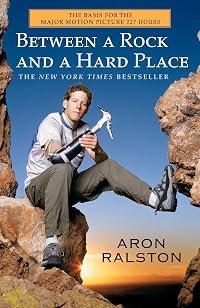
Between a Rock and a Hard Place
by Aron Ralston
On This Page
Description
One of the most extraordinary survival stories ever told-Aron Ralston's searing account of his six days trapped in one of the most remote spots in America, and how one inspired act of bravery brought him home. It started out as a simple hike in the Utah canyonlands on a warm Saturday afternoon. For Aron Ralston, a twenty-seven-year-old mountaineer and outdoorsman, a walk into the remote Blue John Canyon was a chance to get a break from a winter of solo climbing Colorado's highest and show more toughest peaks. He'd earned this weekend vacation, and though he met two charming women along the way, by early afternoon he finally found himself in his element: alone, with just the beauty of the natural world all around him. It was 2:41 P.M. Eight miles from his truck, in a deep and narrow slot canyon, Aron was climbing down off a wedged boulder when the rock suddenly, and terrifyingly, came loose. Before he could get out of the way, the falling stone pinned his right hand and wrist against the canyon wall. And so began six days of hell for Aron Ralston. With scant water and little food, no jacket for the painfully cold nights, and the terrible knowledge that he'd told no one where he was headed, he found himself facing a lingering death-trapped by an 800-pound boulder 100 feet down in the bottom of a canyon. As he eliminated his escape options one by one through the days, Aron faced the full horror of his predicament: By the time any possible search and rescue effort would begin, he'd most probably have died of dehydration, if a flash flood didn't drown him before that. What does one do in the face of almost certain death? Using the video camera from his pack, Aron began recording his grateful good-byes to his family and friends all over the country, thinking back over a life filled with adventure, and documenting a last will and testament with the hope that someone would find it. (For their part, his family and friends had instigated a major search for Aron, the amazing details of which are also documented here for the first time.) The knowledge of their love kept Aron Ralston alive, until a divine inspiration on Thursday morning solved the riddle of the boulder. Aron then committed the most extreme act imaginable to save himself. Between a Rock and a Hard Place-a brilliantly written, funny, honest, inspiring, and downright astonishing report from the line where death meets life-will surely take its place in the annals of classic adventure stories. show lessTags
Recommendations
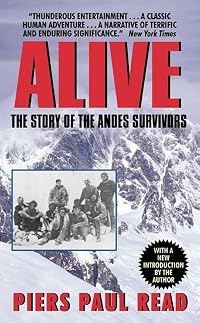
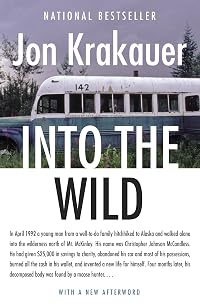
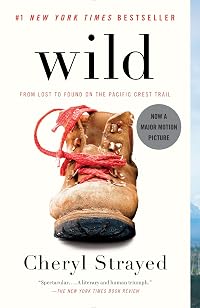
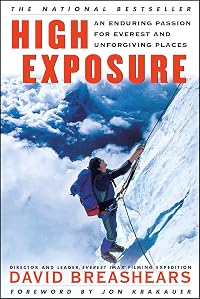


Member Recommendations
Member Reviews
I watched the movie a few years ago. Had to watch it alone, as my husband felt that this would be too difficult for him; plus, I think he felt Ralston was arrogant and was bragging about what a great athlete he was. When I watched the movie, I didn't see him that way (arrogant or bragging), but that was my opinion.
I was curious, though, to see what more was in the book than in the movie. It was really interesting to hear how Aron was so into the outdoors, how he didn't grow up that way, but he gradually fell in love with it. I also found it interesting to hear (I listened to the book--and I found it interesting that, to me at least, his voice sounded very similar to James Franco's) how knowledgeable he was about all the tools and when show more and how to use them, etc. He wasn't out there, at random, carelessly wandering around. I feel like he tells his story as a cautionary tale, which definitely gives it value! show less
I was curious, though, to see what more was in the book than in the movie. It was really interesting to hear how Aron was so into the outdoors, how he didn't grow up that way, but he gradually fell in love with it. I also found it interesting to hear (I listened to the book--and I found it interesting that, to me at least, his voice sounded very similar to James Franco's) how knowledgeable he was about all the tools and when show more and how to use them, etc. He wasn't out there, at random, carelessly wandering around. I feel like he tells his story as a cautionary tale, which definitely gives it value! show less
Aron Ralston took great joy in pushing his limits in the vast untamed reaches of the natural world. Whether surfing, mountain biking or any other athletic pursuit, Aron was always most at home challenging himself physically. But on April 26, 2003, he nearly met his end in Blue John Canyon, Utah while rock climbing all alone when a boulder dislodged and crushed his right hand pinning him to the canyon wall. Miles from his truck with nobody aware of his location and no ability to contact help, Aron survives for 6 days before doing the unthinkable to escape. It is quite literally a story of being stuck between a rock and a hard place.
I’ll give Aron Ralston credit for this – he survived what probably should have been his end by doing something that most of us could never fathom doing while sitting reading about it at home. That said, Between a Rock and a Hard Place really serves as a field guide for absolutely everything you should never do in the great outdoors. However, Ralston seems to miss the point of his own ordeal, speaking of himself as some free spirit who overcame incredible odds instead of displaying a level of humility for getting supremely lucky in spite of breaking every single rule of wilderness survival.
I had heard about Ralston’s ordeal in an interview before I read Between a Rock and a Hard Place, so I was curious what must have been going through his head at the moment he made the decision to do what he did to escape (I’m not going to spoil it for anyone who doesn’t know). While I wasn’t disappointed with his recounting of that moment, I was quite disappointed in what came before and after. The sheer number of reckless decisions he made as an “experienced” outdoorsman to get himself in the predicament he faced is pretty inexcusable. What is worse is he brushes it off with a mix of machismo and naivety.
Ralston had the opportunity to turn his experience into a teachable lesson. Unfortunately, instead of passing on some wisdom in the form of do-as-I-say-not-as-I-do, he revels in his ingenuity and props himself up as some sort of folk hero living the way of the free spirit in an age of shackles. Never mind the people who might have risked their lives to try and save him from his decisions. Never mind the family and friends who might have been devastated when he didn’t come home. That is all secondary to the thrill. Ultimately, Between a Rock and a Hard Place glamorizes taking unnecessary risks and a cheap view of life.
With Between a Rock and a Hard Place, Aron Ralston paints himself as the hero of the folly of his own errors in judgment where his survival hinges on one desperate act of self-preservation. Neither heroic nor self-aware, Ralston comes across as oblivious to his own foolishness, proud of his own recklessness, and reveling in his new-found war story around the campfire as he one-ups the other adrenaline junkies with his missing arm and a smile. Based on his closing comments in the book, it doesn’t appear Ralston has learned anything other than how to capitalize on his fifteen minutes of fame. A monument to modern day myopia, Between a Rock and a Hard Place serves only as a guide for what not to do. show less
“That boulder did what it was there to do. Boulders fall. That’s their nature. It did the only naturalshow more
thing it could do. It was set up, but it was waiting for you. Without you coming along and pulling it, it would still be stuck where it had been for who knows how long. You did this, Aron. You created it. You chose to come here today; you chose to do this descent into the slot canyon by yourself. You chose not to tell anyone where you were going. You chose to turn away from the women who were there to keep you from getting in this trouble. You created this accident. You wanted it to be like this. You have been heading for this situation for a long time. Look how far you came to find this spot. It’s not that you’re getting what you deserve - you’re getting what you wanted.”
I’ll give Aron Ralston credit for this – he survived what probably should have been his end by doing something that most of us could never fathom doing while sitting reading about it at home. That said, Between a Rock and a Hard Place really serves as a field guide for absolutely everything you should never do in the great outdoors. However, Ralston seems to miss the point of his own ordeal, speaking of himself as some free spirit who overcame incredible odds instead of displaying a level of humility for getting supremely lucky in spite of breaking every single rule of wilderness survival.
I had heard about Ralston’s ordeal in an interview before I read Between a Rock and a Hard Place, so I was curious what must have been going through his head at the moment he made the decision to do what he did to escape (I’m not going to spoil it for anyone who doesn’t know). While I wasn’t disappointed with his recounting of that moment, I was quite disappointed in what came before and after. The sheer number of reckless decisions he made as an “experienced” outdoorsman to get himself in the predicament he faced is pretty inexcusable. What is worse is he brushes it off with a mix of machismo and naivety.
Ralston had the opportunity to turn his experience into a teachable lesson. Unfortunately, instead of passing on some wisdom in the form of do-as-I-say-not-as-I-do, he revels in his ingenuity and props himself up as some sort of folk hero living the way of the free spirit in an age of shackles. Never mind the people who might have risked their lives to try and save him from his decisions. Never mind the family and friends who might have been devastated when he didn’t come home. That is all secondary to the thrill. Ultimately, Between a Rock and a Hard Place glamorizes taking unnecessary risks and a cheap view of life.
With Between a Rock and a Hard Place, Aron Ralston paints himself as the hero of the folly of his own errors in judgment where his survival hinges on one desperate act of self-preservation. Neither heroic nor self-aware, Ralston comes across as oblivious to his own foolishness, proud of his own recklessness, and reveling in his new-found war story around the campfire as he one-ups the other adrenaline junkies with his missing arm and a smile. Based on his closing comments in the book, it doesn’t appear Ralston has learned anything other than how to capitalize on his fifteen minutes of fame. A monument to modern day myopia, Between a Rock and a Hard Place serves only as a guide for what not to do. show less
this is a remarkable, even unbelievable story. even knowing it's his true account of what happened, it's almost impossible to read this as nonfiction because it's such an extreme situation. and so difficult to imagine not just doing what he did, but being able to do what he did. so that said, aron is an incredible person, an inspiration. not just this story of his, but all of the other ones in this book, show us that he has amazing outdoorsman skills and abilities, and is smart, with a lot of passions and friends. also that he's reckless, not as careful as he should be, consistently makes choices that put himself (and sometimes others) in danger because he's in search of either an adrenaline rush or the thrill of escape or just show more something more. as he himself says in this book of being stuck and having to cut off his own arm to survive, part of him sought this kind of adventure.
it's a strange mash-up, this book. he talks about how being stuck in the slot canyon for 5 days (plenty of time to think) helped him understand a friend of his, whose personal philosophy differed from his own, which had always been "you are what you do." his friend was more of the "you are who you are" side of things, and he says that he started to understand (or maybe i read more into it) that some of his adventuring was proving himself to people and showing them what he can do. so he says that he understands that life isn't about that, isn't about being able to tell someone about that last peak you summited. but then the entire book is story after story of accomplishment and example after example of all the risky hikes and climbs and slopes that he survived. maybe, like the rest of us, he's working it out (he wasn't even 30 when the book came out) but it read as a look-at-me series of stories, interspersed with the story of his surviving the slot canyon (which really is incredible) and some philosophy as he tries to make sense of it all.
i feel i'm being a bit hard on him, but i'm not feeling like there was an arc here or that he actually learned much. about himself, sure, he learned that he could probably handle and survive far more than most of us, and frankly, with grace. but overall it's a story of a guy who's not much changed by the end; this is just another of his adventure stories he can relay with his climbing buddies. more harrowing than his chased by a bear and stuck in an avalanche stories, but of the same vein.
like i said, i feel like i'm being hard on him, because i actually think that, while he comes across as wanting attention, part of me feels like he deserves it for all that he does, and he also does seem like a genuinely good guy who wants to do good in the world, and who appreciates good in the world. he is a multi-talented guy (he was a pianist, too) and a pretty good writer (especially for someone who isn't a writer; parts of this were definitely overwritten but i can forgive that). i'd totally want to hang out with him, but i sure wouldn't want to go on a hike with him. show less
it's a strange mash-up, this book. he talks about how being stuck in the slot canyon for 5 days (plenty of time to think) helped him understand a friend of his, whose personal philosophy differed from his own, which had always been "you are what you do." his friend was more of the "you are who you are" side of things, and he says that he started to understand (or maybe i read more into it) that some of his adventuring was proving himself to people and showing them what he can do. so he says that he understands that life isn't about that, isn't about being able to tell someone about that last peak you summited. but then the entire book is story after story of accomplishment and example after example of all the risky hikes and climbs and slopes that he survived. maybe, like the rest of us, he's working it out (he wasn't even 30 when the book came out) but it read as a look-at-me series of stories, interspersed with the story of his surviving the slot canyon (which really is incredible) and some philosophy as he tries to make sense of it all.
i feel i'm being a bit hard on him, but i'm not feeling like there was an arc here or that he actually learned much. about himself, sure, he learned that he could probably handle and survive far more than most of us, and frankly, with grace. but overall it's a story of a guy who's not much changed by the end; this is just another of his adventure stories he can relay with his climbing buddies. more harrowing than his chased by a bear and stuck in an avalanche stories, but of the same vein.
like i said, i feel like i'm being hard on him, because i actually think that, while he comes across as wanting attention, part of me feels like he deserves it for all that he does, and he also does seem like a genuinely good guy who wants to do good in the world, and who appreciates good in the world. he is a multi-talented guy (he was a pianist, too) and a pretty good writer (especially for someone who isn't a writer; parts of this were definitely overwritten but i can forgive that). i'd totally want to hang out with him, but i sure wouldn't want to go on a hike with him. show less
Book Description
In April 2003, 28-year-old Aron Ralston took a day trip in Blue John Canyon in Utah's Canyonlands National Park. Shortly after beginning his solo excursion into the canyon, a boulder came loose and pinned Ralston's right arm between it and the canyon wall. Unable to free his arm, Ralston was trapped for 127 hours (more than 5 days) with limited water and food. Because Ralston had broken one of the cardinal rules of outdoor pursuits (always let someone know where you are going), no one knew where he was (or even to come looking for him) until he didn't show up for work on Monday. His account of the ordeal and his eventual decision to save himself by amputating his right arm is documented in this well-written (and show more surprisingly funny) memoir.
My Thoughts
When watching 127 Hours, I was absolutely mesmerized by Ralston's predicament. (It didn't hurt that Ralston was portrayed by James Franco and the movie directed by Danny Boyle.) After watching the film, I wanted to get the full story about what Ralston had experienced. Did he really have a vision of his future son that bolstered his courage? Did he really talk into his video camera during his entrapment? Why had he made such a fundamentally stupid mistake by not telling anyone about his whereabouts? The book answered all these questions and provided much more detail into Ralston's personality and background.
In fact, after reading the book, I'm not completely surprised that Ralston found himself in his predicament. In the book, he recounts several near-death experiences he faced during various other outdoor pursuits (from almost drowning in the Grand Canyon to being buried under an avalanche). Ralston's whole life was (and is) about pushing himself in the outdoors—often in ways that others might consider foolish or overly risky. In addition, solo adventuring was nothing new to Ralston. At the time of his entrapment, he was pursuing his quest to make the first solo ascents of all "fourteeners" (mountains over 14,000 feet) in Colorado. The one line in the movie that stuck with me—"This rock had been waiting for me all my life"—really sums up Ralston's life. (I may be misremembering the exact line but it is something fairly close to this.)
Did he leave the canyon a changed man—aside from the obvious loss of his right arm? Spiritually, Ralston matured—coming to a new appreciation for life and his loved ones. What the experience didn't do was dampen his enthusiasm for outdoor pursuits. Working with prosthetics and climbing companies, Ralston designed a prosthetic arm for himself so he could continue rock climbing and mountain climbing.
The book is surprisingly well written. After all, just because you have the guts to amputate your own arm and survive for five days in a canyon with limited food and water doesn't mean you'll be able to tell your story eloquently. But Ralston (who was an engineer before quitting corporate life to pursue the outdoor life in Colorado) seems to be a true Renaissance man—crafting a well-rounded, eloquent and often amusing account of his life, philosophy and the accident changed him forever.
Finally, I must mention that the book includes a collection of full-color photographs of Ralston before, during and after the accident. I had a rather morbid fascination with these photos (including the one of the severed arm immediately after the amputation), but they really did add to the story. It was amazing to see the exact place where this took place and what Ralston looked like during his entrapment. I also need to give a shout-out to the filmmakers for seeming to recreate Ralston's predicament, clothing, and equipment down to the smallest detail.
Recommended For: Readers who enjoy gripping and well-told adventure/survival stories, fans of the movie 127 Hours, and anyone looking for real-life survival story that demonstrates what people will do to survive. show less
In April 2003, 28-year-old Aron Ralston took a day trip in Blue John Canyon in Utah's Canyonlands National Park. Shortly after beginning his solo excursion into the canyon, a boulder came loose and pinned Ralston's right arm between it and the canyon wall. Unable to free his arm, Ralston was trapped for 127 hours (more than 5 days) with limited water and food. Because Ralston had broken one of the cardinal rules of outdoor pursuits (always let someone know where you are going), no one knew where he was (or even to come looking for him) until he didn't show up for work on Monday. His account of the ordeal and his eventual decision to save himself by amputating his right arm is documented in this well-written (and show more surprisingly funny) memoir.
My Thoughts
When watching 127 Hours, I was absolutely mesmerized by Ralston's predicament. (It didn't hurt that Ralston was portrayed by James Franco and the movie directed by Danny Boyle.) After watching the film, I wanted to get the full story about what Ralston had experienced. Did he really have a vision of his future son that bolstered his courage? Did he really talk into his video camera during his entrapment? Why had he made such a fundamentally stupid mistake by not telling anyone about his whereabouts? The book answered all these questions and provided much more detail into Ralston's personality and background.
In fact, after reading the book, I'm not completely surprised that Ralston found himself in his predicament. In the book, he recounts several near-death experiences he faced during various other outdoor pursuits (from almost drowning in the Grand Canyon to being buried under an avalanche). Ralston's whole life was (and is) about pushing himself in the outdoors—often in ways that others might consider foolish or overly risky. In addition, solo adventuring was nothing new to Ralston. At the time of his entrapment, he was pursuing his quest to make the first solo ascents of all "fourteeners" (mountains over 14,000 feet) in Colorado. The one line in the movie that stuck with me—"This rock had been waiting for me all my life"—really sums up Ralston's life. (I may be misremembering the exact line but it is something fairly close to this.)
Did he leave the canyon a changed man—aside from the obvious loss of his right arm? Spiritually, Ralston matured—coming to a new appreciation for life and his loved ones. What the experience didn't do was dampen his enthusiasm for outdoor pursuits. Working with prosthetics and climbing companies, Ralston designed a prosthetic arm for himself so he could continue rock climbing and mountain climbing.
The book is surprisingly well written. After all, just because you have the guts to amputate your own arm and survive for five days in a canyon with limited food and water doesn't mean you'll be able to tell your story eloquently. But Ralston (who was an engineer before quitting corporate life to pursue the outdoor life in Colorado) seems to be a true Renaissance man—crafting a well-rounded, eloquent and often amusing account of his life, philosophy and the accident changed him forever.
Finally, I must mention that the book includes a collection of full-color photographs of Ralston before, during and after the accident. I had a rather morbid fascination with these photos (including the one of the severed arm immediately after the amputation), but they really did add to the story. It was amazing to see the exact place where this took place and what Ralston looked like during his entrapment. I also need to give a shout-out to the filmmakers for seeming to recreate Ralston's predicament, clothing, and equipment down to the smallest detail.
Recommended For: Readers who enjoy gripping and well-told adventure/survival stories, fans of the movie 127 Hours, and anyone looking for real-life survival story that demonstrates what people will do to survive. show less
One of my favorite adventure themed true tales! My main complaint is my fundamental disagreement with the author that life is about seeking bliss and your passions. I admire Ralston’s ingenuity and ability to defy the odds, but it made me sad to imagine going through such an ordeal without God. This issue flows into Aron’s attitudes throughout a lot of the book, which was distracting, but it’s still a very thrilling and enjoyable read.
I found this true story to be incredible. It is hard to know how one would handle this situation if struggling between life and death. While the story of his time being trapped was fascinating, I found the other parts of the book where he explains his other adventures to be slightly too technical. I really didn't need to know exactly how he tied himself off or the exact degree of the angle he was skiing. However the book was interesting once I got into it. Pretty amazing person (eventhough he seems a little crazy)
Aron Ralston is the young climber who cut his arm off when he became trapped in a remote canyon in the Utah desert. This first person account is reasonably well-written, if you ignore some obviously made-up dialog from some of the minor characters in the book. What surprised me about the book, though, was how unsympathetic I felt about Aron himself. I didn't care for his me-first attitude, considered him a thoroughly dangerous travel companion, and didn't think he had learned a single thing about himself from his ordeal. I really didn't expect to come away from this book thinking the guy was a total jerk, but that is basically the way I feel about him. Very strange.
Members
- Recently Added By
Lists

Accidents, Disasters, and Tragedies
175 works; 7 members

Books Set in Utah
34 works; 5 members

Read the book and saw the movie
1,170 works; 192 members

Unshelved Book Clubs
579 works; 5 members

Best Survival Stories
97 works; 15 members

Books Read in 2007
326 works; 8 members

Books I have Recommended
207 works; 1 member
Author Information

1 Work 1,876 Members
Awards and Honors
Awards
Distinctions
Work Relationships
Has the adaptation
Common Knowledge
- Canonical title
- Between a Rock and a Hard Place
- Alternate titles
- 127 Hours
- Original publication date
- 2004
- People/Characters
- John Griffith; Jim Wall; Aron Ralston; Megan McBride; Kristi Moore
- Important places
- Utah, USA; Canyonlands National Park, Utah, USA; Emery County, Utah, USA
- Related movies
- 127 Hours (2010 | IMDb)
- Epigraph
- But once your crew has rowed you past the Sirens
a choice of routes is yours. I cannot advise you
which to take, or lead you through it all--
you must decide for yourself--
but I can tell you... (show all) the ways of either course.
On one side beetling cliffs shuoot up, and against them
pound the huge roaring breakers of blue-eyed Amphitrite--
The Clashing Rocks they're called by all the blissful gods.
No ship of men has ever approached and slipped past--
always some disaster--big timers and sailors' corpses
whirled away by the waves and lethal blasts of fire. - First words
- He was a better boatman than a cowboy, and a better cook than a train robber, but John Griffith, with the distinguishing mark of one blue eye and one brown eye, became a favored extra hand with the Wild Bunch, Butch Cassidy's... (show all) gang, during his time in the Robbers Roost country of eastern Utah.
- Last words
- (Click to show. Warning: May contain spoilers.)Saying farewell is also a bold and powerful beginning.
Classifications
- Genres
- Sports and Leisure, Biography & Memoir, General Nonfiction, Nonfiction
- DDC/MDS
- 796.52230289 — Arts & recreation Recreation, sports, and performing arts Athletic and outdoor sports and games Outdoor leisure Walking and exploring by kind of terrain Mountains, hills and rocks Rock climbing
- LCC
- GV199.42 .U82 .B587 — Geography, Anthropology and Recreation Recreation. Leisure Recreation. Leisure Outdoor life. Outdoor recreation Hiking. Pedestrian tours
- BISAC
Statistics
- Members
- 1,873
- Popularity
- 11,480
- Reviews
- 50
- Rating
- (3.68)
- Languages
- 12 — Czech, Danish, Dutch, English, French, German, Italian, Marathi, Polish, Portuguese, Spanish, Swedish
- Media
- Paper, Audiobook, Ebook
- ISBNs
- 49
- ASINs
- 24