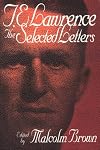
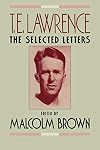
T. E. Lawrence: The Selected Letters
by T. E. Lawrence 
163 Members (4.50)
On This Page
Description
T. E. Lawrence remains one of the most fascinating and enigmatic figures of the 20th century. This account, composed of his remarkable epistles to contemporaries such as Lady Astor, Noel Coward, Robert Graves, Mrs. Thomas Hardy, and Mrs. George Bernard Shaw, discloses both the inner man and the political and military visionary often obscured behind the mystery and myth of "Lawrence of Arabia." Among the letters is a wealth of intriguing correspondence that divulges the true nature of show more Lawrence's role in the Arab Revolt, his anxieties about his illegitimacy, and his secret feelings on women and sexuality. In their entirety, these letters describe a remarkable but tragic life and provide ample proof of a gifted literary mind. show lessTags
Recommendations

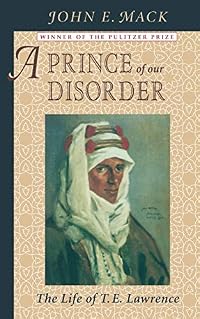
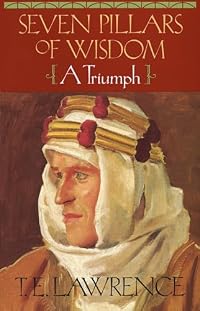


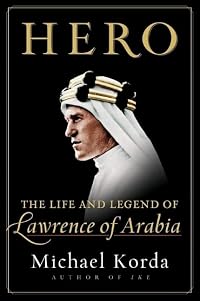


















Member Reviews
Members
- Recently Added By
Published Reviews
Correspondence of the legendary warrior/scholar, much of it published for the first time (being newly in the public domain after 50 years of top-secret classification). Editor Brown has chosen with an eye towards illuminating the conundrums that obscure our understanding of Lawrence. And so these letters do shed some — if still not enough — light on their author's complex nature.
added by poppycocteau
Lawrence was a better-than-good letter writer and this collection provides as much of a truthful, accurate autobiography as anyone has a right to hope for. It shows us Lawrence in all his indefinable humanity, as traveller, scholar, soldier, writer, critic, politician and, supremely, friend. By its careful editing, it portrays a man of such complexity that his often-disbelieved cry for show more simplicity is seen, at the last, as both necessary and inevitable. show less
added by poppycocteau
Author Information

99+ Works 7,900 Members
Born in Caernarvonshire in North Wales and educated at Oxford University, T. E. Lawrence was a soldier, author, archaeologist, traveler, and translator. After participating in archaeological expeditions in the Middle East from 1911 to 1914, he worked for British Army intelligence in North Africa during World War I. In 1916 he joined the Arab show more revolt against the Turks and became known as Lawrence of Arabia, the man who freed the Arabs from Turkish rule. The manuscript of his The Seven Pillars of Wisdom (1926) was lost when it had been two-thirds finished, and he rewrote the book from memory in 1919. Because it expressed certain personal and political opinions that Lawrence did not wish to publicize, it was offered for sale in 1926 in England at a prohibitive price. To ensure copyright in the United States, it was reprinted here by Doran (now Doubleday) and 10 copies were offered for sale at $20,000 each, a price "high enough to prevent their ever being sold." Doubleday then brought out a limited edition and a trade edition, substantially the same as the rare 1926 edition.Revolt in the Desert (1927) is an abridgment of The Seven Pillars, which the author made to pay the printing expenses of the original. The Mint (1955), an account of his service with the Royal Air Force, was published posthumously in an edition of 50 copies, 10 of which were offered for sale at a price of $500,000 each, to ensure no copies being sold. In 1950 a popular edition, in 1955 a limited edition, and in 1963 a paperback edition were published. After World War I, Lawrence enlisted in the Royal Air Force as Private John Hume Ross; when his real identity was discovered, he transferred to the Royal Tank Corps under the name T. E. Shaw, a name he legally assumed in 1927. In 1937 Lawrence was killed when the motorbike given to him by George Bernard Shaw (see Vol. 1) went out of control on an English country lane. Earlier biographers, including Lowell Thomas and Robert Graves, were enthusiastic and laudatory of Lawrence. Twenty years after his death, Richard Aldington wrote Lawrence of Arabia: A Biographical Enquiry, which "set off a fury of charge and countercharge." But Lawrence's saga had become legend. In tribute to this adventurous, enigmatic genius, who shunned fame, wealth, and power, King George V wrote, "His name will live in history." Public interest in "the elusive, mysterious and complex young Irishman" who led the Arab revolt was revived by Lawrence of Arabia, 1962's most honored film. In recent years the picture of Lawrence has changed again with the revelation of his illegitimacy, his readiness to embroider the truth, and other quirks and neuroses; but there were English witnesses to many of his accomplishments, and the disagreements among those who knew him have hindered efforts to discredit him in any definitive manner; even the Arabs view him with their Arab pride at stake. He remains enigmatic and eccentric, and is likely to be the subject of more research and many volumes before the truth about him is finally and fully understood. (Bowker Author Biography) show less
T. E. Lawrence has a Legacy Library. Legacy libraries are the personal libraries of famous readers, entered by LibraryThing members from the Legacy Libraries group.
All Editions
Common Knowledge
- Alternate titles
- T. E. Lawrence: The Selected Letters; Lawrence of Arabia: The Selected Letters; The Letters of T. E. Lawrence
- Original publication date
- 1988
- People/Characters
- T. E. Lawrence
- Disambiguation notice
- This work, edited by Malcolm Brown is not the same work as "Selected letters of T. E. Lawrence" edited by David Garnett, nor is it the same work as "The Letters of T.E. Lawrence" also edited by David Garnett, and they ... (show all)should not be combined.
Edited by Malcolm Brown. Not the same as the work edited by David Garnett
Classifications
Statistics
- Members
- 163
- Popularity
- 200,268
- Rating
- (4.50)
- Languages
- English
- Media
- Paper
- ISBNs
- 9
- ASINs
- 2