The Runaway Wok: A Chinese New Year Tale
by Ying Chang Compestine
On This Page
Description
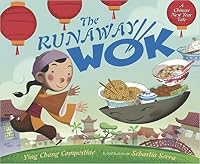
On Chinese New Year's Eve, a poor man who works for the richest businessman in Beijing sends his son to market to trade their last few eggs for a bag of rice, but instead he brings home an empty--but magic--wok that changes their fortunes forever. Includes information about Chinese New Year and a recipe for fried rice.Tags
Recommendations


















Member Reviews
When Ming's parents send him to the market, to trade their last eggs for some rice, he returns home with a rusty old wok instead - a seeming disaster with a surprise outcome. For the wok isn't just any old piece of cooking ware, but a magical object, and after being washed and shined, sets out to provide all the food, toys and games, and money that Ming's family, and all their poor neighbors in Beijing, need...
Unlike some of the other reviewers who rated this poorly, I was not offended by the "take from the rich and give to the poor" theme here, as it is a common one in many folk traditions - although a story for the Chinese New Year, The Runaway Wok is based on a Danish folktale, The Talking Pot - and does not rely on thievery (as has show more been claimed) to redistribute wealth, so much as fate. Ming and his family, after all, aren't the ones taking from the greedy man and his family, the wok - a magical object, uncontrolled by any human being, whose actions are meant to be impartial - is, dealing out both reward and punishment. Whether one thinks this punishment is too harsh or not, to describe what happens here as "theft" is to miss the point, incorrectly painting this as a "Robin Hood" story, when it is more a tale of cosmic justice.
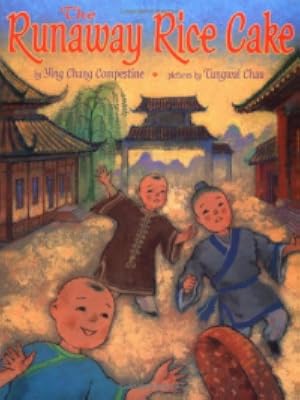
All that said, I still found myself mostly unmoved by this second Chinese New Year's story from Ying Chang Compestine, probably because I was comparing it to her first, The Runaway Rice Cake. In that story, an impoverished human family is rewarded for their generosity - their willingness to sacrifice their own comfort, to aid another in greater need - and the spirit of community that this engendered. Here, it just seems to be dumb luck, and while that sort of story has its place, the good fortune at the end didn't feel as satisfying, as a result. Still, tastes vary, and young readers looking for stories for Chinese New Year might still want to take a look at this one. show less
Unlike some of the other reviewers who rated this poorly, I was not offended by the "take from the rich and give to the poor" theme here, as it is a common one in many folk traditions - although a story for the Chinese New Year, The Runaway Wok is based on a Danish folktale, The Talking Pot - and does not rely on thievery (as has show more been claimed) to redistribute wealth, so much as fate. Ming and his family, after all, aren't the ones taking from the greedy man and his family, the wok - a magical object, uncontrolled by any human being, whose actions are meant to be impartial - is, dealing out both reward and punishment. Whether one thinks this punishment is too harsh or not, to describe what happens here as "theft" is to miss the point, incorrectly painting this as a "Robin Hood" story, when it is more a tale of cosmic justice.
All that said, I still found myself mostly unmoved by this second Chinese New Year's story from Ying Chang Compestine, probably because I was comparing it to her first, The Runaway Rice Cake. In that story, an impoverished human family is rewarded for their generosity - their willingness to sacrifice their own comfort, to aid another in greater need - and the spirit of community that this engendered. Here, it just seems to be dumb luck, and while that sort of story has its place, the good fortune at the end didn't feel as satisfying, as a result. Still, tastes vary, and young readers looking for stories for Chinese New Year might still want to take a look at this one. show less
This is a fun and satisfying book that is both fresh and interesting, although it is also based on familiar stories. The illustrations alone make the book worth reading.
Curricular connections: it would be fun to study the formula of the book (the rule of three), and compare it to other, similar stories. It has elements of Robin Hood, Jack and the Beanstalk, and other familiar tales; it would be interesting to compare these story elements. It would also be a good mentor text for writing fiction because of the simple formula. It is also a good connection to the Chinese New Year and Chinese holidays.
Curricular connections: it would be fun to study the formula of the book (the rule of three), and compare it to other, similar stories. It has elements of Robin Hood, Jack and the Beanstalk, and other familiar tales; it would be interesting to compare these story elements. It would also be a good mentor text for writing fiction because of the simple formula. It is also a good connection to the Chinese New Year and Chinese holidays.
Based on the Danish folktale, The Talking Pot, The Runaway Wok is a new Chinese folktale about old Beijing and a magic wok, a wok determined to right the wrongs committed by the greedy Mr. Li and his family. It is the eve of the Chinese New Year and the poor Zhang family sends its son, Ming, to trade eggs for rice at the market. In a move reminiscent of Jack and the Beanstalk, Ming trades his eggs not for rice, but for a wok that sings out to him,
"Boy, Boy, trade for me, I am more than what you see!”
And so it is! But this wok has greater plans than residing with the Zhangs. Ming's mother barely gets the wok cleaned up before it rolls out the door singing,
"Skippity-hoppity-ho! To the rich man's wife I go,”
And so the wok, like an show more Asian Robin Hood, travels back and forth, taking from the rich and delivering to the poor,
"Skippity-hoppity-ho! To the poor man's house I go,”
much to the delight of the Zhangs and all their friends. The Runaway Wok pays tribute to classic tales in a manner that is still wholly original. Kids will love hearing the wok's rhyming songs and exploring the book's detailed, folk art illustrations full of colorful parasols, foods, flowers, lanterns, and brocade garments.
An author’s note explains the Chinese New Year holiday (with an emphasis on the culinary aspects), and concludes with a recipe for Festive Stir-Fried Rice. Yum!
www.shelf-employed.blogspot.com show less
"Boy, Boy, trade for me, I am more than what you see!”
And so it is! But this wok has greater plans than residing with the Zhangs. Ming's mother barely gets the wok cleaned up before it rolls out the door singing,
"Skippity-hoppity-ho! To the rich man's wife I go,”
And so the wok, like an show more Asian Robin Hood, travels back and forth, taking from the rich and delivering to the poor,
"Skippity-hoppity-ho! To the poor man's house I go,”
much to the delight of the Zhangs and all their friends. The Runaway Wok pays tribute to classic tales in a manner that is still wholly original. Kids will love hearing the wok's rhyming songs and exploring the book's detailed, folk art illustrations full of colorful parasols, foods, flowers, lanterns, and brocade garments.
An author’s note explains the Chinese New Year holiday (with an emphasis on the culinary aspects), and concludes with a recipe for Festive Stir-Fried Rice. Yum!
www.shelf-employed.blogspot.com show less
Greed is not good, especially for the wealthy Li family who are all about accumulating riches. A magical wok benefits the poor Zhangs and their neighbors by stealing from the Li's. Colorful paintings suit this crafty wok tale although a stereotypical image of the toy seller gave me pause.
There are two reasons why I liked the book “The Runaway Wok” by Ying Chang Compestine. First, while the book is considered modern fantasy because of the magical wok, the characters are believable and well developed. Ming, the young boy of a poor family goes to a market to trade eggs for rice but instead brings home a magical wok who ends up bringing them an abundance of food from a greedy rich mans house. While this scenario is impossible, the struggle the poor family goes through is real. Second, since this book shows the difference between rich and poor, readers are able to think about people less fortunate and why generosity is important. The big idea of this book revolves around generosity and giving.
The Runaway Wok is a compilation of several classic fairytales. The story begins with a Jack-and-the-Beanstalk-esque tale of Ming, who is sent to trade eggs for rice in the market, and comes home with a rusty wok instead. The bulk of the rest of the story follows the traditional Robin Hood pattern, as the wok jumps from rich home to poor home, stealing from the needy to give to the greedy. When the "greedy" finally catch up to the wok, it commences to lead them on a Gingerbread-Man-like goose chase. The "evil" rich are led away from the town, and Ming and his family are left to live happily ever after with their stolen riches.
I loved this book! It was silly and funny and entertaining, and the pictures were beautiful. The story flowed show more effortlessly through the various fairytales, blending modern and traditional. I used this book for my read aloud, and the kids really loved it, and responded to it really well.
1. Have kids make a collage of things they would want the wok to bring them.
2. Have kids break up into groups and act out different parts of the story, to incorporate movement and the dramatic arts into the classroom. show less
I loved this book! It was silly and funny and entertaining, and the pictures were beautiful. The story flowed show more effortlessly through the various fairytales, blending modern and traditional. I used this book for my read aloud, and the kids really loved it, and responded to it really well.
1. Have kids make a collage of things they would want the wok to bring them.
2. Have kids break up into groups and act out different parts of the story, to incorporate movement and the dramatic arts into the classroom. show less
I really liked this book because it taught the audience about how big of a deal the Chinese New Year is to people in China and the ending made me really happy. In the story, there is a very poor family trying to prepare for the Chinese New Year. The father works for the richest man in Bejing and doesn't understand how they are so poor, the mother wishes she could fix a huge feast for all of the family's friends, and the boy wishes he could give a new toy to all of his friends. The mother sends the boy to the market place to trade some eggs for brown rice so she can make fried rice for dinner. Instead, the boy trades the eggs for a magical wok that sings. The mother is very upset when he returns with the wok, especially when it sings, show more "Skippity-hoppity-ho! To the rich man's wife I go." The wok goes to the kitchen of the richest man in Bejing. The man's wife puts all of the dishes she's prepared in the wok because it magically is able to hold all of it. The wok then runs away back to the poor family's house and delivers this wonderful feast for the family to share with their friends. The wok runs away three more times. The second time he brings back the rich man son's toys that he doesn't play with for the poor boy to give to his friends. The third time the wok returns with money that the rich man had cheated all of the poor people out of. Finally, on the fourth trip to the rich man's house the wok takes the entire family, runs away, and they never return to Bejing. The poor family has a huge party to celebrate the Chinese New Year and share all of their food, toys, and money with their guests. The main idea of this book is to show the readers that not everyone has the money to have certain items and experiences, so when something special happens to them, it is truly special. I really liked the illustrations in this book because you can really see how sad the poor family was in the beginning of the book because of their financial circumstance, but when the wok brings them all of these great surprises, their eyes light up. It made me really happy to be able to see that in the story and not just picture it in my head. The characters in this book were believable. It showed how there are people who can't afford certain things and then there are others who can afford more than they need, but don't share with others. show less
Members
- Recently Added By
Lists

A Child's Book Tour of China
34 works; 5 members

Fiction Books with Recipes
225 works; 3 members
Author Information

27 Works 2,921 Members
Ying Chang Compestine, a native of the People's Republic of China, teaches cooking at the Boulder Heart Institute and at various cooking schools across the country. A frequent contributor to Cooking Light, Men's Health, and Self magazines
All Editions
Awards and Honors
Awards
Notable Lists
Classifications
Statistics
- Members
- 720
- Popularity
- 39,369
- Reviews
- 24
- Rating
- (3.74)
- Languages
- English
- Media
- Paper, Audiobook, Ebook
- ISBNs
- 5
- ASINs
- 4