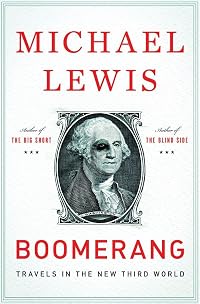
Boomerang: Travels in the New Third World
by Michael Lewis
On This Page
Description
As Pogo once said, "We have met the enemy and he is us." In this book the author offers a scathing assessment of fiscal blunders in foreign lands, and details how economic repercussions are sure to be felt on American soil. Financial bubbles grew and burst, not only in the U.S. but in countries as diverse as Iceland, Germany, and Greece. Mixing humor with prescient insight, he depicts a precarious situation that demands attention. The tsunami of cheap credit that rolled across the planet show more between 2002 and 2008 was more than a simple financial phenomenon: it was temptation, offering entire societies the chance to reveal aspects of their characters they could not normally afford to indulge. Icelanders wanted to stop fishing and become investment bankers. The Greeks wanted to turn their country into a piñata stuffed with cash and allow as many citizens as possible to take a whack at it. The Germans wanted to be even more German; the Irish wanted to stop being Irish. This investigation of bubbles beyond our shores is so sadly hilarious that it leads the American reader to a comfortable complacency: oh, those foolish foreigners. But when he turns a merciless eye on California and Washington, D.C., we see that the narrative is a trap baited with humor, and we understand the reckoning that awaits the greatest and greediest of debtor nations. - Publisher. show lessTags
Recommendations




Member Reviews
As Pogo once said, "We have met the enemy and he is us."
The tsunami of cheap credit that rolled across the planet between 2002 and 2008 was more than a simple financial phenomenon: it was temptation, offering entire societies the chance to reveal aspects of their characters they could not normally afford to indulge.
Icelanders wanted to stop fishing and become investment bankers. The Greeks wanted to turn their country into a piñata stuffed with cash and allow as many citizens as possible to take a whack at it. The Germans wanted to be even more German; the Irish wanted to stop being Irish.
Michael Lewis's investigation of bubbles beyond our shores is so brilliantly, sadly hilarious that it leads the American reader to a comfortable show more complacency: oh, those foolish foreigners. But when he turns a merciless eye on California and Washington, DC, we see that the narrative is a trap baited with humor, and we understand the reckoning that awaits the greatest and greediest of debtor nations show less
The tsunami of cheap credit that rolled across the planet between 2002 and 2008 was more than a simple financial phenomenon: it was temptation, offering entire societies the chance to reveal aspects of their characters they could not normally afford to indulge.
Icelanders wanted to stop fishing and become investment bankers. The Greeks wanted to turn their country into a piñata stuffed with cash and allow as many citizens as possible to take a whack at it. The Germans wanted to be even more German; the Irish wanted to stop being Irish.
Michael Lewis's investigation of bubbles beyond our shores is so brilliantly, sadly hilarious that it leads the American reader to a comfortable show more complacency: oh, those foolish foreigners. But when he turns a merciless eye on California and Washington, DC, we see that the narrative is a trap baited with humor, and we understand the reckoning that awaits the greatest and greediest of debtor nations show less
If anyone had told me that I would become completely absorbed by a book about the finacial crises which have gripped the Western world during the past five years, I would have said they were nuts.
But Boomerang gripped me, and made me laugh several times - mind you, it did help that it is a short book, anything longer I might have given a miss. Michael Lewis has a very direct manner, and cuts to the nub of things very quickly. I learned a great deal about what craziness the global money men stirred up, with little thought for, or knowledge of, what the outcomes could be for people and countries.
My one gripe is that there is no index or bibliography, and a glossary explaining some financial terminology to the lay reader would have been show more helpful. show less
But Boomerang gripped me, and made me laugh several times - mind you, it did help that it is a short book, anything longer I might have given a miss. Michael Lewis has a very direct manner, and cuts to the nub of things very quickly. I learned a great deal about what craziness the global money men stirred up, with little thought for, or knowledge of, what the outcomes could be for people and countries.
My one gripe is that there is no index or bibliography, and a glossary explaining some financial terminology to the lay reader would have been show more helpful. show less
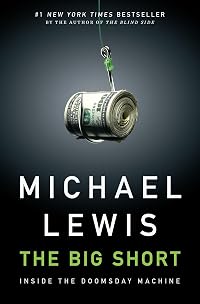
Years ago, I read Michael Lewis' book The Big Short, about the subprime mortgage crisis. It didn't fully succeed in helping me wrap my brain around exactly what went on there, but it a least made a good attempt at it. Well, Boomerang is his follow-up to that, in which he looks at the global financial crisis that followed in the wake of that whole debacle, specifically in Iceland, Greece, Ireland, Germany, and the US state of California.
And, I have to say, I found the financial stuff Lewis is covering in this one easier to understand, but perhaps even harder to fathom. My big takeaway here is that people are nuts, governments are nuts, the things that we do with money are nuts... and the abstract actions we take with this essentially show more imaginary substance can have deeply serious real-world consequences. Which is perhaps a good thing to be reminded of.
For all that it's depressing -- and it is pretty depressing -- this is also a fairly entertaining read. It's not a dry account of what happened (or was happening in 2011, when this was published), but a personal narrative in which Lewis travels to the places he's contemplating and talks to various interesting people, with lots of his own personal commentary included. There is, perhaps, a lot of room to disagree with him on some things, including his thoughts on what each country's specific situation says about their national character, and it's by no means a comprehensive look at the subject of global finance problems. But overall it's quite eye-opening. I'm just sorry it took me this long to get to it. show less
And, I have to say, I found the financial stuff Lewis is covering in this one easier to understand, but perhaps even harder to fathom. My big takeaway here is that people are nuts, governments are nuts, the things that we do with money are nuts... and the abstract actions we take with this essentially show more imaginary substance can have deeply serious real-world consequences. Which is perhaps a good thing to be reminded of.
For all that it's depressing -- and it is pretty depressing -- this is also a fairly entertaining read. It's not a dry account of what happened (or was happening in 2011, when this was published), but a personal narrative in which Lewis travels to the places he's contemplating and talks to various interesting people, with lots of his own personal commentary included. There is, perhaps, a lot of room to disagree with him on some things, including his thoughts on what each country's specific situation says about their national character, and it's by no means a comprehensive look at the subject of global finance problems. But overall it's quite eye-opening. I'm just sorry it took me this long to get to it. show less
I've had Michael Lewis books on my list of books to read for years, but never picked one up. After I saw The Big Short last week, I immediately went to the library. Of course, The Big Short has a long wait list due to the movie so I chose this one. I couldn't put it down. No wonder so many people have recommended his books to me!
Boomerang looks at how governments acted during the sub-prime boom and bust. He carries a great analogy throughout the book: in the early 2000s the world financial sector turned off the lights in a room with loads of cash that countries across the world could do what they want with it. The bust happened, lights came back on, and we got to see what governments did with the money. The bust showed how vastly show more different the cultures are and what people value. He profiles Iceland, Greece, Ireland, Germany and California.
Yes, there's a good amount of finance description that went over my head, but for the most part Lewis is profiling people he meets and then putting them in context with the facts. In many parts it reads like good travel writing. Yes, there are generalizations about cultures. Considering how each culture dealt with the situations so differently, I felt Lewis was right in showing how these characteristics led each country to the decisions they made.
I would recommend you either see or read The Big Short before starting this book. show less
Boomerang looks at how governments acted during the sub-prime boom and bust. He carries a great analogy throughout the book: in the early 2000s the world financial sector turned off the lights in a room with loads of cash that countries across the world could do what they want with it. The bust happened, lights came back on, and we got to see what governments did with the money. The bust showed how vastly show more different the cultures are and what people value. He profiles Iceland, Greece, Ireland, Germany and California.
Yes, there's a good amount of finance description that went over my head, but for the most part Lewis is profiling people he meets and then putting them in context with the facts. In many parts it reads like good travel writing. Yes, there are generalizations about cultures. Considering how each culture dealt with the situations so differently, I felt Lewis was right in showing how these characteristics led each country to the decisions they made.
I would recommend you either see or read The Big Short before starting this book. show less
Michael Lewis has the gift of gab! His book on the financial crisis (the economic debacle that hit the United States and Europe, that almost brought the whole world down and of which we are not yet out of the woods), is so easy to read and so filled with wit that one forgets the horrific images of the failure that the book is describing; he makes plain what was the complete amorality or stupidity of the bankers, the investment brokers and the clients that they serviced, as they all marched toward the fantasyland that they created in which anyone could have whatever they wanted and suffer no consequences for their actions.
Contrary to that belief, when it came to fruition, the penalties for their irresponsible, unethical behavior were show more enormous, but often they hit those least guilty of offense. Those who were able, simply faded into the ether avoiding all the obligations they incurred, returned to their country of origin, went underground someplace and left others who behaved more responsibly, to pay their debts. They simply refused to be responsible for the errors of their ways and that applies to the originators of the schemes and those that took advantage of them.
The debacle continues because once started a culture of takers is not easily dissuaded from taking more, even when the consequences are dire; rather than blaming themselves, they blame others; rather than taking responsibility, they pass it on to other’s shoulders, others who should not be picking up their freight. Unions bled the public with their demands, and once achieved, the culture perpetuated even more abuses as various unions competed for benefits.
When Lewis describes, Iceland, Italy, and California (a state that has taken on the qualities of a country, in its failings), and the PIGS, the countries most involved in the scandals; Portugal, Italy, Greece and Spain and then puts Germany in as the lynchpin, the only country still with a stockpile of actual gold (it is the country that basically will bail out Europe, alone, if willing), he does it with such simplicity and humor, the reader will gasp and have to suspend disbelief at his revelations. Californians still want more of the same, a nanny state, benefits without cost, Greece and the Greeks refuse to abide by the rules imposed, refusing to pay their taxes, so the resolution of the crisis is still up in the air, and on ad infinitum. Although they do not want to adjust their lives or work to pay for their mistakes, the Greeks fully expect the Germans to do it for them because they are frugal and orderly; however, in their own country, they too aided in the execution of the financial debacle by investing in other countries that were running amok. Everyone involved wanted to make a quick buck off the back of some rube!
At the core of many of the financial failures are US bankers, Goldman Sachs, Merrill Lynch, Lehman Bros, Citibank. They brought down the financial world with the schemes they all learned to create in the hallowed halls of Yale, Harvard, etc., in the most esteemed educational institutions of the world, because they learned that greed rules!
Lewis describes a world of finance in which the players make a mockery of reality. The disaster was a monumental Ponzi scheme that even when recognized was allowed to proliferate and continue until it brought down the economies of major countries. He does it with such a light hand using layman’s terms so that the reader will want to laugh at his presentation; they might also want to cry at the truth of all his pen has put to paper. Can we all be such fools and are we all blinded so by greed that we will believe anything told by even the most inexperienced charlatans, simply because of the chance to get rich? Almost half way through the book Lewis uses this quote by Isocrates:
“Democracy destroys itself because it abuses its right to freedom and equality. Because it teaches its citizens to consider audacity as a right, lawlessness as a freedom, abrasive speech as equality, and anarchy as progress.”
In the end, will chaos be the result if the environment ceases to self-regulate causing the situation to spin further out of control?
Lewis adequately describes the inability to place blame on the shoulders of those who engineered this crisis. Stupid people blame those who outsmarted them, the mortgage brokers are blamed by the mortgagees. None of them read the fine print or felt responsible for their own choices, none felt the need to pay back or borrow only what they could afford or grant loans only to those qualified. Who is to blame, the fool who was taken in or the person who took them in, perhaps without malice, but who underestimated how low a human could go to get something they didn’t deserve and then actually complain when they were asked to repay their debt? They all pretended to be victims, not the perpetrators of the crime. Governments, in collusion with the financial industry and simple human beings, all played dumb and looked for scapegoats rather than look to themselves for their own practice of madness. The one truth is that there were no innocents. Everyone who took part was guilty in one form or another but most people who are paying for their poor judgment are not the guilty ones, they are the ones who could not be heard when they rang the alarm bells. In this Ponzi scheme, like Madoff’s, the get rich-schemers of all stripes and in all countries, only succeeded because governments and the people allowed them to succeed. If common sense and cooler heads prevailed, it could have been avoided. It was a failure of government, regulators, and human beings, en masse. They had short term vision and short term goals. In the long term, they failed.
Michael Lewis has succinctly described and analyzed the personality and culture of the parties involved in this enormous financial scandal, fraught with fraud and immorality and he has done it in a highly readable fashion! In short, he sums it up with amusing anecdotes of “people taking what they could, because they could, without regard for social consequences”. Eventually, it is hoped that the situation will have to correct itself through attrition. show less
Contrary to that belief, when it came to fruition, the penalties for their irresponsible, unethical behavior were show more enormous, but often they hit those least guilty of offense. Those who were able, simply faded into the ether avoiding all the obligations they incurred, returned to their country of origin, went underground someplace and left others who behaved more responsibly, to pay their debts. They simply refused to be responsible for the errors of their ways and that applies to the originators of the schemes and those that took advantage of them.
The debacle continues because once started a culture of takers is not easily dissuaded from taking more, even when the consequences are dire; rather than blaming themselves, they blame others; rather than taking responsibility, they pass it on to other’s shoulders, others who should not be picking up their freight. Unions bled the public with their demands, and once achieved, the culture perpetuated even more abuses as various unions competed for benefits.
When Lewis describes, Iceland, Italy, and California (a state that has taken on the qualities of a country, in its failings), and the PIGS, the countries most involved in the scandals; Portugal, Italy, Greece and Spain and then puts Germany in as the lynchpin, the only country still with a stockpile of actual gold (it is the country that basically will bail out Europe, alone, if willing), he does it with such simplicity and humor, the reader will gasp and have to suspend disbelief at his revelations. Californians still want more of the same, a nanny state, benefits without cost, Greece and the Greeks refuse to abide by the rules imposed, refusing to pay their taxes, so the resolution of the crisis is still up in the air, and on ad infinitum. Although they do not want to adjust their lives or work to pay for their mistakes, the Greeks fully expect the Germans to do it for them because they are frugal and orderly; however, in their own country, they too aided in the execution of the financial debacle by investing in other countries that were running amok. Everyone involved wanted to make a quick buck off the back of some rube!
At the core of many of the financial failures are US bankers, Goldman Sachs, Merrill Lynch, Lehman Bros, Citibank. They brought down the financial world with the schemes they all learned to create in the hallowed halls of Yale, Harvard, etc., in the most esteemed educational institutions of the world, because they learned that greed rules!
Lewis describes a world of finance in which the players make a mockery of reality. The disaster was a monumental Ponzi scheme that even when recognized was allowed to proliferate and continue until it brought down the economies of major countries. He does it with such a light hand using layman’s terms so that the reader will want to laugh at his presentation; they might also want to cry at the truth of all his pen has put to paper. Can we all be such fools and are we all blinded so by greed that we will believe anything told by even the most inexperienced charlatans, simply because of the chance to get rich? Almost half way through the book Lewis uses this quote by Isocrates:
“Democracy destroys itself because it abuses its right to freedom and equality. Because it teaches its citizens to consider audacity as a right, lawlessness as a freedom, abrasive speech as equality, and anarchy as progress.”
In the end, will chaos be the result if the environment ceases to self-regulate causing the situation to spin further out of control?
Lewis adequately describes the inability to place blame on the shoulders of those who engineered this crisis. Stupid people blame those who outsmarted them, the mortgage brokers are blamed by the mortgagees. None of them read the fine print or felt responsible for their own choices, none felt the need to pay back or borrow only what they could afford or grant loans only to those qualified. Who is to blame, the fool who was taken in or the person who took them in, perhaps without malice, but who underestimated how low a human could go to get something they didn’t deserve and then actually complain when they were asked to repay their debt? They all pretended to be victims, not the perpetrators of the crime. Governments, in collusion with the financial industry and simple human beings, all played dumb and looked for scapegoats rather than look to themselves for their own practice of madness. The one truth is that there were no innocents. Everyone who took part was guilty in one form or another but most people who are paying for their poor judgment are not the guilty ones, they are the ones who could not be heard when they rang the alarm bells. In this Ponzi scheme, like Madoff’s, the get rich-schemers of all stripes and in all countries, only succeeded because governments and the people allowed them to succeed. If common sense and cooler heads prevailed, it could have been avoided. It was a failure of government, regulators, and human beings, en masse. They had short term vision and short term goals. In the long term, they failed.
Michael Lewis has succinctly described and analyzed the personality and culture of the parties involved in this enormous financial scandal, fraught with fraud and immorality and he has done it in a highly readable fashion! In short, he sums it up with amusing anecdotes of “people taking what they could, because they could, without regard for social consequences”. Eventually, it is hoped that the situation will have to correct itself through attrition. show less
Wonderfully narrated by actor Dylan Baker, this is a deep dive into the cultural and human failings behind crashes in Ireland, Iceland, Germany, Greece, and California. They all seem to have fallen prey to the too-good-to-be-true fallacy. The author's meeting with an interviewing participants to expose the human failings is quite enlightening, if disturbing in the ease of wide-scale financial wreckage resulting from basic misunderstandings. Perhaps the one from Germany is the oddests in welding together a fascination with excrement to explain somehow a German desire to completely follow the rules while blind to the toxic nature of American subprime mortgage securities. Without explicit mention, this somehow explains to me the disastrous show more Deutsche Bank trust in Donald Trump covered in Dark Towers: Deutsche Bank, Donald Trump, and an Epic Trail of Destruction. show less
To adapt the old saying, I'd read a phone book if it was written by Michael Lewis. As a spin-off from The Big Short this isn't one of his seminal works, but it still contains plenty of fine vignettes; best of all are the two top Greek economists who insist on meeting the author separately because they can't stand each other. "This, I'm told, is very Greek."
Members
- Recently Added By
Lists

Top Five Books of 2013
1,562 works; 715 members

Top Five Books of 2014
1,064 works; 398 members

Books read in 2014
11 works; 1 member
Author Information

33+ Works 35,690 Members
Michael Lewis was born in New Orleans, Louisiana on October 15, 1960. He received a BA in art history from Princeton University in 1982 and a Masters in economics from the London School of Economics in 1985. He is a non-fiction author/journalist of mostly financial themes. His books include Liar's Poker, Moneyball: The Art of Winning an Unfair show more Game, The Blind Side: Evolution of a Game, The Money Culture, Boomerang, Flash Boys: A Wall Street Revolt, The Big Short: Inside the Doomsday Machine and The Undoing Project: A Friendship That Changed Our Minds. (Bowker Author Biography) show less
Some Editions
Awards and Honors
Distinctions
Common Knowledge
- Original publication date
- 2011-10
- Important places
- Greece; Iceland; Ireland; Germany; California, USA
- Dedication
- To Doug Stumpf, gifted editor and gentle soul, without whom it never would have occurred to me to tour the ruins
- First words
- This book began accidentally, while I was at work on another book, about Wall Street and the 2008 U.S. financial disaster.
- Last words
- (Click to show. Warning: May contain spoilers.)As idiotic as optimism can sometimes seem, it has a weird habit of paying off.
- Original language
- English
Classifications
Statistics
- Members
- 2,061
- Popularity
- 10,103
- Reviews
- 79
- Rating
- (3.81)
- Languages
- 11 — Chinese, Czech, Dutch, English, Finnish, French, German, Hungarian, Polish, Portuguese, Spanish
- Media
- Paper, Audiobook, Ebook
- ISBNs
- 34
- ASINs
- 13