
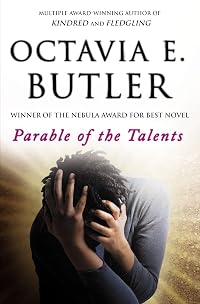
On This Page
Description
Winner of the Nebula Award for Best Novel: The powerful and compelling sequel to the dystopian classic Parable of the Sower Lauren Olamina was only eighteen when her family was killed, and anarchy encroached on her Southern California home. She fled the war zone for the hope of quiet and safety in the north. There she founded Acorn, a peaceful community based on a religion of her creation, called Earthseed, whose central tenet is that God is change. Five years later, Lauren has married a show more doctor and given birth to a daughter. Acorn is beginning to thrive. But outside the tranquil group's walls, America is changing for the worse. Presidential candidate Andrew Steele Jarret wins national fame by preaching a return to the values of the American golden age. To his marauding followers, who are identified by their crosses and black robes, this is a call to arms to end religious tolerance and racial equality--a brutal doctrine they enforce by machine gun. And as this band of violent extremists sets its deadly sights on Earthseed, Acorn is plunged into a harrowing fight for its very survival. Taking its place alongside Margaret Atwood's The Handmaid's Tale, Butler's eerily prophetic novel offers a terrifying vision of our potential future, but also one of hope. This ebook features an illustrated biography of Octavia E. Butler including rare images from the author's estate. show lessTags
Recommendations








Member Recommendations
Member Reviews
As the sequel to Parable of the Sower, this book goes further into the dystopian future America that Butler has created. At first we open up about 30 or so years after where the last book ended, with Lauren's daughter as the first-person narrator. I wasn't sure how much I was going to like that, but then we switched back to Lauren's journals pretty much right where we left off at the end of previous title, with Lauren and her crew settling on the land they dub "Acorn." From there, the book switches back and forth between Lauren and her daughter, with a few glimpses of writings by Lauren's husband and by one of her brothers.
In some ways, I liked this book even more the previous title -- it was really interesting to see Lauren putting show more Earthseed into action and building a community; there was more of the politics of Christian America with its eerie similarities to today in some respects; and there were unresolved issues from the previous book that come to greater light here. Butler introduces more technologies, making this title even more strongly rooted in sci-fi, although she's also not far off in many of these -- for instance, "geneprints" are DNA testing and "dream masks" are VR goggles. Butler also makes some beautiful, if sad, parallels between Lauren and her brother.
In other ways, this book was even more difficult than the last one. The loss of the walled city and Lauren's perilous trek north were scary, but nothing like the things that happen in this book. There was always a sense of hope in the previous book, no matter how slim. There were large swatches of this book where I did not have any hope for Lauren's situation. And while the end of the book is I think meant to be hopeful with Earthseedfinally meeting "the destiny" of traveling to outer space to colonize new spaces , I cannot help but feel sad that Lauren and her daughter are never truly reunited and that her daughter and brother remain dedicated to a religion that enslaved Lauren and the other Earthseed members despite the evidence of this atrocity and I feel that the ending is at best bittersweet, if not downright bleak.
All in all though, Butler has once again written a compelling and thought-provoking work. I think it is worth reading if you enjoyed the first book. show less
In some ways, I liked this book even more the previous title -- it was really interesting to see Lauren putting show more Earthseed into action and building a community; there was more of the politics of Christian America with its eerie similarities to today in some respects; and there were unresolved issues from the previous book that come to greater light here. Butler introduces more technologies, making this title even more strongly rooted in sci-fi, although she's also not far off in many of these -- for instance, "geneprints" are DNA testing and "dream masks" are VR goggles. Butler also makes some beautiful, if sad, parallels between Lauren and her brother.
In other ways, this book was even more difficult than the last one. The loss of the walled city and Lauren's perilous trek north were scary, but nothing like the things that happen in this book. There was always a sense of hope in the previous book, no matter how slim. There were large swatches of this book where I did not have any hope for Lauren's situation. And while the end of the book is I think meant to be hopeful with Earthseed
All in all though, Butler has once again written a compelling and thought-provoking work. I think it is worth reading if you enjoyed the first book. show less
Brutal and frighteningly prescient. The first book documented the collapse of society, this one takes place in the aftermath. As opposed to most post-apocalyptic literature, there is no clean break delineating the descent, it's a gradual decay and then a gradual recovery. The result is a level of realism that is lacking in The Handsmaid's Tale or the Hunger Games, that makes it all the more dramatic and terrifying. It's all too easy to picture something similar happening. The good news is that despite the bleak outlook and heartbreaking story, hope for a better tomorrow never dies.
I will finally tackle The Parable of the Talents. This is the first novel by Octavia E. Butler that I have read, though I have recently encountered one or two of her short stories. I finished this novel in the wee hours and then suffered insomnia because the book left my head buzzing. I haven't had a book arouse such strong feelings since Joan Vinge's Psion, and perhaps, more recently, The Diamond Age by Neal Stephenson.
I would classify this story as something close to post-apocalyptic, but not quite, because it is a story about partial social collapse. It is set largely in Humboldt County in northern California but also moves around the West Coast. Because of the location and the fact that the story begins many years after the show more catastrophic events and involves people who survived it and are trying to rebuild their existence makes, The Postman by David Brin seems like the closest comparison. The Stand by Stephen King and Lucifer's Hammer by Larry Niven and Jerry Pournelle are other books that come to mind--but these are really about the catastrophe itself and the subsequent self-organization (or lack thereof) of society.
Parable of the Talents was published in 1998, when Bill Clinton was just starting his second term. The Kyoto Protocol on Climate Change had just been signed in 1997. I thing this story does an excellent job extrapolating from socioeconomic and ecological trends--her envisioned future is different in degree not direction from the actual trajectory we have experienced, IMHO.
So what am I talking about and what partial collapse? Butler's underlying premise is a synergism of ecological, economic, and social crises called "the Pox" from 2015 to 2030--global warming leading to droughts and other problems (have you seen the news from the Central Valley of CA--and a tornado on the West Coast for the first time ever), a gap between rich and poor that becomes the Grand Canyon with an economic downturn (housing bubble, anyone? what about those banks "too big to fail"?) that leaves far too many homeless and destitute (the foreclosure rates are still climbing). So while the United States continues to exist, and some areas continue unaffected, other areas basically become lawless, an anarchist's dream, I suppose. Rampant slavery in these regions abounds, but that's okay because it only affects the vagrants and other morally bankrupt individuals who don't deserve better (gotta love our national Calvinist streak, and the only fiction is that it occurs openly and affects whites and men and U.S. citizens just as much as racial minorities, particularly immigrants--slavery in the U.S. today is still largely an underground affair). In these lawless zones, small communities have to fend off slavers and other bandits while pursuing some sort of subsistence lifestyle. And of course, no real functional infrastructure or social services--so it's back to a 19th century hardscrabble existence at best.
This is the story of Lauren Oya Olamina, a young African American whose quiet, middle-class existence in a walled suburb of LA was destroyed by riots in 2028, leaving her and many others homeless and destitute. She has founded a new community in Humboldt County with other refugees struggling to create new connections and families in the wake of profound personal loss. She has also created a new religion called Earthseed. Looking about her and reflecting on the course of human history, she realizes that to break this endless cycle of progress and destruction, humanity needs a vision of greatness to inspire the best in people. And her vision is human colonies in space--in effect, the next evolutionary step for our species. The other part of her religion is that the divine is not some anthropomorphic power with a specific agenda. Instead, the underlying driver of reality is change, and we need to accept and adapt to this inevitable and essential stochastic process. "God is Change."
The format of the book is three-part chapters: first, a brief excerpt from a written source--either Olamina's religious work called Earthseed: The Books of the Living or the journals of her husband Taylor Franklin Bankole or her brother Marcos Duran. This is followed by first-person narration by Olamina's daughter that frames the storyline with her spin on ensuing events and people. Last, the main story always begins with "From The Journals of Lauren Oya Olamina" followed by the date, which starts in 2032 and ends in 2090.
The daughter is at first nameless, and her commentary in the prologue gives readers a sense of where the story must ultimately end up. But as the storyline progresses, her interpretations begins to include more personal information, so that her biases become clear by the end of the book.
I found the story ultimately wrenching because it was in many senses a tragedy of love, loyalty, conflicting ideals, and personal betrayals. Every aspect of this story was well crafted: characters, plot, dialogue, pacing, prose, concepts and ideas.
And the characters reflected the actual diversity of the West Coast, with many Anglo, Latino, Asian, and African American (sorry, don't remember any Native Americans, Middle Easter, etc., but they may have been there) major and minor characters. Most of the characters were straight, but by no means all, which turns out to be a critical plot element halfway through the story. While this wasn't a story *about* race, it did incorporate realistic racial elements. For example, Olamina's husband is the only African American medical doctor in Humboldt County, and the preexisting local communities (predominantly Anglo or Anglo/Latino) hesitate to rely on his services. And the multiracial Earthseed community of Acorn recognizes that they face threats from well-armed racist bandits in the area. This is certainly a far better approach than excluding entirely or including and pretending these issues don't exist or are somehow not relevant to defining character and shaping events.
And she has a few interesting science fiction ideas. First, some people experience "hyperempathy syndrome" as a result of in utero exposure to a highly addictive wonder drug that reverses Alzheimers and became a study aid to replace caffeine. This "delusional disorder" means that the person experiences every pain or pleasure that he or she witnesses in others. Again, important plot element in various places. Second, advanced technology in the form of the computerized slave collars and the Dreammasks (virtual reality headsets that replace books).
It's a great book, and I highly recommend it. If you don't want to read spoilers, stop here, because my more detailed analysis will necessarily include specific characters and plot points.
The title of this book comes from the Bible--Matthew 25:14-30. Olamina references this passage explicitly in the opening chapter when reminiscing about her father, the Baptist minister, in her happy youth preaching the parables. And after the story ends, the biblical parable of the talents closes the novel. So I was left wrestling with the connections between the three servants in the parable and the characters in the story. Given that the written preludes are from only Olamina, Bankole, and Marcos, I will assume that they are the characters most closely aligned, with Bankole being the servant who receives two talents. That leaves Olamina and her brother as the five-talent servant and the one-talent servant, respectively, in my reckoning, though others have assigned the reverse when I have described the story to them.
So Olamina and her band are getting along okay up in the mountains. However, they're worried about the larger political climate. The charismatic Christian governor of Texas (where have I seen that before?) is running for president. He's the founder of Church of America, and his message is that the U.S. used to be a great country until the heathens started wrecking things. The economic stagnation, the secession of Alaska, the destitution of so many--clearly the immoral influences of the wrong sort of people. So he's preaching take back America (once again, eerily familiar to you teabaggers?). And sure enough, he gets elected and launches a war with Canada and Alaska (even better than Iraq!).
In the meantime, Olamina discovers her younger brother Marcus, thought dead in the LA riots, and buys him out of slavery. He returns to Acorn with her, but he is unwilling to stay. He despises their backwards existence. He's angry that she's betrayed their upbringing by founding a cult. He's angry that she's putting community interests ahead of self-interest by refusing to relocate to a larger, well-established community that has asked Bankole to stay as their doctor, particularly since Olamina is pregnant and vulnerable and is supposed to be thinking of her baby. His attempts to preach the Baptist, or at least Christian, creed to the community do not meet with success either. And while Olamina thinks that he leaves in order to find his self-respect, rather than always being her younger brother who was rescued (i.e., living in her shadow), I think it's more than that. I think he wanted his privileged position back (while he was just a teenager in a squatter settlement, he became the local minister that others deferred to), and he wanted to be in a position of power so that he would never be vulnerable again. I think he was also fundamentally threatened by the egalitarian society she had created--everyone had an equal voice, was expected to both learn and teach and equally contribute to the community, know at least two languages, etc. Moreover, there were no specific gender roles, and he was a firm believer in women subservient to men.
So Marcos leaves, and where does he end up? Church of America, of course. Because that's where the power is. And while he may have wanted to eliminate slavery and suffering as a result of his traumatic personal experiences, his preferred solution was a top-down tyranny created by the uniting of political, economic, religious, and military power as represented by President Jarrett that would force people to be good, moral Christians or face the consequences. This is very different from Olamina's grassroots solution of inspiring many individuals to believe in and voluntarily contribute to a larger cause.
The small community in the mountains and the larger political force collide in the form of Jarrett's Crusaders--a paramilitary/religious group that turns Acorn into a reeducation camp (hello, Cultural Revolution of China). All of the children, including Olamina's infant, are taken away to be brought up as proper Christians (hello, Australian, American, and Canadian "solutions" to the indigenous problem).
So Marcos may have felt that Olamina betrayed her family upbringing and her duties as wife and mother. Olamina may have felt that leaving Acorn would have been betraying her new family and duties as religious leader. In the end, Olamina feels betrayed when she turns to Marcos to help her find her baby, and he insists there is nothing he can do. So he chooses his religion over his family, self-protection over facing hard truths, privilege over justice (or maybe not the last, because she is a heathen, even if she is his sister). And the daughter feels betrayed because her mother did not manage to find her against all odds. In fact, she feels her mother chose proselytizing her religion over her child. And that left a bad taste in my mouth. Hence my turmoil and upset. But that's a good thing in the end, as I was forced to chew over the title and meanings and so on over a period of months. show less
I would classify this story as something close to post-apocalyptic, but not quite, because it is a story about partial social collapse. It is set largely in Humboldt County in northern California but also moves around the West Coast. Because of the location and the fact that the story begins many years after the show more catastrophic events and involves people who survived it and are trying to rebuild their existence makes, The Postman by David Brin seems like the closest comparison. The Stand by Stephen King and Lucifer's Hammer by Larry Niven and Jerry Pournelle are other books that come to mind--but these are really about the catastrophe itself and the subsequent self-organization (or lack thereof) of society.
Parable of the Talents was published in 1998, when Bill Clinton was just starting his second term. The Kyoto Protocol on Climate Change had just been signed in 1997. I thing this story does an excellent job extrapolating from socioeconomic and ecological trends--her envisioned future is different in degree not direction from the actual trajectory we have experienced, IMHO.
So what am I talking about and what partial collapse? Butler's underlying premise is a synergism of ecological, economic, and social crises called "the Pox" from 2015 to 2030--global warming leading to droughts and other problems (have you seen the news from the Central Valley of CA--and a tornado on the West Coast for the first time ever), a gap between rich and poor that becomes the Grand Canyon with an economic downturn (housing bubble, anyone? what about those banks "too big to fail"?) that leaves far too many homeless and destitute (the foreclosure rates are still climbing). So while the United States continues to exist, and some areas continue unaffected, other areas basically become lawless, an anarchist's dream, I suppose. Rampant slavery in these regions abounds, but that's okay because it only affects the vagrants and other morally bankrupt individuals who don't deserve better (gotta love our national Calvinist streak, and the only fiction is that it occurs openly and affects whites and men and U.S. citizens just as much as racial minorities, particularly immigrants--slavery in the U.S. today is still largely an underground affair). In these lawless zones, small communities have to fend off slavers and other bandits while pursuing some sort of subsistence lifestyle. And of course, no real functional infrastructure or social services--so it's back to a 19th century hardscrabble existence at best.
This is the story of Lauren Oya Olamina, a young African American whose quiet, middle-class existence in a walled suburb of LA was destroyed by riots in 2028, leaving her and many others homeless and destitute. She has founded a new community in Humboldt County with other refugees struggling to create new connections and families in the wake of profound personal loss. She has also created a new religion called Earthseed. Looking about her and reflecting on the course of human history, she realizes that to break this endless cycle of progress and destruction, humanity needs a vision of greatness to inspire the best in people. And her vision is human colonies in space--in effect, the next evolutionary step for our species. The other part of her religion is that the divine is not some anthropomorphic power with a specific agenda. Instead, the underlying driver of reality is change, and we need to accept and adapt to this inevitable and essential stochastic process. "God is Change."
The format of the book is three-part chapters: first, a brief excerpt from a written source--either Olamina's religious work called Earthseed: The Books of the Living or the journals of her husband Taylor Franklin Bankole or her brother Marcos Duran. This is followed by first-person narration by Olamina's daughter that frames the storyline with her spin on ensuing events and people. Last, the main story always begins with "From The Journals of Lauren Oya Olamina" followed by the date, which starts in 2032 and ends in 2090.
The daughter is at first nameless, and her commentary in the prologue gives readers a sense of where the story must ultimately end up. But as the storyline progresses, her interpretations begins to include more personal information, so that her biases become clear by the end of the book.
I found the story ultimately wrenching because it was in many senses a tragedy of love, loyalty, conflicting ideals, and personal betrayals. Every aspect of this story was well crafted: characters, plot, dialogue, pacing, prose, concepts and ideas.
And the characters reflected the actual diversity of the West Coast, with many Anglo, Latino, Asian, and African American (sorry, don't remember any Native Americans, Middle Easter, etc., but they may have been there) major and minor characters. Most of the characters were straight, but by no means all, which turns out to be a critical plot element halfway through the story. While this wasn't a story *about* race, it did incorporate realistic racial elements. For example, Olamina's husband is the only African American medical doctor in Humboldt County, and the preexisting local communities (predominantly Anglo or Anglo/Latino) hesitate to rely on his services. And the multiracial Earthseed community of Acorn recognizes that they face threats from well-armed racist bandits in the area. This is certainly a far better approach than excluding entirely or including and pretending these issues don't exist or are somehow not relevant to defining character and shaping events.
And she has a few interesting science fiction ideas. First, some people experience "hyperempathy syndrome" as a result of in utero exposure to a highly addictive wonder drug that reverses Alzheimers and became a study aid to replace caffeine. This "delusional disorder" means that the person experiences every pain or pleasure that he or she witnesses in others. Again, important plot element in various places. Second, advanced technology in the form of the computerized slave collars and the Dreammasks (virtual reality headsets that replace books).
It's a great book, and I highly recommend it. If you don't want to read spoilers, stop here, because my more detailed analysis will necessarily include specific characters and plot points.
The title of this book comes from the Bible--Matthew 25:14-30. Olamina references this passage explicitly in the opening chapter when reminiscing about her father, the Baptist minister, in her happy youth preaching the parables. And after the story ends, the biblical parable of the talents closes the novel. So I was left wrestling with the connections between the three servants in the parable and the characters in the story. Given that the written preludes are from only Olamina, Bankole, and Marcos, I will assume that they are the characters most closely aligned, with Bankole being the servant who receives two talents. That leaves Olamina and her brother as the five-talent servant and the one-talent servant, respectively, in my reckoning, though others have assigned the reverse when I have described the story to them.
So Olamina and her band are getting along okay up in the mountains. However, they're worried about the larger political climate. The charismatic Christian governor of Texas (where have I seen that before?) is running for president. He's the founder of Church of America, and his message is that the U.S. used to be a great country until the heathens started wrecking things. The economic stagnation, the secession of Alaska, the destitution of so many--clearly the immoral influences of the wrong sort of people. So he's preaching take back America (once again, eerily familiar to you teabaggers?). And sure enough, he gets elected and launches a war with Canada and Alaska (even better than Iraq!).
In the meantime, Olamina discovers her younger brother Marcus, thought dead in the LA riots, and buys him out of slavery. He returns to Acorn with her, but he is unwilling to stay. He despises their backwards existence. He's angry that she's betrayed their upbringing by founding a cult. He's angry that she's putting community interests ahead of self-interest by refusing to relocate to a larger, well-established community that has asked Bankole to stay as their doctor, particularly since Olamina is pregnant and vulnerable and is supposed to be thinking of her baby. His attempts to preach the Baptist, or at least Christian, creed to the community do not meet with success either. And while Olamina thinks that he leaves in order to find his self-respect, rather than always being her younger brother who was rescued (i.e., living in her shadow), I think it's more than that. I think he wanted his privileged position back (while he was just a teenager in a squatter settlement, he became the local minister that others deferred to), and he wanted to be in a position of power so that he would never be vulnerable again. I think he was also fundamentally threatened by the egalitarian society she had created--everyone had an equal voice, was expected to both learn and teach and equally contribute to the community, know at least two languages, etc. Moreover, there were no specific gender roles, and he was a firm believer in women subservient to men.
So Marcos leaves, and where does he end up? Church of America, of course. Because that's where the power is. And while he may have wanted to eliminate slavery and suffering as a result of his traumatic personal experiences, his preferred solution was a top-down tyranny created by the uniting of political, economic, religious, and military power as represented by President Jarrett that would force people to be good, moral Christians or face the consequences. This is very different from Olamina's grassroots solution of inspiring many individuals to believe in and voluntarily contribute to a larger cause.
The small community in the mountains and the larger political force collide in the form of Jarrett's Crusaders--a paramilitary/religious group that turns Acorn into a reeducation camp (hello, Cultural Revolution of China). All of the children, including Olamina's infant, are taken away to be brought up as proper Christians (hello, Australian, American, and Canadian "solutions" to the indigenous problem).
So Marcos may have felt that Olamina betrayed her family upbringing and her duties as wife and mother. Olamina may have felt that leaving Acorn would have been betraying her new family and duties as religious leader. In the end, Olamina feels betrayed when she turns to Marcos to help her find her baby, and he insists there is nothing he can do. So he chooses his religion over his family, self-protection over facing hard truths, privilege over justice (or maybe not the last, because she is a heathen, even if she is his sister). And the daughter feels betrayed because her mother did not manage to find her against all odds. In fact, she feels her mother chose proselytizing her religion over her child. And that left a bad taste in my mouth. Hence my turmoil and upset. But that's a good thing in the end, as I was forced to chew over the title and meanings and so on over a period of months. show less
This sequel to 'Parable of the Sower' reads differently than the first; instead of only seeing the world through Lauren Olamina's journal entries, we have the added voices of Lauren's daughter and even some sections from Bankole, her husband. The shift between these perspectives is sometimes jarring for the reader, but I do think that the multiplicity and the family dynamic both serve to open up the narrative in a productive way.
Once again Butler brazenly approaches ideas of religion and politics, but this time the novel is less hopeful, even less spiritual in tone. The sections from the daughter's perspective are touched with bitter flavor, as the character struggles to come to terms with her mother's persona and the religious show more relationships that she has no part in. Ultimately, this is a novel about suffering, from multiple viewpoints, and about reality.
That reality angle may seem a hard sell when one considers that this is a science-fiction-post-apocalyptic-near-future novel, but the way Butler has framed both the circumstances in which the characters find themselves and the extreme attitudes of some of the people they face will ring eerily true for 21st century readers, at least those who have been paying attention to the religio-political rhetoric that has been flying around in the US recently. For a novel published in the nineties, it feels impeccably timely.
This is not an easy novel to read. The characters are harder -- life's experiences have made them that way -- and the events are even more horrific to witness, but as with any good future fiction, there are important messages to comprehend here. Perhaps even more importantly, there are vivid people and complex ideas to face -- the sheer magnitude of Butler's skill never fails to impress. There were some frustrating moments in the process, but this is absolutely worth reading. Recommended. show less
Once again Butler brazenly approaches ideas of religion and politics, but this time the novel is less hopeful, even less spiritual in tone. The sections from the daughter's perspective are touched with bitter flavor, as the character struggles to come to terms with her mother's persona and the religious show more relationships that she has no part in. Ultimately, this is a novel about suffering, from multiple viewpoints, and about reality.
That reality angle may seem a hard sell when one considers that this is a science-fiction-post-apocalyptic-near-future novel, but the way Butler has framed both the circumstances in which the characters find themselves and the extreme attitudes of some of the people they face will ring eerily true for 21st century readers, at least those who have been paying attention to the religio-political rhetoric that has been flying around in the US recently. For a novel published in the nineties, it feels impeccably timely.
This is not an easy novel to read. The characters are harder -- life's experiences have made them that way -- and the events are even more horrific to witness, but as with any good future fiction, there are important messages to comprehend here. Perhaps even more importantly, there are vivid people and complex ideas to face -- the sheer magnitude of Butler's skill never fails to impress. There were some frustrating moments in the process, but this is absolutely worth reading. Recommended. show less
Absolutely horrific. This picks up where Parable of the Sower left off, but it is 1000% times darker. Lauren Oya Olamina is living with the Earthseed community she's built. Senator Jarret has been elected president based on a platform of "Make America Great Again" and stamp out everyone who is different. Sound familiar? Perhaps that's why the vigilante justice that becomes popular is all the more disturbing. It doesn't feel too far from reality. An incredibly painful book to read, but honestly, an important one, now more than ever.
TWs abound: rape, kidnapping and trafficking of children, torture, murder, etc.
TWs abound: rape, kidnapping and trafficking of children, torture, murder, etc.
I knew that this and Parable of the Sower were two books in what was supposed to become a trilogy but never did, but I couldn't remember which came first, and the bookstore I was in only had this one on the shelf. Therefore, I went ahead and bought it only to determine later that it was the second. However, it stands so well on its own that I'm a little worried that I'll be disappointed when I go back and read the first book.
The post-cataclysmic world in which Olamina is struggling to build a community and find a way to spread her philosophy of Earthseed is one in which the government is in the process of being taken over by a fundamentalist denomination known as Christian America, education has become a luxury or something that must be show more arranged privately, and the poor routinely find themselves sold into slavery, and all of it is frighteningly believable. I can't comment on how possible it all seemed when it was first published, but thirteen years later it strikes me as one of the most prescient books that I've ever read.
And yet, as dark as the book is, so full of violence and despair, it ends with hope. Olamina begins to find supporters at the end of the book's main timeline; in the farther-future timeline, in which her daughter pieces together bits of her mother's journal along with occasional additions from her father and her uncle in order to tell the story, we are told that Christian America is now just one denomination among many. Although a CA family might believe that a woman who moves out of her parents' house before marrying is more or less a prostitute, there's no law that keeps her from doing so. She's not the property of her father until she becomes the property of her husband, and neither does a male guardian have to manage her finances or own/rent the place where she lives. In short, America did not go the way of The Handmaid's Tale. And if the chaos just sort of passing and normality returning might seem narratively strange, without the drama of massive resistance movements, it also seems quite natural in its way that the country would just reject the CA movement when it became clear they did not have the answers. show less
The post-cataclysmic world in which Olamina is struggling to build a community and find a way to spread her philosophy of Earthseed is one in which the government is in the process of being taken over by a fundamentalist denomination known as Christian America, education has become a luxury or something that must be show more arranged privately, and the poor routinely find themselves sold into slavery, and all of it is frighteningly believable. I can't comment on how possible it all seemed when it was first published, but thirteen years later it strikes me as one of the most prescient books that I've ever read.
And yet, as dark as the book is, so full of violence and despair, it ends with hope. Olamina begins to find supporters at the end of the book's main timeline; in the farther-future timeline, in which her daughter pieces together bits of her mother's journal along with occasional additions from her father and her uncle in order to tell the story, we are told that Christian America is now just one denomination among many. Although a CA family might believe that a woman who moves out of her parents' house before marrying is more or less a prostitute, there's no law that keeps her from doing so. She's not the property of her father until she becomes the property of her husband, and neither does a male guardian have to manage her finances or own/rent the place where she lives. In short, America did not go the way of The Handmaid's Tale. And if the chaos just sort of passing and normality returning might seem narratively strange, without the drama of massive resistance movements, it also seems quite natural in its way that the country would just reject the CA movement when it became clear they did not have the answers. show less
This was a brilliant book. I didn't enjoy it as much as its predecessor, The Parable of the Sower, but it is still in the top 5% of books I've read. This book follows the adventures of Lauren after she founded Earthseed. The story goes to some much darker places than it's predecessor, but I think it's actually better written. The framing device is that Lauren's papers are being published, and annotated, by her daughter: so we get to see an outside perspective on her and on Earthseed as a whole. The story added depth of character and complexity to the pre-existing universe;and continued Lauren's story in a very believable and human, if not entirely satisfying, way.
Members
- Recently Added By
Lists

Best Science Fiction Novels
816 works; 430 members

Best Dystopias
280 works; 271 members

Favorite Science Fiction by Women Authors
737 works; 196 members

Best Feminist Science Fiction
188 works; 35 members
Science fiction novels with a female protagonist
105 works; 30 members

Best Feminist Literature
188 works; 26 members

Diversity in Fantasy and Science Fiction
219 works; 33 members

Dystopian and Apocalyptic Literature
350 works; 74 members

Best Political Fiction
92 works; 12 members

Must-Read Books by Black Authors
114 works; 90 members

Slipstream or Interstitial Fiction
160 works; 19 members
Recommended Speculative Fiction by Women and People of Color
298 works; 45 members

Black Authors
384 works; 29 members
Nebula Award
111 works; 14 members

Top Five Books of 2022
736 works; 272 members

The Zora Canon
98 works; 4 members
Arthur C. Clarke Award Winners and Shortlisted Books
219 works; 14 members

Religious Science Fiction
70 works; 20 members

Speculative Fiction: Slipstream Literature
166 works; 16 members

Utopian Anarchist Novels
10 works; 6 members

An End of the World Reading List
63 works; 4 members

Female Author
1,235 works; 67 members

Nineties
43 works; 10 members

Books Set in California
112 works; 15 members

Top Five Books of 2020
982 works; 348 members
Political Science Fiction
43 works; 3 members

Best Survival Stories
97 works; 15 members

Speculative Fiction to Read
706 works; 31 members
LGBTQ+ Speculative Fiction
820 works; 51 members

Literature About Women and Girls
394 works; 39 members
Recommended Science-Fiction Books
40 works; 3 members

Books Read in 2020
4,379 works; 124 members

Books Read in 2021
5,361 works; 114 members

Novels featuring Mothers
64 works; 8 members

1990s
309 works; 17 members

Diverse Reading Challenge 2020
31 works; 1 member

Zora Canon
100 works; 6 members

Books Read in 2019
4,052 works; 108 members

Books Read in 2006
421 works; 8 members

Books Read in 2017
4,249 works; 130 members
Mothers and Daughters
114 works; 11 members
Best African American Literature
53 works; 9 members
Female Protagonist
1,056 works; 57 members

Books Read in 2025
4,091 works; 97 members
Author Information

58+ Works 55,995 Members
Science-fiction writer and novelist Octavia Estelle Butler was born in Pasadena, California, on June 22, 1947. She earned as Associate of Arts degree from Pasadena City College in 1968 and later attended California State University and the University of California. Her first novel, Patternmaster, was the first in a series about a society run by a show more group of telepaths who are mentally linked to one another. She explored the topics of race, poverty, politics, religion, and human nature in her works. She won a Hugo Award in 1984 for her short story Speech Sounds and a Hugo Award and Nebula Award in 1985 for her novella Bloodchild. She received a MacArthur Grant from the John D. and Catherine T. MacArthur Foundation. The award pays $295,000 over a five-year period to creative people who push the boundaries of their fields. She died in Lake Forest Park, Washington on February 24, 2006 at the age of 58. (Bowker Author Biography) show less
Some Editions
Awards and Honors
Awards
Series

Work Relationships
Common Knowledge
- Canonical title
- Parable of the Talents
- Original title
- Parable of the Talents
- Original publication date
- 1998-01-10
- People/Characters
- Lauren Oya Olamina; David Bankole; Marcos Duran
- Important places
- California, USA; Acorn, California, USA (fictitious community)
- Epigraph
- Here we are—
Energy,
Mass,
Life,
Shaping life,
Mind,
Shaping Mind,
God,
Shaping God.
Consider—
We are born
Not with purpose,
But with potential.
From EARTHSEED: THE BOOKS OF TH... (show all)E LIVING
by Lauren Oya Olamina - Dedication
- To my aunts Irma Harris and Hazel Ruth Walker, and in memory of my mother Octavia Margaret Butler
- First words
- They'll make a god of her.
- Quotations*
- Au fil des siècles, nous n'avons cessé de retomber dans les mêmes ornières. L'univers physique nous est de plus en plus familier, les progrès accomplis dans la connaissance du corps humain sont prodigieux, sciences et te... (show all)chnologies ne cessent d'avancer à pas de géant, pourtant notre histoire résonne du fracas d'empires édifiés dans la violence, puis détruits à leur tour. Les enfants s'enflamment au sujet de guerres absurdes, de plus en plus meurtrières, qui sèment la famine, la maladie, sans perler des germes du conflit suivant. Jetant un coup d'œil rétrospectif sur ces désastres en cascade, les hommes se contentent de hausser les épaules. Ainsi va l'Histoire, disent-ils, fataliste. Depuis l'aube de la création, et nous n'y pouvons rien.
- Last words
- (Click to show. Warning: May contain spoilers.)For unto every one that hath shall be given, and he shall have abundance: but from him that hath not shall be taken away even that which he hath. THE BIBLE AUTHORIZED KING JAMES VERSION ST. MATTHEW 25:14-30
- Original language
- English
- Canonical DDC/MDS
- 813.54
- Canonical LCC
- PS3552.U827
*Some information comes from Common Knowledge in other languages. Click "Edit" for more information.
Classifications
Statistics
- Members
- 4,872
- Popularity
- 2,888
- Reviews
- 126
- Rating
- (4.11)
- Languages
- 8 — English, French, German, Hungarian, Italian, Polish, Spanish, Portuguese (Portugal)
- Media
- Paper, Audiobook, Ebook
- ISBNs
- 37
- ASINs
- 15