On This Page
Description
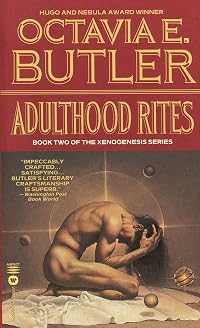
The futures of both mankind and an alien species rest in the hands of one hybrid son in the award-winning science fiction author's masterful sequel to Dawn.Nuclear war had nearly destroyed mankind when the Oankali came to the rescue, saving humanity—but at a price. The Oankali survive by mixing their DNA with that of other species, and now on Earth they have permitted no child to be born without an Oankali parent. The first true hybrid is a boy named Akin—son of Lilith Iyapo— and to show more the naked eye he looks human, for now. He is born with extraordinary sensory powers, understanding speech at birth, speaking in sentences at two months old, and soon developing the ability to see at the molecular level. More powerful than any human or Oankali, he will be the architect of both races' intergalactic future. But before he can carry this new species into the stars, Akin must decide which unlucky souls will stay behind.
At once a coming-of-age story, science fiction adventure, and philosophical exploration, Butler's ambitious and breathtaking novel ultimately raises the question of what it means to be human. This ebook features an illustrated biography of Octavia E. Butler including rare images from the author's estate. show less
Tags
Recommendations






Member Recommendations

Member Reviews
Gotta put it all in spoilers. Read the book!
Yes! Human Akjai! I'm glad that this series hasn't abandoned the attempt to subvert the Oankali system, even if Lilith herself has become rather resigned to her fate and, of necessity, suppressed much of her anger-- though not all of it. Her quote near the beginning of the book made me punch the air, not with victory, but the pure feeling of injustice being perfectly expressed: "But if I had the strength not to ask, it should have had the strength to leave me alone."
Butler continues to avoid depicting a simplistic moral opinion, which I think most authors would be tempted to do and which would so undermine the whole premise. Lilith, Tino, Nikanj, Akin, Tate, Gabriel, Neci, the Akjai -- all of show more them have their own perspectives, and their own complex and realistic stances on what's going on. None of them are stupid. None of them are infallible.
However, one thing that continues to poke into my enjoyment of the series is that gender and sexuality (and for that matter, genetics!) still seem to be entirely mechanistic. No queer characters, no complex or non-binary (non-trinary for the Oankali) relationships with gender. I mean, certainly the Oankali and humans have entirely different frameworks of gender and sexuality from each other, and there is a very interesting depiction of the friction when those two systems interact. But within each species, every one fits the prescription-- we have just a little hint of something with Tiikuchahk choosing to be male despite having a male sibling, but that's it. It's not that it's necessarily reasonable to expect this from something written in the 80s, but it just seems like it would be so relevant to everything that's going on in the book.
In general, I didn't enjoy this book as much as I did Dawn-- I missed Lilith as a protagonist-- but it was still extremely interesting and I definitely want to read the third in the trilogy. show less
Butler continues to avoid depicting a simplistic moral opinion, which I think most authors would be tempted to do and which would so undermine the whole premise. Lilith, Tino, Nikanj, Akin, Tate, Gabriel, Neci, the Akjai -- all of
However, one thing that continues to poke into my enjoyment of the series is that gender and sexuality (and for that matter, genetics!) still seem to be entirely mechanistic. No queer characters, no complex or non-binary (non-trinary for the Oankali) relationships with gender. I mean, certainly the Oankali and humans have entirely different frameworks of gender and sexuality from each other, and there is a very interesting depiction of the friction when those two systems interact. But within each species, every one fits the prescription-- we have just a little hint of something with Tiikuchahk choosing to be male despite having a male sibling, but that's it. It's not that it's necessarily reasonable to expect this from something written in the 80s, but it just seems like it would be so relevant to everything that's going on in the book.
In general, I didn't enjoy this book as much as I did Dawn-- I missed Lilith as a protagonist-- but it was still extremely interesting and I definitely want to read the third in the trilogy. show less
Summary: Lilith’s son Akin, a human “construct,” is kidnapped by resisters and raised in one of their settlements, and realizes his own unique and risky calling.
Akin was a male child born of Lilith, the main character of the first volume in this series. He is the first male “construct,” He is the fruit of a human-alien union–a human father and an Oankali mother and father, and a Ooloi, neither male nor female. Outwardly he looks human, except for his tongue, through which he senses the world, and can also kill. He is also unlike any human in language and intelligence. In months, he can speak like an adult. One day a refugee from a resister settlement, Tino shows up and is accepted into the community of Lo. Over time, Akin show more and Tino develop a special bond, the beginning of an unanticipated connection with the resisters, humans unwilling to bond with the Oankali, and therefore sterile.
One day, Akin and Tino are out when kidnappers seize Akin, leaving Tino for dead. After a harrowing journey, he ends up in Phoenix, a resister settlement hungry to acquire children if they cannot conceive their own. He becomes the child of Gabe and Taft, developing bonds with them even as he grieves the severed bonds with his own siblings in Lo, bonds he can never fully regain. Over time, he recognizes the contradiction of the drive to live, and the drive to kill in humans, and that they are a dying race on a dying planet, with or without the Oankali. He also grasps that there is another possibility, one only possible if he becomes an Akjai, a kind of go-between.
It is risky. Though rescued at last by Lilith and his family, he must give up Lo, embrace training with the Oankali, and then risk return to a Phoenix, even as he transitions to adulthood. And there is no guarantee they will accept the way to a new life he will propose, or even survive the attempt.
This is such an imaginative series. Butler continues to explore the implication of the “trade” the Oankali engage in with humans, and what human-alien progeny might be like. It also parses out the implications of the miscalculation that many humans would refuse the trade the Oankali offered. It strikes me that this is analogous to the blindness of earthly colonizers who cannot grasp why native peoples would refuse the “blessings” of civilization, even when this meant inevitable extinction. But Butler also sees another side to this, that humans faced with the struggle to survive will resort to suspicion and violence and killing, even at the continual diminishment of their numbers.
Can this dying race in a post-nuclear world be saved? Will Akin’s desperate effort work, even with a remnant? And what of us–a people at each others’ throats when faced with a global pandemic, a rapidly warming climate, rising lawlessness and violence in many quarters, and the shadow of thermo-nuclear destruction under which I’ve lived since childhood? Why do we both love life and seem committed to self-destruction? What hope is there for us? show less
Akin was a male child born of Lilith, the main character of the first volume in this series. He is the first male “construct,” He is the fruit of a human-alien union–a human father and an Oankali mother and father, and a Ooloi, neither male nor female. Outwardly he looks human, except for his tongue, through which he senses the world, and can also kill. He is also unlike any human in language and intelligence. In months, he can speak like an adult. One day a refugee from a resister settlement, Tino shows up and is accepted into the community of Lo. Over time, Akin show more and Tino develop a special bond, the beginning of an unanticipated connection with the resisters, humans unwilling to bond with the Oankali, and therefore sterile.
One day, Akin and Tino are out when kidnappers seize Akin, leaving Tino for dead. After a harrowing journey, he ends up in Phoenix, a resister settlement hungry to acquire children if they cannot conceive their own. He becomes the child of Gabe and Taft, developing bonds with them even as he grieves the severed bonds with his own siblings in Lo, bonds he can never fully regain. Over time, he recognizes the contradiction of the drive to live, and the drive to kill in humans, and that they are a dying race on a dying planet, with or without the Oankali. He also grasps that there is another possibility, one only possible if he becomes an Akjai, a kind of go-between.
It is risky. Though rescued at last by Lilith and his family, he must give up Lo, embrace training with the Oankali, and then risk return to a Phoenix, even as he transitions to adulthood. And there is no guarantee they will accept the way to a new life he will propose, or even survive the attempt.
This is such an imaginative series. Butler continues to explore the implication of the “trade” the Oankali engage in with humans, and what human-alien progeny might be like. It also parses out the implications of the miscalculation that many humans would refuse the trade the Oankali offered. It strikes me that this is analogous to the blindness of earthly colonizers who cannot grasp why native peoples would refuse the “blessings” of civilization, even when this meant inevitable extinction. But Butler also sees another side to this, that humans faced with the struggle to survive will resort to suspicion and violence and killing, even at the continual diminishment of their numbers.
Can this dying race in a post-nuclear world be saved? Will Akin’s desperate effort work, even with a remnant? And what of us–a people at each others’ throats when faced with a global pandemic, a rapidly warming climate, rising lawlessness and violence in many quarters, and the shadow of thermo-nuclear destruction under which I’ve lived since childhood? Why do we both love life and seem committed to self-destruction? What hope is there for us? show less
In the first book of the trilogy, “Dawn”, we follow a human perspective on the events, that we can understand. Lilith was our introduction to this species called the Oankali and their behaviour. In this sequel we follow Akin, a half human half Oankali, from his childhood until adulthood. Akin looks fully human on the outside, except for his tongue. He is the first male child to look this way in order to be more or less accepted by the humans that are against the Oankali, the resistants, in order to understand them better. Since Akin was born in an Oankali environment with only a few humans around he offers a perspective that is much more alien than human and the reader seems him struggling to understand human behaviour.
In this book show more humans look even more flawed than in the first one. They started conflicts against each other and since they can’t reproduce they started kidnapping Oankali children. They also started building many of the things that there used to be on Earth before the big war, including fire arms.
Akin tries to understand humans as best as he can at the same time that he develops his human side and struggles to connect with the Oankali as well as he did in the past. We see these conflicting feelings as well as his changes as he matures. It’s in part an observation of a kid’s journey as he enters the teenage stage and then adulthood. In the end there is a little bit of hope for humanity to continue on thanks to Akin, but most see it in a pessimistic way and believe humans will destroy each other once again.
I really got attached to the characters. While on the first book I was mostly invested in Lilith, Nikanj and Tate, here I got to see more of the characters introduced in the first book, like Dichaan, and got to know some new characters that were also good additions to the story. I also really liked getting to know more about how the Oankali live and what they believe and think. The Oankali have as many different personalities as the humans, but that wasn’t as deeply shown through Lilith’s eyes as it is here through Akin’s.
I enjoyed the first book a bit more, but this one is still fantastic. These books continue to impress and challenge me and I fell deeply in love with this sort of weird series. I believe it’s a really good continuation of the story from the first book and I can’t wait to see how it ends and what would be the approach in the third and final book. show less
In this book show more humans look even more flawed than in the first one. They started conflicts against each other and since they can’t reproduce they started kidnapping Oankali children. They also started building many of the things that there used to be on Earth before the big war, including fire arms.
Akin tries to understand humans as best as he can at the same time that he develops his human side and struggles to connect with the Oankali as well as he did in the past. We see these conflicting feelings as well as his changes as he matures. It’s in part an observation of a kid’s journey as he enters the teenage stage and then adulthood. In the end there is a little bit of hope for humanity to continue on thanks to Akin, but most see it in a pessimistic way and believe humans will destroy each other once again.
I really got attached to the characters. While on the first book I was mostly invested in Lilith, Nikanj and Tate, here I got to see more of the characters introduced in the first book, like Dichaan, and got to know some new characters that were also good additions to the story. I also really liked getting to know more about how the Oankali live and what they believe and think. The Oankali have as many different personalities as the humans, but that wasn’t as deeply shown through Lilith’s eyes as it is here through Akin’s.
I enjoyed the first book a bit more, but this one is still fantastic. These books continue to impress and challenge me and I fell deeply in love with this sort of weird series. I believe it’s a really good continuation of the story from the first book and I can’t wait to see how it ends and what would be the approach in the third and final book. show less
This second volume of the Xenogenesis trilogy follows Akin, one of Lilith's offspring with partial Oankali heritage, through his early childhood and up into adult metamorphosis. The story is much concerned with his early travels on Earth and his "adventures" among the humans who have rejected the Oankali. (They live in the Amazon basin in a much-changed jungle environment.) About one-third of the way into the book there's a startling revelation about the Oankali intent for the future of Earth and its human inhabitants. The Oankali are long-time long-distance travellers, after all, who "trade" with other species as they roam the galaxy.
There's a huge amount of ethical/moral ambiguity in this book, along with culture studies and show more reflections upon life, as we learn more about the Oankali, their interesting biology, their environment, and the physical transitions they undergo. Big questions loom everywhere. (And some readers might find the biology a little "disturbing", by the way.)
As the book nears its conclusion we come to the idea of colonizing Mars... But it's probably not going to be how we in the 21st century might commonly imagine things would go. The Oankali, as you'll remember from volume one, generally use DNA to perform tasks for which humans use machinery. And their "ships" are enormous living creatures that carry closed ecosystems across the vast expanses of space...
So far, the series presents huge ideas and environments as a backdrop to individual "biographies" of a few main characters. In that sense, it's idea-driven fiction. Most characters in both books are minor, but the protagonist Akin (and Lilith in volume one) are deeply explored.
This is humanistic sci-fi at its best, I think. Should be required reading for first-year college students in humanities and sciences both. ;-) Now, I can't wait to get into the next book... Totally not gonna be Flash Gordon. show less
There's a huge amount of ethical/moral ambiguity in this book, along with culture studies and show more reflections upon life, as we learn more about the Oankali, their interesting biology, their environment, and the physical transitions they undergo. Big questions loom everywhere. (And some readers might find the biology a little "disturbing", by the way.)
As the book nears its conclusion we come to the idea of colonizing Mars... But it's probably not going to be how we in the 21st century might commonly imagine things would go. The Oankali, as you'll remember from volume one, generally use DNA to perform tasks for which humans use machinery. And their "ships" are enormous living creatures that carry closed ecosystems across the vast expanses of space...
So far, the series presents huge ideas and environments as a backdrop to individual "biographies" of a few main characters. In that sense, it's idea-driven fiction. Most characters in both books are minor, but the protagonist Akin (and Lilith in volume one) are deeply explored.
This is humanistic sci-fi at its best, I think. Should be required reading for first-year college students in humanities and sciences both. ;-) Now, I can't wait to get into the next book... Totally not gonna be Flash Gordon. show less
Nobody writes quite like Octavia Butler. In the midst of this (second in the series), I was wondering if I wanted to spend more time with it, but by the time I reached the end, I have no doubt I will finish the trilogy and read any other of Butler's books that have escaped me thus far. Though she deals in sophisticated ways with questions of difference, race, gender, sex, biology, choice, etc. she never falls into the black/white good/evil dichotomies that infect far too many science fiction and (especially) fantasy novels. Her aliens are truly alien, and yet have even more power to inspire the reader to reflect on what is (uniquely?) human. Compromises are made; bad things done by good creatures (and vice versa); there are no perfect show more answers; these novels are Butler's way of portraying the struggle. show less
In conclusion, Octavia Butler is amazing.
I'm not even sure where to begin. The Xenogenesis trilogy is completely unlike anything I've ever read before. The closest I can come in comparison is to The Left Hand of Darkness: this is a book with rich, thorough world/species building, compelling characters, a solid plot and more theme than you can shake a stick at. Butler understands that meaningful speculative fiction asks "what if" questions to cause readers to reflect on the world as it is. And here, she does that artfully, weaving in questions about whether human nature is intrinsically violent, how different we are able to tolerate our children being from us and still perceive them as "ours," whether it is better to die sticking with show more the familiar, or be irrevocably mutated and survive.
In there are implications about environmentalism, gender relations, racial relations, consent, and warfare.
But all of this lies under an intricate plot, and beautifully devised characters: the bitter, resigned, maternal Lillith; the optimistic, daring Akin; sweet Tino and others. The Oankali as an alien species feel so real: Butler has developed for them a physicality, a culture, a morality, subdivisions, etc. such that it is as easy to predict how an Oankali will feel as a human character, and yet they feel so alien that it's easy to feel that undercurrent of revulsion towards them that is felt by the characters. show less
I'm not even sure where to begin. The Xenogenesis trilogy is completely unlike anything I've ever read before. The closest I can come in comparison is to The Left Hand of Darkness: this is a book with rich, thorough world/species building, compelling characters, a solid plot and more theme than you can shake a stick at. Butler understands that meaningful speculative fiction asks "what if" questions to cause readers to reflect on the world as it is. And here, she does that artfully, weaving in questions about whether human nature is intrinsically violent, how different we are able to tolerate our children being from us and still perceive them as "ours," whether it is better to die sticking with show more the familiar, or be irrevocably mutated and survive.
In there are implications about environmentalism, gender relations, racial relations, consent, and warfare.
But all of this lies under an intricate plot, and beautifully devised characters: the bitter, resigned, maternal Lillith; the optimistic, daring Akin; sweet Tino and others. The Oankali as an alien species feel so real: Butler has developed for them a physicality, a culture, a morality, subdivisions, etc. such that it is as easy to predict how an Oankali will feel as a human character, and yet they feel so alien that it's easy to feel that undercurrent of revulsion towards them that is felt by the characters. show less
Lilith of Dawn becomes a mother of a child who is partly human and partly Oankali - Akin. Born into extraordinary consciousness, Akin is kidnapped by Resisters, and left with them when all of his parents decide that it will be valuable for everyone for him to get to know rebellious humans. This action prevents him from bonding with his almost-born sibling, but has vast reprecussions when Akin becomes mature and decides to bring Resisters with him to populate Mars, made possible by the skills and knowledge of the Ooloi and the Oankali. As beautifully written by the fantastic world builder, this second novel suspensefully leads into the final one: can humans and partial humans curb their violence and make a new world?
Members
- Recently Added By
Lists

Best First Contact Stories
33 works; 16 members

Dystopian and Apocalyptic Literature
350 works; 74 members

Women's reading list
50 works; 7 members

Books Read in 2020
4,379 works; 123 members
Author Information

58+ Works 56,516 Members
Science-fiction writer and novelist Octavia Estelle Butler was born in Pasadena, California, on June 22, 1947. She earned as Associate of Arts degree from Pasadena City College in 1968 and later attended California State University and the University of California. Her first novel, Patternmaster, was the first in a series about a society run by a show more group of telepaths who are mentally linked to one another. She explored the topics of race, poverty, politics, religion, and human nature in her works. She won a Hugo Award in 1984 for her short story Speech Sounds and a Hugo Award and Nebula Award in 1985 for her novella Bloodchild. She received a MacArthur Grant from the John D. and Catherine T. MacArthur Foundation. The award pays $295,000 over a five-year period to creative people who push the boundaries of their fields. She died in Lake Forest Park, Washington on February 24, 2006 at the age of 58. (Bowker Author Biography) show less
Some Editions
Awards and Honors
Awards
Series

Belongs to Publisher Series
Work Relationships
Is contained in
Is an expanded version of
Common Knowledge
- Canonical title
- Adulthood Rites
- Original title
- Adulthood Rites
- Original publication date
- 1988-06
- People/Characters
- Lilith Iyapo; Tate Marah; Gabriel Rinaldi; Akin; Augustino Leal; Tiikuchahk
- Dedication
- To Lynn-
write! - First words
- He remembered much of his stay in the womb.
Classifications
Statistics
- Members
- 2,060
- Popularity
- 10,141
- Reviews
- 66
- Rating
- (4.05)
- Languages
- 9 — Catalan, Czech, English, Finnish, German, Hungarian, Italian, Portuguese, Spanish
- Media
- Paper, Audiobook, Ebook
- ISBNs
- 23
- UPCs
- 1
- ASINs
- 13