On This Page
Description
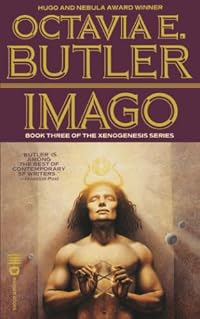
The stunning conclusion to a postapocalyptic trilogy about an alien species merging with humans—from "one of science fiction's finest writers" (TheNew York Times).Human and Oankali have been mating since the aliens first came to Earth to rescue the few survivors of an annihilating nuclear war. The Oankali began a massive breeding project, guided by the ooloi, a sexless subspecies capable of manipulating DNA, in the hope of eventually creating a perfect starfaring race. Jodahs is supposed show more to be just another hybrid of human and Oankali, but as he begins his transformation to adulthood he finds himself becoming ooloi—the first ever born to a human mother. As his body changes, Jodahs develops the ability to shapeshift, manipulate matter, and cure or create disease at will. If this frightened young man is able to master his new identity, Jodahs could prove the savior of what's left of mankind. Or, if he is not careful, he could become a plague that will destroy this new race once and for all.
Readers of Ursula K. Le Guin and N. K. Jemisin will be fascinated by bestselling author Octavia Butler's thought-provoking and compelling vision of humanity.
This ebook features an illustrated biography of Octavia E. Butler including rare images from the author's estate. show less
Tags
Recommendations








Member Reviews
Summary: The concluding volume of this trilogy explores what happens when human-Oankali breeding results in a construct child that is not supposed to occur.
Jodahs is one of Lilith’s children with both human and Oankali parents. Up until now all of these “constructs” mature to be males or females with a blend of human and Oankali traits. This appeared to be the case with Jodahs and its paired sibling Aaor until they began to metamorphose. They didn’t smell right to the others. They were changing into ooloi, the third sex of the Oankali (referred to as “it”). This was not supposed to happen and was potentially dangerous. Ooloi could alter DNA at a touch, indeed the structure of anything, and an imperfect ooloi could unleash show more organic destruction on the planet.
The sensible thing was to transport to the mother ship. The family takes the riskier course of leaving the settlement of Lo to an isolated place to allow both Jodahs and Aaor to complete their metamorphoses. In the process, Jodahs encounters a brother and sister, Tomas and Jesusa, afflicted with painful tumors that will kill them and much of their settlement–but they are also fertile humans. Using its ooloi powers, which are not flawed, it heals them and bonds with them. They become mates and help it complete its metamorphosis. Aaor is less fortunate. It needs mates too, and lacking them, it goes formless with despair, and is danger of dissolving, not a good thing
This leads to a daring action. The settlement the brother and sister came from had kept its existence hidden. This could not continue. The shuttles would come for them. Jodahs realizes he can play a key role in helping them end resistance, choosing either breeding with the Oankali or joining the human-only colony on Mars. The settlement also offers hope of mates for Aaor. But they religiously hate Oankali, and especially ooloi. There is a good chance Jodahs, Aaor, Tomas, and Jesusa could all end up dead.
Butler explores the unanticipated consequences of colonizing a race. The settlement of Tomas and Jodahs represents the human passion for self-determination, which clashes with a more powerful race that neither succeeded in keeping them sterile, nor could let them, exist as they were. Is benevolent intent from one’s own worldview sufficient when it violates the self-determination of others. Is using one’s power to shape the decisions of others so that they will accept what they need to do to survive acceptable when their self determination will kill them?
The capacities of the ooloi also raise questions for humanity as we are witnessing the dawning of new genetic technologies such as CRISPR, capable of possible healing of genetic disorders, but also “optimizing” human genetics or even changing our genetic codes, giving us new capacities. The ooloi seem capable of making perfect changes. Would this be so for us, and would there also be unforeseen consequences?
I came to the end of this book wondering why the trilogy ended here. To say much more would be to leave spoilers, but I thought this series could go further. Others see the emergence of construct ooloi as the culmination of the process that began in Dawn. I can’t help but think this may have opened possibilities the Oankali haven’t anticipated. But we’ll never know… show less
Jodahs is one of Lilith’s children with both human and Oankali parents. Up until now all of these “constructs” mature to be males or females with a blend of human and Oankali traits. This appeared to be the case with Jodahs and its paired sibling Aaor until they began to metamorphose. They didn’t smell right to the others. They were changing into ooloi, the third sex of the Oankali (referred to as “it”). This was not supposed to happen and was potentially dangerous. Ooloi could alter DNA at a touch, indeed the structure of anything, and an imperfect ooloi could unleash show more organic destruction on the planet.
The sensible thing was to transport to the mother ship. The family takes the riskier course of leaving the settlement of Lo to an isolated place to allow both Jodahs and Aaor to complete their metamorphoses. In the process, Jodahs encounters a brother and sister, Tomas and Jesusa, afflicted with painful tumors that will kill them and much of their settlement–but they are also fertile humans. Using its ooloi powers, which are not flawed, it heals them and bonds with them. They become mates and help it complete its metamorphosis. Aaor is less fortunate. It needs mates too, and lacking them, it goes formless with despair, and is danger of dissolving, not a good thing
This leads to a daring action. The settlement the brother and sister came from had kept its existence hidden. This could not continue. The shuttles would come for them. Jodahs realizes he can play a key role in helping them end resistance, choosing either breeding with the Oankali or joining the human-only colony on Mars. The settlement also offers hope of mates for Aaor. But they religiously hate Oankali, and especially ooloi. There is a good chance Jodahs, Aaor, Tomas, and Jesusa could all end up dead.
Butler explores the unanticipated consequences of colonizing a race. The settlement of Tomas and Jodahs represents the human passion for self-determination, which clashes with a more powerful race that neither succeeded in keeping them sterile, nor could let them, exist as they were. Is benevolent intent from one’s own worldview sufficient when it violates the self-determination of others. Is using one’s power to shape the decisions of others so that they will accept what they need to do to survive acceptable when their self determination will kill them?
The capacities of the ooloi also raise questions for humanity as we are witnessing the dawning of new genetic technologies such as CRISPR, capable of possible healing of genetic disorders, but also “optimizing” human genetics or even changing our genetic codes, giving us new capacities. The ooloi seem capable of making perfect changes. Would this be so for us, and would there also be unforeseen consequences?
I came to the end of this book wondering why the trilogy ended here. To say much more would be to leave spoilers, but I thought this series could go further. Others see the emergence of construct ooloi as the culmination of the process that began in Dawn. I can’t help but think this may have opened possibilities the Oankali haven’t anticipated. But we’ll never know… show less
The last and best of the Xenogenesis trilogy. In "Imago", Butler fleshes out her vision of how far human transformation can stretch by telling the story of a human-born individual who becomes an ooloi -- a sort of master gene manipulator and nucleus of Oankali families. While much of these books focused on humans' inability or unwillingness to accept what they could not recognize, "Imago" takes this a step further: this time, the Oankali are nervous about accepting a human born ooloi into their society. Jodahs and Aaor -- the "the paired siblings" we follow in this narrative, an array of possibilities that they find unpalatable: exile, return to a mothership that they do not identify with, lifelong loneliness. Like the other books in show more this trilogy, "Xenogenesis" is as much about connection as anything else. We see Johas and Aaor go through metamorphoses and find mates, which is not, I suppose, so different to what happens to many young people on Earth. The difference is that, as ooloi, if they do not find mates at the right time, there is a genuine chance that they will die -- simply dissolve. In this book -- in this series, really -- contact with others isn't just important, it's essential. There's a lot of talk about touch and sensory arms and what might essentially be called prehensile nerves, and Butler describes the connections made here in terms so vividly sensual that they border on the sexual. Even more so than the other novels in this series, "Imago" is a book about mating and maturing and coming into adulthood, both as an individual and as a society.
The author also doubles down on themes she explored in the first two novels in this trilogy. The future that she imagines here is set in the Global South and explicitly post-racial: the Oankali have no real concept of race, and it's a concept that seems to have lost all use even for the humans who have chosen to resist their new, multi-tentacled alien overlords. Butler also takes pains to describe what I can only assume are the harmful mental habits of the humans who have chosen to preserve their human identity at all costs. Suspicious, irrational, and often nasty, their die-hard insistence on preserving what they see as human purity does not seem to do them any favors. Butler skillfully fits these reactionaries into a wider intellectual landscape -- one in which races that prize adaptation, connection, long-range planning and the preservation of nature have better chances for survival. At the same time, I couldn't help but wonder whether the Oankali themselves displayed a bit of a colonialist mindset themselves. After all, humans who resisted were gassed to sleep, genetically modified -- albeit with clear benefits -- and given a choice of either assimilating to Oankali society or settling on Mars in a new human colony being built there. As marvelous as the Oankali often seem, I'm not sure that I'd really appreciate these choices, either, though I've got enough health problems that I wouldn't mind a check up with an ooloi myself. The resisters are classic dead-enders -- their society has just been destroyed in a nuclear war! -- but sometimes I couldn't help but sympathize with them, which may not have been what the author intended. If it isn't already obvious, "Imago", like every book in this trilogy, gives the reader a great deal to think about. That Butler's prose is well-crafted and her attention to human emotions and habits on par -- or better -- than many literary authors I've read only makes her work more of a pleasure. This is a good one. show less
The author also doubles down on themes she explored in the first two novels in this trilogy. The future that she imagines here is set in the Global South and explicitly post-racial: the Oankali have no real concept of race, and it's a concept that seems to have lost all use even for the humans who have chosen to resist their new, multi-tentacled alien overlords. Butler also takes pains to describe what I can only assume are the harmful mental habits of the humans who have chosen to preserve their human identity at all costs. Suspicious, irrational, and often nasty, their die-hard insistence on preserving what they see as human purity does not seem to do them any favors. Butler skillfully fits these reactionaries into a wider intellectual landscape -- one in which races that prize adaptation, connection, long-range planning and the preservation of nature have better chances for survival. At the same time, I couldn't help but wonder whether the Oankali themselves displayed a bit of a colonialist mindset themselves. After all, humans who resisted were gassed to sleep, genetically modified -- albeit with clear benefits -- and given a choice of either assimilating to Oankali society or settling on Mars in a new human colony being built there. As marvelous as the Oankali often seem, I'm not sure that I'd really appreciate these choices, either, though I've got enough health problems that I wouldn't mind a check up with an ooloi myself. The resisters are classic dead-enders -- their society has just been destroyed in a nuclear war! -- but sometimes I couldn't help but sympathize with them, which may not have been what the author intended. If it isn't already obvious, "Imago", like every book in this trilogy, gives the reader a great deal to think about. That Butler's prose is well-crafted and her attention to human emotions and habits on par -- or better -- than many literary authors I've read only makes her work more of a pleasure. This is a good one. show less
The final book of the series is just as highly readable as the first two. It is a bit more optimistic and closes the trilogy on a positive note - the power of love is infinite, it is able to overcome prejudice, fear, barriers of race and even irreconcilable differences between species.
Overall design of the trilogy strikes me as a good example of Hegelian dialectic. 'Dawn' is entirely focused on the thesis of Human Contradiction. We are a species endowed with intelligence yet bound by hierarchical behavior, which our rationality cannot overcome. We inevitably become self-destructive as a result of this contradiction. We are doomed, there is no possibility for us to survive, our time is running out, the Great Filter is already in action. show more This thesis is the central theme of the entire series and its main insight.
'Adulthood Rites' presents an antithesis - an alternative evolutionary path that is inclusive. Instead of attempting to climb to a pinnacle of creation by dominating other life forms, Oankali embrace whatever expression of life they meet - it becomes part of them. Life is precious, one can only kill in the act of desperate self-defense, one can never kill to attain a status or a privileged position. Closely following Hegel's norm Butler dismantles her antithesis. What is it if not a form of ultimate domination? Life being embraced has no choice even if it is an intelligent life. It cannot refuse to be absorbed, integrated, swallowed up by its gracious benefactor. It cannot retain its contradiction and attempt to overcome it independently. Humans obviously cannot accept this.
'Imago' formulates a synthesis. It unites the thesis and antithesis on a higher level. It chooses one aspect of human condition that can reach above hierarchal behavior - love. This unique selfless characteristic of humans is also important to Oankali, for whom it is rooted in partnership, family, raising of children - all these viewed as the highest possible reward for any individual. Humans and Oankali are brought together yet again but without coercion and subjugation. Turns out that love is all you need. show less
Overall design of the trilogy strikes me as a good example of Hegelian dialectic. 'Dawn' is entirely focused on the thesis of Human Contradiction. We are a species endowed with intelligence yet bound by hierarchical behavior, which our rationality cannot overcome. We inevitably become self-destructive as a result of this contradiction. We are doomed, there is no possibility for us to survive, our time is running out, the Great Filter is already in action. show more This thesis is the central theme of the entire series and its main insight.
'Adulthood Rites' presents an antithesis - an alternative evolutionary path that is inclusive. Instead of attempting to climb to a pinnacle of creation by dominating other life forms, Oankali embrace whatever expression of life they meet - it becomes part of them. Life is precious, one can only kill in the act of desperate self-defense, one can never kill to attain a status or a privileged position. Closely following Hegel's norm Butler dismantles her antithesis. What is it if not a form of ultimate domination? Life being embraced has no choice even if it is an intelligent life. It cannot refuse to be absorbed, integrated, swallowed up by its gracious benefactor. It cannot retain its contradiction and attempt to overcome it independently. Humans obviously cannot accept this.
'Imago' formulates a synthesis. It unites the thesis and antithesis on a higher level. It chooses one aspect of human condition that can reach above hierarchal behavior - love. This unique selfless characteristic of humans is also important to Oankali, for whom it is rooted in partnership, family, raising of children - all these viewed as the highest possible reward for any individual. Humans and Oankali are brought together yet again but without coercion and subjugation. Turns out that love is all you need. show less
The final installment in the Lilith's Brood trilogy give us a closer, first-person perspective on the Oankali's third gender: the ooloi. Like Akin before it, Jodahs is the first of it's kind: a human born ooloi who struggles to reconcile it's unique combination of human and oankali traits. Unlike Akin, though, Jodhas can modify the genetic structure of living things around it, often subconsciously and without effort, which is dangerous on a planet with so many creatures that can't defend themselves. As such, Jodhas faces a form of exile from its oankali community until it can prove that it has control over it's abilities. It's tumultuous time in metamorphosis is complicated by meeting two fertile humans, with which it desperately wants show more to mate.
Imago benefits from a more directed plot than Adulthood Rites, and I personally found myself much more drawn to learning about the ooloi than a male construct. In describing Jodah's experiences, there are a few moments of alienness that hearken back to the best parts of Dawn. Butler continues to walk the fine line of empathy for the oankali, and condemnation of their treatment of humanity.
If I can do a bit of armchair-quarterbacking, had Adulthood Rites and Imago been condensed into one ~400 page book by cutting out some of the repetition and lulls, I'd probably love it as much as I love Dawn. Even as it stand, I'm super satisfied with the trilogy, and glad to have read them all back-to-back. Though, I do think that Butler's style of prose suffers a little bit when you read it at such length. I found myself unable to appreciate the subtlety of her writing after engaging with it for so long. show less
Imago benefits from a more directed plot than Adulthood Rites, and I personally found myself much more drawn to learning about the ooloi than a male construct. In describing Jodah's experiences, there are a few moments of alienness that hearken back to the best parts of Dawn. Butler continues to walk the fine line of empathy for the oankali, and condemnation of their treatment of humanity.
If I can do a bit of armchair-quarterbacking, had Adulthood Rites and Imago been condensed into one ~400 page book by cutting out some of the repetition and lulls, I'd probably love it as much as I love Dawn. Even as it stand, I'm super satisfied with the trilogy, and glad to have read them all back-to-back. Though, I do think that Butler's style of prose suffers a little bit when you read it at such length. I found myself unable to appreciate the subtlety of her writing after engaging with it for so long. show less
Some thoughts: A satisfactory ending to the trilogy, although the ending feels a bit too tidy. We do, however, never find out what happens to humanity; we only have the Oankali's prediction and they are never wrong. Well, hardly ever. The writing feels very stately; perhaps all the long, alien names help you read the book slowly. There's a little bit about gender and language: in, say, Spanish, where every noun is either masculine or feminine, it is hard to find a pronoun for a third gender. English has "it" which may be an unfair term to use (and the word isn't always used as a pronoun) because it seems to imply someone lacking male or female characteristics. The Oankali say that humans are hierarchical, a trait they developed even show more before intelligence, and therefore are doomed to self-destruction. I wonder if our need to divide people into "us" and "them" isn't also a factor. There is little about the day-to-day life of the people, but I suppose that's true of most stories. show less
The last volume of the mind blowing, thought provoking Lilith’s Brood series (I prefer the original name Xenogenesis myself, it has a nice sci-fi ring to it).
Jodahs the protagonist of this book is another offspring of Lilith Iyapo. The least human of the series' central characters, especially after its first metamorphosis. As Jodahs is neither male or female, and certainly not a hermaphrodite, the pronoun it is the only appropriate one for referring to characters of the “ooloi” gender; he third sex of the alien Oankali race.
The story of Imago is basically a Bildungsroman, centered around the adventures of Jodahs. As if being an ooloi is not alien enough he (I'm slipping back into using he instead of it again, old habits) is even show more more alien than the average ooloi, being the first of this third gender to have human gene as well as Oankali. This necessitates that he goes into exile until he can control his genetic manipulation abilities; as the other aliens are concerned that he will inadvertently contaminate them, their biotech habitat, food sources etc. Fortunately he has his family going along with him to back him up. After straying in the woods with his family for a whole he soon wanders off on his own and soon encounters a couple of humans who he seduces to become his mates.
That is probably the longest synopsis I have ever written, I normally avoid writing these like the plague but sometime I find a synopsis to be an unavoidable component of the review. Perhaps because there are so many bizarre concepts which need to be mentioned in order to proceed with the review. As with the other books in this series weird biotechnology is the main sci-fi aspect. While amazing the sci-fi fans with her wild inventions Ms. Butler is subtly making us ponder what it means to be human and whether it is worth preserving our humanity at all cost. The problem with being human, according to the Oankali’s observation, is that “the human biological contradiction” dictates that we will eventually self destruct because we can not refrain from hierarchical behavior. Basically being human is not what it is cracked up to be.
The theme of xenophobia is also more prominent in this volume, how an open mind is required to achieve racial harmony. While conveying her ideas and themes Butler never forget that she is telling a story, more importantly a science fiction story. The novel is rich in subtext which can be inferred from reading between the lines, but reading the lines themselves is always entertaining, thrilling and involving. As with all her works the characters are very well developed and believable, and the writing is powerful. The book is also weirdly erotic in places without ever becoming sexually explicit or titillating.
As my friend Michael kindly pointed out to me there is also an element of alien invasion in this trilogy. However, from the Oankali’s point of view the invasion is for our own good. They believe they are saving us from self destruction (“the human biological contradiction”), even if it means taking away our freedom to choose. The story so far, from their initial rescue of the few remaining humans in [b:Dawn|60929|Dawn (Xenogenesis, #1)|Octavia E. Butler|https://d.gr-assets.com/books/1388290339s/60929.jpg|1008111], would indicate that they may be right. However, mating with the Oankali would lead to hybrid offsprings and eventual end of the original human race.
After reviewing the two previous volumes of this series I am almost out of hyperbole. One bold statement I can make is that Lilith’s Brood series (or Xenoegenesis) is my all time favorite sf series, and I have read all the greats, Dune, Foundation, Hyperion etc. Thank you Ms. Butler. show less
Jodahs the protagonist of this book is another offspring of Lilith Iyapo. The least human of the series' central characters, especially after its first metamorphosis. As Jodahs is neither male or female, and certainly not a hermaphrodite, the pronoun it is the only appropriate one for referring to characters of the “ooloi” gender; he third sex of the alien Oankali race.
The story of Imago is basically a Bildungsroman, centered around the adventures of Jodahs. As if being an ooloi is not alien enough he (I'm slipping back into using he instead of it again, old habits) is even show more more alien than the average ooloi, being the first of this third gender to have human gene as well as Oankali. This necessitates that he goes into exile until he can control his genetic manipulation abilities; as the other aliens are concerned that he will inadvertently contaminate them, their biotech habitat, food sources etc. Fortunately he has his family going along with him to back him up. After straying in the woods with his family for a whole he soon wanders off on his own and soon encounters a couple of humans who he seduces to become his mates.
That is probably the longest synopsis I have ever written, I normally avoid writing these like the plague but sometime I find a synopsis to be an unavoidable component of the review. Perhaps because there are so many bizarre concepts which need to be mentioned in order to proceed with the review. As with the other books in this series weird biotechnology is the main sci-fi aspect. While amazing the sci-fi fans with her wild inventions Ms. Butler is subtly making us ponder what it means to be human and whether it is worth preserving our humanity at all cost. The problem with being human, according to the Oankali’s observation, is that “the human biological contradiction” dictates that we will eventually self destruct because we can not refrain from hierarchical behavior. Basically being human is not what it is cracked up to be.
The theme of xenophobia is also more prominent in this volume, how an open mind is required to achieve racial harmony. While conveying her ideas and themes Butler never forget that she is telling a story, more importantly a science fiction story. The novel is rich in subtext which can be inferred from reading between the lines, but reading the lines themselves is always entertaining, thrilling and involving. As with all her works the characters are very well developed and believable, and the writing is powerful. The book is also weirdly erotic in places without ever becoming sexually explicit or titillating.
As my friend Michael kindly pointed out to me there is also an element of alien invasion in this trilogy. However, from the Oankali’s point of view the invasion is for our own good. They believe they are saving us from self destruction (“the human biological contradiction”), even if it means taking away our freedom to choose. The story so far, from their initial rescue of the few remaining humans in [b:Dawn|60929|Dawn (Xenogenesis, #1)|Octavia E. Butler|https://d.gr-assets.com/books/1388290339s/60929.jpg|1008111], would indicate that they may be right. However, mating with the Oankali would lead to hybrid offsprings and eventual end of the original human race.
After reviewing the two previous volumes of this series I am almost out of hyperbole. One bold statement I can make is that Lilith’s Brood series (or Xenoegenesis) is my all time favorite sf series, and I have read all the greats, Dune, Foundation, Hyperion etc. Thank you Ms. Butler. show less
Many thoughts. I have a lot to say about this whole series, lol.
So, are the Oankali... bad? Would humanity be better without them, or worse? Octavia Butler is too clever to let you answer questions like that easily. The Oankali rescue humanity from mass extinction, and commit reproductive genocide on the survivors. They heal terminal human sicknesses and injuries, but at the cost of human freedom. Those that they finally do set free, they displace. They have destroyed all human structures and cultural/historical records. But they will also go to extremes to save the life of any human they meet, even to the point of endangering themselves. The Oankali are believers in biological determinism, eugenics, and their own absolute right to show more dominion over others. But they seem to truly believe that this is a product of care and love, even moral necessity-- and you kind of believe them!
I think to a certain extent the reader is supposed to be aware of how the Oankali mentality is insidious and disturbing, but the main character of the book has pretty much fully bought in, and we see everything from its perspective, which creates an interesting ambiguity. Unlike Akin from Adulthood Rites, whose bildungsroman plot separated him from his Oankali family, Jodahs does not learn to advocate for the resister humans, but rather at the humans, on behalf of the colonizer Oankali. Though the Oankali did not create Jodahs intentionally, as an ooloi it becomes an instrument for the greater Oankali plan/way of life. And it believes in that way of life fundamentally-- it is strongly attracted to Tomas and Jesusa, and it sees its attraction as a positive and a necessity. It genuinely wants to help them, and it does so as best as it can within the systems that it knows. It's clear that for construct ooloi, finding human mates is a psychological/biological imperative, and allowing humans to live and reproduce on their own is morally distasteful. And so it drugs a young man and a young woman into physiological dependence.
This is not to say that the humans are the "good guys"-- certainly the one human group we see with any detail in this book is extremely hierarchical, violent, and insular. And the whole trilogy is in the shadow of the almost complete self-destruction of the human race through nuclear war (a product, we are told, of humanity's inherent "contradiction"). This makes it tempting to forgive the Oankali's paternalism. But none of the humans of the Xenogenesis trilogy are the world leaders who pulled the nuclear trigger. The book's discussion of human hierarchy and self-oppression is further complicated by the fact that the majority of survivors are from the Global South, as most of the areas least affected by nuclear fallout were in South America and Africa. So these survivors are far removed from the most powerful political entities of the world.
And these survivors find no empowerment or equality with the Oankali. The Oankali method of decision-making, their "consensus" apparatus, by its very mechanism cannot include humans. They talk a big game about their system being better than human hierarchical tendencies, but their "consensus" is a hierarchy as well-- a hierarchy of two tiers, that clearly disenfranchises its less powerful members. Their justification is that humans don't know what's best for them, a view which basically treats them like children, or like animals, to be cared for and minded (something especially troubling when contrasted with the Oankali's sexual attraction to and seduction of humans.)
Adulthood Rites I think did a better job of showing that there are resister humans who aren't just stupid/tricked/deluded, with Tate and the doctor. I am a little disappointed that there seems to be some backtracking on portraying complex human characters with agency-- or at least struggling towards attaining agency-- since the strength of Dawn was all about Lilith, as such a character, grappling with her new circumstances. Here, with our protagonist having such an Oankali mentality, and having such power over all the humans it meets, it is a little harder to see things from the human perspective. Perhaps that was intentional.
As far as Butler's writing style and portrayal of character, it was excellent as always. It can be easy to lose track of the little technical things when it's so interesting to discuss the book's big ideas and overarching plot, but Butler's precise control of language and tone keep you hooked. It would be easy for such complex worldbuilding to fall apart if not deftly explained, but luckily Butler makes everything clear and keeps everything moving.
A few smaller thoughts:
1) The Lo entity disturbs me. The Oankali dislike the human dwellings that can allow vermin and bugs through their imperfect walls-- why would you want that irritation when you can have the comfortable, sterile, Lo buildings, which look similar but are all one interconnected entity, an entity that feeds on and replaces the natural environment, and which imprisons all humans not in the genetically manipulated "in" group. The fruits, trees, etc, that Lo produces all look like different plants, but are genetically "encouraged" from the same organism. Idk, in my opinion one of the most beautiful things about Earth is that humans are a small part of a diverse interconnected ecology, a world of complexity we barely understand. For the Oankali, the only diversity and complexity they want is what is stored in the organelles of its ooloi, a tightly-packed, perfectly-controlled database, which can be coaxed into existence out of the homogenous mass of the Oankali ship-entities. Honestly, that freaks me out. There is no interdependence, only consumption, and production for the purpose of consumption.
2) I've heard reviews say that this book is about challenging gender conventions, and it kind of is-- but not, I think, in the way that most people are talking about. The Oankali have a different gender paradigm than the human characters, which challenges the worldview of some characters, especially homophobic ones. But the Oankali paradigm is a rigidly structured and biologically deterministic one-- it just happens to be trinary rather than binary. This is still interesting, especially since Oankali children have no gender until what is essentially Oankali puberty, but it seems unrealistic to me that no Oankali have a more complex relationship to their gender than "once I found out my gender during puberty, I realized it was exactly right". Relatedly, I was disappointed that once again all the humans are heterosexual-- for a minute I thought we were going to meet some lesbians but it turns out I was just misunderstanding what Tomas and Jesusa were talking about. Oh well! show less
So, are the Oankali... bad? Would humanity be better without them, or worse? Octavia Butler is too clever to let you answer questions like that easily. The Oankali rescue humanity from mass extinction, and commit reproductive genocide on the survivors. They heal terminal human sicknesses and injuries, but at the cost of human freedom. Those that they finally do set free, they displace. They have destroyed all human structures and cultural/historical records. But they will also go to extremes to save the life of any human they meet, even to the point of endangering themselves. The Oankali are believers in biological determinism, eugenics, and their own absolute right to show more dominion over others. But they seem to truly believe that this is a product of care and love, even moral necessity-- and you kind of believe them!
I think to a certain extent the reader is supposed to be aware of how the Oankali mentality is insidious and disturbing, but the main character of the book has pretty much fully bought in, and we see everything from its perspective, which creates an interesting ambiguity. Unlike Akin from Adulthood Rites, whose bildungsroman plot separated him from his Oankali family, Jodahs does not learn to advocate for the resister humans, but rather at the humans, on behalf of the colonizer Oankali. Though the Oankali did not create Jodahs intentionally, as an ooloi it becomes an instrument for the greater Oankali plan/way of life. And it believes in that way of life fundamentally-- it is strongly attracted to Tomas and Jesusa, and it sees its attraction as a positive and a necessity. It genuinely wants to help them, and it does so as best as it can within the systems that it knows. It's clear that for construct ooloi, finding human mates is a psychological/biological imperative, and allowing humans to live and reproduce on their own is morally distasteful. And so it drugs a young man and a young woman into physiological dependence.
This is not to say that the humans are the "good guys"-- certainly the one human group we see with any detail in this book is extremely hierarchical, violent, and insular. And the whole trilogy is in the shadow of the almost complete self-destruction of the human race through nuclear war (a product, we are told, of humanity's inherent "contradiction"). This makes it tempting to forgive the Oankali's paternalism. But none of the humans of the Xenogenesis trilogy are the world leaders who pulled the nuclear trigger. The book's discussion of human hierarchy and self-oppression is further complicated by the fact that the majority of survivors are from the Global South, as most of the areas least affected by nuclear fallout were in South America and Africa. So these survivors are far removed from the most powerful political entities of the world.
And these survivors find no empowerment or equality with the Oankali. The Oankali method of decision-making, their "consensus" apparatus, by its very mechanism cannot include humans. They talk a big game about their system being better than human hierarchical tendencies, but their "consensus" is a hierarchy as well-- a hierarchy of two tiers, that clearly disenfranchises its less powerful members. Their justification is that humans don't know what's best for them, a view which basically treats them like children, or like animals, to be cared for and minded (something especially troubling when contrasted with the Oankali's sexual attraction to and seduction of humans.)
Adulthood Rites I think did a better job of showing that there are resister humans who aren't just stupid/tricked/deluded, with Tate and the doctor. I am a little disappointed that there seems to be some backtracking on portraying complex human characters with agency-- or at least struggling towards attaining agency-- since the strength of Dawn was all about Lilith, as such a character, grappling with her new circumstances. Here, with our protagonist having such an Oankali mentality, and having such power over all the humans it meets, it is a little harder to see things from the human perspective. Perhaps that was intentional.
As far as Butler's writing style and portrayal of character, it was excellent as always. It can be easy to lose track of the little technical things when it's so interesting to discuss the book's big ideas and overarching plot, but Butler's precise control of language and tone keep you hooked. It would be easy for such complex worldbuilding to fall apart if not deftly explained, but luckily Butler makes everything clear and keeps everything moving.
A few smaller thoughts:
1) The Lo entity disturbs me. The Oankali dislike the human dwellings that can allow vermin and bugs through their imperfect walls-- why would you want that irritation when you can have the comfortable, sterile, Lo buildings, which look similar but are all one interconnected entity, an entity that feeds on and replaces the natural environment, and which imprisons all humans not in the genetically manipulated "in" group. The fruits, trees, etc, that Lo produces all look like different plants, but are genetically "encouraged" from the same organism. Idk, in my opinion one of the most beautiful things about Earth is that humans are a small part of a diverse interconnected ecology, a world of complexity we barely understand. For the Oankali, the only diversity and complexity they want is what is stored in the organelles of its ooloi, a tightly-packed, perfectly-controlled database, which can be coaxed into existence out of the homogenous mass of the Oankali ship-entities. Honestly, that freaks me out. There is no interdependence, only consumption, and production for the purpose of consumption.
2) I've heard reviews say that this book is about challenging gender conventions, and it kind of is-- but not, I think, in the way that most people are talking about. The Oankali have a different gender paradigm than the human characters, which challenges the worldview of some characters, especially homophobic ones. But the Oankali paradigm is a rigidly structured and biologically deterministic one-- it just happens to be trinary rather than binary. This is still interesting, especially since Oankali children have no gender until what is essentially Oankali puberty, but it seems unrealistic to me that no Oankali have a more complex relationship to their gender than "once I found out my gender during puberty, I realized it was exactly right". Relatedly, I was disappointed that once again all the humans are heterosexual-- for a minute I thought we were going to meet some lesbians but it turns out I was just misunderstanding what Tomas and Jesusa were talking about. Oh well! show less
Members
- Recently Added By
Lists

Dystopian and Apocalyptic Literature
350 works; 74 members

Books Read in 2020
4,379 works; 123 members
Author Information

58+ Works 55,835 Members
Science-fiction writer and novelist Octavia Estelle Butler was born in Pasadena, California, on June 22, 1947. She earned as Associate of Arts degree from Pasadena City College in 1968 and later attended California State University and the University of California. Her first novel, Patternmaster, was the first in a series about a society run by a show more group of telepaths who are mentally linked to one another. She explored the topics of race, poverty, politics, religion, and human nature in her works. She won a Hugo Award in 1984 for her short story Speech Sounds and a Hugo Award and Nebula Award in 1985 for her novella Bloodchild. She received a MacArthur Grant from the John D. and Catherine T. MacArthur Foundation. The award pays $295,000 over a five-year period to creative people who push the boundaries of their fields. She died in Lake Forest Park, Washington on February 24, 2006 at the age of 58. (Bowker Author Biography) show less
Some Editions
Awards and Honors
Awards
Series

Belongs to Publisher Series
Work Relationships
Is contained in
Is an expanded version of
Common Knowledge
- Canonical title
- Imago
- Original title
- Imago
- Original publication date
- 1989-05
- People/Characters
- Lilith Iyapo; Jodahs; Aaor; Jesusa; Tomás; Nikanj
- Dedication
- To Irie Isaacs
- First words
- I slipped into my first metamorphosis so quietly that no one noticed.
- Last words
- (Click to show. Warning: May contain spoilers.)Seconds after I had expelled it, I felt it begin the tiny positioning movements of independent life.
- Blurbers
- Bear, Greg
- Original language
- English
Classifications
Statistics
- Members
- 1,853
- Popularity
- 11,608
- Reviews
- 57
- Rating
- (4.09)
- Languages
- 8 — Czech, English, Finnish, German, Hungarian, Italian, Spanish, Portuguese (Portugal)
- Media
- Paper, Audiobook, Ebook
- ISBNs
- 23
- UPCs
- 1
- ASINs
- 11