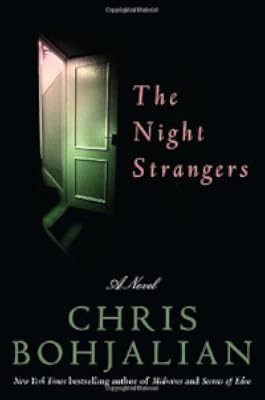
The Night Strangers
by Chris Bohjalian 
On This Page
Description
From the bestselling author of The Double Bind, Skeletons at the Feast, and Secrets of Eden, comes a riveting and dramatic ghost story. In a dusty corner of a basement in a rambling Victorian house in northern New Hampshire, a door has long been sealed shut with 39 six-inch-long carriage bolts. The home's new owners are Chip and Emily Linton and their twin ten-year-old daughters. Together they hope to rebuild their lives there after Chip, an airline pilot, had to ditch his 70-seat regional show more jet in Lake Champlain after double engine failure. Unlike the Miracle on the Hudson, however, most of the passengers aboard Flight 1611 died on impact or were drowned. The body count? Thirty-nine, a coincidence not lost on Chip when he discovers the number of bolts in that basement door. Meanwhile, Emily finds herself wondering about the women in this sparsely populated White Mountain village, self-proclaimed herbalists, and their interest in her fifth-grade daughters. Are the women mad? Or is it her husband, in the wake of the tragedy, whose grip on sanity has become desperately tenuous? The result is a powerful ghost story with a palpable sense of place, an unerring sense of the demons that drive us, and characters we care about deeply. The difference this time? Some of those characters are dead. show lessTags
Recommendations



Member Reviews
A copy of this book was in the big haul from the Airplane Lady, but until I heard this author’s name recently in a podcast, I hadn’t even looked at the file or investigated what kind of books he writes. Evidently this is a weird one for him, but knowing that and that it was fraught and over-the-top, I think I enjoyed myself more than most people who come to the book after reading his other work. And let me get this out of the way - I LIKED THE ENDING.
Let me deal with I didn’t like, then we head deep into spoilerville, so be warned.
There are two threads to the book; Chip’s PTSD after crashing the plane and the herbalists and their fascination with his twins. They didn’t really mesh as well as they could have. I kept expecting show more them to, then whammo, right at the end, Bohjalian merges them in a way I found perfunctory and dismissive. Another thing that bugged me is the inclusion of people who didn’t matter; townspeople and the like. They’d pop up with some message of foreboding, then fade out of sight and out of the story. Not sure they were altogether necessary, but whatever. And I didn’t think moving to New Hampshire was at all plausible when Chip’s plane crashed next door in Vermont. Whut? Oh and Emily drove me a bit crazy with her attitude sometimes. Like thinking anything you do with an ax must be inherently violent. Again, whut? It’s a tool you simpleton. Like any other tool. Oy.
So now let’s address the ending. If you haven’t read it STOP.
I really did like the way the herbalists gradually and relentlessly isolated the family. One by one everyone else even remotely connected to their lives was removed or replaced. Personally I would have found their constant attentions smothering, but Emily repeatedly refers to them as a support system and uses that as a further reason to stay in Bethel (which doesn’t exist, btw, not in NH). A lot of the cryptic remarks between herbalists and their casual cruelty was also pretty chilling (like dithering over which girl will go under the blade). Some are set up as more villainous than others and yeah, it was pretty silly, but it’s a ghost story for crying out loud. With witches! So when people complain that the family didn’t notice what was happening to them - they were poisoned or hexed or whatever, so how could they realize? It’s all part of how the herbalists control their victims. And didn’t you just love it when another one would show up? Like when the cop came to the door for something and Emily notes her initial on her name badge. I wondered what it stood for and in a minute Emily asks. Celandine. Another little swirl of dread just reading it.
Now I really will talk about the end. The reason I liked it is that the horror of the situation continues. All during the novel Bohjalian serves up tons and tons of creepy actions and atmosphere. From Reseda planting a wet one on Emily to Chip’s lower back pain being right in the spot where Ashley was cleaved in two (and he couldn’t have known), from Anise’s awful food to the herbalists manic pawing over the twins. Their real purpose with the twins is 12 shades of dreadful.Then there’s the cat. Creepy, creepy, creepy. Laid on thick, sure, but loads of fun. By the time everyone got renamed they were so totally dominated (and who could blame them considering what all was in their food) they couldn’t do anything but submit. It was like they were in some trance, inevitably marching on to their doom.
I admit, I sort of longed for some payback now and again. That Chip would finally be able to save somebody after his struggle with the crash and then with the ghostly commands to make friends of his girls for Ashley (the dead can’t be friends with breathers, you know). Then when Garnet started to wake up and realize what was happening, I wanted she and Hallie to bond together like in Scooby Doo and go and rip off Sage’s mask and reveal some hokey scheme. Even Reseda would have done in a pinch, but when I read the epilogue, Chip calling Emily Verbena and little Cali off to botany school, the full flower of horror blossomed in my mind. No one escaped. No one would ever escape. The Lintons didn’t even realize what they had done because Anise’s horrid brownies just keep on coming. They are living the lies in near innocence. Near. And isn’t that more squirm-inducing?
Another reason why the ending works is because you come to understand that probably all of them have sacrificed someone to be what they are and preserve the group. If that doesn’t make you feel at least a little sick, you have issues. Didn’t Reseda say she was a twin a couple of times, but that her sister is dead? All to further this little blood cult. The teacher. The cop. The psychiatrist. The lawyer. They all serve to watch for victims and trap them once they’ve been lured in. And it drove Tansy insane in the end. Her situation becomes truly horrifying in the light of this ending. Without it, her behavior is merely perplexing and unresolved. Without it the dread is nullified and meaningless. The evil needs to continue and to flower in the dark like one of their beloved plants. And I think that’s just fine. Can I make you some tea? show less
Let me deal with I didn’t like, then we head deep into spoilerville, so be warned.
There are two threads to the book; Chip’s PTSD after crashing the plane and the herbalists and their fascination with his twins. They didn’t really mesh as well as they could have. I kept expecting show more them to, then whammo, right at the end, Bohjalian merges them in a way I found perfunctory and dismissive. Another thing that bugged me is the inclusion of people who didn’t matter; townspeople and the like. They’d pop up with some message of foreboding, then fade out of sight and out of the story. Not sure they were altogether necessary, but whatever. And I didn’t think moving to New Hampshire was at all plausible when Chip’s plane crashed next door in Vermont. Whut? Oh and Emily drove me a bit crazy with her attitude sometimes. Like thinking anything you do with an ax must be inherently violent. Again, whut? It’s a tool you simpleton. Like any other tool. Oy.
So now let’s address the ending. If you haven’t read it STOP.
I really did like the way the herbalists gradually and relentlessly isolated the family. One by one everyone else even remotely connected to their lives was removed or replaced. Personally I would have found their constant attentions smothering, but Emily repeatedly refers to them as a support system and uses that as a further reason to stay in Bethel (which doesn’t exist, btw, not in NH). A lot of the cryptic remarks between herbalists and their casual cruelty was also pretty chilling (like dithering over which girl will go under the blade). Some are set up as more villainous than others and yeah, it was pretty silly, but it’s a ghost story for crying out loud. With witches! So when people complain that the family didn’t notice what was happening to them - they were poisoned or hexed or whatever, so how could they realize? It’s all part of how the herbalists control their victims. And didn’t you just love it when another one would show up? Like when the cop came to the door for something and Emily notes her initial on her name badge. I wondered what it stood for and in a minute Emily asks. Celandine. Another little swirl of dread just reading it.
Now I really will talk about the end. The reason I liked it is that the horror of the situation continues. All during the novel Bohjalian serves up tons and tons of creepy actions and atmosphere. From Reseda planting a wet one on Emily to Chip’s lower back pain being right in the spot where Ashley was cleaved in two (and he couldn’t have known), from Anise’s awful food to the herbalists manic pawing over the twins. Their real purpose with the twins is 12 shades of dreadful.Then there’s the cat. Creepy, creepy, creepy. Laid on thick, sure, but loads of fun. By the time everyone got renamed they were so totally dominated (and who could blame them considering what all was in their food) they couldn’t do anything but submit. It was like they were in some trance, inevitably marching on to their doom.
I admit, I sort of longed for some payback now and again. That Chip would finally be able to save somebody after his struggle with the crash and then with the ghostly commands to make friends of his girls for Ashley (the dead can’t be friends with breathers, you know). Then when Garnet started to wake up and realize what was happening, I wanted she and Hallie to bond together like in Scooby Doo and go and rip off Sage’s mask and reveal some hokey scheme. Even Reseda would have done in a pinch, but when I read the epilogue, Chip calling Emily Verbena and little Cali off to botany school, the full flower of horror blossomed in my mind. No one escaped. No one would ever escape. The Lintons didn’t even realize what they had done because Anise’s horrid brownies just keep on coming. They are living the lies in near innocence. Near. And isn’t that more squirm-inducing?
Another reason why the ending works is because you come to understand that probably all of them have sacrificed someone to be what they are and preserve the group. If that doesn’t make you feel at least a little sick, you have issues. Didn’t Reseda say she was a twin a couple of times, but that her sister is dead? All to further this little blood cult. The teacher. The cop. The psychiatrist. The lawyer. They all serve to watch for victims and trap them once they’ve been lured in. And it drove Tansy insane in the end. Her situation becomes truly horrifying in the light of this ending. Without it, her behavior is merely perplexing and unresolved. Without it the dread is nullified and meaningless. The evil needs to continue and to flower in the dark like one of their beloved plants. And I think that’s just fine. Can I make you some tea? show less
After a horrific plane crash, a pilot and his family move to rural New Hampshire to get away from it all. There, the first set of people they meet are exceptionally friendly herbalists who take an uncanny interest in the family's twin daughters. Occasional hints are dropped by others that this group is not to be trusted. Meanwhile, the pilot -- with nothing but time to ruminate -- begins to be haunted by those who died on his fatal flight. Is it all in his head or are there real ghosts in their strange new home?
On the whole, I've enjoyed books by Chris Bohjalian in the past so I picked this one up without really looking at it much beyond the author's name. This book is a little bit different than the others I've read by him, as it is show more has a bit of supernatural twist compared to his more realistic novels that I had previously read. That's not necessarily a deal breaker for me, as I like things that have a smidge of the supernatural. In fact, this book seemed to me like it could be an episode of one of my favorite shows, The X-Files. Actually, it seemed like it could be at least two episodes of that show and therein lies my problem with this book.
There was just SO much going on in this book. The PTSD from the plane crash combined with a man who is either being literally haunted or metaphorically haunted is a great idea. It's a bit reminiscent of The Shining but with enough of its own details to not feel like a ripoff. The second-person point-of-view narration works really well here and the story is unsettling but intriguing. This could be a great novel right here.
Then there's the other story of the herbalists with maybe murderous intentions. Again, there's a bit of cat-and-mouse in terms of what's really going on, although I felt like the story revealed itself very early on and then just followed through on that. Considering that Bohjalian often has remarkable twists at the end of his stories, I expected there might be more going on here than meets the eye, but it was pretty much what you were lead to believe by being privy to the thoughts of the herbalists alongside the thoughts of the family. This *maybe* could have been done better if we only seen the family's perspective and were kept just as in the dark as they were.
Finally, there's a third supernatural element with a character who claims to be a shaman who can read people's minds and exorcise ghosts. This I feel is where things really 'jumped the shark.' Having yet another supernatural aspect to this story felt like overkill and the mind-reading in particular was an unnecessary add-on.
That all being said, Bohjalian continues to be talented in his writing style in terms of word choice, dialogue, etc. and he builds a world with many perspectives. He clearly did a lot of research, as he describes a little bit in the author interview at the end of the audiobook version. The narrators for the audiobook both did a good job, with Mark Bramhall being particularly compelling. Still, it's clearly not my favorite book by this author and not the first one I would recommend to others. show less
On the whole, I've enjoyed books by Chris Bohjalian in the past so I picked this one up without really looking at it much beyond the author's name. This book is a little bit different than the others I've read by him, as it is show more has a bit of supernatural twist compared to his more realistic novels that I had previously read. That's not necessarily a deal breaker for me, as I like things that have a smidge of the supernatural. In fact, this book seemed to me like it could be an episode of one of my favorite shows, The X-Files. Actually, it seemed like it could be at least two episodes of that show and therein lies my problem with this book.
There was just SO much going on in this book. The PTSD from the plane crash combined with a man who is either being literally haunted or metaphorically haunted is a great idea. It's a bit reminiscent of The Shining but with enough of its own details to not feel like a ripoff. The second-person point-of-view narration works really well here and the story is unsettling but intriguing. This could be a great novel right here.
Then there's the other story of the herbalists with maybe murderous intentions. Again, there's a bit of cat-and-mouse in terms of what's really going on, although I felt like the story revealed itself very early on and then just followed through on that. Considering that Bohjalian often has remarkable twists at the end of his stories, I expected there might be more going on here than meets the eye, but it was pretty much what you were lead to believe by being privy to the thoughts of the herbalists alongside the thoughts of the family. This *maybe* could have been done better if we only seen the family's perspective and were kept just as in the dark as they were.
Finally, there's a third supernatural element with a character who claims to be a shaman who can read people's minds and exorcise ghosts. This I feel is where things really 'jumped the shark.' Having yet another supernatural aspect to this story felt like overkill and the mind-reading in particular was an unnecessary add-on.
That all being said, Bohjalian continues to be talented in his writing style in terms of word choice, dialogue, etc. and he builds a world with many perspectives. He clearly did a lot of research, as he describes a little bit in the author interview at the end of the audiobook version. The narrators for the audiobook both did a good job, with Mark Bramhall being particularly compelling. Still, it's clearly not my favorite book by this author and not the first one I would recommend to others. show less
The sheer variety of subjects covered by this author is quite astonishing. In this one, we have a graphic plane crash juxtaposed with some full-on weird herb abuse in a small New England community. There is also a healthy dose of the supernatural at play. It was perhaps a mistake to read this book just a week or so before a transatlantic flight. The very impressive description of the air crash at the novel’s heart was very much on my mind as we took off, and it took me a while to shake myself free. This is quite an exciting read when all’s said and done; different, very original. But the ending won’t please many people. Me included!
A pilot, who is one of the few survivors of one of his flights, moves with his family to a rambling, old Victorian house in a small, Northern New Hampshire town in an attempt to reset and recuperate from the accident. But the town is filled with strange folk who seem to love herb gardening more than is customary, and the house is either haunted or it's all in the pilot's head. It certainly doesn't help the creep factor that the townsfolk seem overly interested in his twin daughters...
The Shining meets Rosemary's Baby. Excellently creepy atmosphere, and nicely told in such a way that keeps you guessing for a good long while if the monsters are real or not. A supernatural thriller that doesn't get too scary. I loved it.
The Shining meets Rosemary's Baby. Excellently creepy atmosphere, and nicely told in such a way that keeps you guessing for a good long while if the monsters are real or not. A supernatural thriller that doesn't get too scary. I loved it.
Pilot Chip Linton is plagued by the guilt he feels after an unsuccessful water landing claimed the lives of 39 of his passengers and crew. He and his wife Emily and their 10-year-old twin daughters decide to start over and move to a rambling old Victorian house in a small town in New Hampshire. But Chip, suffering from PTSD, phantom pains, and depression, does not find rest and respite in their new home. He quickly becomes obsessed with a strange door in the basement—a door bolted shut with exactly 39 heavy-duty carriage bolts. When Chip’s phantom pains increase, he begins to understand that what he’s feeling are the fatal injuries sustained by three crash victims—a young woman, and a father and daughter. The three begin show more appearing to Chip and the dead father attempts to convince Chip to kill his own daughters to provide playmates for the dead girl. Meanwhile, Emily is being befriended by a group of women in the town, all of whom are named for plants, all of whom have greenhouses filled with strange and exotic herbs and flowers, and all of whom have a very unusual and sinister interest in the Linton twins.
The Night Strangers is slow-starting, with a gradual and inexorable build-up to the truly creepy ending. However, many readers may wish Bohjalian had focused more on either the ghost story or the herbalists’s plot, the two stories being so unrelated outside of their cast that at times it feels one is reading two different books at once. show less
The Night Strangers is slow-starting, with a gradual and inexorable build-up to the truly creepy ending. However, many readers may wish Bohjalian had focused more on either the ghost story or the herbalists’s plot, the two stories being so unrelated outside of their cast that at times it feels one is reading two different books at once. show less
What begins as the story of a pilot dealing with severe PTSD morphs into an atmospheric horror novel. The pilot and his wife, Chip and Emily Linton, move their family to a rambling Victorian house in a small New England town hoping to rebuild their lives after the crash of one of Chip's flights in which nearly all the passengers die. But Chip finds a strange door in the basement sealed with 39 six-inch long carriage bolts. Mysterious enough, but it is also the exact number of passengers who died in the crash. As Chip's mental state deteriorates and he begins seeing ghosts, his wife and children cope with the town's rather odd group of self-proclaimed herbalists. Why are the herbalists so interested in the two girls, and why do they want show more to give Emily and the girls new names? Truly creepy, right down to the final twist. One of my favorite books of the year. show less
CREEPY
The first hundred pages were rather depressing, but then things started getting interesting. Vengeful ghosts, flower-name witches, and all along, you wanted the family out of danger. The ending caught me. It has been a good while since I have read such a good horror story.
The first hundred pages were rather depressing, but then things started getting interesting. Vengeful ghosts, flower-name witches, and all along, you wanted the family out of danger. The ending caught me. It has been a good while since I have read such a good horror story.
Members
- Recently Added By
Published Reviews
KIRKUS REVIEW
Bohjalian’s (Secrets of Eden, 2010, etc.) latest effort finds its dark magick in a coven of herbalists, ghosts from an air crash and the troubled history of a derelict Victorian house.
Chip Linton was an experienced pilot for a regional airline, but the aircraft he was flying one sunny August day hit a flock of geese upon takeoff. Chip’s chance to duplicate the heroic flying show more skills of Sully Sullenberger and the miracle landing on the Hudson River are lost to a rogue wave in the middle of Lake Champlain. Thirty-nine people died during the emergency landing. Until that day, Chip’s life had been the American dream: a profession he loved; a beautiful wife with a successful law practice; adored 10-year-old twin daughters. Now Chip fights posttraumatic stress and has crashed into clinical depression. Emily Linton decides the family needs a new start. She persuades Chip to move to the White Mountains of New Hampshire where she’s found a gingerbread-trimmed house crying for restoration. Emily joins a local law firm. The twins, Hallie and Garnet, try to fit in at school. And Chip goes to work remodeling the house, right down to obsessing over a door in the basement sealed by 39 carriage bolts. Chip, haunted by victims of the crash, wonders if the bolts are macabre symbols for the 39 dead. Like the Lintons, numerous houses around the small town have greenhouses, each owned and lovingly maintained by one of the herbalists. And the herbalists are especially interested in the Lintons’ twin daughters. The narrative develops an aura of malevolence early on, but perhaps too slowly for some horror fans. Many characters, especially all but one of the herbalists, seem one-dimensional. Some plot points are unresolved or take odd turns, perhaps in anticipation of a sequel. Chip’s story is the most compelling. It's presented in the second person and closely parallels the fugue state that sometimes haunts those with depression.
A practical magick horror story with a not-entirely-satisfying resolution. show less
Bohjalian’s (Secrets of Eden, 2010, etc.) latest effort finds its dark magick in a coven of herbalists, ghosts from an air crash and the troubled history of a derelict Victorian house.
Chip Linton was an experienced pilot for a regional airline, but the aircraft he was flying one sunny August day hit a flock of geese upon takeoff. Chip’s chance to duplicate the heroic flying show more skills of Sully Sullenberger and the miracle landing on the Hudson River are lost to a rogue wave in the middle of Lake Champlain. Thirty-nine people died during the emergency landing. Until that day, Chip’s life had been the American dream: a profession he loved; a beautiful wife with a successful law practice; adored 10-year-old twin daughters. Now Chip fights posttraumatic stress and has crashed into clinical depression. Emily Linton decides the family needs a new start. She persuades Chip to move to the White Mountains of New Hampshire where she’s found a gingerbread-trimmed house crying for restoration. Emily joins a local law firm. The twins, Hallie and Garnet, try to fit in at school. And Chip goes to work remodeling the house, right down to obsessing over a door in the basement sealed by 39 carriage bolts. Chip, haunted by victims of the crash, wonders if the bolts are macabre symbols for the 39 dead. Like the Lintons, numerous houses around the small town have greenhouses, each owned and lovingly maintained by one of the herbalists. And the herbalists are especially interested in the Lintons’ twin daughters. The narrative develops an aura of malevolence early on, but perhaps too slowly for some horror fans. Many characters, especially all but one of the herbalists, seem one-dimensional. Some plot points are unresolved or take odd turns, perhaps in anticipation of a sequel. Chip’s story is the most compelling. It's presented in the second person and closely parallels the fugue state that sometimes haunts those with depression.
A practical magick horror story with a not-entirely-satisfying resolution. show less
added by kthomp25
Lists

Summer Reads 2014
207 works; 69 members

Books Read in 2014
2,343 works; 89 members

ALA The Reading List
490 works; 28 members

Books Tagged Doppelganger
15 works; 1 member

Haunted Places and Ghost Stories Reading List
99 works; 4 members

GoodReads Horror Choice Awards
160 works; 4 members

Ghost Stories That Thrill Us
256 works; 115 members
Author Information

37+ Works 28,836 Members
Chris Bohjalian (born on August 12, 1962 in White Plains, New York) graduated from Amherst College and worked as an account representative for J. Walter Thompson advertising agency in New York in the mid-1980s. Bohjalian is an American novelist and the author of 15 novels, including the bestsellers Midwives and The Sandcastle Girls. His first show more novel, A Killing in the Real World, was released in 1988. His other novels include Water Witches, The Law of Similars, Before You Know Kindness, Skeletons at the Feast, and The Night Strangers. Past the Bleachers and Midwives were made into Hallmark Hall of Fame movies and Secrets of Eden was made into a Lifetime Television movie. He won the New England Book Award in 2002. He also contributes to numerous publications including Cosmopolitan, Reader's Digest, Boston Globe Sunday Magazine and the Burlington Free Press. Bohjalian's The Guest Room is a New York Times bestseller. (Bowker Author Biography) show less
Chris Bohjalian is a LibraryThing Author, an author who lists their personal library on LibraryThing.
Some Editions
Awards and Honors
Awards
Distinctions
Common Knowledge
- Canonical title
- The Night Strangers
- Original publication date
- 2011
- People/Characters
- Chip Linton; Emily Linton; Garnet Linton; Hallie Linton
- Important places
- Bethel, New Hampshire, USA
- Epigraph
- Our bodies are gardens, to which our wills are gardeners.
WILLIAM SHAKESPEARE, Othello
Dead . . . might not be quiet at all.
MARSHA NORMAN, 'night, Mother - Dedication
- For Shaye Areheart and Jane Gelfman
- First words
- The door was presumed to have been the entry to a coal chute, a perfectly reasonable assumption since a small hillock of damp coal sat mouldering before it. (Prologue)
Classifications
Statistics
- Members
- 1,219
- Popularity
- 20,302
- Reviews
- 109
- Rating
- (3.26)
- Languages
- English, French
- Media
- Paper, Audiobook, Ebook
- ISBNs
- 25
- ASINs
- 6