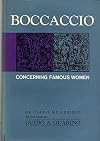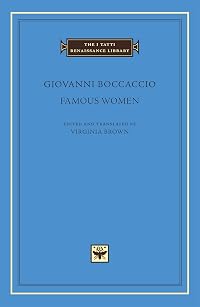
Famous Women (The I Tatti Renaissance Library, 1)
by Giovanni Boccaccio
On This Page
Description
After the composition of the Decameron, and under the influence of Petrarch's humanism, Giovanni Boccaccio(1313-1375) devoted the last decades of his life to compiling encyclopedic works in Latin. Among them is Famous Women, the first collection of biographies in Western literature devoted exclusively to women. The 106 women whose life stories make up this volume range from the exemplary to the notorious, from historical and mythological figures to Renaissance contemporaries. In the hands of show more a master storyteller, these brief biographies afford a fascinating glimpse of a moment in history when medieval attitudes toward women were beginning to give way to more modern views of their potential. Famous Women, which Boccaccio continued to revise and expand until the end of his life, became one of the most popular works in the last age of the manuscript book, and had a signal influence on many literary works, including Chaucer's Canterbury Tales and Castiglione's Courtier. This edition presents the first English translation based on the autograph manuscript of the Latin. show lessTags
Recommendations




Member Reviews
Members
- Recently Added By
Author Information

757+ Works 16,066 Members
Although Giovanni Boccaccio was born in France and raised and educated in Naples, where he wrote his first works under the patronage of the French Angevin ruler, Boccaccio always considered himself a Tuscan, like Petrarch and Dante. After Boccaccio returned to Florence in 1340, he witnessed the outbreak of the great plague, or Black Death, in show more 1348. This provided the setting for his most famous work, the vernacular prose masterpiece Il Decamerone (Decameron) (1353). This collection of 100 short stories, told by 10 Florentines who leave plague-infected Florence for the neighboring hill town of Fiesole, is clear evidence of the beginning of the Renaissance in Italy. The highly finished work exerted a tremendous influence on Chaucer, Shakespeare, Dryden, Keats, and Tennyson even as it established itself as the great classic of Italian fictional prose. Although Chaucer did not mention Boccaccio's name, his Canterbury Tales are clearly modeled on the Decameron. Boccaccio's other important works are a short life of Dante and commentaries on the Divine Comedy; Filocolo (1340) a prose romance; Filostrato (1335), a poem on Troilus and Cressida; and Theseus (1340-41), a poem dealing with the story of Theseus, Palamon, and Arcite. Boccassio's only attempt at writing an epic was a work that Chaucer rendered as his "Knight's Tale." Boccaccio's last work written in Italian was the gloomy, cautionary tale titled The Corbaccio (1355). The Nymph Song (1346), as a counterpiece for the Decameron, demonstrates that it is possible to read the Decameron as an allegory, with the plague representing the spiritual plague of medieval Christianity, viewed from the vantage point of Renaissance humanism. Many of the Decameron tales are indeed paganized versions of medieval sermons about sin and damnation with the morals reversed. After 1363 Boccaccio concentrated on trying to gain enduring fame by writing, in Latin, a series of lives of memorable men and women and a genealogy of the pagan gods. Boccaccio died in 1375. (Bowker Author Biography) show less
Awards and Honors
Series
Belongs to Publisher Series
Common Knowledge
- Original publication date
- 1362
- People/Characters
- Joan I, Queen of Naples; Giovanni Boccaccio; Virginia Brown; Eve; Semiramis; Opis (show all 13); Juno; Ceres; Minerva; Venus; Isis; Europa; Joanna II of Naples
Classifications
- Genres
- Nonfiction, Biography & Memoir, History, General Nonfiction
- DDC/MDS
- 920.72 — History & geography Biographies, Genealogy, Healdry Biographies Famous People of Native Nations Women
- LCC
- PQ4274 .D5 .E5 — Language and Literature French, Italian, Spanish and Portuguese literatures Italian literature Individual authors and works to 1400
- BISAC
Statistics
- Members
- 187
- Popularity
- 175,272
- Rating
- (3.94)
- Languages
- 5 — English, French, German, Latin, Portuguese
- Media
- Paper
- ISBNs
- 7
- ASINs
- 4