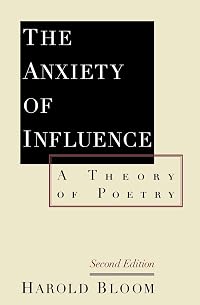
The Anxiety of Influence: A Theory of Poetry
by Harold Bloom
On This Page
Description
Harold Bloom's The Anxiety of Influence has cast its long shadow of influence since it was first published in 1973. Through an insightful study of Romantic poets, Bloom puts forth his central vision of the relations between precursors and the individual artist. His argument that all literary texts are a strong misreading of those that precede them had an enormous impact on the practice of criticism and post-structuralist literary theory. The book remains a central work of criticism for all show more students of literature. Written in a moving personal style, anchored by concrete examples, and memorable quotations, this second edition of Bloom's classic work maintains that the anxiety of influence cannot be evaded - neither by poets nor by responsible readers and critics. A new introduction, centering upon Shakespeare and Marlowe explains the genesis of Bloom's thinking, and the subsequent influence of the book on literary criticism of the past quarter of a century. show lessTags
Recommendations











Member Reviews
Edebiyat teorisi alanının en çok tartışılan, alıntı yapılan klasik eserlerinden biri daha uzun bir aradan sonra Türkçede. Bloom Etkilenme Endişesi'nde esasen Romantik şairler üzerinden, sanatçı birey ile selefleri arasındaki "Ödipal" denebilecek ilişki hakkında, “bir şairin başka bir şairin doğmasına nasıl yardım ettiği” hakkında gayet özgün ve çok tartışılmış bir teori geliştiriyor.
Bloom kitaba 1997 yılında eklediği önsözde bütün şairlerin en büyüğü olarak, hatta modern anlamda "insanı icat eden kişi" olarak gördüğü Shakespeare'in, selefi Marlowe karşısında yaşadığı etkilenme endişesini nasıl yaratıcı bir biçimde aştığını anlatıyor. Bunu yaparken de show more Shakespeare gibi büyük edebiyatçıları toplumsal koşullarına indirgemeye çalıştıklarını düşündüğü için "Hınç Okulu" adını verdiği, günümüzün radikal-siyasi eleştirmenleriyle çok sert bir polemiğe giriyor. Kitabın kendisi kadar bu önsözün de ilgiyle okunacağından eminiz. show less
Bloom kitaba 1997 yılında eklediği önsözde bütün şairlerin en büyüğü olarak, hatta modern anlamda "insanı icat eden kişi" olarak gördüğü Shakespeare'in, selefi Marlowe karşısında yaşadığı etkilenme endişesini nasıl yaratıcı bir biçimde aştığını anlatıyor. Bunu yaparken de show more Shakespeare gibi büyük edebiyatçıları toplumsal koşullarına indirgemeye çalıştıklarını düşündüğü için "Hınç Okulu" adını verdiği, günümüzün radikal-siyasi eleştirmenleriyle çok sert bir polemiğe giriyor. Kitabın kendisi kadar bu önsözün de ilgiyle okunacağından eminiz. show less
## from second reading ##
Video review: https://www.youtube.com/watch?v=QGLpHeI76zQ.
## from first reading ##
Bloom's first book is a phenomenon. He covers his 6 stages of revisionary ratios, through which poets may pass: clinamen, tessera, kenosis, daemonisation, askesis, apophrades; and the symbol of the Covering Cherub (Genesis, Ezekiel, Blake), which casts the longest shadow over every ephebe poet and conceals the way to self-birth.
"[S]trong poets make [poetic] history by misreading one another, so as to clear imaginative space for themselves."
"[R]eally strong poets can read only themselves."
Video review: https://www.youtube.com/watch?v=QGLpHeI76zQ.
## from first reading ##
Bloom's first book is a phenomenon. He covers his 6 stages of revisionary ratios, through which poets may pass: clinamen, tessera, kenosis, daemonisation, askesis, apophrades; and the symbol of the Covering Cherub (Genesis, Ezekiel, Blake), which casts the longest shadow over every ephebe poet and conceals the way to self-birth.
"[S]trong poets make [poetic] history by misreading one another, so as to clear imaginative space for themselves."
"[R]eally strong poets can read only themselves."
Some interestingly similar ideas can be found in Walter Jackson Bate's _Burden of the Past on the English Poet_.
Ratings
Members
- Recently Added By
Lists

Tablet Magazine's List of 101 Great Jewish Books
103 works; 9 members
Author Information

1,222+ Works 38,086 Members
Harold Bloom was born on July 11, 1930 in New York City. He earned his Bachelor of Arts from Cornell in 1951 and his Doctorate from Yale in 1955. After graduating from Yale, Bloom remained there as a teacher, and was made Sterling Professor of Humanities in 1983. Bloom's theories have changed the way that critics think of literary tradition and show more has also focused his attentions on history and the Bible. He has written over twenty books and edited countless others. He is one of the most famous critics in the world and considered an expert in many fields. In 2010 he became a founding patron of Ralston College, a new institution in Savannah, Georgia, that focuses on primary texts. His works include Fallen Angels, Till I End My Song: A Gathering of Last Poems, Anatomy of Influence: Literature as a Way of Life and The Shadow of a Great Rock: A Literary Appreciation of The King James Bible. Harold Bloom passed away on October 14, 2019 in New Haven, at the age of 89. (Bowker Author Biography) show less
Common Knowledge
- Canonical title
- The Anxiety of Influence: A Theory of Poetry
- Original publication date
- 1973
Classifications
- Genres
- Literature Studies and Criticism, Nonfiction
- DDC/MDS
- 809.1 — Literature & rhetoric Literature, rhetoric & criticism History, description, critical appraisal of more than two literatures Poetry
- LCC
- PN1031 .B53 — Language and Literature Literature (General) Literature (General) Poetry Theory, philosophy, relations, etc.
- BISAC
Statistics
- Members
- 865
- Popularity
- 31,467
- Reviews
- 3
- Rating
- (3.63)
- Languages
- 7 — English, French, Italian, Polish, Portuguese, Spanish, Turkish
- Media
- Paper, Ebook
- ISBNs
- 15
- ASINs
- 3