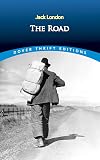
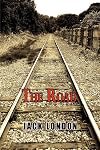
The Road
by Jack London
On This Page
Description
In 1894, an eighteen-year-old Jack London quit his job shoveling coal, hopped a freight train, and left California on the first leg of a ten thousand-mile odyssey. His adventure was an exaggerated version of the unemployed migrations made by millions of boys, men, and a few women during the original "great depression of the 1890's. By taking to the road, young wayfarers like London forged a vast hobo subculture that was both a product of the new urban industrial order and a challenge to it. show more As London's experience suggests, this hobo world was born of equal parts desperation and fascination. "I went on 'The Road,'" he writes, "because I couldn't keep away from it . . . Because I was so made that I couldn't work all my life on 'one same shift'; because-well, just because it was easier to than not to." The best stories that London told about his hoboing days can be found in The Road, a collection of nine essays with accompanying illustrations, most of which originally appeared in Cosmopolitan magazine between 1907 and 1908. His virile persona spoke to white middle-class readers who vicariously escaped their desk-bound lives and followed London down the hobo trail. The zest and humor of his tales, as Todd DePastino explains in his lucid introduction, often obscure their depth and complexity. The Road is as much a commentary on London's disillusionment with wealth, celebrity, and the literary marketplace as it is a picaresque memoir of his youth. show lessTags
Recommendations


















Member Reviews
Sketches of people, places and events by a teenage London who rode the rails during the 1890s looking for adventure. He begged, stole and generally whatever he could do to get by without working (even if it was work). London provides lots of flavor in the slang used by hobos, and interesting details of riding the rails during the golden age. Remarkable how innocent and simple the times were, yet also brutal. I've read better tramping memoirs from this period, this one has good moments and some snoozers. Most significant for biographical details about London but still worthwhile for adventuresome stories.
London's tale of life on the road as a hobo in the 1890s isn't nearly as harrowing as similar tales from the 20th century, especially during the Depression. But it is quite interesting as it describes his initiation to the hobo life and some of the skills he developed. The book sidetracks into a few non-hobo passages, most of which also highlight the author's prowess. While he is certainly boasting of his cleverness throughout the book, he doesn't do so in an annoying way. We learn a lot about human nature here, and London, whom I have not widely read, is a very engaging, modern-sounding author. Recommended!
The 'Road' in question is the railroad - motor cars were almost unheard of when Jack London was travelling around America as a hobo. This is a fascinating look at a very different country. It's full of great characters and long-forgotten slang and exciting tussles with policemen and railroad employees.
The interesting thing about the book, for me, is that it works so well even though the story doesn't have much of a trajectory. It's really just a series of anecdotes about life as a hobo, from surviving a stint in jail to sneaking onto trains and staying on despite the brakemen trying to throw him off. The reason I kept reading was for the wonderful details, the vivid descriptions, the large characters, the tall tales and the wonderful show more insight into a world that seems very distant now. Highly recommended. show less
The interesting thing about the book, for me, is that it works so well even though the story doesn't have much of a trajectory. It's really just a series of anecdotes about life as a hobo, from surviving a stint in jail to sneaking onto trains and staying on despite the brakemen trying to throw him off. The reason I kept reading was for the wonderful details, the vivid descriptions, the large characters, the tall tales and the wonderful show more insight into a world that seems very distant now. Highly recommended. show less
I read this to complete the Sonoma County Library's Winter Reading Program Challenge. Jack London would not have been my first choice for a book to read. I did find this much better and more interesting than I had anticipated. This is Jack London's stories of being a hobo on the railroad from the time he was about 16 to I'm not sure exactly when. It was a page turner. Some funny bits and lots of adventure. Not a life I would want to try. I'm glad such a good writer was able to share it with me.
A fascinating account of the life of a hobo in the time before automobiles, when riding the rails was adventure at its finest. Jack London earned his right to spin adventure tales by living through some of the most incredible wanderings a young person could have enjoyed, and he happily takes us along for the hobo ride.
A great find. Learned alot about JL, the 1890's, and the way America used to be. An honest telling of his days being a 'profesh' hobo and by default about an America long gone buy. He lived during the times of reaction to the Robber Barons. Probably not too popular because JL was an obvious racist but most from that time were. He only lived to 40 but he squeezed a lot out of hos life for sure.
Sagan The Road eftir Jack London var gefin út á íslensku undir heitinu Flækingar og hana er hægt að hlusta á sem hljóðbók í lestri Sigurðar Arendts Jónssonar í útgáfu Hlusta.is.
Í sögunni lýsir ævintýramaðurinn London lífi sínu sem flakkari um Bandaríkin þegar hann var u.þ.b. 18 ára gamall á síðasta áratuginum fyrir aldamótin 1900. Bókin kom út 1907 og í henni lýsir hann þegar hann stalst sem laumufarþegi á lestum þrátt fyrir harða eftirgrennslan lestarvarða, sníkti mat, sagði sögur til að hafa í sig á og og margt fleira.
Skemmtilega ferskar frásagnir og fjörugar en Jack London var einn af fyrstu höfundunum sem öðlaðist heimsfrægð og ríkidæmi fyrir skrif sín.
Í sögunni lýsir ævintýramaðurinn London lífi sínu sem flakkari um Bandaríkin þegar hann var u.þ.b. 18 ára gamall á síðasta áratuginum fyrir aldamótin 1900. Bókin kom út 1907 og í henni lýsir hann þegar hann stalst sem laumufarþegi á lestum þrátt fyrir harða eftirgrennslan lestarvarða, sníkti mat, sagði sögur til að hafa í sig á og og margt fleira.
Skemmtilega ferskar frásagnir og fjörugar en Jack London var einn af fyrstu höfundunum sem öðlaðist heimsfrægð og ríkidæmi fyrir skrif sín.
Members
- Recently Added By
Lists

The Works of Jack London
44 works; 1 member
Author Information

1,809+ Works 82,058 Members
One of the pioneers of 20th century American literature, Jack London specialized in tales of adventure inspired by his own experiences. London was born in San Francisco in 1876. At 14, he quit school and became an "oyster pirate," robbing oyster beds to sell his booty to the bars and restaurants in Oakland. Later, he turned on his pirate show more associates and joined the local Fish Patrol, resulting in some hair-raising waterfront battles. Other youthful activities included sailing on a seal-hunting ship, traveling the United States as a railroad tramp, a jail term for vagrancy and a hazardous winter in the Klondike during the 1897 gold rush. Those experiences converted him to socialism, as he educated himself through prolific reading and began to write fiction. After a struggling apprenticeship, London hit literary paydirt by combining memories of his adventures with Darwinian and Spencerian evolutionary theory, the Nietzchean concept of the "superman" and a Kipling-influenced narrative style. "The Son of the Wolf"(1900) was his first popular success, followed by 'The Call of the Wild" (1903), "The Sea-Wolf" (1904) and "White Fang" (1906). He also wrote nonfiction, including reportage of the Russo-Japanese War and Mexican revolution, as well as "The Cruise of the Snark" (1911), an account of an eventful South Pacific sea voyage with his wife, Charmian, and a rather motley crew. London's body broke down prematurely from his rugged lifestyle and hard drinking, and he died of uremic poisoning - possibly helped along by a morphine overdose - at his California ranch in 1916. Though his massive output is uneven, his best works - particularly "The Call of the Wild" and "White Fang" - have endured because of their rich subject matter and vigorous prose. (Bowker Author Biography) show less
Some Editions
Series
Belongs to Publisher Series
Work Relationships
Common Knowledge
- Canonical title
- The Road
- Original title
- The Road
- Alternate titles
- Tussen de wielen
- Original publication date
- 1907
- People/Characters
- Jack London
- Epigraph
- "Speakin' in general, I 'ave tried 'em all,
The 'appy roads that take you o'er the world.
Speakin' in general, I 'ave found them good
For such as cannot use one bed too long,
But must get 'ence, the s... (show all)ame as I 'ave done,
An' go observin' matters till they die."
—Sestina of the Tramp-Royal - Dedication
- TO
JOSIAH FLYNT
The Real Thing, Blowed in the Glass - First words
- There is a woman in the state of Nevada to whom I once lied continuously, consistently, and shamelessly, for the matter of a couple of hours.
- Quotations
- When a man is paralleling your mental processes, ditch him. Abruptly break off your line of reasoning, and go off on a new line.
Perhaps the greatest charm of tramp-life is the absence of monotony. In Hobo Land the face of life is protean—an ever changing phantasmagoria, where the impossible happens and the unexpected jumps out of the bushes at every... (show all) turn of the road. The hobo never knows what is going to happen the next moment; hence, he lives only in the present moment. He has learned the futility of telic endeavor, and knows the delight of drifting along with the whimsicalities of Chance. - Original language
- English
Classifications
Statistics
- Members
- 452
- Popularity
- 67,910
- Reviews
- 10
- Rating
- (3.78)
- Languages
- 14 — Czech, Danish, Dutch, English, Finnish, French, German, Hungarian, Italian, Norwegian (Bokmål), Portuguese, Spanish, Swedish, Turkish
- Media
- Paper, Audiobook, Ebook
- ISBNs
- 114
- ASINs
- 26