
The Leftovers
by Tom Perrotta
On This Page
Description
What if--whoosh, right now, with no explanation--a number of us simply vanished? Would some of us collapse? Would others of us go on, one foot in front of the other, as we did before the world turned upside down?That's what the bewildered citizens of Mapleton, who lost many of their neighbors, friends and lovers in the event known as the Sudden Departure, have to figure out. Because nothing has been the same since it happened--not marriages, not friendships, not even the relationships show more between parents and children.
Kevin Garvey, Mapleton's new mayor, wants to speed up the healing process, to bring a sense of renewed hope and purpose to his traumatized community. Kevin's own family has fallen apart in the wake of the disaster: his wife, Laurie, has left to join the Guilty Remnant, a homegrown cult whose members take a vow of silence; his son, Tom, is gone, too, dropping out of college to follow a sketchy prophet named Holy Wayne. Only Kevin's teenaged daughter, Jill, remains, and she's definitely not the sweet "A" student she used to be. Kevin wants to help her, but he's distracted by his growing relationship with Nora Durst, a woman who lost her entire family on October 14th and is still reeling from the tragedy, even as she struggles to move beyond it and make a new start.
With heart, intelligence and a rare ability to illuminate the struggles inherent in ordinary lives, Tom Perrotta has written a startling, thought-provoking novel about love, connection and loss.
. show less
Tags
Recommendations




Member Recommendations
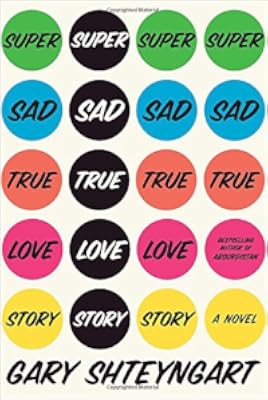
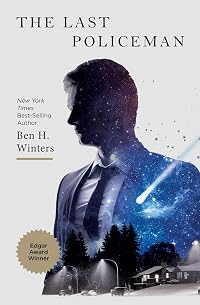
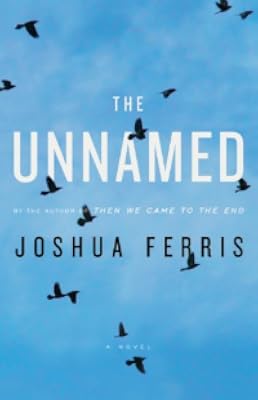
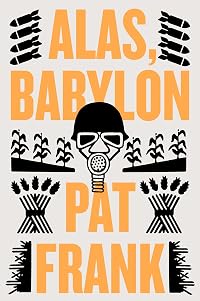
BookshelfMonstrosity If you appreciated the "what if" quality of The Leftovers and its examination of a changed society in which people are struggling to accept the new normal, you may want to read the dystopian classic Brave New World.
21
Member Reviews
A Rapture-style event takes place and millions of people around the world disappear. There seems to be no rhyme or reason to who was taken and those who remain, the leftovers if you will, are baffled.
The novel focuses mainly on one suburban family’s reaction to the event in the years that follow the occurrence. The husband and wife, Kevin and Laurie, have vastly different reactions. She joins a group of fanatics called the Guilty Remnant, convinced they must abandon their lives and take a vow of silence in order to remind people about what happened. Kevin goes in the opposite direction, embracing the community and running for the office of town mayor.
Their college-age son Tom searches for meaning and instead finds the “Healing Hug show more Movement” led by the charismatic Holy Wayne. Lost in the mix is Jill, their daughter who has just started high school. After losing her friend Jen in the event, she is expected to grieve, but instead finds herself wanting to embrace life. A lack of parental guidance and the bad influence of a new friend leave her feeling empty. She is searching for love and acceptance in the wrong places.
Perrotta has a gift for making extreme circumstances seem relatable. In this case, the rapture serves mainly as a device to allow the readers to dive into a fascinating character study of the effects of grief and shock on people. Everyone has lost someone, even those who are only missing celebrities. This shared grief both unites and divides people. It has created a world filled with lonely individuals, few of which know how to initiate new meaningful connections.
One of the most interesting characters is Nora. She lives in the same town and lost both of her kids and her husband on that fateful day. Unlike some of the other characters, she seems unable to move forward, trapped by her grief and guilt, despite the fact that her life was not the perfect picture others thought it to be.
For me the ending was a letdown. The story just seemed to peter out and that really affected my overall impression of the book. I was just expecting something more and instead it just wrapped up quickly and ended.
BOTTOM LINE: The book might be about an unexplained rapture, but really it’s about human nature, relationships and interactions. The rapture is just used to bring those things into a sharper focus, highlighting the loneliness of our world. It was surprisingly hard to put down. I was a bit disappointed in the ending, hence the lower rating, but still an interesting character study.
“… the gratitude that spreads through your body when a burden gets lifted, and the sense of homecoming that follows, when you suddenly remember what it feels like to be yourself.” show less
The novel focuses mainly on one suburban family’s reaction to the event in the years that follow the occurrence. The husband and wife, Kevin and Laurie, have vastly different reactions. She joins a group of fanatics called the Guilty Remnant, convinced they must abandon their lives and take a vow of silence in order to remind people about what happened. Kevin goes in the opposite direction, embracing the community and running for the office of town mayor.
Their college-age son Tom searches for meaning and instead finds the “Healing Hug show more Movement” led by the charismatic Holy Wayne. Lost in the mix is Jill, their daughter who has just started high school. After losing her friend Jen in the event, she is expected to grieve, but instead finds herself wanting to embrace life. A lack of parental guidance and the bad influence of a new friend leave her feeling empty. She is searching for love and acceptance in the wrong places.
Perrotta has a gift for making extreme circumstances seem relatable. In this case, the rapture serves mainly as a device to allow the readers to dive into a fascinating character study of the effects of grief and shock on people. Everyone has lost someone, even those who are only missing celebrities. This shared grief both unites and divides people. It has created a world filled with lonely individuals, few of which know how to initiate new meaningful connections.
One of the most interesting characters is Nora. She lives in the same town and lost both of her kids and her husband on that fateful day. Unlike some of the other characters, she seems unable to move forward, trapped by her grief and guilt, despite the fact that her life was not the perfect picture others thought it to be.
For me the ending was a letdown. The story just seemed to peter out and that really affected my overall impression of the book. I was just expecting something more and instead it just wrapped up quickly and ended.
BOTTOM LINE: The book might be about an unexplained rapture, but really it’s about human nature, relationships and interactions. The rapture is just used to bring those things into a sharper focus, highlighting the loneliness of our world. It was surprisingly hard to put down. I was a bit disappointed in the ending, hence the lower rating, but still an interesting character study.
“… the gratitude that spreads through your body when a burden gets lifted, and the sense of homecoming that follows, when you suddenly remember what it feels like to be yourself.” show less
i completely understand the section of people who hate open endings of this magnitude but i just eat them up every time. i LOVE and live for the gaps authors leave for me to sit around and think about what they could be filled with. i love the acceptance that i'll never know for sure. i read this after watching the show, so it was fascinating to see the changes the showrunners made from the original story and especially what they ended up leaving behind altogether (justice for jill's shaved head and the GR members at the outpost who fell in love). meg and laurie's storyline had so much life here, i got the time with jill and tom that i desperately wanted, and everyone was just so real. they're messy and fucked up and make the wrong show more decisions and act out in pain/anger and there aren't resolutions and they don't have time to fix mistakes and they're just dragging themselves through every day full of grief and confusion and i just love them for it!!!!!!!!!! show less
This book isn't quite was I was expecting. I was anticipating it having more of an immediately post-Rapture plot but it doesn't - most of this happens three years afterwards. It did seem to me to be a bit of a long wait between the event and people acting out from their grief, but I still found the book was massively engaging. It's really more of a character study, watching how each member of a family group (plus one) deals with the losses they've experienced. Grief, if done well, interests me (perhaps because of the somewhat higher than average number of family deaths I dealt with when I was young). This grief is done very well and I could barely put the book down. The characters don't always make logical choices or even smart ones, show more but it was fascinating to watch the paths they choose to take and why. I didn't particularly care for many/any of the characters (especially the males' tendency to be attracted to teenage/underage girls - totally could have done without that) but I was still very into the book and could barely put it down - I finished this book the same day I started it. show less
The Leftovers was an unknown book to me until a friend mentioned over coffee one evening this confusing book that had been loaned to him by one of his friends. He mentioned it a couple of times over the next few weeks, and consistently referenced that, while it was an easy read, he just couldn't figure out what it was that the author was up to. Because of my background, though, he had sought his friend's permission to loan the book to me in turn when he finished, because he was interested in my opinion.
The premise of the Leftovers is this: a Rapture-like event called the Great Departure has occurred, and the story picks up with those who have been (pardon the cliche) left behind. Except this event didn't mesh with the Rapture of show more Christian theology, because people of all faiths are missing, just as many Christians are left behind. Obviously, the world toys with falling apart, and many individuals do just that. Perrotta centers his story on the citizens of one mid-western U.S. town, Mapleton, and how they survive and move forward.
Many religious cults begin to manifest in this future world that Perrotta spins, and all of them seem to emerge from a similar motivation: they are all attempting to correct whatever it was that had been missed in the first place. There's the Guilty Remnant, a fascinating idea for a group of characters, consisting of white-clad watchers that smoke cigarettes and mutely stare at you to remind you that you shouldn't be moving on with life or forgetting what they feel God has done. There's the more humorous Holy Wayne, who marries a few teenage girls and manages to get one pregnant with what he predicts will be the miracle child that will save the world. And, there's the more down to earth pastor whom, unbelieving that he has devoted his whole life to God and yet been deserted, begins to self-publish a newsletter exposing all the sins of the people who vanished, as though to find an outlet for his bitterness.
The Leftovers isn't a heavy read at all, but each evening I picked it up was a struggle. I hefted the book from the coffee table and generally grumbled about how unfair life was and why I should have my head examined for pushing through this thing. In fact, I have difficulty remembering the last time I struggled so much to simply finish a book. This is in contrast, however, to the last twenty pages, which I suddenly found nearly impossible to put down. So, to say that the pacing felt a bit odd to me would be an understatement.
One of the reviews on the book jacket describes Perrotta as the "Steinbeck of Suburbia," and I'll draw this comparison to Steinbeck's work immediately: this novel is supremely depressing (and this coming from someone who enjoys dystopian concepts). What Perrotta does masterfully is weave thoroughly developed characters who are working, some successfully and some not, through the grief process. I found myself heartbroken for some of them, and the touching descriptions of their most intimate struggles and attempts to cope were perhaps what made the book difficult to take in longer sittings.
The friend who loaned this book to me? He told me that his friend had told him that, for him, the entire novel came down to the last sentence. He urged me to resist the urge to look forward, and to wait for it to arrive. So I did. My friend also told me that, if that last sentence is really what the novel is working toward, then it didn't have much. I'll just say that it fell hopelessly flat.
And that, ultimately, is my description of much the book: hopelessly flat. That has a great deal to do with the fact that the reader finishes with absolutely no clue what Perrotta is trying to accomplish here. I've heard others say that he doesn't have an axe to grind, but I'm not so convinced. I would have walked away from the book much more fulfilled had I simply been able to get some glimpse of what axe it was, but Perrotta, perhaps intentionally, leaves it obscured. What seems most likely to me is a treatment of the shortfalls of organized religion, but even this reading runs into difficulties soon enough. I finished this book emotionally wrung out, but more bemused than I have been by a work of literary fiction in some time.
Perhaps I'm looking too deeply, and Perrotta is simply painting a picture of working through the grief of sudden and enormous loss, and how some always find ways to hope and move forward, while some become twisted and forever fractured, all againt an imaginative premise as a backdrop. If this is the case, then he certainly writes his characters beautifully, but to a shallow end. If this is what Perrotta wanted to accomplish, then he certainly did so, but I found it wanting. I have difficulty recommending this book to anyone. show less
The premise of the Leftovers is this: a Rapture-like event called the Great Departure has occurred, and the story picks up with those who have been (pardon the cliche) left behind. Except this event didn't mesh with the Rapture of show more Christian theology, because people of all faiths are missing, just as many Christians are left behind. Obviously, the world toys with falling apart, and many individuals do just that. Perrotta centers his story on the citizens of one mid-western U.S. town, Mapleton, and how they survive and move forward.
Many religious cults begin to manifest in this future world that Perrotta spins, and all of them seem to emerge from a similar motivation: they are all attempting to correct whatever it was that had been missed in the first place. There's the Guilty Remnant, a fascinating idea for a group of characters, consisting of white-clad watchers that smoke cigarettes and mutely stare at you to remind you that you shouldn't be moving on with life or forgetting what they feel God has done. There's the more humorous Holy Wayne, who marries a few teenage girls and manages to get one pregnant with what he predicts will be the miracle child that will save the world. And, there's the more down to earth pastor whom, unbelieving that he has devoted his whole life to God and yet been deserted, begins to self-publish a newsletter exposing all the sins of the people who vanished, as though to find an outlet for his bitterness.
The Leftovers isn't a heavy read at all, but each evening I picked it up was a struggle. I hefted the book from the coffee table and generally grumbled about how unfair life was and why I should have my head examined for pushing through this thing. In fact, I have difficulty remembering the last time I struggled so much to simply finish a book. This is in contrast, however, to the last twenty pages, which I suddenly found nearly impossible to put down. So, to say that the pacing felt a bit odd to me would be an understatement.
One of the reviews on the book jacket describes Perrotta as the "Steinbeck of Suburbia," and I'll draw this comparison to Steinbeck's work immediately: this novel is supremely depressing (and this coming from someone who enjoys dystopian concepts). What Perrotta does masterfully is weave thoroughly developed characters who are working, some successfully and some not, through the grief process. I found myself heartbroken for some of them, and the touching descriptions of their most intimate struggles and attempts to cope were perhaps what made the book difficult to take in longer sittings.
The friend who loaned this book to me? He told me that his friend had told him that, for him, the entire novel came down to the last sentence. He urged me to resist the urge to look forward, and to wait for it to arrive. So I did. My friend also told me that, if that last sentence is really what the novel is working toward, then it didn't have much. I'll just say that it fell hopelessly flat.
And that, ultimately, is my description of much the book: hopelessly flat. That has a great deal to do with the fact that the reader finishes with absolutely no clue what Perrotta is trying to accomplish here. I've heard others say that he doesn't have an axe to grind, but I'm not so convinced. I would have walked away from the book much more fulfilled had I simply been able to get some glimpse of what axe it was, but Perrotta, perhaps intentionally, leaves it obscured. What seems most likely to me is a treatment of the shortfalls of organized religion, but even this reading runs into difficulties soon enough. I finished this book emotionally wrung out, but more bemused than I have been by a work of literary fiction in some time.
Perhaps I'm looking too deeply, and Perrotta is simply painting a picture of working through the grief of sudden and enormous loss, and how some always find ways to hope and move forward, while some become twisted and forever fractured, all againt an imaginative premise as a backdrop. If this is the case, then he certainly writes his characters beautifully, but to a shallow end. If this is what Perrotta wanted to accomplish, then he certainly did so, but I found it wanting. I have difficulty recommending this book to anyone. show less
I find everything that Tom Perrotta writes to be about as readable as books get. The downside is that I find them as forgettable as I find them readable.
In more recent novels his characters and plots are becoming more memorable. In The Leftovers Perrotta's growth in these areas is almost irrelevant because of the absolute brilliance of the premise at the heart of his novel: an inexplicable rapture (rupture?) that undermines and destabilizes ordinary lives. It so cleverly and monolithically stands in for the many existential black holes that are repressed in our lives, principally death and in particular the deaths of those we love. For some in the book nothing helps. For others time, reconnection, routine help. Mostly though, in The show more Leftovers, there is an overall sense of diminishment, that "though much is taken", not so "much abides". show less
In more recent novels his characters and plots are becoming more memorable. In The Leftovers Perrotta's growth in these areas is almost irrelevant because of the absolute brilliance of the premise at the heart of his novel: an inexplicable rapture (rupture?) that undermines and destabilizes ordinary lives. It so cleverly and monolithically stands in for the many existential black holes that are repressed in our lives, principally death and in particular the deaths of those we love. For some in the book nothing helps. For others time, reconnection, routine help. Mostly though, in The show more Leftovers, there is an overall sense of diminishment, that "though much is taken", not so "much abides". show less
It’s March. We are a quarter of the way through the year and already I have found a book that I believe is a serious contender for my book of the year.
The Leftovers takes place three years after an event known as the Rapture by some, and the Sudden Departure by many. Basically, 2% of the earth’s population just disappeared in a split second. The monumental event, whatever it was, did not discriminate across gender, sexual, religious, colour or race lines. Set in the fictional town of Mapleton, New York, this novel examines the effect the Sudden Departure has had on the residents, focusing mainly on the Garvey family – father Kevin, the town mayor, who tries to maintain a positive outlook and a sense of normalcy; wife Laurie, who show more has left the family to join a cult known as the Guilty Remnant; daughter Jill, who is rebelling as a form of coping with seeing her oldest friend disappear; and son Tom, who put his faith in a man who calls himself Holy Wayne and who believes he has the power to absorb other people’s pain.
A lot of the events in the book could be described as mundane, in that it is people just trying to live their lives, coping with loss, not knowing what happened or why, and searching for ways to get through the pain and confusion. It does make you think ‘what if’, but what I loved about it was the fact that although the Sudden Departure itself is implausible, the reactions of the townsfolk to it do seem entirely believable. I wouldn’t class it necessarily as dystopia, and definitely not as sci-fi, but perhaps alternative reality. A reality that I personally would not want to contemplate!
Lives go off on their own trajectories, and people react in different ways. I loved reading about the residents of this small town, and I only wish there was a sequel. Incidentally, I tried watching the TV adaptation before I even knew that it was based on a book, and while the premise fascinated me, I couldn’t get past two episodes before giving up. The second long flashbacks annoyed me and there seemed to be too many storylines going on, but in the book the storylines all meld together perfectly.
Highly, highly recommended. show less
The Leftovers takes place three years after an event known as the Rapture by some, and the Sudden Departure by many. Basically, 2% of the earth’s population just disappeared in a split second. The monumental event, whatever it was, did not discriminate across gender, sexual, religious, colour or race lines. Set in the fictional town of Mapleton, New York, this novel examines the effect the Sudden Departure has had on the residents, focusing mainly on the Garvey family – father Kevin, the town mayor, who tries to maintain a positive outlook and a sense of normalcy; wife Laurie, who show more has left the family to join a cult known as the Guilty Remnant; daughter Jill, who is rebelling as a form of coping with seeing her oldest friend disappear; and son Tom, who put his faith in a man who calls himself Holy Wayne and who believes he has the power to absorb other people’s pain.
A lot of the events in the book could be described as mundane, in that it is people just trying to live their lives, coping with loss, not knowing what happened or why, and searching for ways to get through the pain and confusion. It does make you think ‘what if’, but what I loved about it was the fact that although the Sudden Departure itself is implausible, the reactions of the townsfolk to it do seem entirely believable. I wouldn’t class it necessarily as dystopia, and definitely not as sci-fi, but perhaps alternative reality. A reality that I personally would not want to contemplate!
Lives go off on their own trajectories, and people react in different ways. I loved reading about the residents of this small town, and I only wish there was a sequel. Incidentally, I tried watching the TV adaptation before I even knew that it was based on a book, and while the premise fascinated me, I couldn’t get past two episodes before giving up. The second long flashbacks annoyed me and there seemed to be too many storylines going on, but in the book the storylines all meld together perfectly.
Highly, highly recommended. show less
In the trainwreck of 2020, aspects of Tom Perotta’s The Leftovers feel eerily familiar as people struggle to find a new normal after part of the world’s population disappear without an explanation. Short chapters follow a handful of characters including a small-town mayor, his unhappy wife, and their two teenage children as they deal with their different outlooks and reactions to the Sudden Departure. Perotta does a great job finding the awkwardness in the aftermath, and the humor amidst the loss, but some of his characters fall a bit flat--especially the women. Nonetheless, an interesting read about loss, connections, and moving on that feels timely during COVID-19.
Members
- Recently Added By
Published Reviews
ThingScore 58
One might argue that The Leftovers is missing the details of the Sudden Departure that provide the book’s premise, but that is irrelevant to Perrotta’s purpose. In a post-9/11, post-economic-collapse world, we do not require an apocalyptic event to underwrite the plausibility of sudden, catastrophic change. Perrotta’s true interests — and the novel’s rich gifts — lie in exploring show more the way that traditional suburban structures of meaning fail to cohere under the pressure of such changes show less
added by prosperosbook
Perrotta suggests that in times of real trouble, extremism trumps logic and dialogue becomes meaningless. Read as a metaphor for the social and political splintering of American society after 9/11, it’s a chillingly accurate diagnosis.
added by LiteraryFiction
It is the portions of “The Leftovers” where Mr. Perrotta avoids the more cartoony and melodramatic aspects of his story (having to do with the Sudden Departure and the Guilty Remnant) that are by far the most persuasive. And it is these same sections that showcase his gifts as a novelist: his talent for depicting the ordinary (as opposed to metaphoric or supernatural); his affectionate but show more astringent understanding of his characters and their imperfections; his appreciation of the dark undertow of loss that lurks beneath the familiar, glossy surface of suburban life. show less
added by LiteraryFiction
Lists

Dystopian and Apocalyptic Literature
350 works; 74 members

Religious Science Fiction
70 works; 20 members

Lit Lattes Ep 003
22 works; 1 member

Books Set in Small Towns and Villages
278 works; 16 members

Religion in Fantasy and Horror
38 works; 9 members

Biggest Disappointments
606 works; 168 members

Books Read in 2012
816 works; 34 members

Books whose title names an object usually found in the kitchen
171 works; 14 members

Books Read in 2013
1,630 works; 51 members

Books Tagged Cults
14 works; 1 member
Books Tagged Small Town
58 works; 1 member

2025 Books
19 works; 1 member
Author Information

22+ Works 13,515 Members
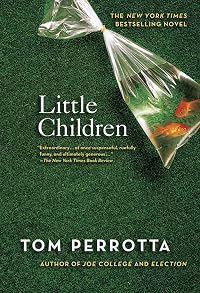
Tom Perrotta is a novelist and screenwriter best known for his novels Election (1998) and Little Children (2004), both of which were made into critically acclaimed, Academy Award-nominated films. His fiction book, The Leftovers, made it to the New York Times bestseller list in 2014. (Bowker Author Biography)
Some Editions
Awards and Honors
Awards
Distinctions
Common Knowledge
- Original publication date
- 2011
- People/Characters
- Laurie Garvey; Kevin Garvey; Jill Garvey; Tom Garvey; Nora Durst; Rosalie Sussman (show all 25); Aimee; Wayne Gilchrest; Christine; Hubbs; Doug Durst; Melissa Hulbert; Karen; Nick Lazarro; Max Connolly; Jon Verbecki; Matt Jamison; Marcella Falk; Meg Lomax; Kylie Mannheim; Mark Henning; Patti Levin; Terrence Falk; Grigori; Holly Maffrey
- Important places
- Massachusetts, USA
- Related movies
- The Leftovers (2014 | IMDb)
- Dedication
- For Nina and Luke
- First words
- Laurie Garvey hadn't been raised to believe in the Rapture.
- Quotations
- "Is there anything else you want to know? It's kind of a relief to tell you about it."
Nora knew what she meant. As distressing as it was to learn the details of Doug's affair, it also felt therapeutic, as if a missing... (show all) chunk of the past were being returned to her.
"Just one thing. Did he ever talk about me?"
Kylie rolled her eyes. "Only all the time."
"Really?"
"Yeah. He always said he loved you."
"You're kidding." Nora couldn't hide her skepticism. "He hardly ever said that to me. Not even when I said it first."
"It was like a ritual. Right after we had sex, he'd get all serious and say, This isn't about me not loving Nora." She uttered these words in a deep, manly voice, not at all like Doug's. "Sometimes I said it along with him. This isn't about me not loving Nora."
"Wow. You must've hated me."
"I didn't hate you," Kylie said. "I was just jealous."
"Jealous?" Nora tried to laugh, but the sound died in her throat. It had been a long time since she'd thought of herself as someone other people could be jealous of. "Why?"
"You had everything, you know? The husband, the house, those beautiful kids. All your friends and your nice clothes, the yoga and the vacations. And I couldn’t even make him forget you when he was in my bed."
Nora closed her eyes. Doug had been foggy in her mind for a long time, but all at once he was clear again. She could see him lying beside Kylie, naked and smug after fucking her, earnestly reminding her of his family commitments, his enduring love for his wife, letting her know that she could only have so much, and nothing more.
"He didn't care for me," Nora explained. "He just couldn’t stand to see you happy."
Whern your words are futile, you are better off keeping them to yourself, or never even thinking them in the first place. - Last words
- (Click to show. Warning: May contain spoilers.)"Look what I found," she told him.
- Blurbers
- King, Stephen
- Canonical DDC/MDS
- 813.54
- Canonical LCC
- PS3566.E6948
Classifications
Statistics
- Members
- 2,516
- Popularity
- 7,687
- Reviews
- 189
- Rating
- (3.42)
- Languages
- 11 — Catalan, Chinese, Dutch, English, Estonian, French, German, Italian, Polish, Portuguese, Spanish
- Media
- Paper, Audiobook, Ebook
- ISBNs
- 38
- ASINs
- 13