Essay on the Freedom of the Will
by Arthur Schopenhauer
On This Page
Description
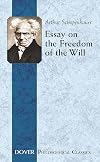
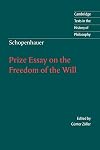
Written in 1839 and chosen as the winning entry in a competition held by the Royal Norwegian Society of Sciences, Schopenhauer's Prize Essay on the Freedom of the Will marked the beginning of its author's public recognition and is widely regarded as one of the most brilliant and elegant treatments of free will and determinism. Schopenhauer distinguishes the freedom of acting from the freedom of willing, affirming the former while denying the latter. He portrays human action as thoroughly show more determined but also argues that the freedom which cannot be established in the sphere of human action is preserved at the level of our innermost being as individuated will, whose reality transcends all dependency on outside factors. This volume offers the text in a previously unpublished translation by Eric F. J. Payne, the leading twentieth-century translator of Schopenhauer into English, together with a historical and philosophical introduction by Günter Zöller. show lessTags
Recommendations









Member Reviews
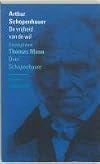
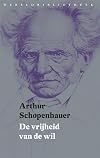
Schopenhauer neemt een vrij klassiek standpunt in: onze handelingen zijn onderdeel van een deterministische natuur, en dat betekent dat ze dus niet vrij zijn. Schopenhauer hamert erop dat de illusie van vrijheid ontstaat doordat we de ware uitspraak "ik kan doen wat ik wil" verwarren met de onware uitspraak "ik kan willen wat ik wil".
In de loop van het essay poneert Schopenhauer een aantal interessante en soms ontluisterende ideeën. Onder die laatste noemer valt zeker zijn claim dat het menselijk karakter onveranderlijk is, dat wie ik ben tijdens mijn leven een constante is en dat mensen altijd op dezelfde manier blijven handelen. Dat is een ontkenning van vrijheid van een radicalere soort dan het klassieke idee waarmee ik de show more bespreking begon; maar de argumenten die Schopenhauer ervoor geeft zijn buitengewoon zwak. Verder interessant is zijn proto-existentialistische claim dat als de mens vrij is, hij een wezen moet zijn dat wel een existentie maar geen essentie heeft. Voor Schopenhauer houdt dit een tegenspraak in, maar we zien wel hoe hier de deur opengezet wordt voor Heidegger en Sartre.
Aan het eind van het essay blijkt overigens ineens en totaal onverwacht dat Schopenhauer stiekem toch in vrijheid gelooft, namelijk naar het model van Kant: als intelligibele wezens zijn we wel degelijk vrij, ook al zijn we als empirische wezens gedetermineerd.
Het in de Wereldbibliotheek-uitgave toegevoegde essay van Thomas Mann is zeer lezenswaardig. show less
In de loop van het essay poneert Schopenhauer een aantal interessante en soms ontluisterende ideeën. Onder die laatste noemer valt zeker zijn claim dat het menselijk karakter onveranderlijk is, dat wie ik ben tijdens mijn leven een constante is en dat mensen altijd op dezelfde manier blijven handelen. Dat is een ontkenning van vrijheid van een radicalere soort dan het klassieke idee waarmee ik de show more bespreking begon; maar de argumenten die Schopenhauer ervoor geeft zijn buitengewoon zwak. Verder interessant is zijn proto-existentialistische claim dat als de mens vrij is, hij een wezen moet zijn dat wel een existentie maar geen essentie heeft. Voor Schopenhauer houdt dit een tegenspraak in, maar we zien wel hoe hier de deur opengezet wordt voor Heidegger en Sartre.
Aan het eind van het essay blijkt overigens ineens en totaal onverwacht dat Schopenhauer stiekem toch in vrijheid gelooft, namelijk naar het model van Kant: als intelligibele wezens zijn we wel degelijk vrij, ook al zijn we als empirische wezens gedetermineerd.
Het in de Wereldbibliotheek-uitgave toegevoegde essay van Thomas Mann is zeer lezenswaardig. show less
A great piece by Shopenhauer, in his entertaining arrogant pessimistic style. His thesis is quite convincing, but in my opinion contains a few flaws and he jumps to conclusions too fast sometimes (perhaps because he explains those things more eleborate in his main works), but overall a very interesting and easy-to-read essential work of philosophy.
Schopenhauer submitted this essay on free will and determinism to an 1839 competition of the Royal Norwegian Society of Sciences and won the prize for his lucid expression and compelling arguments. He argues in favor of determinism in the realm of human action, asserting that the only existing freedom lies in a realm beyond the limited physical world of appearances, in the realm of the pure non-individuated will. Because we are what we will, we can only ever will a single thing in a given moment, and can only ever do what is dictated by our innermost will. Freedom of the will in this sense is a delusion. Our actions are at all times determined by the specific attributes that make up our character, and from this there is no escape. We show more are free to act on motives, to do what we will, but we simply have no choice but to will. show less
Ratings
Members
- Recently Added By
Author Information

733+ Works 14,972 Members
Arthur Schopenhauer traveled in childhood throughout Europe and lived for a time in Goethe's Weimar, where his mother had established a salon that attracted many of Europe's leading intellectuals. As a young man, Schopenhauer studied at the University of Gottingen and in Berlin, where he attended the lectures of Fichte and Schleiermacher. show more Schopenhauer's first work was The Fourfold Root of the Principle of Sufficient Reason (1813), followed by a treatise on the physiology of perception, On Vision and Colors (1816). When Schopenhauer wrote his principal work, The World as Will and Idea (1819), he was confident that it was a work of great importance that would soon win him fame, but in this he was badly disappointed. In 1819 he arranged to hold a series of philosophical lectures at the same time as those of the newly arrived professor Hegel, whom Schopenhauer despised (calling him, among other creative epithets, an "intellectual Caliban"). This move resulted only in further humiliation for Schopenhauer, since no one showed up to hear him. Schopenhauer continued to be frustrated in repeated attempts to achieve recognition. In 1839 and 1840 he submitted essays on freedom of the will and the foundation of morality to competitions sponsored by the Royal Danish Academy but he won no prize, even when his essay was the only entry in the competition. In 1844 he published a second volume of The World as Will and Idea, containing developments and commentaries on the first. Around 1850, toward the end of his life, Schopenhauer's philosophy began to receive belated recognition, and he died in the confidence that his long-awaited and deserved fame had finally come. Schopenhauer's philosophy exercised considerable influence in the late nineteenth and early twentieth centuries, not only among academic philosophers but even more among artists and literati. This may be in part because, unlike his German idealist contemporaries, Schopenhauer is a lucid and even witty writer, whose style consciously owes more to Hume than to Kant. Schopenhauer's philosophy is founded on the idea that reality is Will--a single, insatiable, objectless striving that manifests itself in the world of appearance as a vast multiplicity of phenomena, engaged in an endless and painful struggle with one another. He saw the same vision in the texts of Indian religions---Vedanta and Buddhism---which he regarded as vastly superior to Western monotheism. Schopenhauer's theory of the empirical world is an idealism, in which the doctrines of Kant are identified with those of Berkeley. In aesthetic enjoyment Schopenhauer saw a form of knowledge that is higher than ordinary empirical knowledge because it is a disinterested contemplation of the forms or essences of things, rather than a cognition of causal connections between particulars driven by the will's interest in control and domination. True salvation, however, lies in an intuitive insight into the evil of willing, which in its highest manifestations is capable of completely extinguishing the will in a state of nirvana. In his perceptive development of the psychological consequences of his theory, Schopenhauer gives particular emphasis to the way in which our knowledge and behavior are insidiously manipulated by our unconscious volition; this stress, plus the central role he gives to sexuality in his theory of the will, contains much that is found later in Freud (who acknowledged that Schopenhauer had anticipated his theory of repression). Schopenhauer's main influence on twentieth-century philosophy, however, was mediated by Nietzsche, whose theory of the will to power added a poignant twist by committing itself to the affirmation of the will while still conceiving it in essentially the same way---insatiable, painful, predatory, deceptive, and subversive of rational thought---which it had been in Schopenhauer's metaphysical pessimism. (Bowker Author Biography) show less
Some Editions
Series
Belongs to Publisher Series
Work Relationships
Is contained in
Common Knowledge
- Canonical title
- Essay on the Freedom of the Will
- Original title
- Über die Freiheit des menschlichen Willens
- Original publication date
- 1989
Classifications
Statistics
- Members
- 315
- Popularity
- 101,961
- Reviews
- 3
- Rating
- (4.13)
- Languages
- 13 — Dutch, English, Finnish, French, German, Greek, Hungarian, Italian, Norwegian (Bokmål), Polish, Portuguese, Romanian, Spanish
- Media
- Paper, Ebook
- ISBNs
- 30
- ASINs
- 3