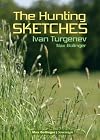
The Hunting Sketches Bk.1: My Neighbour Radilov and Other Stories
by Ivan Turgenev
Hunting Sketches (1)
On This Page
Description
The first major writing by Turgenev that gained him recognition. The stories in this collection were written based on Turgenev's own observations while hunting at his mothers' estate. This work exposed many injustices of serfdom and led to Turgenev's house arrest and eventual abolishment of serfdom in Russia. Read in English (unabridged)Tags
Recommendations





















Member Reviews
What Turgenev’s Early Writing Led Him To (A review of The Hunting Sketches)
A work from a distant country in a foreign language written over a century-and-a-half ago had better be able to speak for itself. Fortunately, as an audio book, it now can.
When a book first comes out, as this one did, it attracts or repels readers largely on the basis of three things: its author, its topic, and its type or genre. While a swing and a miss on any of these is a strike against you, a hit on just one of them may save the day and keep the game alive. When Turgenev published The Hunting Sketches in 1852, he wasn’t well known (Strike One!). What’s more, though his material had a definite place to it (the estate he had just inherited from his show more domineering mother) and a gaggle of colorful people, it really had no theme or topic (Strike Two!!). When it came to the sole remaining chance, what Turgenev did actually doubled his difficulty ratio, because what he chose wasn’t the familiar and more popular story form, but that of the sketch (When was the last time you read, and thoroughly enjoyed, a sketch – on anything?). And here is exactly where Turgenev’s fortunes pivoted and turned around. Not only did he get his hit, but he knocked the ball into the stands, and – to stick with the sports metaphor – he even made it into the hall of fame.
The response was instantaneous. It wasn’t a matter of beginners luck, but emerged out of what he chose to focus his sketches on: character. Not as a mere literary device or technique employed to make a written piece more effective (though many regard it in this very way, and their work shows it), and few writers succeed, despite their many labored attempts, in learning to wield it in the engaging and life-like way Turgenev did. That is what shows so clearly in The Hunting Sketches, where again and again he seizes his people with both hands, determined not to let them go until they all “gave,” handing over the revealing riches character always holds within. He wrote of this exclusively, relentlessly, and unswervingly in every single sketch. What Turgenev found in character gave the people he wrote about -- the peasants and nobles of the provincial Russia of his day -- real things to talk about, think of, feel, say, and do. And that is found in his distinctly vivid characters.
Surely this boundless depth and dimensionality came as something of a surprise even to him. For what had he published up to that time but a long poem and a short story? But in 1847 at 29, he begins to write in the fine fashion found in The Hunting Sketches. It changed both the way he saw things and the way he would write from then on. It even had a hand in changing the world around him (several credit his writing with hastening the official end of serfdom as well).
That Turgenev could actually see the reality of character is evidence of his artistic creativity, but that he also chose to follow where it led is a sure sign of his own.
If the quality of narration matched that of the writing, I would have given this audio book a four star rating. As it presently stands, though, I rate it at three-and-a-half.
* * *
(General comments on the recording and on two mispronunciations:)
I strongly suggest re-recording the entire first track in order to correct the mispronunciation of two words in the first track (see notes at bottom), and to use this as an opportunity to bring the narrator’s level of animation and vocal energy up to the level achieved in the third track and those following. As the opening track, it is simply not up to standard! – and, it is likely to turn-off listeners otherwise interested in hearing Turgenev’s work. (This commonly happens in readying professional recordings, and when it does, as indeed it has, there is no need to delay in quickly getting it corrected. After all, Turgenev handled his part very well, and now the current producers must do the same!)
To an American listener, the accent sounds “British,” which needn’t be a drawback, yet it seems “odd” and a little puzzling. This is likely due to the speaker’s having learned English from people whose natural accent was an English one, as is commonly found among Europeans who learn English in that way.
The narrator’s strength lies in the accurate pronunciation of the many Russian names. He speaks distinctly and enunciates well, warming to his task as he got further into it, so that his pace picked up, his tone grew less deliberate and became more natural, reflecting the accompanying feelings treated in the dialog. Beyond that, there is the slightly dated language of another historical era (which, of course, is there in Garnett’s translation); but a case can well be made for the language being closer in its style to that used in Turgenev’s day. Some will find it “quaint” by modern standards, but it can nevertheless serve the purpose of opening to the modern listener the world and times treated in the book. Without doubt, a greater formality was observed back then, particularly between people of different social classes, and was simply a fact and feature of how these people lived and related.)
Mistake #1 – (3:43 into Track 1), in the phrase . . . “a dog blinking and twitching in every limb was gnawing a bone” . . . (the word was mispronounced as ‘knowing a bone’).
Mistake #2 – ( 6:21 into Track 1), in the phrase . . . “took the bow” . . . (the word was mispronounced ‘bow’, as in the posture of respect, but here is meant to be ‘bow’ as that with which one plays a fiddle). show less
A work from a distant country in a foreign language written over a century-and-a-half ago had better be able to speak for itself. Fortunately, as an audio book, it now can.
When a book first comes out, as this one did, it attracts or repels readers largely on the basis of three things: its author, its topic, and its type or genre. While a swing and a miss on any of these is a strike against you, a hit on just one of them may save the day and keep the game alive. When Turgenev published The Hunting Sketches in 1852, he wasn’t well known (Strike One!). What’s more, though his material had a definite place to it (the estate he had just inherited from his show more domineering mother) and a gaggle of colorful people, it really had no theme or topic (Strike Two!!). When it came to the sole remaining chance, what Turgenev did actually doubled his difficulty ratio, because what he chose wasn’t the familiar and more popular story form, but that of the sketch (When was the last time you read, and thoroughly enjoyed, a sketch – on anything?). And here is exactly where Turgenev’s fortunes pivoted and turned around. Not only did he get his hit, but he knocked the ball into the stands, and – to stick with the sports metaphor – he even made it into the hall of fame.
The response was instantaneous. It wasn’t a matter of beginners luck, but emerged out of what he chose to focus his sketches on: character. Not as a mere literary device or technique employed to make a written piece more effective (though many regard it in this very way, and their work shows it), and few writers succeed, despite their many labored attempts, in learning to wield it in the engaging and life-like way Turgenev did. That is what shows so clearly in The Hunting Sketches, where again and again he seizes his people with both hands, determined not to let them go until they all “gave,” handing over the revealing riches character always holds within. He wrote of this exclusively, relentlessly, and unswervingly in every single sketch. What Turgenev found in character gave the people he wrote about -- the peasants and nobles of the provincial Russia of his day -- real things to talk about, think of, feel, say, and do. And that is found in his distinctly vivid characters.
Surely this boundless depth and dimensionality came as something of a surprise even to him. For what had he published up to that time but a long poem and a short story? But in 1847 at 29, he begins to write in the fine fashion found in The Hunting Sketches. It changed both the way he saw things and the way he would write from then on. It even had a hand in changing the world around him (several credit his writing with hastening the official end of serfdom as well).
That Turgenev could actually see the reality of character is evidence of his artistic creativity, but that he also chose to follow where it led is a sure sign of his own.
If the quality of narration matched that of the writing, I would have given this audio book a four star rating. As it presently stands, though, I rate it at three-and-a-half.
* * *
(General comments on the recording and on two mispronunciations:)
I strongly suggest re-recording the entire first track in order to correct the mispronunciation of two words in the first track (see notes at bottom), and to use this as an opportunity to bring the narrator’s level of animation and vocal energy up to the level achieved in the third track and those following. As the opening track, it is simply not up to standard! – and, it is likely to turn-off listeners otherwise interested in hearing Turgenev’s work. (This commonly happens in readying professional recordings, and when it does, as indeed it has, there is no need to delay in quickly getting it corrected. After all, Turgenev handled his part very well, and now the current producers must do the same!)
To an American listener, the accent sounds “British,” which needn’t be a drawback, yet it seems “odd” and a little puzzling. This is likely due to the speaker’s having learned English from people whose natural accent was an English one, as is commonly found among Europeans who learn English in that way.
The narrator’s strength lies in the accurate pronunciation of the many Russian names. He speaks distinctly and enunciates well, warming to his task as he got further into it, so that his pace picked up, his tone grew less deliberate and became more natural, reflecting the accompanying feelings treated in the dialog. Beyond that, there is the slightly dated language of another historical era (which, of course, is there in Garnett’s translation); but a case can well be made for the language being closer in its style to that used in Turgenev’s day. Some will find it “quaint” by modern standards, but it can nevertheless serve the purpose of opening to the modern listener the world and times treated in the book. Without doubt, a greater formality was observed back then, particularly between people of different social classes, and was simply a fact and feature of how these people lived and related.)
Mistake #1 – (3:43 into Track 1), in the phrase . . . “a dog blinking and twitching in every limb was gnawing a bone” . . . (the word was mispronounced as ‘knowing a bone’).
Mistake #2 – ( 6:21 into Track 1), in the phrase . . . “took the bow” . . . (the word was mispronounced ‘bow’, as in the posture of respect, but here is meant to be ‘bow’ as that with which one plays a fiddle). show less
 This review was written for LibraryThing Early Reviewers.
These are classic stories: lapidary vignettes of Russian country life, penetrating and humane. And Garnet's translation has worn rather well in my opinion.
But the quality of an audiobook is directly dependent on the narrator, and unfortunately Max Bollinger's delivery is a major let-down. I like the idea of a Russian-accented reading, but Bollinger's toneless, one-paced drone seems to miss not only the nuances, but the main rhythms of the text, and is completely at odds with the conviviality of Turgenev's prose. It sounds like it's being read from autocue - like an early reader focusing on each word individually and missing the context of the sentence - or, it has to be said, like a text-to-speech program. For me, this made it show more impossible to enjoy.
Not recommended. show less
But the quality of an audiobook is directly dependent on the narrator, and unfortunately Max Bollinger's delivery is a major let-down. I like the idea of a Russian-accented reading, but Bollinger's toneless, one-paced drone seems to miss not only the nuances, but the main rhythms of the text, and is completely at odds with the conviviality of Turgenev's prose. It sounds like it's being read from autocue - like an early reader focusing on each word individually and missing the context of the sentence - or, it has to be said, like a text-to-speech program. For me, this made it show more impossible to enjoy.
Not recommended. show less
This review was written for LibraryThing Early Reviewers.This was my first experience of Turgenev. I've been wanting to read 'A Sportsman's Notebook', so I was pleased to get this audiobook copy in the LT Early Reviewers' programme. 'The Hunting Sketches' are taken from 'A Sportsman's Notebook' - this is Book 1 of an intended audiobook series.
I have mixed feelings as I could sense that Turgenev's writing is particularly good - 'My Neighbour Radilov' and the chapter 'A French Affair' from 'Proprietor Ovsyanikov' I liked the best. But, and it's a very big but, as others have already said, the experience was totally affected (as it is in any audiobook) by the voice of the narrator/reader. Max Bollinger's delivery is off-putting to say the least! His accent is not the issue at all - rather the show more monotone and lifeless delivery. It was so distracting that I found myself noticing the bad mispronounciations more than the actual content - "...A dog was knowing a bone..." is one that springs to mind - and this was way too distracting. So much so that even after repeat listening I found it very difficult to concentrate on the flow of 'Proprietor Ovsyanikov' altogether.
All in all, most disappointing. I won't though be put off from reading 'A Sportsman's Notebook' in due course as it was the delivery here that was the problem - not the writing. 3 stars owing to Turgenev's creation. show less
I have mixed feelings as I could sense that Turgenev's writing is particularly good - 'My Neighbour Radilov' and the chapter 'A French Affair' from 'Proprietor Ovsyanikov' I liked the best. But, and it's a very big but, as others have already said, the experience was totally affected (as it is in any audiobook) by the voice of the narrator/reader. Max Bollinger's delivery is off-putting to say the least! His accent is not the issue at all - rather the show more monotone and lifeless delivery. It was so distracting that I found myself noticing the bad mispronounciations more than the actual content - "...A dog was knowing a bone..." is one that springs to mind - and this was way too distracting. So much so that even after repeat listening I found it very difficult to concentrate on the flow of 'Proprietor Ovsyanikov' altogether.
All in all, most disappointing. I won't though be put off from reading 'A Sportsman's Notebook' in due course as it was the delivery here that was the problem - not the writing. 3 stars owing to Turgenev's creation. show less
This review was written for LibraryThing Early Reviewers.These are some of the famous stories about a community of Russian land owners and their serfs in the 19th century. In them Turgenev explores the effect of the changing morality of the times on his characters. The crystalline quality of his prose comes through despite the occasionally strange narration by Max Bollinger.
This review was written for LibraryThing Early Reviewers.I really wanted to love this audio book. I love Turgenev, even if at times I find his writing to be a bit purple. At times I found Max Bollinger's, the narrator, accent to be troublesome; sometimes it felt like a Russian man attempting to do a British man attempting a Russian accent. However, that would have been overlooked if the cadence of speech wasn't so awkward. Again the cadence fell somewhere between Russian and British. All in all it took away from the work.
Also, some find Constance Garnett's translations to be dated, I do not find this to be the case. I rather like her as a translator, particularly of shorter works. In this case, I have read translations of Turgenev by George Reavey, David Margarshack, and Richard Freeborn. My show more translation of The Hunting Sketches is by Olga Shartse. After reading the complaints that Garnett's translation was dated I pulled out my print copy and reread the particular stories. I found them to be almost identical. show less
Also, some find Constance Garnett's translations to be dated, I do not find this to be the case. I rather like her as a translator, particularly of shorter works. In this case, I have read translations of Turgenev by George Reavey, David Margarshack, and Richard Freeborn. My show more translation of The Hunting Sketches is by Olga Shartse. After reading the complaints that Garnett's translation was dated I pulled out my print copy and reread the particular stories. I found them to be almost identical. show less
This review was written for LibraryThing Early Reviewers.It took a big effort to hear this audiobook. It was not as attractive to me as the other audiobook I reviewed, Mumu. How come? The voice of the narrator was more nasal and the intonation too monotonous. Combined with the slightly less interesting stories I just couldn't get the book finished for months. In this case (also contrary to Mumu) I prefer reading the stories myself. I still think it is a good idea to bring out these stories on audio, but with a better voice (sorry, Max Bollinger)!
This review was written for LibraryThing Early Reviewers.As commented on several times already, the major problem with their work for me is the vocal track. I found it to be flat, and lack energy. I've not come across Turgenev before and I have to say that after this audio reading I would be hesitant to do so again. There's not excitment or joy in it, no variation or tone or interest in the voice, it sounds like someone reading a very boring text they'd rther not be reading and when the reader is board how can I help but feel the same? The accent is also quite strange and I spent a long time trying to work out if it was an English person affecting a Russia accent or a Russian person trying to affect an English accent. The fact that I was contemplating this as he was reading should give you show more some idea of how much his voice engaged me with the text.
That said, once you get used to the tone "The hunting sketches" do seem interesting and worth investigating on teir own, I just certainly wouldn't recoment this audio reading for a beginner like myself.
I'd say the other thing I found disapointing was that the entire book ran at about an hour, which had I payed for this I would find disapointing, though I do suppose that depends on the price. Still, at this is labeled as volume 1, one can't help but think they'd have done better to combine them all and have one volume of a decent length. show less
That said, once you get used to the tone "The hunting sketches" do seem interesting and worth investigating on teir own, I just certainly wouldn't recoment this audio reading for a beginner like myself.
I'd say the other thing I found disapointing was that the entire book ran at about an hour, which had I payed for this I would find disapointing, though I do suppose that depends on the price. Still, at this is labeled as volume 1, one can't help but think they'd have done better to combine them all and have one volume of a decent length. show less
This review was written for LibraryThing Early Reviewers.Members
- Recently Added By
Published Reviews
ThingScore 100
"Often, the most insignificant things produce more effect on people than the most important." Turgenev expresses his own view through these words of the young nobleman who meets landowner Radilov while shooting gamebirds on his family estate. The impact of the sketches is in the significance with which Turgenev freights simple detail, such as the fly Radilov observes on his dead wife’s eye. show more Bollinger’s engaging Russian intonation enhances this richly detailed creation of the daily lives of both landowners and serfs on country estates. show less
added by PDSA
Even hunt saboteurs will enjoy the story, in this all-too-brief taste of one of Russia's greatest writers, about Lejeune, a French drummer boy retreating from Moscow with Napoleon's not so Grande Armée. Captured by villagers and all but drowned under river ice, he is rescued by a passing nobleman out hunting. On one condition. Lejeune must teach his daughter to play the piano . . . Now read on.
added by PDSA
Author Information

610+ Works 24,389 Members
Ivan Turgenev, 1818 - 1883 Novelist, poet and playwright, Ivan Turgenev, was born to a wealthy family in Oryol in the Ukraine region of Russia. He attended St. Petersburg University (1834-37) and Berlin University (1838-41), completing his master's exam at St. Petersburg. His career at the Russian Civil Service began in 1841. He worded for the show more Ministry of Interior from 1843-1845. In the 1840's, Turgenev began writing poetry, criticism, and short stories under Nikolay Gogol's influence. "A Sportsman's Sketches" (1852) were short pieces written from the point of view of a nobleman who learns to appreciate the wisdom of the peasants who live on his family's estate. This brought him a month of detention and eighteen months of house arrest. From 1853-62, he wrote stories and novellas, which include the titles "Rudin" (1856), "Dvorianskoe Gnedo" (1859), "Nakanune" (1860) and "Ottsy I Deti" (1862). Turgenev left Russia, in 1856, because of the hostile reaction to his work titled "Fathers and Sons" (1862). Turgenev finally settled in Paris. He became a corresponding member of the Imperial Academy of Sciences in 1860 and Doctor of Civil Law at Oxford University in 1879. His last published work, "Poems in Prose," was a collection of meditations and anecdotes. On September 3, 1883, Turgenev died in Bougival, near Paris. (Bowker Author Biography) show less
Series

Common Knowledge
- Canonical title*
- The Hunting Sketches Bk.1: My Neighbour Radilov and Other Stories
- Original publication date
- 1853
- Important places
- Russia
*Some information comes from Common Knowledge in other languages. Click "Edit" for more information.
Classifications
Statistics
- Members
- 53
- Popularity
- 572,271
- Reviews
- 14
- Rating
- (3.28)
- Languages
- Dutch, English, Norwegian (Bokmål), Norwegian
- Media
- Paper, Audiobook, Ebook
- ISBNs
- 10
- ASINs
- 5