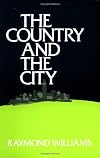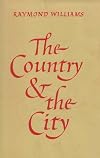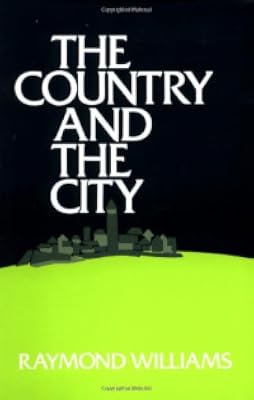
The Country and the City
by Raymond Williams
On This Page
Description
Taking inspiration from classic authors from Jane Austen to Thomas Hardy, Williams shines a light on our society's changing views of the rural and industrial landscapes in which we work and live. Our collective notion of the city and country is irresistibly powerful. The city as the seat of enlightenment, sophistication, power and greed is in profound contrast with an innocent, peaceful, backward countryside. Examining literature since the sixteenth century, Williams traces the development show more of our conceptions of these two traditional poles of life. His groundbreaking study casts the country and city as central symbols for the social and economic changes associated with capitalist development. WITH AN INTRODUCTION BY TRISTRAM HUNT show lessTags
Recommendations







Member Reviews
A great mix of literary criticism - his readings of G. Eliot and Dickens are particularly impressive - history and political agitation. Williams starts with a discussion of the pastoral mode, which is valuable in itself. But the book really gets humming when he hits the early moderns, and starts to track the different ways that pastoral themes have been used and abused by people in different times and classes. This is in the middle portion of the book. The last few chapters finally started to get a bit too preachy. Now, I don't mind some preachiness about poverty and oppression and so on, since that's always nice to have. But preachiness about the 'decadent,' 'weak' tradition of 'country house' writing, which somewhat ambivalently show more includes Henry James, Ivy-Compton Burnett and, no doubt, Elizabeth Bowen is unnecessarily old-Marxisty. As the book draws to a close, you get the impression that Williams prefers Hardy to James, not because of any literary qualities, but because Hardy writes about threshing machines and grew up in the lower middle classes, while James writes about princesses and was a bit of a Brahmin. Now that may all be true, but then you're making judgment about who's the better political sociologist. And to turn around and say the real heirs of Austen and so on are detective story writers is more than bit whack. There's not much doubt that detective novels are the most conservative literary form in existence, Raymond. Too bad. Otherwise, 5 stars for great writing, avoiding theory b.s., and caring about books. show less
The academic book I wish I'd written.
Ratings
Members
- Recently Added By
Author Information

Raymond Williams (1921-1988) was for many years Professor of Drama at the University of Cambridge. Among his many books are Culture and Society; Culture and Materialism; and several novels. Phil O'Brien is the author of The Working Class and Twenty-First-Century British Fiction.
Some Editions
Common Knowledge
- Canonical title
- The Country and the City
- Original publication date
- 1973
- Dedication
- For the country workers who were my grandparents - James Bird | Mary Ann Lewis | Joseph Williams | Margaret Williams
- Blurbers
- Berman, Marshall; Hatch, Robert; Goldfein, Alan; Bliven, Naomi
- Original language
- English
Classifications
- Genres
- Literature Studies and Criticism, Nonfiction
- DDC/MDS
- 820.932 — Literature & rhetoric English & Old English literatures English and Old English (Anglo-Saxon) literatures History, description, critical appraisal of works in more than one form Literature dealing with specific themes and subjects Travel and geography
- LCC
- PR409 .C5 .W5 — Language and Literature English English Literature By period Modern
- BISAC
Statistics
- Members
- 557
- Popularity
- 52,975
- Reviews
- 2
- Rating
- (4.05)
- Languages
- English, Portuguese (Portugal), Spanish
- Media
- Paper, Ebook
- ISBNs
- 13
- ASINs
- 2