On This Page
Description
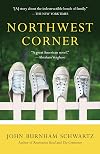
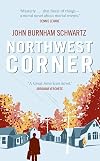
"A follow-up to Reservation Road finds 50-year-old Dwight Arno's new start in California thrown into turmoil by the unexpected arrival of college-age Sam, who is fleeing a devastating incident in his own life, a parallel struggle that dramatically transforms the lives of the women around them"--From publisher.Tags
Recommendations





































Member Reviews
[Northwest Corner] is John Burham Schwartz's follow through to [Reservation Road] but stands well on it's own (confession: I always meant to read the earlier work but never got around to it. I'll be taking care of that soon). In Reservation Road, lawyer Dwight Arno hits and kills a classmate of his son, Sam, who is in the back seat of the car at the time, as they are driving home in a hurry to his ex-wife's house. He leaves the scene and doesn't confess to the crime until months later when he is confronted by the boy's father.
[Northwest Corner] opens several years after Dwight has completed his sentence and, in the traditional trajectory of the outcast, fled west to California. He hasn't seen his son in years, perhaps since he went to show more prison, and when Sam shows up on his doorstep after fleeing the consequences of a violent incident at college, it would seem that the sins of the father are destined to shape the fate of the son.
While the novel explores the relationship between father and son and how each shapes the other's life for good and ill, the strongest presence in the book is neither Dwight nor Sam, but the many years dead Josh Lerner. The lost son whose absence is so vitally felt that it becomes another character, a black hole at the center of the survivors' universe, and how the survivors interact with this Josh-in-absentia is at the core of the novel. There is a flashback scene in the center of the book where Josh pokes and prods at the bloated carcass of a deer and his father admonishes him to leave the dead in peace, but this admonishment proves impossible to heed for those left standing after Josh's death. They cluster in small, interweaving groups around his absence, never intersecting until the end of the novel. show less
[Northwest Corner] opens several years after Dwight has completed his sentence and, in the traditional trajectory of the outcast, fled west to California. He hasn't seen his son in years, perhaps since he went to show more prison, and when Sam shows up on his doorstep after fleeing the consequences of a violent incident at college, it would seem that the sins of the father are destined to shape the fate of the son.
While the novel explores the relationship between father and son and how each shapes the other's life for good and ill, the strongest presence in the book is neither Dwight nor Sam, but the many years dead Josh Lerner. The lost son whose absence is so vitally felt that it becomes another character, a black hole at the center of the survivors' universe, and how the survivors interact with this Josh-in-absentia is at the core of the novel. There is a flashback scene in the center of the book where Josh pokes and prods at the bloated carcass of a deer and his father admonishes him to leave the dead in peace, but this admonishment proves impossible to heed for those left standing after Josh's death. They cluster in small, interweaving groups around his absence, never intersecting until the end of the novel. show less
 This review was written for LibraryThing Early Reviewers.
John Burnham Schwartz's NORTHWEST CORNER is simply one of the most moving, page-turning novels I have read in a long time. With his super short and precisely worded chapters, Mr. Schwartz's writing is evocative proof positive that less is indeed more. Here's an early sample that let me know I was going to love this book. Protagonist Dwight Arno, a divorced ex-con who has not seen his son in more than a decade, suddenly has him back in his life, and he doesn't know how to deal with it. Watching him sleep, he is suddenly afraid his son is dead -
"I'm halfway to the bed, stepping panicked over my set of dumbbells strewn across the rubber-matted floor, when I see his chest rise. I stop to watch him breathing in and out, until I'm sure."
A show more simple enough description of a father's sudden and unreasonable panic for the safety of his child, albeit a 22 year-old one. It made me remember when I was a new father and would often lean over my infant son's sleeping body, watching, listening to him breathe, sometimes touching him to be sure. Dwight Arno may have been an absent father, a distant father, but even then, after years apart from his son, he was still very much a father. Schwartz is a master of finding the right word, the perfect phrase. The kind of writing I found here, in NORTHWEST CORNER, is rare and precious. It packs a powerful emotional punch.
I know that this novel is a sequel to an earlier one, RESERVATION ROAD. I gotta read that book. In the meantime, I will press this one on anyone who appreciates fine writing. Very highly recommended. show less
"I'm halfway to the bed, stepping panicked over my set of dumbbells strewn across the rubber-matted floor, when I see his chest rise. I stop to watch him breathing in and out, until I'm sure."
A show more simple enough description of a father's sudden and unreasonable panic for the safety of his child, albeit a 22 year-old one. It made me remember when I was a new father and would often lean over my infant son's sleeping body, watching, listening to him breathe, sometimes touching him to be sure. Dwight Arno may have been an absent father, a distant father, but even then, after years apart from his son, he was still very much a father. Schwartz is a master of finding the right word, the perfect phrase. The kind of writing I found here, in NORTHWEST CORNER, is rare and precious. It packs a powerful emotional punch.
I know that this novel is a sequel to an earlier one, RESERVATION ROAD. I gotta read that book. In the meantime, I will press this one on anyone who appreciates fine writing. Very highly recommended. show less
John Burnham Schwartz's fifth novel, Northwest Corner (forthcoming from Random House) is a standalone sequel to Reservation Road, featuring several of the same characters several years later. The book is told from the alternating perspectives of college student Sam Arno, his estranged father Dwight and ailing mother Ruth, Dwight's paramour Penny, and Emma, a young woman of an age with Sam whose connection to the family I should let the reader discover.
When Sam seriously injures a fellow student in a bar fight and then flees to his father in California, the family and those around them are drawn into a whirlwind of consequences as their past and present trials and decisions swirl around them.
I had a hard time putting the book down show more after I opened it; it's written with a well-paced immediacy that practically demands that it be read all at once. The characters are so troublingly real, so frustratingly human, it's difficult not to understand them (even if some of their actions might be incomprehensible), and I wanted to know what would happen to them, which choices they would make and what those would mean.
A fine addition to your summer reading list, I'd say.
http://philobiblos.blogspot.com/2011/06/book-review-northwest-corner.html show less
When Sam seriously injures a fellow student in a bar fight and then flees to his father in California, the family and those around them are drawn into a whirlwind of consequences as their past and present trials and decisions swirl around them.
I had a hard time putting the book down show more after I opened it; it's written with a well-paced immediacy that practically demands that it be read all at once. The characters are so troublingly real, so frustratingly human, it's difficult not to understand them (even if some of their actions might be incomprehensible), and I wanted to know what would happen to them, which choices they would make and what those would mean.
A fine addition to your summer reading list, I'd say.
http://philobiblos.blogspot.com/2011/06/book-review-northwest-corner.html show less
Northwest Corner by John Burnham Schwartz continues the story from his novel Reservation Road. Dwight Arno is now fifty years old and out of prison. He is now living in California and is the manager of a sporting goods store. Dwight is surprised by an unexpected visitor, his estranged son, Sam. Sam has left college in Connecticut and is running from something he has done. Northwest Corner examines the lives of ordinary men and woman who are all damaged in some way and are all searching for meaning and redemption.
All the chapters are short and each one is from the point of view of a different character. Rest assured, though, that you do not need to have read Reservation Road in order to appreciate Northwest Corner. For those who have show more read Reservation Road, the characters include: Dwight, Sam, Ruth, Penny (Dwight's girlfriend), and Emma Learner.
Schwartz explores his damaged characters, their desires and fears, while slowly building an emotional tension that should resonate with most readers. The characters are all so very, very real - so true to life.The sheer raw emotion that leaps off the page is heart wrenching, yet does not feel manufactured. The characters feel like real people. You know these people. You feel their sadness and despair. You may have been through circumstances similar to these tortured souls. You will hope that they find redemption, that there is some resolution to their pain.
This is an incredible novel, exquisitely written. Schwartz is a gifted, poetic writer with a keen sharp insight into human character. There are observations throughout the novel that are brilliant gems of perfect cut and clarity. His descriptions transport you into the scene with the characters. While the plot itself is not full of action, the emotional landscape explored is packed full to overflowing.
Very Highly Recommended - one of the best; http://shetreadssoftly.blogspot.com/ show less
All the chapters are short and each one is from the point of view of a different character. Rest assured, though, that you do not need to have read Reservation Road in order to appreciate Northwest Corner. For those who have show more read Reservation Road, the characters include: Dwight, Sam, Ruth, Penny (Dwight's girlfriend), and Emma Learner.
Schwartz explores his damaged characters, their desires and fears, while slowly building an emotional tension that should resonate with most readers. The characters are all so very, very real - so true to life.The sheer raw emotion that leaps off the page is heart wrenching, yet does not feel manufactured. The characters feel like real people. You know these people. You feel their sadness and despair. You may have been through circumstances similar to these tortured souls. You will hope that they find redemption, that there is some resolution to their pain.
This is an incredible novel, exquisitely written. Schwartz is a gifted, poetic writer with a keen sharp insight into human character. There are observations throughout the novel that are brilliant gems of perfect cut and clarity. His descriptions transport you into the scene with the characters. While the plot itself is not full of action, the emotional landscape explored is packed full to overflowing.
Very Highly Recommended - one of the best; http://shetreadssoftly.blogspot.com/ show less
After I finished Reservation Road, countless questions lingered amid disparate emotions coupled not only with the painful narrative which continued to haunt me, but also the enduring legacy foisted upon the memorable characters of Dwight, Sam, and Ruth of the Arno family pitted against Ethan, Grace, and Emma Lerner begging to be explored.
Twelve years later, Northwest Corner spiritedly revisits Dwight Arno, outwardly transformed and contrite, vaguely expectant in his new West Coast surroundings, mindful of the compulsory physical and emotional distance essential to create a life anew without relentless reminders of one careless moment that shattered two families into irrevocable pieces. The pivotal tragedy alone did not thrust Dwight show more into these recent circumstances; rather his immediate unforgivable response mingled with excessive evasive subterfuge disqualified him from any possible future in his previously fractured existence.
Once the solitary motivation in Dwight's circumspect memories, his collegiate son Sam now stands in a similar place after his violent and physically brutal attack upon another young man as he hastily chooses an unplanned disparate course of action, an abrupt departure from his UConn dorm room, West Coast bound aboard a Greyhound bus to Santa Barbara and his father. When the sins of the father become a heavy burden to bear alone and lie befuddled upon a son's hazy conscience, the ominous consequences of inexplicable rage are quickly disowned.
Succinctly, yet sparingly the author reveals the parsimonious remnants of each affected character's life. He unconsciously captures you with his eloquent words and deftly draws you in to vicariously endure those profusely diverse emotions deftly woven within the gritty details that accompany life's most unexpected torturous moments accompanied by their insurmountable losses.
If John Burnham Schwartz's intent is to unceremoniously immerse the reader into each distinctively disquieting character's churning vortex of inner thoughts and feelings, he is successful beyond all expectations. Every single page is a pithy volume of overwhelmingly unforgettable words that linger long after it is read. Minute corners of the mind and heart are brutally bared until mercy finally prevails. Ultimately love empowers and redemption triumphs. show less
Twelve years later, Northwest Corner spiritedly revisits Dwight Arno, outwardly transformed and contrite, vaguely expectant in his new West Coast surroundings, mindful of the compulsory physical and emotional distance essential to create a life anew without relentless reminders of one careless moment that shattered two families into irrevocable pieces. The pivotal tragedy alone did not thrust Dwight show more into these recent circumstances; rather his immediate unforgivable response mingled with excessive evasive subterfuge disqualified him from any possible future in his previously fractured existence.
Once the solitary motivation in Dwight's circumspect memories, his collegiate son Sam now stands in a similar place after his violent and physically brutal attack upon another young man as he hastily chooses an unplanned disparate course of action, an abrupt departure from his UConn dorm room, West Coast bound aboard a Greyhound bus to Santa Barbara and his father. When the sins of the father become a heavy burden to bear alone and lie befuddled upon a son's hazy conscience, the ominous consequences of inexplicable rage are quickly disowned.
Succinctly, yet sparingly the author reveals the parsimonious remnants of each affected character's life. He unconsciously captures you with his eloquent words and deftly draws you in to vicariously endure those profusely diverse emotions deftly woven within the gritty details that accompany life's most unexpected torturous moments accompanied by their insurmountable losses.
If John Burnham Schwartz's intent is to unceremoniously immerse the reader into each distinctively disquieting character's churning vortex of inner thoughts and feelings, he is successful beyond all expectations. Every single page is a pithy volume of overwhelmingly unforgettable words that linger long after it is read. Minute corners of the mind and heart are brutally bared until mercy finally prevails. Ultimately love empowers and redemption triumphs. show less
This review was written for LibraryThing Early Reviewers.A continuation of the story told in Reservation Road, Northwest Corner is a spare and minimalist novel that packs a huge punch. We return to the story of Dwight Arno whose horrible mistake cost him just about everything, including contact with his son, Sam. When Sam turns up on his doorstep, a college senior and varsity superstar, who badly injured another boy in a bar fight. He's been expelled from school and criminal charges are imminent. His only real relationship is with the sister of the the boy his father accidentally hit with his car.
This is a dark novel and was hard for me to read because of how much it made me feel. Schwartz can write and this will haunt me for awhile. Its minimalist writing style stands in stark relief to the show more depth of the story (and the tragedy of it). Not a comfortable read, but a worthwhile one. show less
This is a dark novel and was hard for me to read because of how much it made me feel. Schwartz can write and this will haunt me for awhile. Its minimalist writing style stands in stark relief to the show more depth of the story (and the tragedy of it). Not a comfortable read, but a worthwhile one. show less
Caveat: I have not read [Reservation Road]. After reading the blurb describing NW Corner as continuing the characters of that book, I fully intended to set this book aside until I had, but then I peeked at the first couple chapters and thought I would never make it through 2 books about baseball. It also seemed as if the initial chapters gave sufficient background that I wouldn't be completely at sea.
I do resent male authors who have a female character mentally describing her body as "tits and ass" (p. 13) so I wasn't predisposed to enjoy the book. I did notice how people never eat--their planned meals are always interrupted by a scene--and Sam always says he's not hungry when someone offers him food (this from a college-aged show more male?)
Schwartz scatters intriguing metaphors and similes across his pages, but the underlying theme of people's lives falling apart overpowers their pull, so that I can only hope to get through the book without absorbing any of its poison. One quote (p.33) seems to summarize the point of this novel: "Like most guys of my ilk (whatever that means) I'm in all likelihood just another salmon narcissist, ever returning to the corpse-strewn spawning ground of me, where one day, unless something even worse happens, I too will quietly expire."
I can imagine my brother--oldest son, spent his entire life doing what was expected, now divorced and confused about what's happened to him--reading this. Or my son-in-law, fifteen years from now (if he were the type of person to crack a book cover). But not a woman, voluntarily.
Maybe the character Ruth sums up the reason this book fails to connect with me "She's of the stubborn bag-lady genus: bringing it all with her wherever she goes, hoarding the past not because it's better but because it's the only thing she seems to own." (p 209) while I am continually shedding my past, letting go.
A good story should give you hope and motivation for being the best person you can be, not drag you down into a pointless existence. That positive outlook is what we are given in the ending. I'm still not sure if the change of emotions is permanent--or even believable, whether the separate acts of generous love and acceptance will be enough to overcome a history of anger and pain. Schwartz gives an ending people crave in this disjointed society, but it is built on fragile ice. show less
I do resent male authors who have a female character mentally describing her body as "tits and ass" (p. 13) so I wasn't predisposed to enjoy the book. I did notice how people never eat--their planned meals are always interrupted by a scene--and Sam always says he's not hungry when someone offers him food (this from a college-aged show more male?)
Schwartz scatters intriguing metaphors and similes across his pages, but the underlying theme of people's lives falling apart overpowers their pull, so that I can only hope to get through the book without absorbing any of its poison. One quote (p.33) seems to summarize the point of this novel: "Like most guys of my ilk (whatever that means) I'm in all likelihood just another salmon narcissist, ever returning to the corpse-strewn spawning ground of me, where one day, unless something even worse happens, I too will quietly expire."
I can imagine my brother--oldest son, spent his entire life doing what was expected, now divorced and confused about what's happened to him--reading this. Or my son-in-law, fifteen years from now (if he were the type of person to crack a book cover). But not a woman, voluntarily.
Maybe the character Ruth sums up the reason this book fails to connect with me "She's of the stubborn bag-lady genus: bringing it all with her wherever she goes, hoarding the past not because it's better but because it's the only thing she seems to own." (p 209) while I am continually shedding my past, letting go.
A good story should give you hope and motivation for being the best person you can be, not drag you down into a pointless existence. That positive outlook is what we are given in the ending. I'm still not sure if the change of emotions is permanent--or even believable, whether the separate acts of generous love and acceptance will be enough to overcome a history of anger and pain. Schwartz gives an ending people crave in this disjointed society, but it is built on fragile ice. show less
This review was written for LibraryThing Early Reviewers.Members
- Recently Added By
Published Reviews
Strangely, Schwartz both over- and underwrites. He’s constantly telling us what his characters are feeling instead of allowing us to watch them and decide for ourselves. The effect is at once distancing and frustrating.
added by DieFledermaus
Author Information

9+ Works 1,844 Members
Series

Common Knowledge
- Canonical title
- Northwest Corner
- Important places
- Santa Barbara, California, USA; Connecticut, USA
Classifications
Statistics
- Members
- 158
- Popularity
- 208,119
- Reviews
- 33
- Rating
- (3.64)
- Languages
- Dutch, English
- Media
- Paper, Audiobook, Ebook
- ISBNs
- 12
- ASINs
- 2