On This Page
Description
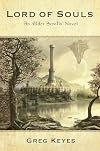
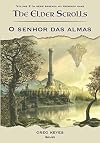
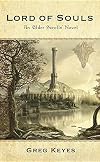
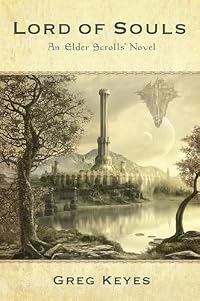
Forty years after the Oblivion crisis, the empire of Tamriel is threatened by a mysterious floating city, Umbriel, whose shadow spawns a terrifying undead army.Reeling from a devastating discovery, Prince Attrebus continues on his seemingly doomed quest to obtain a magic sword that holds the key to destroying the deadly invaders. Meanwhile, in the Imperial City, the spy Colin finds evidence of betrayal at the heart of the empire—if his own heart doesn’t betray him first. And Annaïg, show more trapped in Umbriel itself, has become a slave to its dark lord and his insatiable hunger for souls.
How can these three unlikely heroes save Tamriel when they cannot even save themselves?
Based on the award-winning Elder Scrolls® series, Lord of Souls is the second of two exhilarating novels that continue the story from The Elder Scrolls IV: Oblivion, named 2006 Game of the Year by numerous outlets,.... show less
Tags
Recommendations



Member Reviews
When I was younger, before I knew good literature from bad, I was enthralled by the so-called Extended Universe of Star Wars. If someone had written a novel set in the Star Wars universe, and it featured characters or settings familiar to me, I read it, and, to some degree, enjoyed it.
I never was a fan of “fan fiction,” having read a short story here or there (back in the days in which reading a novel on a computer screen was about as comfortable as reading a novel printed on a light bulb), and for the most part thought down on people who wrote fan fiction. And then it struck me, the concepts juxtaposing in my mind: These novels I read were the exact same thing!
I came to this realization when I tried reading some non-Star Wars show more stories written by some of these authors. By an odd coincidence, many of the authors of the EU books had more books set in other people’s playgrounds than their owns. The CVs of these EU authors were mostly novelizations, media tie-ins, and licensed novels, or, in some cases, noncanonical sequels to long-Public Domain works. When this epiphany came to me, I felt a level of disgust at all the time I wasted, reading relatively uninspired books, set upon the backs of successful franchises like a crutch alleviating the author of having to actually paint an eloquent description of the world in which the story was set, assuming the reader is familiar enough with the setting so that the author could focus on a story that wasn’t really that good to begin with.
I had a flashback to those days while reading Lord of Souls, based on the popular video game franchise, Elder Scrolls. The author, Greg Keyes, surprisingly enough, has several Star Wars books under his belt, as well as a series of books set in the Babylon 5 setting.
I’m not sure which aspect soured my reading of this book: the author filling that “Professional Fan Fic Writer” role, the author’s corpus being less than original, the book in question being part of an “extended universe,” or the quality of the writing material itself.
The story felt dead in my hands, as if I was unable to draw life from this story. The characters seemed flat, and while they suffered and succeeded, I found myself not caring. In the end, I thought the story was something that would satiate someone who didn’t like reading anything unless it had the name of a popular science fiction or fantasy franchise emblazoned across its side. But for people who crave sustenance in literature, this book would leave one bloated with filler, but sick, longing for something more substantial, like something that comes with a side of soup or salad, and not French fries.
I’ll admit, I was not familiar with Elder Scrolls prior to this. Back in college, I watched a friend walk around in Morrowind, but never really yearned to play the game myself (or, if I was, such desires were hindered by a slow computer with a pitiful graphics card). So, maybe I was soured by having to learn everything I ever wanted to know about Elder Scrolls (but was too afraid to ask) from the actual material.
To Keyes’ credit, the characters were so one-dimensional that getting a grasp on their personalities was complete cake. But that’s not really a strong point in writing, now is it?
My final recommendation is this: If you love such media tie-ins, and you’ll know if you do, and are familiar with Elder Scrolls, then you’ll probably enjoy this book and wonder why I was bitching so much about it. However, if you’re like me, and like original ideas, and elaborate worldbuilding, and dynamic characters, and all those other marks of “good” literature, then you may wish to give this one a pass. Try a book from the bookstore that’s categorized by Author’s last name, and not by the franchise slapped on the spine. That recommendation goes for the former reader as well. You may just find that you got the sufficient jolt to get yourself out of the EU rut. show less
I never was a fan of “fan fiction,” having read a short story here or there (back in the days in which reading a novel on a computer screen was about as comfortable as reading a novel printed on a light bulb), and for the most part thought down on people who wrote fan fiction. And then it struck me, the concepts juxtaposing in my mind: These novels I read were the exact same thing!
I came to this realization when I tried reading some non-Star Wars show more stories written by some of these authors. By an odd coincidence, many of the authors of the EU books had more books set in other people’s playgrounds than their owns. The CVs of these EU authors were mostly novelizations, media tie-ins, and licensed novels, or, in some cases, noncanonical sequels to long-Public Domain works. When this epiphany came to me, I felt a level of disgust at all the time I wasted, reading relatively uninspired books, set upon the backs of successful franchises like a crutch alleviating the author of having to actually paint an eloquent description of the world in which the story was set, assuming the reader is familiar enough with the setting so that the author could focus on a story that wasn’t really that good to begin with.
I had a flashback to those days while reading Lord of Souls, based on the popular video game franchise, Elder Scrolls. The author, Greg Keyes, surprisingly enough, has several Star Wars books under his belt, as well as a series of books set in the Babylon 5 setting.
I’m not sure which aspect soured my reading of this book: the author filling that “Professional Fan Fic Writer” role, the author’s corpus being less than original, the book in question being part of an “extended universe,” or the quality of the writing material itself.
The story felt dead in my hands, as if I was unable to draw life from this story. The characters seemed flat, and while they suffered and succeeded, I found myself not caring. In the end, I thought the story was something that would satiate someone who didn’t like reading anything unless it had the name of a popular science fiction or fantasy franchise emblazoned across its side. But for people who crave sustenance in literature, this book would leave one bloated with filler, but sick, longing for something more substantial, like something that comes with a side of soup or salad, and not French fries.
I’ll admit, I was not familiar with Elder Scrolls prior to this. Back in college, I watched a friend walk around in Morrowind, but never really yearned to play the game myself (or, if I was, such desires were hindered by a slow computer with a pitiful graphics card). So, maybe I was soured by having to learn everything I ever wanted to know about Elder Scrolls (but was too afraid to ask) from the actual material.
To Keyes’ credit, the characters were so one-dimensional that getting a grasp on their personalities was complete cake. But that’s not really a strong point in writing, now is it?
My final recommendation is this: If you love such media tie-ins, and you’ll know if you do, and are familiar with Elder Scrolls, then you’ll probably enjoy this book and wonder why I was bitching so much about it. However, if you’re like me, and like original ideas, and elaborate worldbuilding, and dynamic characters, and all those other marks of “good” literature, then you may wish to give this one a pass. Try a book from the bookstore that’s categorized by Author’s last name, and not by the franchise slapped on the spine. That recommendation goes for the former reader as well. You may just find that you got the sufficient jolt to get yourself out of the EU rut. show less
 This review was written for LibraryThing Early Reviewers.
Lord of Souls: An Elder Scrolls Novel
Greg Keyes
Del Rey (2011), Paperback, 336 pages
I may have approached this book differently than some reviewers; while I know of the video game universe in which this is set, I have never played it and only barely seen it. Instead of reading it as a tie-in I took the book to see how it stands on it's own two feet, as it were.
Without knowing any of the backstory I found myself rather scattered early in the book, but as the characters and intrigues (and it's FULL of intrigues) developed it generated a personality of it's own. Watching the threads twist together the book has quite enough cohesiveness to stand on it's own. It has richly detailed scenes that would allow you to place yourself in the midst of show more many of them.
I expect it will be more fully appreciated by players of the game (or people who've read the previous novel) but it clearly isn't dependent on the game tie-in to be an engaging read. show less
Greg Keyes
Del Rey (2011), Paperback, 336 pages
I may have approached this book differently than some reviewers; while I know of the video game universe in which this is set, I have never played it and only barely seen it. Instead of reading it as a tie-in I took the book to see how it stands on it's own two feet, as it were.
Without knowing any of the backstory I found myself rather scattered early in the book, but as the characters and intrigues (and it's FULL of intrigues) developed it generated a personality of it's own. Watching the threads twist together the book has quite enough cohesiveness to stand on it's own. It has richly detailed scenes that would allow you to place yourself in the midst of show more many of them.
I expect it will be more fully appreciated by players of the game (or people who've read the previous novel) but it clearly isn't dependent on the game tie-in to be an engaging read. show less
This review was written for LibraryThing Early Reviewers.Disclaimer: I did receive a free ARC (advanced reading copy) in return for this review. This novel is part two of a story; it is not a stand-alone book. The edition I received did not include a “what came before” section.
With most “Epic Fantasy” the story starts with a connected group of people, sends them on a quest separates them, and then brings them together for the ending. The author decided for this novel to start with six point of view characters with little to connect them. Each one brings a different perspective which, like puzzle pieces, adds up to the big picture.
The central challenge of the story is the mysterious floating city which leaves death and destruction in its wake. We observe it through; rumors heard by a show more sorcerous intelligence officer, sightings by an orc guardswoman sent on a scouting mission, knowledge gleaned from a mysterious “elf” who knows where it came from, and two characters who “hitched a ride” on it, one (an amphibious adventurer) ends up working the depths and the other (a human alchemist) for the highest of the high. Piecing together what each knows, they come up with a theory of why the floating city is there, what its ruler hopes to accomplish, and possibly how to stop it.
I liked the characters. I found the setting of the floating city of Umbriel fascinating. The countryside it floated over was less compelling, and I was not interested in the “alternate realms” some of the characters traveled through. show less
With most “Epic Fantasy” the story starts with a connected group of people, sends them on a quest separates them, and then brings them together for the ending. The author decided for this novel to start with six point of view characters with little to connect them. Each one brings a different perspective which, like puzzle pieces, adds up to the big picture.
The central challenge of the story is the mysterious floating city which leaves death and destruction in its wake. We observe it through; rumors heard by a show more sorcerous intelligence officer, sightings by an orc guardswoman sent on a scouting mission, knowledge gleaned from a mysterious “elf” who knows where it came from, and two characters who “hitched a ride” on it, one (an amphibious adventurer) ends up working the depths and the other (a human alchemist) for the highest of the high. Piecing together what each knows, they come up with a theory of why the floating city is there, what its ruler hopes to accomplish, and possibly how to stop it.
I liked the characters. I found the setting of the floating city of Umbriel fascinating. The countryside it floated over was less compelling, and I was not interested in the “alternate realms” some of the characters traveled through. show less
This review was written for LibraryThing Early Reviewers.This was a great book! I have played morrowind when it first came out, though that was years ago now. I did not remember much of the details of morrowind, but the book brought back memories. It is not necessary to understand the details and background of morrowind nor the other elder scrolls games. The book is nicely self contained and provides the necessary background to understand what is going on. The plot is fun and twisted and you will have a hard time to putting it down. I read the entire book on a sunday afternoon. It has all the elements necessary of a good fantasy book: intrigue, plots twists, conspiracies, and an other worldly foe that seems unstoppable.
This review was written for LibraryThing Early Reviewers.Despite the fact that I haven't read the first book, nor have I played the game, I had no problem picking up on what was going on. It took a little bit, and I'm sure some of the finer details of the world were lost on me, but during no point in the book was I thinking, "What is going on?!" So I appreciate the fact that Greg Keyes did an awesome job in making this read like a stand-alone novel.
Besides that, it's a really interesting story. As is usual with fantasy, there are multiple viewpoints, and I enjoyed most of the characters and their personal involvement with the larger problem at hand. There was one character I didn't care for (Mazgar), just because I didn't think her story was as developed as the others'. I thought that Annaig show more and Glim's stories were by far the most interesting and entertaining. They had a stronger connection, and I think they were the characters that had the most to lose if things didn't turn out well.
I enjoyed the intrigues and the suspense. There were a few times that I was completely surprised by the turn of events (and a few plot twists that were predictable, but that's okay). If you're a fan of fantasy, I think you'd enjoy this story. Some have complained about it being too difficult to follow along without reading the first book, though. But it may not be a bad thing to read more of this series, since the plots and the characters are so well-constructed. show less
Besides that, it's a really interesting story. As is usual with fantasy, there are multiple viewpoints, and I enjoyed most of the characters and their personal involvement with the larger problem at hand. There was one character I didn't care for (Mazgar), just because I didn't think her story was as developed as the others'. I thought that Annaig show more and Glim's stories were by far the most interesting and entertaining. They had a stronger connection, and I think they were the characters that had the most to lose if things didn't turn out well.
I enjoyed the intrigues and the suspense. There were a few times that I was completely surprised by the turn of events (and a few plot twists that were predictable, but that's okay). If you're a fan of fantasy, I think you'd enjoy this story. Some have complained about it being too difficult to follow along without reading the first book, though. But it may not be a bad thing to read more of this series, since the plots and the characters are so well-constructed. show less
This review was written for LibraryThing Early Reviewers.6/10
I won an Advanced Uncorrected Proof of this book in a First Reads giveaway.
Lord of Souls is the sequel to [b:The Infernal City|6488043|The Infernal City (The Elder Scrolls, #1)|Greg Keyes|https://d.gr-assets.com/books/1320502596s/6488043.jpg|6679421] and exceeds it in every way, but still falls short. The story is filled with action, but there is just not enough backstory or context for all that action to matter very much. There continue to be references to characters, races, places, and events that seem to have importance but we never find out why. The motivations of several of the characters remain a mystery.
Yet the individual stories of Annaig, Glim, Colin, and Attrebus are engaging and not too predictable. Fitting their stories show more into the larger context of the Empire, the floating city of Umbriel, and the various demons/spirits is where things seem to fall apart for this reader. show less
I won an Advanced Uncorrected Proof of this book in a First Reads giveaway.
Lord of Souls is the sequel to [b:The Infernal City|6488043|The Infernal City (The Elder Scrolls, #1)|Greg Keyes|https://d.gr-assets.com/books/1320502596s/6488043.jpg|6679421] and exceeds it in every way, but still falls short. The story is filled with action, but there is just not enough backstory or context for all that action to matter very much. There continue to be references to characters, races, places, and events that seem to have importance but we never find out why. The motivations of several of the characters remain a mystery.
Yet the individual stories of Annaig, Glim, Colin, and Attrebus are engaging and not too predictable. Fitting their stories show more into the larger context of the Empire, the floating city of Umbriel, and the various demons/spirits is where things seem to fall apart for this reader. show less
For a game based novel, this was quite good. Novels based on video games are always a challenge for a number of reasons. There is often a ton of backstory, the world is already in existence and is usually strange, and fans of the games want to see well known characters of locations. If you haven't played the games, it makes reading the books difficult.
I have not played any of these games. However, the author did a good job of creating a story I could follow and get involved in. There's a confusing multitude of races involved and some strange rulers and powers, but he managed to work with it all the same. You can sometimes identify what happened in previous versions of the game (references to countries that used to exist; strange show more conditions of some of the major antagonists) but even so, this was enjoyable to read. I liked the characters and Keyes managed to put his own style into it. Once you get past the problem of jumping into the middle of a story, it moved along well. This isn't as good as his other works, but those are his creations entirely. show less
I have not played any of these games. However, the author did a good job of creating a story I could follow and get involved in. There's a confusing multitude of races involved and some strange rulers and powers, but he managed to work with it all the same. You can sometimes identify what happened in previous versions of the game (references to countries that used to exist; strange show more conditions of some of the major antagonists) but even so, this was enjoyable to read. I liked the characters and Keyes managed to put his own style into it. Once you get past the problem of jumping into the middle of a story, it moved along well. This isn't as good as his other works, but those are his creations entirely. show less
This review was written for LibraryThing Early Reviewers.Members
- Recently Added By
Published Reviews
ThingScore 50
Do you want to know how rescue to a city from a hellish place for the second time in a 100 years? The book, Lord of Souls, is a fantasy book based on the game series Elder Scrolls, a fantasy western RPG. In this second book of the Elder Scrolls novel series, the main heroes of the series save the imperial city from oblivion, A hellish place that sent a flying city that attacked Cyrodiil. As show more a book it felt alright but as a fan of the Elder Scrolls games I didn't like it that much. I love all of the rich story and lore of the Elder Scrolls, to where I found I was enriched again when reading this amazing book.
It has been forty years since the last crisis hit Cyrodiil and the daedra are back for vengeance. Will the heroes beat the fiendish forces in this book?
When reading I did not see any place from the game in the book besides the Imperial city you see on the cover picture. As well I never remember seeing of the places in the game the book talks about. I have been playing the Elder Scrolls games since the 2006 hit game Oblivion came out. The game took place where this game did so I had some places in my mind. I had a monumental standards for this book. When reading it felt nice seeing the references in the book however in the games it never said anything about this event, but the book read great by itself. But it felt unusual when I would look at it as a game and felt out of place. Overall I felt left out of a lot of lore on the book and was disappointed, but I liked the lord of souls book.
All in all I did enjoy the book greatly even though it wasn't connected that much to the games besides a few place names. I would recommend this book to people who enjoyed the first book in the series and fans of a medieval fantasy genre.
show less
It has been forty years since the last crisis hit Cyrodiil and the daedra are back for vengeance. Will the heroes beat the fiendish forces in this book?
When reading I did not see any place from the game in the book besides the Imperial city you see on the cover picture. As well I never remember seeing of the places in the game the book talks about. I have been playing the Elder Scrolls games since the 2006 hit game Oblivion came out. The game took place where this game did so I had some places in my mind. I had a monumental standards for this book. When reading it felt nice seeing the references in the book however in the games it never said anything about this event, but the book read great by itself. But it felt unusual when I would look at it as a game and felt out of place. Overall I felt left out of a lot of lore on the book and was disappointed, but I liked the lord of souls book.
All in all I did enjoy the book greatly even though it wasn't connected that much to the games besides a few place names. I would recommend this book to people who enjoyed the first book in the series and fans of a medieval fantasy genre.
show less
added by Matt168591
Lists

infjsarah's wishlist
408 works; 2 members
Author Information

62+ Works 14,016 Members
Greg Keyes is the New York Times best-selling author of
the novels The Waterborn, The Blackgod, plus The Age of
Unreason tetralogy. He has also written the Star Wars:
New Jedi Order novels Edge of Victory I: Conquest, Edge
of Victory II: Rebirth, and The Final Prophecy, as well as
tie-ins to the popular Elder Scrolls video game franchise.
He lives show more in Savannah, Georgia. show less
All Editions
Series

Common Knowledge
- Canonical title
- Lord of Souls: An Elder Scrolls Novel
- Original title
- Lord of Souls: An Elder Scrolls Novel
- Alternate titles
- Lord of Souls
- Original publication date
- 2011
- People/Characters
- Attrebus Mede; Annaig; Mere-Glim; Letine Arese; Colin Vineban
- Important places
- Umbriel; Imperial City, Cyrodil
Classifications
Statistics
- Members
- 290
- Popularity
- 110,535
- Reviews
- 19
- Rating
- (3.40)
- Languages
- 5 — Czech, English, German, Italian, Portuguese
- Media
- Paper, Audiobook, Ebook
- ISBNs
- 14
- ASINs
- 3