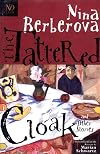
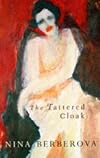
The Tattered Cloak and Other Stories
by Nina Berberova
On This Page
Description
The greatest collection by one of the great Russian writers is now back in print. First published in Europe in the 1930s and '40s, these searing, evocative stories by the late emigre writer Nina Berberova (1901-1993) are portraits of the lives of Russian exiles in Paris on the eve of World War II. The protagonists range from housekeepers and waiters to shabby-genteel aristocrats and intellectualsbut all are united in a haunting displacement from their pasts, and all share a troubling show more uncertainty about the future. show lessTags
Recommendations



































Member Reviews
I was ready to give this five stars but the tone of the book started changing towards the end; the stories lost their hard edge and became dreamy (the change starts somewhere in the middle of "The Dark Spot"). They were still well written, but to my taste not nearly as affecting. "The Waiter and the Slut" is as cutting as a George Grosz drawing, but "In Memory of Schliemann" is perhaps more akin to the sentimental art of Ben Shahn--not bad, but far from great.
While The Tattered Cloak, a collection of six novellas was released by Vintage just prior to Berberova’s death, they were released individually in France during the late 1980’s, and in two volumes in Russia and Britain in the early 1990’s. Berberova’s work, like her life, has a foothold in many lands. But, no matter where her works were published and into which language they were translated, they are true to their Russian roots.
With the exception of a more sophisticated narrator and mature style of story-telling, four of the novellas in The Tattered Cloak are quite similar to the stories found in the Billancourt Tales –- stories of exiled Russians who carry their ghosts and their hopes with them to Paris. The opening novella, show more “The Resurrection of Mozart,” stands apart for the intrusion of World War II into its plot. For those who have read Irene Nemirovsky’s Suite Francaise, the scenes of roads clogged of people fleeing Paris and villages crowded with refugees will feel eerily familiar. The age of the two authors may be similar, however Berberova is much more Russian in her approach to story telling. She opens “The Resurrection of Mozart” in June 1940 with Russians in a country home 30 miles from Paris speaking about what the dead if resurrected would say about the disturbing turn of world events. I could not help but be reminded of the start of War and Peace – with Russians at a dinner party discussing Napoleon and the possibility of Russia’s invasion. This novella stands out for the different set of eyes and voice it gives to the events in Nemirovsky’s novel.
The final novella of this collection, “In Memory of Schliemann” is set in 1984 in an unnamed urban area that feels like the East Coast of the U.S. While there’s more than a little nod to Orwell in this story -- man vs the machines of industry and government -- this story reminds me more of such Soviet writers of the 1920’s and 30’s as Bulgakov and Zoshchenko in its use of humor and metaphor. The computer at the narrator’s workplace spits out a card that bestows the narrator with three days of unexpected vacation. He heads to a location called “Great Fountains” thinking it will be an excellent excursion, only to discover crowds of people wandering around the dry concrete basins of the fountains because they are inoperable. The narrator’s ensuing quest to find a relaxing location near water, and the obstacles he keeps encountering, becomes a metaphor for his journey to a modern rebirth of spirit and purpose.
The Tattered Cloak is both a marvelous showcase of the range of Berberova’s skills as a writer and as a philosopher. While I mourn the fact that her work was so overlooked during most of her life, I celebrate the fact that we are able to discover them now. show less
With the exception of a more sophisticated narrator and mature style of story-telling, four of the novellas in The Tattered Cloak are quite similar to the stories found in the Billancourt Tales –- stories of exiled Russians who carry their ghosts and their hopes with them to Paris. The opening novella, show more “The Resurrection of Mozart,” stands apart for the intrusion of World War II into its plot. For those who have read Irene Nemirovsky’s Suite Francaise, the scenes of roads clogged of people fleeing Paris and villages crowded with refugees will feel eerily familiar. The age of the two authors may be similar, however Berberova is much more Russian in her approach to story telling. She opens “The Resurrection of Mozart” in June 1940 with Russians in a country home 30 miles from Paris speaking about what the dead if resurrected would say about the disturbing turn of world events. I could not help but be reminded of the start of War and Peace – with Russians at a dinner party discussing Napoleon and the possibility of Russia’s invasion. This novella stands out for the different set of eyes and voice it gives to the events in Nemirovsky’s novel.
The final novella of this collection, “In Memory of Schliemann” is set in 1984 in an unnamed urban area that feels like the East Coast of the U.S. While there’s more than a little nod to Orwell in this story -- man vs the machines of industry and government -- this story reminds me more of such Soviet writers of the 1920’s and 30’s as Bulgakov and Zoshchenko in its use of humor and metaphor. The computer at the narrator’s workplace spits out a card that bestows the narrator with three days of unexpected vacation. He heads to a location called “Great Fountains” thinking it will be an excellent excursion, only to discover crowds of people wandering around the dry concrete basins of the fountains because they are inoperable. The narrator’s ensuing quest to find a relaxing location near water, and the obstacles he keeps encountering, becomes a metaphor for his journey to a modern rebirth of spirit and purpose.
The Tattered Cloak is both a marvelous showcase of the range of Berberova’s skills as a writer and as a philosopher. While I mourn the fact that her work was so overlooked during most of her life, I celebrate the fact that we are able to discover them now. show less
Berberova, Nina. The Tattered Cloak and Other Novels. Translated by Marian Schwartz. New York: Alfred A. Knopf, 1990.
The Tattered Cloak is one of six novels in Berberova's book of the same name. Well, she calls them novels. Each story is under 100 pages so 'novella' might be a better description. The six stories are as follows (with my favorites being the first two),
"The Resurrection of Mozart" ~ the coming of World War II
"The Waiter and the Slut" ~ one woman's tragic effort to stave off loneliness and growing old
"Astashev in Paris"
"The Tattered Cloak"
"The Black Pestilence" and,
"In Memory of Schliemann"
All stories are written in that traditional stark Russian way. Most of the stories leave you hanging in that, "and then what show more happened?" kind of way. For example in "The Resurrection of Mozart" the reader is left asking did they escape the war or did they wait too long? show less
The Tattered Cloak is one of six novels in Berberova's book of the same name. Well, she calls them novels. Each story is under 100 pages so 'novella' might be a better description. The six stories are as follows (with my favorites being the first two),
"The Resurrection of Mozart" ~ the coming of World War II
"The Waiter and the Slut" ~ one woman's tragic effort to stave off loneliness and growing old
"Astashev in Paris"
"The Tattered Cloak"
"The Black Pestilence" and,
"In Memory of Schliemann"
All stories are written in that traditional stark Russian way. Most of the stories leave you hanging in that, "and then what show more happened?" kind of way. For example in "The Resurrection of Mozart" the reader is left asking did they escape the war or did they wait too long? show less
Ratings
Members
- Recently Added By
Lists

Russian Literature
184 works; 35 members
Author Information

81+ Works 1,949 Members
Born in 1901 in pre-Revolutionary St. Petersburg, Russia, Nina Berberova emigrated in 1922, living in several European countries before settling in the United States. She wrote frequently for the leading journals and anthologies of the first wave of the Russian emigration. The Italics Are Mine (1969), her autobiography, is an important record of show more that period. (Bowker Author Biography) show less
Some Editions
Series
Belongs to Publisher Series
New Directions Classic (916)
Common Knowledge
- Original language
- Russian
Classifications
- Genres
- General Fiction, Fiction and Literature
- DDC/MDS
- 891.73 — Literature & rhetoric Literatures of other languages East Indo-European and Celtic literatures Russian and East Slavic languages Russian fiction
- LCC
- PG3476 .B425 .A28 — Language and Literature Slavic languages and literatures. Baltic languages. Albanian language Slavic. Baltic. Albanian Russian literature Individual authors and works 1917-1960
- BISAC
Statistics
- Members
- 118
- Popularity
- 277,086
- Reviews
- 3
- Rating
- (4.05)
- Languages
- English
- Media
- Paper
- ISBNs
- 3