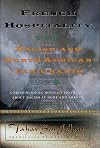
French Hospitality
by Tahar Ben Jelloun
40 Members (2.00)
On This Page
Description
The award-winning novelist and author of the international bestseller Racism Explained to My Daughter uses his own experience to illuminate the experience of the Other in his adopted land--and everywhere. A Moroccan who emigrated to France in 1971, Tahar Ben Jelloun draws upon his own encounters with racism along with his insights as a practicing psychologist and gifted novelist to elucidate the racial divisions that plague contemporary society. In a modern France where openly racist leaders show more such as National Front spokesman Jean-Marie Le Pen have made significant strides toward broad popular acceptance, Ben Jelloun's book is more topical now than ever. His profound and compelling appeal for tolerance--in both public discourse and the law--is a passionate yet reasoned argument that racism simply does not make sense in the multicultural world of today. French Hospitality confronts issues of international resonance: the relationship of a formerly colonized people to their onetime colonizers, the encounter between Islam and the modern Judeo-Christian West, and the status of the non-European minorities in Europe today. Underlying these issues is a heartfelt nostalgia for simple, traditional North African hospitality as practiced since time immemorial by a relatively poor and unsophisticated society. Ben Jelloun supplements this rather noble ideal of generosity and welcoming by borrowing the philosophical concept of hospitality--the opening of oneself to another--from the works of Emmanuel Lévinas and Jacques Derrida in order to illustrate the moral conception of a nation's unconditional acceptance of foreigners. Isn't the belief in welcoming strangers a fundamental mark of civilization? In a political climate where increasingly repressive immigration laws are a national trend as well as an international phenomenon, he contends, it is not surprising that racism has gained a foothold. Most hurt by racist polemic and politics, he points out, are children of immigrants--born in France, their memories are those of the French people, and they deserve to be treated with the full respect afforded to any citizen. With his elegant and imaginative prose, Ben Jelloun shows us both racism's face and the immigrant's heartbreak; but he also evokes the wind of freedom and the ideal of hospitality, and with this gesture offers a kind of hope in extricating ourselves from racism's recidivist incoherencies. show lessTags
Recommendations











































Member Reviews
Members
- Recently Added By
Author Information

140+ Works 5,008 Members
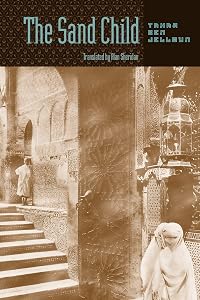
Controversial winner of the prestigious French Prix Goncourt (1987), Tahar Ben Jelloun is a Moroccan writer who has not found much favor at home, despite his growing popularity abroad. According to some North African critics, Ben Jelloun intentionally sets out to please foreign readers. The critics contend that his writing reinforces European show more stereotypes by pandering to western tastes for quaint folklore and traditions, and exotic scenery. Moroccan critics have accused Ben Jelloun of creating artificial, fabricated stories that fail to convey a true picture of Morocco. They have also been offended by his criticism of Morocco, and the fact that he reveals sides of Moroccan life that are usually kept hidden. Ben Jelloun's story of a girl dressed as a boy, L'Enfant du Sable (The Sand Child) (1985), was scandalous in their eyes. After Ben Jelloun won the Prix Goncourt, a number of critics changed their minds and have begun to praise his work. (Bowker Author Biography) show less
104+ Works 3,863 Members
Classifications
- Genres
- Nonfiction, Anthropology, Politics and Government, History, Religion & Spirituality
- DDC/MDS
- 305.893044 — Society, government, & culture Social sciences, sociology & anthropology Social group - Age, Gender, Ethnicity Ethnic and national groups Other ethnic and national groups Non-Semitic Afro-Asiatic peoples
- LCC
- DC34.5 .N67 .B4513 — History of Europe, Asia, Africa and Oceania France – Andorra – Monaco History of France Antiquities. Social life and customs. Ethnography
- BISAC
Statistics
- Members
- 40
- Popularity
- 733,711
- Rating
- (2.00)
- Languages
- Dutch, English, French, Italian
- Media
- Paper
- ISBNs
- 8