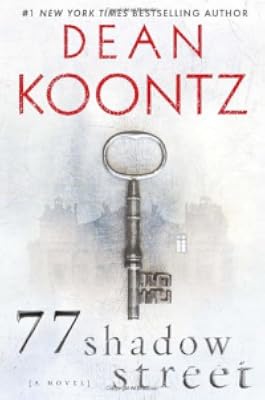
77 Shadow Street
by Dean Koontz
On This Page
Description
Once the center of madness, suicide, mass murder, and whispers of things far worse, the 1800s Gilded Age palace known as the Pendleton, has been re-christened in the 1970s as a luxury apartment building. But now inexplicable shadows caper across walls, security cameras relay impossible images, phantom voices mutter in strange tongues, not-quite-human figures lurk in the basement, and elevators plunge into unknown depths.Tags
Recommendations

Member Reviews
This only just got 4 stars due to Dean Koontz's seemingly uncanny ability to mess up a fantastic story right at the very end. He did this with Phantoms by wimping out and invoking the great god, Science, and now he's gone and done the same thing again here.
It was a truly great ride right up to the last 100 pages(approx.) when he decided to introduce what he clearly thought was a really cool and unexpected twist by letting us know that the house was in fact built on a tear in space-time which caused future creatures which from what I could make out are future humans that have been adjusted by some sort of nano-machines that use the human as a host upon orders of some sort of intelligence called the One. This is all very well and good, show more and is hinted at throughout the novel with various messages being heard by the various characters, but I really do wish Mr Koontz would have the guts to not make it about how great and all powerful science is. Just for once I'd like it to be about how powerful nature, or demons, or some sort of weird and wonderful creature is. Not something enhanced with nano-tech or something being beaten and dispatched because, of course, science is so much more powerful than mere nature.
This novel isn't nearly as bad as I'm making out, but it is very annoying when I'm 90% through the novel wondering what this demonic creature is and where it comes from and why it's here and getting really excited to know whether it turns out to be an ancient god, or a demonic power previously unknown, or some other force of nature that got screwed up somewhere in the dim and distant past, only to find out that it comes down to Koontz's great god Science, ...yet again!
Read this for the first 90%, then stop and make up your own ending. You'll be happier, and it'll be a better novel for it. show less
It was a truly great ride right up to the last 100 pages(approx.) when he decided to introduce what he clearly thought was a really cool and unexpected twist by letting us know that the house was in fact built on a tear in space-time which caused future creatures which from what I could make out are future humans that have been adjusted by some sort of nano-machines that use the human as a host upon orders of some sort of intelligence called the One. This is all very well and good, show more and is hinted at throughout the novel with various messages being heard by the various characters, but I really do wish Mr Koontz would have the guts to not make it about how great and all powerful science is. Just for once I'd like it to be about how powerful nature, or demons, or some sort of weird and wonderful creature is. Not something enhanced with nano-tech or something being beaten and dispatched because, of course, science is so much more powerful than mere nature.
This novel isn't nearly as bad as I'm making out, but it is very annoying when I'm 90% through the novel wondering what this demonic creature is and where it comes from and why it's here and getting really excited to know whether it turns out to be an ancient god, or a demonic power previously unknown, or some other force of nature that got screwed up somewhere in the dim and distant past, only to find out that it comes down to Koontz's great god Science, ...yet again!
Read this for the first 90%, then stop and make up your own ending. You'll be happier, and it'll be a better novel for it. show less
This book started off amazingly strong and had me unable to put it down. The second half of the book started to really pick up the pace, and then I feel it fell flat on its face. A chilling horror story was reduced to a mishmash of failed plots that really made no sense at all. It felt forced at the end, and I had a hard time even finishing the book. I still gave it two stars, because it really drew me in at force. The ending left a lot to be desired though.
I received an advance copy for free through GoodReads’ First Reads.
I read a lot of Dean Koontz’s books during my high school and college years, but have read almost none in the last 10 years, so I’m not really current on the Koontz oeuvre. But even to me, this felt like a lot of stock characters recycled to perform a lot of unnecessary tasks, making the book longer and less interesting than it needed to be. We spend a lot of time learning about characters who ultimately have very little to do in or with the story, while others more (and sometimes less) integral to the plot pop up halfway through with little explication.
Personally, I could get past bland characters if they were only serving as grist for a powerful storytelling show more mill. I mean, if something genuinely scary happens to a character, it’s going to be scary regardless of who it happens to, right? And the book does kick off fairly fast, but after the first couple chapters I just wasn’t feeling the tension. It takes too long for the stakes to be raised, as we keep switching from one pointless character to another to experience the same level of anxiety or suspense from 10 different perspectives.
So you slog through 400 pages of that, and suddenly the bland characters have saved the world byassassinating scientists for their ideas (because knowledge and ideas die with the scientists, right?), and then two of the most stock bland characters (“ex-military guy” and “single mom with inner strength who really loves her darn-good kid”) are married and having a kid together and the stepson is so thrilled to finally have a real dad and a dog. And that vision of domestic bliss is how you know they’ve really saved the world, and not just postponed the inevitable or something. You’ll probably be too busy saying “WTF?” to barf.
Overall, it felt like a thin and sloppily assembled plot, more tied to finding an unusual explanation for an apparent haunting than exploring any number of the bigger and far more interesting ideas popping up at the resolution of the story. I’m giving it two stars because it wasn’t that painful to read, and if you shut your brain off at the end and/or move on immediately to another book it won’t seem that bad. show less
I read a lot of Dean Koontz’s books during my high school and college years, but have read almost none in the last 10 years, so I’m not really current on the Koontz oeuvre. But even to me, this felt like a lot of stock characters recycled to perform a lot of unnecessary tasks, making the book longer and less interesting than it needed to be. We spend a lot of time learning about characters who ultimately have very little to do in or with the story, while others more (and sometimes less) integral to the plot pop up halfway through with little explication.
Personally, I could get past bland characters if they were only serving as grist for a powerful storytelling show more mill. I mean, if something genuinely scary happens to a character, it’s going to be scary regardless of who it happens to, right? And the book does kick off fairly fast, but after the first couple chapters I just wasn’t feeling the tension. It takes too long for the stakes to be raised, as we keep switching from one pointless character to another to experience the same level of anxiety or suspense from 10 different perspectives.
So you slog through 400 pages of that, and suddenly the bland characters have saved the world by
Overall, it felt like a thin and sloppily assembled plot, more tied to finding an unusual explanation for an apparent haunting than exploring any number of the bigger and far more interesting ideas popping up at the resolution of the story. I’m giving it two stars because it wasn’t that painful to read, and if you shut your brain off at the end and/or move on immediately to another book it won’t seem that bad. show less
I really enjoyed this one.
Part creepy ghost story, part Lovecraft style nightmare, part sci-fi monster romp, with a strong message against technology that loses sight of humanity. The monsters, and there were plenty of them in all shapes and sizes, were nasty, deadly, and creatively imagined. The plot and structure were tight and propelled toward the finale. The characters were well drawn and acted in a very realistic fashion. Koontz even managed to fit in a couple of Golden Retrievers (all Dean Koontz books must have a good dog in there somewhere) before it was all said and done.
What is not to like with this novel? Nothing. Well written, compelling, and fun. Nothing wrong with that.
Part creepy ghost story, part Lovecraft style nightmare, part sci-fi monster romp, with a strong message against technology that loses sight of humanity. The monsters, and there were plenty of them in all shapes and sizes, were nasty, deadly, and creatively imagined. The plot and structure were tight and propelled toward the finale. The characters were well drawn and acted in a very realistic fashion. Koontz even managed to fit in a couple of Golden Retrievers (all Dean Koontz books must have a good dog in there somewhere) before it was all said and done.
What is not to like with this novel? Nothing. Well written, compelling, and fun. Nothing wrong with that.
I really wanted to like this book. The blurb sounded interesting and creepy. But.....Dean Koontz is hit or miss for me. This one is a miss.
I DNF'd this about 150 pages. Why?
The story moves too slowly. No real suspense or action.
Weird, mostly unseen, mysterious creature sneaking up on people -- Koontz Trope.
Very little character development.
This one is not for me. DNF and taking it back to the library. Sometimes I really enjoy Koontz.....other times.....meh. It did keep me entertained while I spent 3 hours getting my hair colored and cut......but not entertaining enough for me to finish the book.
I DNF'd this about 150 pages. Why?
The story moves too slowly. No real suspense or action.
Weird, mostly unseen, mysterious creature sneaking up on people -- Koontz Trope.
Very little character development.
This one is not for me. DNF and taking it back to the library. Sometimes I really enjoy Koontz.....other times.....meh. It did keep me entertained while I spent 3 hours getting my hair colored and cut......but not entertaining enough for me to finish the book.
I'm never sure how to end my reviews. I know the theory of how they should end: the last paragraph should summarise my feelings for the tl;dr crowd; the last sentence should be a snappy punchline, a send off that leaves anyone reading the review with a warm glow in their special places; the last syllable should be stressed because, as Giles Coren splenetically pointed out, “When you're winding up a piece of prose, metre is crucial.… It's not fucking rocket science. It's fucking pre-GCSE scansion.”
Last year I got into a bad habit. If I liked a book by Joseph Bloggs I would almost always end my review of it with “I'll be sure to read more of Joseph Bloggs's books in the future!” Not only was this somewhat egocentric (the highest show more praise I can give a book is that I would deign to read more of the author's work? Really?) but it was also mostly untrue. My bookshelves are already metaphorically heaving with unread works by authors I've never tried before, it's unlikely I'll actually rush out to buy new books by authors I've enjoyed when I've such a backlog to get through.
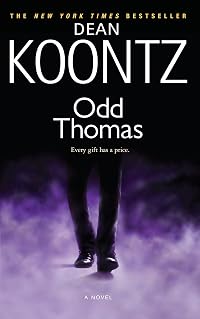
When 2012 rolled around I vowed to stop this bad habit, and so was brutally honest in my review of my first Dean Koontz novel: [b:Odd Thomas|13421305|Odd Thomas (Odd Thomas, #1)|Dean Koontz|http://photo.goodreads.com/books/1327279012s/13421305.jpg|4574034]. I enjoyed it, yes, but couldn't promise I'd be reading any more of Mr Koontz any time soon.
Predictably, then, here I am, reading more of Mr Koontz some time soon.
The blurb on the back of 77 Shadow Street (or the posterior descriptive matter, as those of us in the know call it), claims that “This is not a ghost story. It is something scarier by far.” And to be fair that claim is half right: this isn't a ghost story.
The scariest book I've ever read was Stephen King's [b:'Salem's Lot|9668519|'Salem's Lot|Stephen King|http://photo.goodreads.com/books/1289333263s/9668519.jpg|3048937]. That story wasn't a priori particularly terrifying. What made it The Scariest Book Ever was the fact that I read it during a week-long bout of insomnia I was having while staying at my dad's house during a break from University. My dad lives out in a rural area, so I never bother to close the curtains of my bedroom there. This isn't normally a problem; it is a problem when you're reading a horror book at 2am each night in lieu of sleeping, by the insufficient light of a bedside lamp, and the book describes creepy vampires appearing at people's windows.
Fancying a good scare, and wanting to believe this book's claim of being “scarier by far” than a ghost story, I tried to give it a helping hand in the scare stakes. I read it late at night, curtains agape, just a lamp for company; or I read it during the numerous gloomy thunder storms we've had of late. If reading about people being menaced by weird beings in their bedrooms during a thunder storm while sat in my bedroom during a thunder storm couldn't give me a bag full of the willies then clearly the book wasn't that scary.
The book wasn't that scary.
One of its problems is the exorbitantly long time spent introducing characters and foreshadowing the main part of the story compared to the time spent actually telling the main part of the story. Part One — the longer of the novel's two parts — is a series of Dan Brown length chapters that flit between the various residences in the eponymous condominium. In retrospect there aren't that many characters, but it feels like almost every chapter we're introduced to a new character or two. Even into Part Two new characters pop up here and there, some of them utterly crucial and some of them utterly pointless. These characters are like twenty-first century versions of the old horror cast clichés: instead of token black guys, token dumb blondes, and a token gruff hero with a tortured past we get token Asian-Americans, token single mothers, and a token gruff hero with a tortured past. And yet for all their novelty these characters still feel like clichés.
The first part of the book is saved from utter humdrumness by occasional pieces written from the perspective of two mysterious characters who clearly don't belong in 77 Shadow Street. Alas, far too soon Koontz reveals who they really are, and indeed offers some science fiction-esque explanations for all the mysterious shenanigans. In fact the mystery is so totally drained from the plot that early on into the second part, when the characters and reader alike should be panicked and confused, the characters seem utterly relaxed at the inexplicable goings-on around them and I found it pretty hard to panic for the characters.Part One reveals that the inhabitants of the condominium and whatever they're holding at the time will be sucked into a future devoid of humanity and populated by monsters, and the survivors will be sent back to their own time some unspecified length of time later. All very threatening until half of the people in the building happen to get sent forward while armed, and it's quickly revealed that the unspecified length of time they have to survive for is a whopping ninety minutes. I balked when I read that. I really did.
The novel's science fiction trappings aren't what makes it a mediocre story and a humdrum horror. Science fiction horror can make for excellent and terrifying tales. Dean Koontz seems to have tried to squeeze terror and science into too small a space, and rather than fusing together neatly they've just not left enough room for one another. There's enough content in the story for a moderately interesting science fiction short story, or if the horror aspects were fleshed out to fill the space between the covers then it could live up to its blurb's brags. As it is it manages to be unsatisfying in two genres at once, an inglorious quality indeed. show less
Last year I got into a bad habit. If I liked a book by Joseph Bloggs I would almost always end my review of it with “I'll be sure to read more of Joseph Bloggs's books in the future!” Not only was this somewhat egocentric (the highest show more praise I can give a book is that I would deign to read more of the author's work? Really?) but it was also mostly untrue. My bookshelves are already metaphorically heaving with unread works by authors I've never tried before, it's unlikely I'll actually rush out to buy new books by authors I've enjoyed when I've such a backlog to get through.
When 2012 rolled around I vowed to stop this bad habit, and so was brutally honest in my review of my first Dean Koontz novel: [b:Odd Thomas|13421305|Odd Thomas (Odd Thomas, #1)|Dean Koontz|http://photo.goodreads.com/books/1327279012s/13421305.jpg|4574034]. I enjoyed it, yes, but couldn't promise I'd be reading any more of Mr Koontz any time soon.
Predictably, then, here I am, reading more of Mr Koontz some time soon.
The blurb on the back of 77 Shadow Street (or the posterior descriptive matter, as those of us in the know call it), claims that “This is not a ghost story. It is something scarier by far.” And to be fair that claim is half right: this isn't a ghost story.
The scariest book I've ever read was Stephen King's [b:'Salem's Lot|9668519|'Salem's Lot|Stephen King|http://photo.goodreads.com/books/1289333263s/9668519.jpg|3048937]. That story wasn't a priori particularly terrifying. What made it The Scariest Book Ever was the fact that I read it during a week-long bout of insomnia I was having while staying at my dad's house during a break from University. My dad lives out in a rural area, so I never bother to close the curtains of my bedroom there. This isn't normally a problem; it is a problem when you're reading a horror book at 2am each night in lieu of sleeping, by the insufficient light of a bedside lamp, and the book describes creepy vampires appearing at people's windows.
Fancying a good scare, and wanting to believe this book's claim of being “scarier by far” than a ghost story, I tried to give it a helping hand in the scare stakes. I read it late at night, curtains agape, just a lamp for company; or I read it during the numerous gloomy thunder storms we've had of late. If reading about people being menaced by weird beings in their bedrooms during a thunder storm while sat in my bedroom during a thunder storm couldn't give me a bag full of the willies then clearly the book wasn't that scary.
The book wasn't that scary.
One of its problems is the exorbitantly long time spent introducing characters and foreshadowing the main part of the story compared to the time spent actually telling the main part of the story. Part One — the longer of the novel's two parts — is a series of Dan Brown length chapters that flit between the various residences in the eponymous condominium. In retrospect there aren't that many characters, but it feels like almost every chapter we're introduced to a new character or two. Even into Part Two new characters pop up here and there, some of them utterly crucial and some of them utterly pointless. These characters are like twenty-first century versions of the old horror cast clichés: instead of token black guys, token dumb blondes, and a token gruff hero with a tortured past we get token Asian-Americans, token single mothers, and a token gruff hero with a tortured past. And yet for all their novelty these characters still feel like clichés.
The first part of the book is saved from utter humdrumness by occasional pieces written from the perspective of two mysterious characters who clearly don't belong in 77 Shadow Street. Alas, far too soon Koontz reveals who they really are, and indeed offers some science fiction-esque explanations for all the mysterious shenanigans. In fact the mystery is so totally drained from the plot that early on into the second part, when the characters and reader alike should be panicked and confused, the characters seem utterly relaxed at the inexplicable goings-on around them and I found it pretty hard to panic for the characters.
The novel's science fiction trappings aren't what makes it a mediocre story and a humdrum horror. Science fiction horror can make for excellent and terrifying tales. Dean Koontz seems to have tried to squeeze terror and science into too small a space, and rather than fusing together neatly they've just not left enough room for one another. There's enough content in the story for a moderately interesting science fiction short story, or if the horror aspects were fleshed out to fill the space between the covers then it could live up to its blurb's brags. As it is it manages to be unsatisfying in two genres at once, an inglorious quality indeed. show less
The book's subtle beginning and slow build-up may suggest to some that Koontz is taking too long to get on with the story. Halfway through the book this was certainly my feeling and I wondered whether my interest would wain before I finally found out what the heck was really going on in this time-fractured building.
As the end approached the mystery deepened, as did the tension. By the time the truth was revealed and the dead were counted I was completely hooked.
A good gripping read - recommended.
As the end approached the mystery deepened, as did the tension. By the time the truth was revealed and the dead were counted I was completely hooked.
A good gripping read - recommended.
Members
- Recently Added By
Lists

Jarett's Books
86 works; 1 member

2016 Book Club Choices
52 works; 7 members

To Read
617 works; 7 members
Author Information

532+ Works 228,815 Members
Dean Koontz was born on July 9, 1945 in Everett, Pennsylvania. He received a degree in education from Shippensburg State College in 1967. A former high school English teacher as well as a teacher-counselor with the Appalachian Poverty Program, he began writing as a child to escape an ugly home life caused by his alcoholic father. A prolific writer show more at a young age, he had sold a dozen novels by the age of 25. Early in his career, he wrote under numerous pen names including David Axton, Brian Coffey, K. R. Dwyer, Leigh Nichols, Richard Paige, and Owen West. He is best known for the books written under his own name, many of which are bestsellers, including Midnight, Cold Fire, The Bad Place, Hideaway, The Husband, Odd Hours, 77 Shadow Street, Innocence, The City, Saint Odd, and The Silent Corner. (Bowker Author Biography) show less
Some Editions
Awards and Honors
Distinctions
Work Relationships
Is contained in
Common Knowledge
- Canonical title
- 77 Shadow Street
- Original title
- 77 Shadow Street
- Original publication date
- 2011-12-27
- People/Characters
- Earl Blandon; Devon Murphy; Norman Fixxer; Silas Kinsley; Bailey Hawkes; Twyla Trahern (show all 22); Edna Cupp; Martha Cupp; Sally Hollander; Logan Spangler; Vernon Klick; Mickey Dime; Thomas Tran; Sparkle Sykes; Iris Sykes; Perry Kyser; Padmini Bahrati; Winston 'Winny' Trahern; Kirby Ignis; Fielding Udell; Mac Reeves; Shelly Reeves
- Important places
- 77 Shadow Street
- Epigraph*
- O Dunkel Dunkel Dunkel, Sie alle gehen ins Dunkel ... - T.S. Eliot: "East Coker"
Wie langsam er kriecht, der Schatten; doch ist es so weit,
Wie rasch sich die Schatten dann senken. Wie rasch! Wie rasch! - Hilaire Belloc: "An eine Sonnenuhr" - Dedication
- From here in the Nutland,
To Ed and Carol Gorman,
Out there in the Heartland,
With undiminished affection
after all these years. - First words
- Bitter and drunk, Earl Blandon, a former United States senator, got home at 2:15 A.M. that Thursday with a new tattoo: a two-word obscenity in blue block letters between the knuckles of the middle finger of his right hand.
- Last words
- (Click to show. Warning: May contain spoilers.)Really and truly, in 2049 or here in the present, it didn't get better than that.
- Original language*
- Amerikanisch
*Some information comes from Common Knowledge in other languages. Click "Edit" for more information.
Classifications
Statistics
- Members
- 1,136
- Popularity
- 22,211
- Reviews
- 49
- Rating
- (3.09)
- Languages
- Dutch, English, German, Polish
- Media
- Paper, Audiobook, Ebook
- ISBNs
- 33
- UPCs
- 1
- ASINs
- 13