On This Page
Description
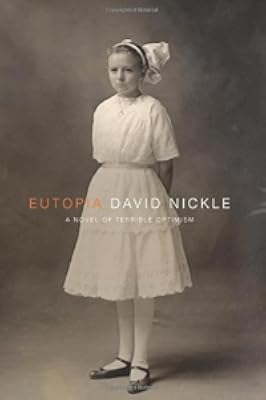
The year is 1911. In Cold Spring Harbour, New York, the newly formed Eugenics Records Office is sending its agents to catalogue the infirm, the insane, and the criminal--with an eye to a cull, for the betterment of all. Near Cracked Wheel, Montana, a terrible illness leaves Jason Thistledown an orphan, stranded in his dead mother's cabin until the spring thaw shows him the true meaning of devastation--and the barest thread of hope. At the edge of the utopian mill town of Eliada, Idaho, show more Doctor Andrew Waggoner faces a Klansman's noose and glimpses wonder in the twisting face of the patient known only as Mister Juke. And deep in a mountain lake overlooking that town, something stirs, and thinks, in its way: Things are looking up. Eutopia follows Jason and Andrew as together and alone, they delve into the secrets of Eliada--industrialist Garrison Harper's attempt to incubate a perfect community on the edge of the dark woods and mountains of northern Idaho. What they find reveals the true, terrible cost of perfection--the cruelty of the surgeon's knife--the folly of the cull--and a monstrous pact with beings that use perfection as a weapon, and faith as a trap. show lessTags
Recommendations
Member Reviews
Pros: excellent writing, courageous, tight ending
Cons: the supernatural aspect isn't as scary as the historically accurate parts
Eutopia takes place in the early 1900's when the eugenics movement was becoming popular with a certain type of people. Mrs Frost, an agent of the Eugenics Records Office finds her nephew is the sole survivor of a plague ravaged frontier town. She brings him with her to Eilada, Idaho, where an industrialist has started what he intends to be a utopic community.
But not everything's rosy in paradise. The town's black doctor, Andrew Waggoner, has had a run in with the Ku Klux Klan and discovered that his colleague, Dr. Bergstrom has been keeping a 'Mr. Juke' in quarantine. The more Dr. Waggoner learns of Dr. show more Bergstrom's actions and who, or what, Mr. Juke is, the more imperiled his life becomes.
Because Mr. Juke's family is coming to get him back.
For a novel that has such a horrifying supernatural creature at the heart of it, the true terror of the book was contained in the historically accurate parts. It's hard to be afraid of made up monsters when the Klan and practicing eugenicists show up. Indeed, when you see the unrepentant Mrs. Frost and delusional Dr. Bergstrom own up to their crimes, no fictional monster could possibly stand up to the horrors humans are willing to perpetrate on each other.
I call this novel courageous because Mr. Nickle focuses on a period of history most people pretend didn't exist. The eugenics movement died after the holocaust showed the end result of such thinking. But denying that sterilization happened in other nations (including Canada and the U.S.), as painful as it is to admit, denies the injustices done to people in the past due to racism and elitist thinking. And allows the possibility of repeating such things. Fiction allows us to examine issues we'd rather not, in the safety of the present, when we hope such occurrences will never be allowed to happen again. In this way it reminds me of Blonde Roots, by Bernardine Evaristo, which flips history so Europeans are enslaved by Afrikaans. It shows how racism can go both ways and only the conquerors decide what is right and who are the elite.
People will find reading this book uncomfortable, for the subject matter and the liberal use of the 'n' word. We have whitewashed our history and no longer want to acknowledge the attitudes and language of the past. Even the subtle put downs black men faced, like using Dr. Waggoner's Christian name when addressing him, rather than his title, are accurately represented in this book.
The ending is tight, bringing all three plot lines together in surprising ways. It's an ending that is both satisfying, and thought provoking. show less
Cons: the supernatural aspect isn't as scary as the historically accurate parts
Eutopia takes place in the early 1900's when the eugenics movement was becoming popular with a certain type of people. Mrs Frost, an agent of the Eugenics Records Office finds her nephew is the sole survivor of a plague ravaged frontier town. She brings him with her to Eilada, Idaho, where an industrialist has started what he intends to be a utopic community.
But not everything's rosy in paradise. The town's black doctor, Andrew Waggoner, has had a run in with the Ku Klux Klan and discovered that his colleague, Dr. Bergstrom has been keeping a 'Mr. Juke' in quarantine. The more Dr. Waggoner learns of Dr. show more Bergstrom's actions and who, or what, Mr. Juke is, the more imperiled his life becomes.
Because Mr. Juke's family is coming to get him back.
For a novel that has such a horrifying supernatural creature at the heart of it, the true terror of the book was contained in the historically accurate parts. It's hard to be afraid of made up monsters when the Klan and practicing eugenicists show up. Indeed, when you see the unrepentant Mrs. Frost and delusional Dr. Bergstrom own up to their crimes, no fictional monster could possibly stand up to the horrors humans are willing to perpetrate on each other.
I call this novel courageous because Mr. Nickle focuses on a period of history most people pretend didn't exist. The eugenics movement died after the holocaust showed the end result of such thinking. But denying that sterilization happened in other nations (including Canada and the U.S.), as painful as it is to admit, denies the injustices done to people in the past due to racism and elitist thinking. And allows the possibility of repeating such things. Fiction allows us to examine issues we'd rather not, in the safety of the present, when we hope such occurrences will never be allowed to happen again. In this way it reminds me of Blonde Roots, by Bernardine Evaristo, which flips history so Europeans are enslaved by Afrikaans. It shows how racism can go both ways and only the conquerors decide what is right and who are the elite.
People will find reading this book uncomfortable, for the subject matter and the liberal use of the 'n' word. We have whitewashed our history and no longer want to acknowledge the attitudes and language of the past. Even the subtle put downs black men faced, like using Dr. Waggoner's Christian name when addressing him, rather than his title, are accurately represented in this book.
The ending is tight, bringing all three plot lines together in surprising ways. It's an ending that is both satisfying, and thought provoking. show less
Wonderful, creepy, amazing, thought-provoking... A proper review is going to take some thought. It will be coming later.
Full Review: Eutopia sucked me right in. The writing in this book is exquisite, perfectly suited to its setting and characters; although it’s from a limited-third-person point of view, the prose shifts ever so slightly between the French-educated Dr. Waggoner and the farmboy Jason Thistledown. It’s little things like that that make me fall in love with fiction, and this one really did it for me.
I love the early twentieth century. It’s such an insane time, particularly in America, so many ideas rocketing around (and so many of them terrible). Eugenics seemed like a great plan in 1911: if you can just get rid of show more the people who are born criminals, you can get rid of crime! From where we are now, we can see how insane that looks, but you can also kind of see the logic in it. Which is key for a book like this, because characters with logical motivations make the best villains. Doctor Bergstrom and Aunt Germaine are both clearly operating out of that idea of eugenics, and while they do insane things, they still clearly want what’s best for people. That’s what makes them so terrifying.
And then there are the monsters. Nickle has created some amazing monsters here, and the best thing I can say for them is even once I realized how well they supported the theme of the novel – the futile dream of perfection, and what that means – they still seemed more found than created, even though I’m sure I’ve never heard of anything quite like them before. Parasitic and mind-controlling, they feed humanity’s desire for perfection and use those seductive illusions to convince people to give them what they need. This is Faerie horror, I thought after the first chilling scene Jason stumbles across in the quarantine, and the creatures do bear a strong resemblance to the creepiest kind of Fae, although there’s something else there too. This is horror in the tradition of Algernon Blackwood and Arthur Machen, not Stephen King and Peter Straub. (My favorite kind.)
(Fair warning: there’s quite a lot of body horror in this, so if you’re the kind of person who’s freaked out by pregnancy-gone-wrong, this book will probably hit you a lot harder than it did me.)
The plot of Eutopia is also elegantly constructed. It’s seamless, without any of the formulaic “wait it’s been fifty pages without a scare” kind of structure you so often get in horror novels. The reader is swept along with events, much the same way poor Jason Thistledown is, and before you know it things have gotten much, much bigger than you ever expected. This is just all-around great work, and I look forward to reading more of Nickle’s work in the future. (ChiZine also has an anthology of his – excellent! I’ve always thought that horror works better in short story than in novel form, anyway.) show less
Full Review: Eutopia sucked me right in. The writing in this book is exquisite, perfectly suited to its setting and characters; although it’s from a limited-third-person point of view, the prose shifts ever so slightly between the French-educated Dr. Waggoner and the farmboy Jason Thistledown. It’s little things like that that make me fall in love with fiction, and this one really did it for me.
I love the early twentieth century. It’s such an insane time, particularly in America, so many ideas rocketing around (and so many of them terrible). Eugenics seemed like a great plan in 1911: if you can just get rid of show more the people who are born criminals, you can get rid of crime! From where we are now, we can see how insane that looks, but you can also kind of see the logic in it. Which is key for a book like this, because characters with logical motivations make the best villains. Doctor Bergstrom and Aunt Germaine are both clearly operating out of that idea of eugenics, and while they do insane things, they still clearly want what’s best for people. That’s what makes them so terrifying.
And then there are the monsters. Nickle has created some amazing monsters here, and the best thing I can say for them is even once I realized how well they supported the theme of the novel – the futile dream of perfection, and what that means – they still seemed more found than created, even though I’m sure I’ve never heard of anything quite like them before. Parasitic and mind-controlling, they feed humanity’s desire for perfection and use those seductive illusions to convince people to give them what they need. This is Faerie horror, I thought after the first chilling scene Jason stumbles across in the quarantine, and the creatures do bear a strong resemblance to the creepiest kind of Fae, although there’s something else there too. This is horror in the tradition of Algernon Blackwood and Arthur Machen, not Stephen King and Peter Straub. (My favorite kind.)
(Fair warning: there’s quite a lot of body horror in this, so if you’re the kind of person who’s freaked out by pregnancy-gone-wrong, this book will probably hit you a lot harder than it did me.)
The plot of Eutopia is also elegantly constructed. It’s seamless, without any of the formulaic “wait it’s been fifty pages without a scare” kind of structure you so often get in horror novels. The reader is swept along with events, much the same way poor Jason Thistledown is, and before you know it things have gotten much, much bigger than you ever expected. This is just all-around great work, and I look forward to reading more of Nickle’s work in the future. (ChiZine also has an anthology of his – excellent! I’ve always thought that horror works better in short story than in novel form, anyway.) show less
This was a whole book of face scrunching, twitching, scrunching up of eyes while looking away, and making strangled little "blargh" noises. That said, the writing is gorgeous and some of the characters are going to stay with me forever I'm sure as I was able to see them so clearly.
Sooo, if you can handle some very specific squidgey, stomach twisting scenes a la Dead Ringers with some amazing storytelling, this may be just the book for you.
Sooo, if you can handle some very specific squidgey, stomach twisting scenes a la Dead Ringers with some amazing storytelling, this may be just the book for you.
The plot felt like it kind of ran away from itself throughout pretty much the whole book. It started off seeming like something I'd be really into, making a point about racism and eugenics and "purity", and maybe a comparison of race to the difference of this parasitic species that lives off of humans...but kind of in the end it seemed like an excuse for a white guy to write the n-word a whole bunch of times? I was interested in a few of the characters but I was asking "why?" a lot and never really got an answer.
This book was advertised to me as a modern take on Lovecraft-style horror. It ended up being a bit more monster-of-the-week than the cosmic horror I expected, but otherwise, this is definitely Lovecraft inspired. There are mad doctors with mad plans, weird hill people with experience of the supernatural, creepy cults with an eye towards monsterish rituals and bloodshed, bizarre and terrifying creatures, and a whole lot of religious hallucinations.
Starts out slow, but speeds up as it progresses, and ends up being a wild ride. A few scenes in here genuinely made me feel really squeamish, particularly a couple very intimate descriptions of surgery and monster births. And there’s a whole lot of nasty to be found on these pages--racism, show more rape, murder, surgery, plague, and a whole lot of gynecology. Otherwise, it’s a pretty straight forward horror piece. Fans of the genre won’t be disappointed, but also probably won’t ever be terribly surprised.
There’s also a pretty silly romance subplot in here, but other than a few too many ‘Oh my poor darling’ type comments, it doesn’t get in the way of scares. And there’s also a surprising amount of racial tension, which is managed well and merges into the horror narrative well.
This is good genre fiction. It’s weird, it’s uncomfortable, and it’s dark as hell. show less
Starts out slow, but speeds up as it progresses, and ends up being a wild ride. A few scenes in here genuinely made me feel really squeamish, particularly a couple very intimate descriptions of surgery and monster births. And there’s a whole lot of nasty to be found on these pages--racism, show more rape, murder, surgery, plague, and a whole lot of gynecology. Otherwise, it’s a pretty straight forward horror piece. Fans of the genre won’t be disappointed, but also probably won’t ever be terribly surprised.
There’s also a pretty silly romance subplot in here, but other than a few too many ‘Oh my poor darling’ type comments, it doesn’t get in the way of scares. And there’s also a surprising amount of racial tension, which is managed well and merges into the horror narrative well.
This is good genre fiction. It’s weird, it’s uncomfortable, and it’s dark as hell. show less
A wonderful look at how racism and eugenics played out in the early 20th century, with a gripping Lovecraftian twist.
Though a lot doesn't seem to happen at any one time in the story, every section leads into the next and the next in such a way that before you know it you're halfway into the book, and you're constantly going what the hell just happened?!?
Though it didn't frighten me (something that is hard to do), this story did have its moments of creepiness and unease.
When the KKK isn't the scariest monster in the book, and a Pinkerton man is one of the good guys, you know things are about to get intense.
A definite must read if you're a fan of horror, Lovecraft, stories that focus on the unjustness of racism, or all of the above.
Though a lot doesn't seem to happen at any one time in the story, every section leads into the next and the next in such a way that before you know it you're halfway into the book, and you're constantly going what the hell just happened?!?
Though it didn't frighten me (something that is hard to do), this story did have its moments of creepiness and unease.
When the KKK isn't the scariest monster in the book, and a Pinkerton man is one of the good guys, you know things are about to get intense.
A definite must read if you're a fan of horror, Lovecraft, stories that focus on the unjustness of racism, or all of the above.
Ah, the good old days. Where people dropped N-bombs with impunity, where doctors gave out morphine for broken bones, and where the improvement of the human race was worked on by sterilizing the feeble-minded and the crippled.
The title of this book is a deliberate and disturbing pun, referencing a path to utopia via eugenics, the selective culling of the less desirable aspects of the human race. If only the best exist and breed, then only the best babies will be born. At least in theory. Eugenics in itself is a chilling subject, and is mostly known as part of the Nazi agenda, but people don't often realize that the Nazis were not the first to experiment with it. Just one of the most villified and thus the most famous. David Nickle show more acknowledges and plays with this fact by having the book set in American shortly after the turn of the 20th century. We follow the joint stories of Jason and Andrew, the former an orphan and only surviver of a plague that qiped out his hometown, the latter a black doctor hated by some and tolerated by others, as more and more of the secrets of Eliada's so-called utopian ideals are unveiled in a truly disturbing fashion.
If there's any real flaw in this book, it's the transparency of the author's writing. It was clear to me very early on that Germaine was not Jason's aunt, and obvious also that Jason's discovery of this was supposed to surprise the reader also. I felt no surprise, just a faint sense of, "I saw that coming half a book ago." It was mostly this that counted against the book in terms of a final rating, for if some things had been less obvious, there might have been more of a sense of edge-of-your-seat suspense and drama going on.
But while nothing may have come as a surprise, that does not mean that it was all smooth sailing. Nickle has a real talent for writing disturbing and frightening scenes, not all of which rely on blood and gore to make their impression. The book was written with cinematic clarity, in a style that left little or no doubt as to what's going on and how you're supposed to see it.
The book's ending also felt weak and rushed, and not so much open-ended as unfinished. The heroes get away, but don't go too far from where all the horror of Eliada and the Jukes took place. We never really do get to find out just what was going on with the Jukes, nor what they were or what their purpose was. It would be easy to dismiss them as mindless monsters if it hadn't been demonstrated that they possess a fierce cunning, a culture and drive and interaction with humans that can't be dismissed so easily.
Still, in spite of the flaws it contained, it was still a good book, presenting a terrifying image of our past even when you exclude the monsters! Nickle is definitely an author to keep an eye on, and a real treat for casual horror fans! show less
The title of this book is a deliberate and disturbing pun, referencing a path to utopia via eugenics, the selective culling of the less desirable aspects of the human race. If only the best exist and breed, then only the best babies will be born. At least in theory. Eugenics in itself is a chilling subject, and is mostly known as part of the Nazi agenda, but people don't often realize that the Nazis were not the first to experiment with it. Just one of the most villified and thus the most famous. David Nickle show more acknowledges and plays with this fact by having the book set in American shortly after the turn of the 20th century. We follow the joint stories of Jason and Andrew, the former an orphan and only surviver of a plague that qiped out his hometown, the latter a black doctor hated by some and tolerated by others, as more and more of the secrets of Eliada's so-called utopian ideals are unveiled in a truly disturbing fashion.
If there's any real flaw in this book, it's the transparency of the author's writing. It was clear to me very early on that Germaine was not Jason's aunt, and obvious also that Jason's discovery of this was supposed to surprise the reader also. I felt no surprise, just a faint sense of, "I saw that coming half a book ago." It was mostly this that counted against the book in terms of a final rating, for if some things had been less obvious, there might have been more of a sense of edge-of-your-seat suspense and drama going on.
But while nothing may have come as a surprise, that does not mean that it was all smooth sailing. Nickle has a real talent for writing disturbing and frightening scenes, not all of which rely on blood and gore to make their impression. The book was written with cinematic clarity, in a style that left little or no doubt as to what's going on and how you're supposed to see it.
The book's ending also felt weak and rushed, and not so much open-ended as unfinished. The heroes get away, but don't go too far from where all the horror of Eliada and the Jukes took place. We never really do get to find out just what was going on with the Jukes, nor what they were or what their purpose was. It would be easy to dismiss them as mindless monsters if it hadn't been demonstrated that they possess a fierce cunning, a culture and drive and interaction with humans that can't be dismissed so easily.
Still, in spite of the flaws it contained, it was still a good book, presenting a terrifying image of our past even when you exclude the monsters! Nickle is definitely an author to keep an eye on, and a real treat for casual horror fans! show less
Members
- Recently Added By
Author Information

20+ Works 584 Members
Awards and Honors
Awards
Series

Common Knowledge
- People/Characters
- Andrew Waggoner; Jason Thistledown
- Important places
- Eliada, Idaho
- First words
- Dr. Charles Davenport
c/o The Eugenics Records Office Cold Spring Harbor, NY - Last words
- (Click to show. Warning: May contain spoilers.)Jason's fingers spread and his hands came apart, and he hurried off, to help the doctor up the rocky slope.
Classifications
- Genres
- Fiction and Literature, Horror, General Fiction, Historical Fiction, Science Fiction, Fantasy
- DDC/MDS
- 813 — Literature & rhetoric American literature in English American fiction in English
- LCC
- PR9199.4 .N55 .E98 — Language and Literature English English Literature English literature: Provincial, local, etc.
- BISAC
Statistics
- Members
- 217
- Popularity
- 150,127
- Reviews
- 17
- Rating
- (3.35)
- Languages
- English
- Media
- Paper, Audiobook, Ebook
- ISBNs
- 5
- ASINs
- 6