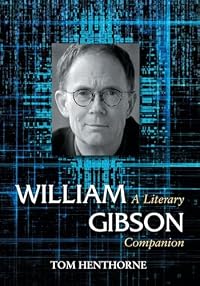
William Gibson: A Literary Companion (Mcfarland Literary Companions)
by Tom Henthorne
McFarland Literary Companions (12)
On This Page
Description
"William Gibson, founding father of cyberpunk, is one of today's most popular science fiction writers. This companion provides literary and cultural context from Gibson's first short story, "Fragments of a Hologram Rose" (1977), to his seminal cyberpunk classic Neuromancer (1984), to his best-selling novel Zero History (2010), and commentary on Gibson's subjects, themes, and approaches"--Provided by publisher.Tags
Recommendations








Member Reviews
This book is a convenient, complete (enough), guide to the works & concepts of sci-fi punk genius William Gibson, kind of a cross between cliffnotes and a research paper (at textbook prices), with data presented in usable formats.
The Chronology of Life and Works offers logical groupings of works by type/trilogy. The Literary Companion itself is about 120 pages, an alphabetical listing of Gibson's characters, themes, titles, places, obsessions, and interests; longer entries have references. A briefer Glossary offers definitions of real & imagined names, ideas, acronyms in Gibson's work.
The first appendix offers a timeline of tech innovations (tv, atom bomb, Walkman), 1948 - 2010, while the second suggests writing/research topics. There show more is an extensive bibliography and a basic index.
Readable and understandable, geared toward fans, general readers, and interested students. Thanks to LibraryThing for this ARC. show less
The Chronology of Life and Works offers logical groupings of works by type/trilogy. The Literary Companion itself is about 120 pages, an alphabetical listing of Gibson's characters, themes, titles, places, obsessions, and interests; longer entries have references. A briefer Glossary offers definitions of real & imagined names, ideas, acronyms in Gibson's work.
The first appendix offers a timeline of tech innovations (tv, atom bomb, Walkman), 1948 - 2010, while the second suggests writing/research topics. There show more is an extensive bibliography and a basic index.
Readable and understandable, geared toward fans, general readers, and interested students. Thanks to LibraryThing for this ARC. show less
 This review was written for LibraryThing Early Reviewers.
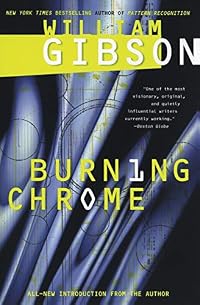
William Gibson, A Literary Companion, is a is an interesting look into Gibson's stories and novels. I came into this book having read just Neuromancer and his short story collection, Burning Chrome. Although lacking in background for the remaining books in the Sprawl setting and his other novels, I really didn't see this as a hindrance, as Henthorne did a good job in describing these works.
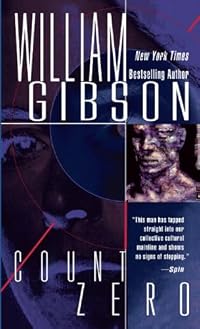
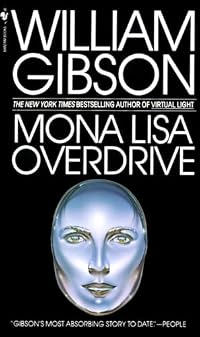
The book is put together like an encyclopedia, with a glossary and discussion questions at the end. One either comes away from this wanting to read more Gibson or stay away from his works. While I'll probably someday read Count Zero and Mona Lisa Overdrive, I didn't find his other works much to my personal taste.
The book itself, while handy for show more Gibson fans, is full of typos and some grammatical errors that I do find annoying. This definitely needed a second set of eyes before going to print.
We learn a lot about Gibson personally in this, not just about his work. As it turns out, he and I don't have much in common and I think he would be rather a downer at parties. So while we wouldn't be chums based on his views of politics and religion (he seemingly hates Christians, yet admires Bono of the band U2, who is a believer in God, though not a person who lives a Christian lifestyle), I have enjoyed some of his stories. Whether I'll be interested in any future works he produces is certainly dependent on the direction he goes. And it doesn't look promising to my interests. show less
The book is put together like an encyclopedia, with a glossary and discussion questions at the end. One either comes away from this wanting to read more Gibson or stay away from his works. While I'll probably someday read Count Zero and Mona Lisa Overdrive, I didn't find his other works much to my personal taste.
The book itself, while handy for show more Gibson fans, is full of typos and some grammatical errors that I do find annoying. This definitely needed a second set of eyes before going to print.
We learn a lot about Gibson personally in this, not just about his work. As it turns out, he and I don't have much in common and I think he would be rather a downer at parties. So while we wouldn't be chums based on his views of politics and religion (he seemingly hates Christians, yet admires Bono of the band U2, who is a believer in God, though not a person who lives a Christian lifestyle), I have enjoyed some of his stories. Whether I'll be interested in any future works he produces is certainly dependent on the direction he goes. And it doesn't look promising to my interests. show less
This review was written for LibraryThing Early Reviewers.This is an excellent book with either a glaring flaw or a bizarre editorial decision. It provides an excellent history of Gibson, his writings, his influences etc. with good annotation. There is a certain amount of repetitive text but the format [covering separately every written work and every major character or concept] means some things are covered in multiple places. The extra words repeated are worth it for ease of use. The cross-references within the text are also excellent. The flaw / editorial decision is the approach. Gibson started out clearly as a genre writer and has evolved into a modern literary talent. Splitting his career into four parts, as the author did, the first two sections [Burning Chrome and the Sprawl trilogy] show more are clearly genre even if somewhat advanced New Wave. The most recent sections [Bridge Trilogy, Bigend Trilogy] are literature. Difference Engine and Gibson's Hollywood period are the transition. The author does an excellent job of analyzing Gibson according to postmodernism, gender and similar current literary critical templates. However he seems almost clueless dealing with the earlier works as New Wave SF. The almost is in a way the most frustrating part. There is simply no way to tell if he simply does not grok SF, much less what New Wave did to SF and cyberpunk did to New Wave, or does understand but feels it is too jejune to discuss. So there are flashes of comprehension that jump out like lightning on a moonless night but in general if your interest in Gibson is as an SF writer the book just keeps missing. Hence one less star as a compromise. It is three star for readers who want an SF literary compendium and students of modern literature will rate it a five star and never be aware of what they are missing [and probably would never care if it was explained to them]. show less
This review was written for LibraryThing Early Reviewers.The book very thoroughly examines Gibson through his life, the events and literature that influenced him, and his writing. Tom Henthorne, the author, studies the stories and characters individually and as they relate to his work overall. The more I read the more the whole makes sense, a feeling that Gibson is not as inaccessible as seemed at the beginning, of Henthorne's book or of Neuromancer. Not a retelling of the stories, but a guide to the philosophy and thoughts in the telling of the story. Characters are also examined for their part in the story and how they relate to the ideas behind the story. An excellent guide through a complex forest of ideas.
This review was written for LibraryThing Early Reviewers.The back cover of the book tells us that Tom Henthorne is a professor of both English and Women's studies, as well as director of the American Studies program at Pace University. All these hats may explain the nature of this book, which the back cover again helpfully supplies is meant both for general readers and scholars. But the bulk of the book doesn't measure up to the standards set on the back cover, which I'm forced to use when judging this book.
Both scholar and casual reader may glean something from the brief biography of William Gibson beginning the work, followed by encyclopedia-type entries on characters and themes in Gibson's output, all interspersed with Henthorne's commentaries and sprinkled with just enough plot details to show more spoil endings. Gibson does create intricate tapestries of character and setting, and his work could theoretically support the both kind of popular encyclopedic overview that gets created for authors like J.R.R. Tolkien and Frank Herbert. It would certainly lend itself to the kind of post-modern death by criticism that Henthorne might be really good at, with his academic qualification.
But combining the two genres leaves room for neither to flourish. There might be a case for presenting this work as a gateway to to Gibson's output, but then the level of detail Henthorne presents is too large. The 176 page book is nowhere near big enough to be any kind of comprehensive companion, nor is there time for any but the most superficial development of criticism. This unhappy compromise is further damaged by sloppy editing; more than one sentence seems to be missing a single word.
The ultimate failure of the book has to be pinned on the editorial format. The author should either have been allowed to develop his criticism, or produce a popular guide. The combination doesn't satisfactorily serve either scholar or fan. show less
Both scholar and casual reader may glean something from the brief biography of William Gibson beginning the work, followed by encyclopedia-type entries on characters and themes in Gibson's output, all interspersed with Henthorne's commentaries and sprinkled with just enough plot details to show more spoil endings. Gibson does create intricate tapestries of character and setting, and his work could theoretically support the both kind of popular encyclopedic overview that gets created for authors like J.R.R. Tolkien and Frank Herbert. It would certainly lend itself to the kind of post-modern death by criticism that Henthorne might be really good at, with his academic qualification.
But combining the two genres leaves room for neither to flourish. There might be a case for presenting this work as a gateway to to Gibson's output, but then the level of detail Henthorne presents is too large. The 176 page book is nowhere near big enough to be any kind of comprehensive companion, nor is there time for any but the most superficial development of criticism. This unhappy compromise is further damaged by sloppy editing; more than one sentence seems to be missing a single word.
The ultimate failure of the book has to be pinned on the editorial format. The author should either have been allowed to develop his criticism, or produce a popular guide. The combination doesn't satisfactorily serve either scholar or fan. show less
This review was written for LibraryThing Early Reviewers.Intriguing book about one of the most intriguing, sensible futurist writers out there. Gibson's writing has come a long way from the cyberpunk days of Neuromancer, he has grown into a novelist to be reckoned with, current books now taking interesting directions on the future happening NOW. Basically this small book is number 12 in the McFarland Literary Companions series with brief biographical background of Gibson, his influences and impact his work has had in not only the world of literary fiction, but culturally as well. I also think it is the first biography on him. Great for fans of the author, or professors who teach Gibson, but probably not really interesting for anyone else. I certainly appreciate it and recommend it for those show more that are into him. show less
This review was written for LibraryThing Early Reviewers.I am one of what I gather is a large group of sf fans who gave up on Gibson after his early books, but on the other hand I have taught Gibson's Burning Chrome collection in a science fiction class, so I do have some practical experience using Gibson in the classroom for which this book is apparently intended. The first part is a reasonably competent brief biography of Gibson and does give a useful overview of his career and major works. The next part is very idiosyncratic mini-encyclopedia of material related to Gibson. It does not include entries on several good stories from the early Burning Chrome collection --including Dogfight (which I found drew excellent student interest), Belonging Kind, and Red Star, Winter Orbit. Possibly this show more is because they are collaborations, but it includes other lesser collaborations. It does include the novels and series and some short stories, as well as some major characters and a number of rather nebulous critical concepts. The entries contain a good deal of overlapping repetitive material, but this might be less obvious if readers were just consulting individual entries instead of reading straight through as I did. There are a series of questions for possible classroom use and a bibliography whch has a useful list of Gibson's own work and a good deal of criticism about him as well as works that may have influenced his work. This book is marred by many careless errors. The same character is called Wingrove p. 102, Winthrop, p. 104, and Winfield p. 147. There are many accidental verbal repetitions as well as misuse of words (e.g, "offensive" when "offense" is intended). It gives a strong impression of having been carelessly written and negligently proofread.
It does, however, have one quality that is a great gift in a critic: reading this does make the reader want to read more of GIbson. show less
It does, however, have one quality that is a great gift in a critic: reading this does make the reader want to read more of GIbson. show less
This review was written for LibraryThing Early Reviewers.Members
- Recently Added By
Author Information
3 Works 57 Members
Tom Henthorne is associate professor of English and women's and gender studies at Pace University in New York City.
Series

Classifications
- Genres
- Literature Studies and Criticism, Fiction and Literature, Science Fiction
- DDC/MDS
- 813.54 — Literature & rhetoric American literature in English American fiction in English 1900-1999 1945-1999
- LCC
- PS3557 .I2264 .Z75 — Language and Literature American literature American literature Individual authors 1961-
- BISAC
Statistics
- Members
- 22
- Popularity
- 1,184,507
- Reviews
- 10
- Rating
- (2.90)
- Languages
- English
- Media
- Paper, Ebook
- ISBNs
- 3
- ASINs
- 1