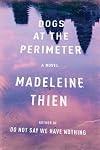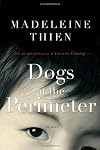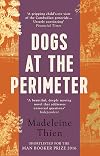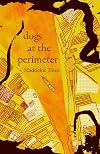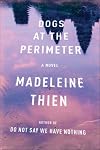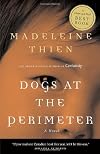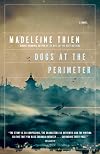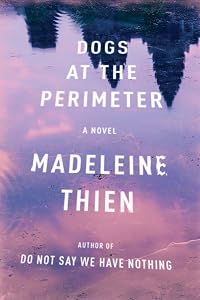
Dogs at the Perimeter
by Madeleine Thien
On This Page
Description
Set in Cambodia during the regime of the Khmer Rouge and in present day Montreal, Dogs at the Perimeter tells the story of Janie, who as a child experiences the terrible violence carried out by the Khmer Rouge and loses everything she holds dear. Three decades later, Janie has relocated to Montreal, although the scars of her past remain visible.Tags
Recommendations














Member Reviews
Beautifully tangled
A riveting, sorrowful read. It's like being inside the main character's head while she devolves into mental illness, but the tendrils of story that cling to the reader like questing fingers reveal the horror she has endured that formed her into the broken simulacra of a woman. I know enough history of Laos and Cambodia to fill in the blanks of this literary horror tale. The plot rambles and is sometimes incoherent, and there is no resolution or happiness at the end of the book.
A riveting, sorrowful read. It's like being inside the main character's head while she devolves into mental illness, but the tendrils of story that cling to the reader like questing fingers reveal the horror she has endured that formed her into the broken simulacra of a woman. I know enough history of Laos and Cambodia to fill in the blanks of this literary horror tale. The plot rambles and is sometimes incoherent, and there is no resolution or happiness at the end of the book.
This is my second Thien novel, after [b:Do Not Say We Have Nothing|31549906|Do Not Say We Have Nothing|Madeleine Thien|https://images.gr-assets.com/books/1473220440s/31549906.jpg|47869112], which was my personal favourite book on the 2016 Booker shortlist. Like that book, this one is deeply immersed in history, this time exploring the brutal period when the Khmer Rouge controlled Cambodia, and as such it is not an easy read, but it is a profoundly moving one.
The story is held together by Janie, who was born in Cambodia but eventually escaped and lives in Canada with a husband and son she is separated from. She works as a neuroscientist, with Hiroji, whose Japanese brother disappeared in Cambodia while working as a doctor in the same show more period. The narrative switches between the present day and the 70s and between the different narrative viewpoints. In the modern part of the story Hiroji disappears to search for his brother and Janie is forced to confront her suppressed memories.
The core stories about what happened in Cambodia are understandably horrific, but there is nothing gratuitous or insensitive about the way they are told, and there is always a strong element of the personal and poetic about them. Overall this book is very impressive (but if you want dogs, the title is metaphorical). show less
The story is held together by Janie, who was born in Cambodia but eventually escaped and lives in Canada with a husband and son she is separated from. She works as a neuroscientist, with Hiroji, whose Japanese brother disappeared in Cambodia while working as a doctor in the same show more period. The narrative switches between the present day and the 70s and between the different narrative viewpoints. In the modern part of the story Hiroji disappears to search for his brother and Janie is forced to confront her suppressed memories.
The core stories about what happened in Cambodia are understandably horrific, but there is nothing gratuitous or insensitive about the way they are told, and there is always a strong element of the personal and poetic about them. Overall this book is very impressive (but if you want dogs, the title is metaphorical). show less
This review was first published in Belletrista.
Over this past summer, Case 002 was getting underway in the Cambodian legal system. This is the trial of several of the top Khmer Rouge leaders on charges of genocide, torture and crimes against humanity for their roles in what has become known popularly as the Killing Fields. During the four year period of their power, some estimates say that as many as one quarter of Cambodia's entire population was killed, a statistic that makes the count inherent in the term "decimate" seem paltry. Madeleine Thien's contribution to holocaust (small h) literature surfaces out of that period.
The skeleton of the story is set in 2006: Janie, a neurological researcher who came to Canada as an orphaned 11 show more year old fleeing the Khmer Rouge, becomes fixated on finding Hiroji, an older friend and fellow researcher who has disappeared. The meat of the story, however, lies 25 years farther into the past. Janie's suspicion that Hiroji is seeking his brother, James, a medical relief doctor who vanished at the end of the Cambodian civil war, has brought up overwhelming memories of the destruction of her family and the horrors she, herself, endured. The divide between Janie Now and the Child Then — a person she doesn't even name, calling herself only Mei, a name given by a prison guard meaning beautiful — is one she has never reconciled. Unable to suppress the past anymore, she starts to let go of her present, leaving her husband and young son and withdrawing from her job.
This theme of fragmented and broken chains of identity permeates the story. Fault lines can be created in the soul, whether from the internal bio-chemical disorders of Janie's patients or the external forces of Khmer Rouge brainwashing and torture, and a life you once had is torn from you and something else takes its place. Those who cannot accept that, who lose the past or refuse the present, remain crippled. Only, as Janie says, by trying to "steal back and piece together" our many lives can some measure of wholeness be found.
It's not always an easy book to read due to Thien's writing style. On one hand, it's frugal, sometimes leaving out signals of changes in time or person. On the other, it's almost visual rather than verbal, using short mental images (sometimes surreal) to convey feeling and tone. The result is, at times, something like an Impressionist painting: if you look closely at the details, it doesn't make much sense; you have to step back and take in the entire image, letting your mind fill in the details.
One might expect that the content of a story with genocide as a setting might be difficult to stomach but it isn't particularly so: the horrors of torture, murder and rape take place largely off stage. This is almost necessary since the later lives of characters are already pale in comparison to the intensity of their pasts, making it hard enough to come to grips with what they have become. Even more so than the writing style, this insubstantiality forces readers to work hard at the end. Thien does not hand you the answers to where the characters have ended up; you must puzzle out for yourself how Janie has resolved the fragmentation of her life or, indeed, if she has even resolved it at all.
This is a book that tends more toward examining consequences rather than causes. When Janie says, "One day, I promise, I'll find a way to tell you everything," she isn't speaking to the reader for we are told relatively little about the Killing Fields. This fictional exploration is a welcome addition to the testamentary memoirs and historical analyses that naturally follow soon after a catastrophe. To some extent, the literature of the Holocaust (capital h) and the Stalinist Purges have dominated our consciousness of 20th century genocide for decades. However, the second half of that century was as bloody as the first and merits equal attention. show less
Over this past summer, Case 002 was getting underway in the Cambodian legal system. This is the trial of several of the top Khmer Rouge leaders on charges of genocide, torture and crimes against humanity for their roles in what has become known popularly as the Killing Fields. During the four year period of their power, some estimates say that as many as one quarter of Cambodia's entire population was killed, a statistic that makes the count inherent in the term "decimate" seem paltry. Madeleine Thien's contribution to holocaust (small h) literature surfaces out of that period.
The skeleton of the story is set in 2006: Janie, a neurological researcher who came to Canada as an orphaned 11 show more year old fleeing the Khmer Rouge, becomes fixated on finding Hiroji, an older friend and fellow researcher who has disappeared. The meat of the story, however, lies 25 years farther into the past. Janie's suspicion that Hiroji is seeking his brother, James, a medical relief doctor who vanished at the end of the Cambodian civil war, has brought up overwhelming memories of the destruction of her family and the horrors she, herself, endured. The divide between Janie Now and the Child Then — a person she doesn't even name, calling herself only Mei, a name given by a prison guard meaning beautiful — is one she has never reconciled. Unable to suppress the past anymore, she starts to let go of her present, leaving her husband and young son and withdrawing from her job.
This theme of fragmented and broken chains of identity permeates the story. Fault lines can be created in the soul, whether from the internal bio-chemical disorders of Janie's patients or the external forces of Khmer Rouge brainwashing and torture, and a life you once had is torn from you and something else takes its place. Those who cannot accept that, who lose the past or refuse the present, remain crippled. Only, as Janie says, by trying to "steal back and piece together" our many lives can some measure of wholeness be found.
It's not always an easy book to read due to Thien's writing style. On one hand, it's frugal, sometimes leaving out signals of changes in time or person. On the other, it's almost visual rather than verbal, using short mental images (sometimes surreal) to convey feeling and tone. The result is, at times, something like an Impressionist painting: if you look closely at the details, it doesn't make much sense; you have to step back and take in the entire image, letting your mind fill in the details.
One might expect that the content of a story with genocide as a setting might be difficult to stomach but it isn't particularly so: the horrors of torture, murder and rape take place largely off stage. This is almost necessary since the later lives of characters are already pale in comparison to the intensity of their pasts, making it hard enough to come to grips with what they have become. Even more so than the writing style, this insubstantiality forces readers to work hard at the end. Thien does not hand you the answers to where the characters have ended up; you must puzzle out for yourself how Janie has resolved the fragmentation of her life or, indeed, if she has even resolved it at all.
This is a book that tends more toward examining consequences rather than causes. When Janie says, "One day, I promise, I'll find a way to tell you everything," she isn't speaking to the reader for we are told relatively little about the Killing Fields. This fictional exploration is a welcome addition to the testamentary memoirs and historical analyses that naturally follow soon after a catastrophe. To some extent, the literature of the Holocaust (capital h) and the Stalinist Purges have dominated our consciousness of 20th century genocide for decades. However, the second half of that century was as bloody as the first and merits equal attention. show less
This book is beautifully written and completely engrossing. It is not a typical book about war, nor was the war in Cambodia typical in any respect. It is an analysis on "identity" both personal and national and how people can move intentionally or unintentionally between those identities. As a student of many cultures, I found it fascinating to have some light shed on this tragic wound of Cambodian history which is too deep and too fresh to heal.
Janie is a researcher at the Montreal Neroulogical Center, but she was once known by different names in Phnom Penh, Cambodia. She once came from a middle class family, had a father, mother, brother, until War came, and Cambodia became the killing fields. Made to leave their home by the Khmer Rouge, her life and family will never be the same.
Haunted by the memories of the past, and the atrocities committed at the hand of the Khmer Rouge, Janie falls apart. Leaving her husband and young son, she seeks shelter at the home of a friend, he too has ghosts haunting him from the past. We learn of Janie's backstory, what happened to her family, and what life was like under the Khmer Rouge. Where nothing is ever the same, loyalties shift, and show more there is no firm ground. Eventually the two stories will combine, Heroji, searching for his brother and Janie trying to come to terms with her past.
Such a devastating time period for so many, separations, the uncertainty, the brutality, all hallmarks of this horrendous time. The writing is sometimes repetitive and fragmented, but I found it very effective. We do get a clear understanding of what these people went through, and even what Phnom Penh, looked like after the Khmer Rouge were driven out. A difficult book to read, these type of stories always are, but not told dramatically nor overly emotional. I thought this was quite well done, combining memories, trauma, with the two leading characters studying the brain in the present, but realizing that the past is never quite gone.
ARC from Edelweiss. show less
Haunted by the memories of the past, and the atrocities committed at the hand of the Khmer Rouge, Janie falls apart. Leaving her husband and young son, she seeks shelter at the home of a friend, he too has ghosts haunting him from the past. We learn of Janie's backstory, what happened to her family, and what life was like under the Khmer Rouge. Where nothing is ever the same, loyalties shift, and show more there is no firm ground. Eventually the two stories will combine, Heroji, searching for his brother and Janie trying to come to terms with her past.
Such a devastating time period for so many, separations, the uncertainty, the brutality, all hallmarks of this horrendous time. The writing is sometimes repetitive and fragmented, but I found it very effective. We do get a clear understanding of what these people went through, and even what Phnom Penh, looked like after the Khmer Rouge were driven out. A difficult book to read, these type of stories always are, but not told dramatically nor overly emotional. I thought this was quite well done, combining memories, trauma, with the two leading characters studying the brain in the present, but realizing that the past is never quite gone.
ARC from Edelweiss. show less
Janie recalls her childhood while she is looking for a good friend. It is the childhood at the end of the war in Cambodia as families were torn apart as brainwashing took place as one could only survive with an illusory spark to see his loved ones again. For those concerned it was about the naked survival, even if one for others has betrayed.
The language is strong and nevertheless the feelings are very sensitive. Even if it is a fiction, many people have experienced this and have great difficulties that this sad destiny does not hinder them in today's everyday life.
The language is strong and nevertheless the feelings are very sensitive. Even if it is a fiction, many people have experienced this and have great difficulties that this sad destiny does not hinder them in today's everyday life.
I read this one a few months back and apparently never got around to reviewing it, possibly because I'm not quite sure how to word it. When I picked it up the blurb intrigued me, but unfortuanatley the writing not as much. I'm not sure if it was the style or something else but I was not pulled into the story as much as I'd hoped.
Members
- Recently Added By
Published Reviews
ThingScore 55
If for each season there is a book, then Dogs at the Perimeter belongs to winter -and in particular to the sullen clouds and ever-looming darkness of November. Depicting a "broken world [that] finally fell apart," Madeleine Thien's sophomore novel is mournful, gloomy, despairing and monochromatic. Not a novel with a reader's enjoyment anywhere in its agenda, Dogs can be instead witnessed, show more puzzled over and, on occasion, merely endured. show less
added by vancouverdeb
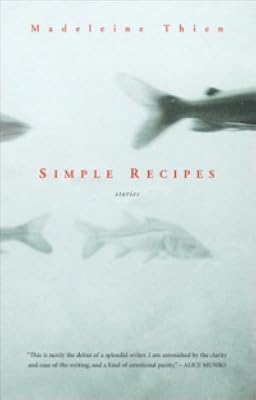
In stark, beautiful prose, Thien (whose first work of fiction, Simple Recipes, was a finalist for the Commonwealth Writers’ Prize for Best First Book) shows that it’s through these characters’ relationships with others—like James’s complicated bond with his brother, or Janie’s with her husband and son, and the connection between Janie and Hiroji—that a more permanent identity is show more created. show less
added by vancouverdeb
Among the numerous episodes of mass murder characteristic of the 20th century, the reign of the Khmer Rouge in Cambodia stands out as one of the most bizarre and horrifying. Overrunning Cambodia in 1975, this revolutionary army waged war on half the population of the country — anybody educated, middle class, living in a city. Before the Khmer Rouge or the Angkar (the organization) were show more finished, well over a million Cambodians had died at their hands.
“Families are a disease of the past,” ran one of their tenets, as quoted in Madeleine Thien’s novel, Dogs at the Perimeter, and so families were split apart and individual members driven into rural communes where they worked the fields and perished from disease, starvation and execution. Interrogators extracted confessions from these forced labourers, detailed written accounts of their lives. If the accounts were deemed unsatisfactory they were rewritten several times. It was a highly organized attempt to reduce every person to zero...This is harrowing stuff, but before absorbing it, a reader must come to terms with certain structural and stylistic aspects of the novel. Her sentences tend to be poetically constructed, with idiosyncratic use of language...I do not mean to be picky, and there are certainly striking passages throughout the novel, but it is fair to say Thien’s language does tend to call attention to itself in ways that are not always fortunate...Narrative becomes disjointed, impressionistic, almost incoherent show less
“Families are a disease of the past,” ran one of their tenets, as quoted in Madeleine Thien’s novel, Dogs at the Perimeter, and so families were split apart and individual members driven into rural communes where they worked the fields and perished from disease, starvation and execution. Interrogators extracted confessions from these forced labourers, detailed written accounts of their lives. If the accounts were deemed unsatisfactory they were rewritten several times. It was a highly organized attempt to reduce every person to zero...This is harrowing stuff, but before absorbing it, a reader must come to terms with certain structural and stylistic aspects of the novel. Her sentences tend to be poetically constructed, with idiosyncratic use of language...I do not mean to be picky, and there are certainly striking passages throughout the novel, but it is fair to say Thien’s language does tend to call attention to itself in ways that are not always fortunate...Narrative becomes disjointed, impressionistic, almost incoherent show less
added by vancouverdeb
Lists

Books Read in 2017
4,249 works; 130 members
Author Information

12+ Works 2,368 Members
Madeline Thien, 26, is the Canadian born daughter of Malaysian-Chinese immigrants. She holds an MFA in creative writing from the University of British Columbia. She live in Vancouver, BC. Madeleine Thien was born in Vancouver, Canada. She received an MFA in creative writing from the University of British Columbia. She is the author of Certainty, show more Dogs at the Perimeter, and Do Not Say We Have Nothing, which won the 2016 Scotiabank Giller Prize. She also wrote the story collection Simple Recipes. (Bowker Author Biography) show less
Some Editions
Awards and Honors
Awards
Distinctions
Series
Belongs to Publisher Series
Common Knowledge
- Canonical title*
- Laat de honden waken
- Original title
- Dogs at the Perimeter
- Original publication date
- 2011
- First words
- On November 29, 2005, my friend Dr. Jiroji Matsui walked out of Montreal's Brain Research Centre at 7:29 in the evening.
*Some information comes from Common Knowledge in other languages. Click "Edit" for more information.
Classifications
- Genres
- General Fiction, Fiction and Literature, Historical Fiction
- DDC/MDS
- 813.54 — Literature & rhetoric American literature in English American fiction in English 1900-1999 1945-1999
- LCC
- PR9199.3 .T447 .D64 — Language and Literature English English Literature English literature: Provincial, local, etc.
- BISAC
Statistics
- Members
- 207
- Popularity
- 158,288
- Reviews
- 12
- Rating
- (3.70)
- Languages
- 8 — Dutch, English, Estonian, French, German, Italian, Portuguese, Spanish
- Media
- Paper, Audiobook, Ebook
- ISBNs
- 22
- ASINs
- 6