I Am Still the Greatest Says Johnny Angelo
by Nik Cohn
On This Page
Description
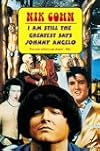
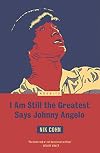
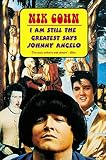
I Am Still The Greatest Says Johnny Angelo is Nik Cohn's hymn to rock as myth, in all its crazed, absurd, and glorious excess. Partly based on the legendary rocker, PJ Proby, Johnny Angelo is the pop star to end all pop stars--narcissistic, mock-heroic, and massively destructive. The novel follows his progress from warped infancy to final messianic explosion. It is a top read, which David Bowie once claimed inspired Ziggy Stardust.Tags
Recommendations
















Member Reviews
I came across I Am Still the Greatest Says Johnny Angelo in an article detailing the books that David Bowie read and was influenced by. That's good enough for me, but when you add to that the fact that it was key inspiration for the character of Ziggy Stardust, then count me in!
The enduring mythical status of Nik Cohn's novel is this connection to Bowie, but it is one that, like so many myths, is perhaps better preserved at a distance rather than being investigated closely. In the preface, Cohn recalls how he dashed out this book after a lengthy interview with legendary rocker PJ Proby, an American who had a few hits in the mid-1960s in the UK before fading into obscurity. Proby's story was so wild, Cohn just knew he had to transform show more into a fantastical tale of his own about a boy who lives his life with the assumption that he is bound for superstardom.
Cohn was only eighteen at the time he wrote this book. While it is reasonably competent for what one might expect from such a young author, unfortunately it still suffers from a lack of maturity and critical distance. Johnny Angelo swaggers through the story that more resembles one of those lives of a Christian or Buddhist saint, full of encounters with strange antagonists and packed with impossible miracles.
While Johnny Angelo may think he's the greatest, it's clear that so does Nik Cohn, and although it's not hard to understand why Bowie took that supreme self-confidence and ran with it, the Ziggy Stardust character is already nuanced by the missteps and failures that litter Bowie's very early career. Of course, it is precisely this utter egoism that is part of the supposed of this text, so perhaps I am asking too much.
In the end, I'm not sorry to have read I Am Still the Greatest Says Johnny Angelo, and I do recommend it to those who are particularly interested in this period of British culture. Otherwise, it's probably better to leave this text wrapped firmly in the mythical veils it has wrapped around itself. show less
The enduring mythical status of Nik Cohn's novel is this connection to Bowie, but it is one that, like so many myths, is perhaps better preserved at a distance rather than being investigated closely. In the preface, Cohn recalls how he dashed out this book after a lengthy interview with legendary rocker PJ Proby, an American who had a few hits in the mid-1960s in the UK before fading into obscurity. Proby's story was so wild, Cohn just knew he had to transform show more into a fantastical tale of his own about a boy who lives his life with the assumption that he is bound for superstardom.
Cohn was only eighteen at the time he wrote this book. While it is reasonably competent for what one might expect from such a young author, unfortunately it still suffers from a lack of maturity and critical distance. Johnny Angelo swaggers through the story that more resembles one of those lives of a Christian or Buddhist saint, full of encounters with strange antagonists and packed with impossible miracles.
While Johnny Angelo may think he's the greatest, it's clear that so does Nik Cohn, and although it's not hard to understand why Bowie took that supreme self-confidence and ran with it, the Ziggy Stardust character is already nuanced by the missteps and failures that litter Bowie's very early career. Of course, it is precisely this utter egoism that is part of the supposed of this text, so perhaps I am asking too much.
In the end, I'm not sorry to have read I Am Still the Greatest Says Johnny Angelo, and I do recommend it to those who are particularly interested in this period of British culture. Otherwise, it's probably better to leave this text wrapped firmly in the mythical veils it has wrapped around itself. show less
Ratings
Members
- Recently Added By
Author Information

18+ Works 891 Members
Nik Cohn is the author of Rock Dreams (with Guy Peellaert), The Heart of the World, and a number of other books. One of his short stories became the film Saturday Night Fever.
Classifications
Statistics
- Members
- 38
- Popularity
- 759,203
- Reviews
- 1
- Rating
- (2.58)
- Languages
- English
- Media
- Paper, Ebook
- ISBNs
- 6
- ASINs
- 1