Twilight: Photographs by Gregory Crewdson
by Rick Moody
On This Page
Description
"Twilight is the magic hour when ordinary routines undergo strange transformations. Gregory Crewdson's Twilight series, begun in 1998 and completed in 2002, consists of forty photographs created as elaborately staged large-scale tableaux that explore the domestic landscape and its relationship to an artificially heightened natural world. The collision between the normal and the paranormal in these narrative images produces a tension that serves to transform the topology of the suburban show more landscape into a place of wonder and anxiety." "As Rick Moody suggests in his essay, Crewdson seems preocupied with "the resection of the suburban ideal, where dream strategies, like condensation and displacement, the action of metaphor, undergird the here and now." Moody's essay reveals as much as it withholds, suggesting the ways that life and memory can be points of entry into art."--BOOK JACKET. show lessTags
Recommendations


























Member Recommendations

Member Reviews
I stumbled upon Crewdson just by chance, in fact it was probably looking for photography books on Amazon! The images I saw just drew me in and I just had to get one of his books to see more.
Crewdson may not be viewed as a photographer in the traditional sense and not be to everyone's taste but that's the beauty of photography, it moves around, changes and evolves and, as I have read many times now, does not necessarily mean one lone person travelling the country and globe to capture the shot. I enjoy many different styles of photography and Crewdson's is one of my favourites...so far!
Crewdson is different in that he uses the skills of an elaborate production team. His work is on a large scale, setting up scenes in, more often than not, show more small town America. Scenes that are dreamlike, unusual and that make the usual seem out of place.
Take the 'Twilight' photography series. This was the first book I bought by Crewdson and it will not be the last. The book includes 40 untitled photographs (plates) which are all seemingly shot at 'Twilight' which he says is an evocative time for the 'movement of transition between before and after' which is what the shots are about. The photographs all include people in everyday situations but with that added extra or a missing component.
I find them very striking in that all the people in them appear dislocated from their current surroundings with almost blank features and stiff, motionless bodies they appear, to me, like the walking dead. Probably not a great comparison but that is what strikes me as I gaze through the photographs.
On the more subtle ones (if subtle is a word to be used here!), a first quick glance and you would almost not notice anything out of place. But something starts to make you feel uneasy, it's un-nerving and you find you have to look for longer, taking in all the surreal dreamlike and, often, haunting visions. You just have to question what is going on here? What came before and is coming after so, in effect, the purpose of showing the transition of before and after has, for me, been achieved.
One of the most striking images for me is Plate 6, that of a woman dressed in her nightie and underwear, kneeling in her kitchen/dining room on a bed of flowers. Dirt covers her legs, and her expression is vacant, her neck is covered with sweat. Amazing streams of light come in through the windows shining into the room. The kitchen itself seems to have been transformed into some kind of greenhouse, it looks hot, plants and flowers are growing in abundance yet there is a woman sat in the middle of frame, in the pile of flowers. I keep looking at this and wonder, was she just gardening and has stopped in mid-thought!? Is she angry and has been beating it out of the flowers? Why the heck are there a load of flowers in the kitchen/dining room?? What is the metaphorical meaning if any?
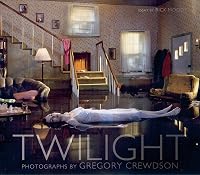
Plate 19 though is my favourite from the whole series. This is also used as the cover for the book and with good reason. A woman lies face up on a floor, of what seems to be water, in the living room. She is motionless, yet, I find something quite alive about her. The image is quite haunting, as with all the photographs here, and quite disturbing too. But, for me, the beauty and depth shines through. The reflections are wonderful and, once again, the lighting is just so perfect.
That's what I love about this photography, the ability to make me look at it for ages and contemplate what has happened? What is happening? and what is about to happen? A small part of me, maybe the working class, northern 'neigh lass what d'yer want to look at stuff like that fer' wants to fight against it and questions whether it is a little pretentious, but that is a very small, minuscule part of me and one which, for many years in the quest of my creativity, I have had to strongly fight against.
A great set of photographs presented beautifully in this book. show less
Crewdson may not be viewed as a photographer in the traditional sense and not be to everyone's taste but that's the beauty of photography, it moves around, changes and evolves and, as I have read many times now, does not necessarily mean one lone person travelling the country and globe to capture the shot. I enjoy many different styles of photography and Crewdson's is one of my favourites...so far!
Crewdson is different in that he uses the skills of an elaborate production team. His work is on a large scale, setting up scenes in, more often than not, show more small town America. Scenes that are dreamlike, unusual and that make the usual seem out of place.
Take the 'Twilight' photography series. This was the first book I bought by Crewdson and it will not be the last. The book includes 40 untitled photographs (plates) which are all seemingly shot at 'Twilight' which he says is an evocative time for the 'movement of transition between before and after' which is what the shots are about. The photographs all include people in everyday situations but with that added extra or a missing component.
I find them very striking in that all the people in them appear dislocated from their current surroundings with almost blank features and stiff, motionless bodies they appear, to me, like the walking dead. Probably not a great comparison but that is what strikes me as I gaze through the photographs.
On the more subtle ones (if subtle is a word to be used here!), a first quick glance and you would almost not notice anything out of place. But something starts to make you feel uneasy, it's un-nerving and you find you have to look for longer, taking in all the surreal dreamlike and, often, haunting visions. You just have to question what is going on here? What came before and is coming after so, in effect, the purpose of showing the transition of before and after has, for me, been achieved.
One of the most striking images for me is Plate 6, that of a woman dressed in her nightie and underwear, kneeling in her kitchen/dining room on a bed of flowers. Dirt covers her legs, and her expression is vacant, her neck is covered with sweat. Amazing streams of light come in through the windows shining into the room. The kitchen itself seems to have been transformed into some kind of greenhouse, it looks hot, plants and flowers are growing in abundance yet there is a woman sat in the middle of frame, in the pile of flowers. I keep looking at this and wonder, was she just gardening and has stopped in mid-thought!? Is she angry and has been beating it out of the flowers? Why the heck are there a load of flowers in the kitchen/dining room?? What is the metaphorical meaning if any?
Plate 19 though is my favourite from the whole series. This is also used as the cover for the book and with good reason. A woman lies face up on a floor, of what seems to be water, in the living room. She is motionless, yet, I find something quite alive about her. The image is quite haunting, as with all the photographs here, and quite disturbing too. But, for me, the beauty and depth shines through. The reflections are wonderful and, once again, the lighting is just so perfect.
That's what I love about this photography, the ability to make me look at it for ages and contemplate what has happened? What is happening? and what is about to happen? A small part of me, maybe the working class, northern 'neigh lass what d'yer want to look at stuff like that fer' wants to fight against it and questions whether it is a little pretentious, but that is a very small, minuscule part of me and one which, for many years in the quest of my creativity, I have had to strongly fight against.
A great set of photographs presented beautifully in this book. show less
Ratings
Members
- Recently Added By
Author Information

41+ Works 4,759 Members
Novelist Rick Moody was born in Fairfield, Connecticut on October 18, 1962. He is an undergraduate of Brown University and has a Master of Fine Arts Degree from Columbia University. Moody's works often demonstrate the concept that money makes no difference in the problems people face. His first novel, Garden State, won Pushcart's Tenth Annual show more Editor's Book Award. The Ice Storm (1994) was adapted into the 1997 film starring Kevin Kline and Sigourney Weaver. In 1999, The New Yorker chose him as one of America's most talented young writers, listing him on their "20 Writers for the 21st Century" list. He has also won the Addison Metcalf Award and has received a Guggenheim Fellowship. Moody's memoir The Black Veil (2002) won the PEN/Martha Albrand Award for the Art of the Memoir. His other works include The Diviners and The Four Fingers of Death. In 2012 he won Fernanda Pivano Award in Italy. Moody has taught at Yale University, Princeton University, the State University of New York at Purchase and Bennington College, and New York University. (Bowker Author Biography) show less
Common Knowledge
- People/Characters
- Gregory Crewdson
Classifications
Statistics
- Members
- 187
- Popularity
- 174,993
- Reviews
- 1
- Rating
- (4.43)
- Languages
- English
- Media
- Paper
- ISBNs
- 1
- ASINs
- 2