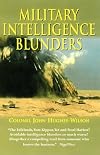
Military Intelligence Blunders
by John Hughes-Wilson
On This Page
Description
This book is a professional military-intelligence officer's and a controversial insider's view of some of the greatest intelligence blunders of recent history. It includes the serious developments in government misuse of intelligence in the recent war with Iraq. Colonel John Hughes-Wilson analyses not just the events that conspire to cause disaster, but why crucial intelligence is so often ignored, misunderstood or spun by politicians and seasoned generals alike. This book analyses: how show more Hitler's intelligence staff misled him in a bid to outfox their Nazi Party rivals; the bureaucratic bungling behind Pearl Harbor; how in-fighting within American intelligence ensured they were taken off guard by the Viet Cong's 1968 Tet Offensive; how over confidence, political interference and deception facilitated Egypt and Syria's 1973 surprise attack on Israel; why a handful of marines and a London taxicab were all Britain had to defend the Falklands; the mistaken intelligence that allowed Saddam Hussein to remain in power until the second Iraq War of 2003; the truth behind the US failure to run a terrorist warning system before the 9/11 WTC bombing; and how governments are increasingly pressurising intelligence agencies to 'spin' the party-political line. show lessTags
Recommendations




















Member Reviews
This books is written by a retired UK Colonel who clearly knows what he's talking about. I found it a surprisingly easy read for a history book, even managing to make his discussion of the battles I knew nothing about (Barbarossa, Yom Kippur, Singapore and Dieppe) as interesting as the ones I did (Falklands, Gulf War I, 9/11, Pearl Harbor).
He traces the causes of the failures - often on the apparently victorious side as well as the defeated - showing that sometimes it was scared Intelligence Officers saying what they knew the Dictator wanted to hear, sometimes it was a failure of collation, sometimes of not having good enough dissemination, and sometimes lack of direction from the top. The lack of coordination between the intel agencies show more in the USA comes under particular fire: a full 6 decades after Pearl Harbor, the same structural problems prevented the mass of intelligence ahead of the Al-Qa'ida attacks of 9/11 being collated and acted on. The UK's Joint Intelligence Community (JIC) approach is normally held up as the example on how to do it, but even then it failed over the Falklands. He also said it failed over its 'sexed-up' dossier published to the public to persuade them of the need to invade Iraq in 2003, though here his analysis didn't go far enough. If the press reports are right, this was less of an issue in the JIC, and more the inevitable problem of intelligence from on a few MI6 agents that couldn't be corroborated.
Recommended: not just for intelligence buffs, but for those who want to get a quick overview of some of the most pivotal (or at least infamous) military events of the twentieth century. show less
He traces the causes of the failures - often on the apparently victorious side as well as the defeated - showing that sometimes it was scared Intelligence Officers saying what they knew the Dictator wanted to hear, sometimes it was a failure of collation, sometimes of not having good enough dissemination, and sometimes lack of direction from the top. The lack of coordination between the intel agencies show more in the USA comes under particular fire: a full 6 decades after Pearl Harbor, the same structural problems prevented the mass of intelligence ahead of the Al-Qa'ida attacks of 9/11 being collated and acted on. The UK's Joint Intelligence Community (JIC) approach is normally held up as the example on how to do it, but even then it failed over the Falklands. He also said it failed over its 'sexed-up' dossier published to the public to persuade them of the need to invade Iraq in 2003, though here his analysis didn't go far enough. If the press reports are right, this was less of an issue in the JIC, and more the inevitable problem of intelligence from on a few MI6 agents that couldn't be corroborated.
Recommended: not just for intelligence buffs, but for those who want to get a quick overview of some of the most pivotal (or at least infamous) military events of the twentieth century. show less
Ratings
Members
- Recently Added By
Author Information

19 Works 636 Members
Colonel John Hughes-Wilson is one of Britain's leading military historians and lectures for a number of international, governmental, and academic-organizations, Hughes-Wilson's previous works include Military intelligence Blunders and A Brief History of the Cold War, He lives in Cyprus.
Some Editions
Common Knowledge
- Canonical title
- Military intelligence blunders and cover-ups; Military Intelligence Blunders
- Original title
- Military intelligence blunders
- Alternate titles
- Military Intelligence Blunders
- Original publication date
- 1999
Classifications
- Genres
- Nonfiction, History
- DDC/MDS
- 355.3432 — Society, government, & culture Public administration & military science The Military - Land, Air & Sea / Warfare Organization and personnel of military forces Special service Military Intelligence & Special Warfare Military Intelligence
- LCC
- UB250 .H84 — Military Science Military administration Military administration Intelligence
- BISAC
Statistics
- Members
- 198
- Popularity
- 164,404
- Reviews
- 1
- Rating
- (3.32)
- Languages
- Czech, Danish, English, Swedish
- Media
- Paper, Audiobook, Ebook
- ISBNs
- 13
- ASINs
- 4