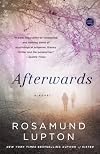
Afterwards
by Rosamund Lupton
On This Page
Description
From the author of the acclaimed New York Times bestseller Sister comes a compelling, thrilling story of a mother who will do anything to protect her child.The school is on fire. Her children are inside.
Grace runs toward the burning building, desperate to reach them.
In the aftermath of the devastating fire which tears her family apart, Grace embarks on a mission to find the person responsible and protect her children from further harm. This fire was not an accident, show more and her daughter Jenny may still be in grave danger. Grace is the only one who can discover the culprit, and she will do whatever it takes to save her family and find out who committed the crime that rocked their lives. While unearthing truths about her life that may help her find answers, Grace learns more about everyone around her — and finds she has courage she never knew she possessed... show less
Tags
Recommendations










Member Reviews
I'm sitting here in my recliner, trying to think where I want to start with this review. Should I start with what I disliked first? Or should I talk about how it emotionally made me feel? Or should I just talk about how close this book came to being extra-special, but ended up missing the mark in a pretty big way?
The first thing a reader should know before even opening this book is how awkward the writing style truly is. To me, this is where the book ruined itself before it even began. I actually abhorred the writing style. There were several occasions where I slammed the book down and said out loud that I couldn't do it. I know what the author was trying to do. I even respect what the author was trying to do. But it seemed show more unnecessarily gimmicky and over the top. Rather than try to explain how messed up the second person POV and writing style were, I'm just going to quote it and let you see for yourself. Sometimes that's better.
"Who did he get to blame my son?" Your anger hurling the words at her.
"I've no idea what you're on about," she says.
"Tell him I want to speak to him," you say. You turn to go.
"Wait. I haven't finished! I told you, you need to hear the truth."
"I have to get back to my daughter."
You start to leave, but she comes after you. "The accident in the playground was Robert Fleming's fault, nothing to do with Silas."
You hurry on, not listening. But for a moment I think of eight-year old Robert Fleming, who bullied Adam so horribly.
I think that's a pretty decent example of what the writing style was like. Now, imagine that over and over again, constantly, throughout the entire book. And there is the problem. I actually had to train myself to deal with the writing style. But I did. I got used to it. I never ended up learning to like it, but more or less endured it.
And then there were the random but abundant italics. They were all over the place, and for no good reason. I mean why? Imagine if I just stuck random words in italics throughout this review. Can you picture how annoying that would be? No more to say about that. I just don't understand the point in doing that. It made no sense.
But the truth is, even though there is a lot about this book to complain about, I still loved it. The story itself was brilliant, and even though I didn't care for the writing style, it did create this wonderful feeling of foreboding. I felt like I was spending the entire book in the eye of a storm and you just knew something terrible was going to happen eventually. I loved the author's way with words. I loved Grace's observations of everything that was going on around her. Unraveling the mystery slowly and from her point of view was agonizing, but at the same time, riveting. It was mental torture. But in a good way.
And the thing is? I know I am completely contradicting myself all over the place in this review. But I don't know how else to do it. Because I still really disliked the writing style. But at the same time, I don't believe this story could have been told in a different POV. It just wouldn't have had the same effect. So I'm conflicted.
Let's put it this way. I would definitely recommend this book to mystery and whodunit fans. But don't expect it to be like a standard mystery. Because it isn't. And even though it's close to 400 pages, it does read really fast. It's also a fun ride trying to solve the mystery and figure out who started the fire. I solved it with 100 pages to go, but I didn't arrive at my solution the same way the author did. So there were still surprises to be had for me even though I knew how it was was going to end. Just try it if you think it sounds like something you might like. You may love it. show less
The first thing a reader should know before even opening this book is how awkward the writing style truly is. To me, this is where the book ruined itself before it even began. I actually abhorred the writing style. There were several occasions where I slammed the book down and said out loud that I couldn't do it. I know what the author was trying to do. I even respect what the author was trying to do. But it seemed show more unnecessarily gimmicky and over the top. Rather than try to explain how messed up the second person POV and writing style were, I'm just going to quote it and let you see for yourself. Sometimes that's better.
"Who did he get to blame my son?" Your anger hurling the words at her.
"I've no idea what you're on about," she says.
"Tell him I want to speak to him," you say. You turn to go.
"Wait. I haven't finished! I told you, you need to hear the truth."
"I have to get back to my daughter."
You start to leave, but she comes after you. "The accident in the playground was Robert Fleming's fault, nothing to do with Silas."
You hurry on, not listening. But for a moment I think of eight-year old Robert Fleming, who bullied Adam so horribly.
I think that's a pretty decent example of what the writing style was like. Now, imagine that over and over again, constantly, throughout the entire book. And there is the problem. I actually had to train myself to deal with the writing style. But I did. I got used to it. I never ended up learning to like it, but more or less endured it.
And then there were the random but abundant italics. They were all over the place, and for no good reason. I mean why? Imagine if I just stuck random words in italics throughout this review. Can you picture how annoying that would be? No more to say about that. I just don't understand the point in doing that. It made no sense.
But the truth is, even though there is a lot about this book to complain about, I still loved it. The story itself was brilliant, and even though I didn't care for the writing style, it did create this wonderful feeling of foreboding. I felt like I was spending the entire book in the eye of a storm and you just knew something terrible was going to happen eventually. I loved the author's way with words. I loved Grace's observations of everything that was going on around her. Unraveling the mystery slowly and from her point of view was agonizing, but at the same time, riveting. It was mental torture. But in a good way.
And the thing is? I know I am completely contradicting myself all over the place in this review. But I don't know how else to do it. Because I still really disliked the writing style. But at the same time, I don't believe this story could have been told in a different POV. It just wouldn't have had the same effect. So I'm conflicted.
Let's put it this way. I would definitely recommend this book to mystery and whodunit fans. But don't expect it to be like a standard mystery. Because it isn't. And even though it's close to 400 pages, it does read really fast. It's also a fun ride trying to solve the mystery and figure out who started the fire. I solved it with 100 pages to go, but I didn't arrive at my solution the same way the author did. So there were still surprises to be had for me even though I knew how it was was going to end. Just try it if you think it sounds like something you might like. You may love it. show less
This is an amazingly good book with a premise that i can't do justice because it will sound silly. A woman and her daughter both end up in the hospital after a fire at a school in London. They aslo both end up in a strange state, able to know what is going on even though their bodies are tethered to machines and neither appears conscious. Lupton is able to pull off this premise and involves both women in figuring out who set the fire and why. Beyond that, as in her previous novel, Sisters, she breaths life into her characters and makes them matter. It's a moving, involving, beautifully written and well-plotted story about characters who may be not quite part of the real world but utterly convincing. I suspect it will be on my top ten show more list this year (and it's only January as I write this!) show less
First Line: I couldn't move, not even a little finger or a flicker of an eye.
It's Sports Day at Sidley House School. Grace Covey's eight-year-old son, Adam, has gone inside the school to bring out the birthday cake that he's sharing with his classmates while Jennifer, her seventeen-year-old daughter, is up on the third floor filling in for the school nurse. Grace has simply come to pick her children up at school, an ordinary, everyday task. But what began as a simple task turns into a nightmare when Grace looks up at the school and sees black smoke billowing out of the windows.
Sidley House School is on fire, and her children are inside.
"And then [Grace] was running at the velocity of a scream." As she comes to the school entrance, she show more sees that her son is outside and safe, but Jenny is still inside. Jenny needs her. And so Grace fights the heat and the smoke and the fear and the panic and the pain until she finds Jenny... but Grace doesn't have the strength to get them outside to safety. They are both rushed to the hospital. Grace has suffered severe head trauma, and Jenny has suffered bad burns and intense smoke inhalation.
This story is told by Grace as if she's talking to her husband, and she has quite the story to tell. You see, she and Jenny both have out-of-body experiences. They leave their battered bodies and follow their friends and loved ones. They hear what's being said, and although they can talk with each other, no one else can see or hear them. A lot is being said because what was originally a tragic fire is really arson, and it also seems as though someone wants to make sure that Jenny dies. Did she see the person who started the fire?
Grace's sister-in-law, Detective Sergeant Sarah MacBride, in many ways is the hero of this book. Her family has been dealt a devastating blow. Sarah wants to make sure that her family survives, and she goes about it the only way she knows how: by doing her job. Sarah proves to be tireless at tracking down witnesses, at searching for clues, at reading interview transcripts and teasing out tiny inconsistencies and peculiar word choices. She simply will not give up.
Although the ultimate ending of the book really comes as no surprise, I enjoyed Lupton's meticulous plotting of the investigation. This is the sort of case which relies on listening to how people say things as well as listening to what they don't say. It is a case of nuance and shadow. Taken simply as a mystery, this is an excellent read. But Grace Covey takes this book beyond mystery and whodunit. As she watches her husband and son, as she talks with Jenny, and as she follows Sarah, she learns what extraordinary people her family members are. She learns about herself. And she learns that "the last of the senses to go is love."
This is an extraordinary read that kept me mesmerized from first page to last-- often with a lump in my throat and tears in my eyes. If you have someone in your life whom you love more than life itself, you will also be deeply affected by this book. In her depth of characterization and psychological nuance, Rosamund Lupton reminds me of Louise Penny. Like Penny, Lupton can take subject matter that's profoundly sad and create something very beautiful and life-affirming. I was impressed by Lupton's first book, Sister. I am blown away by Afterwards. show less
It's Sports Day at Sidley House School. Grace Covey's eight-year-old son, Adam, has gone inside the school to bring out the birthday cake that he's sharing with his classmates while Jennifer, her seventeen-year-old daughter, is up on the third floor filling in for the school nurse. Grace has simply come to pick her children up at school, an ordinary, everyday task. But what began as a simple task turns into a nightmare when Grace looks up at the school and sees black smoke billowing out of the windows.
Sidley House School is on fire, and her children are inside.
"And then [Grace] was running at the velocity of a scream." As she comes to the school entrance, she show more sees that her son is outside and safe, but Jenny is still inside. Jenny needs her. And so Grace fights the heat and the smoke and the fear and the panic and the pain until she finds Jenny... but Grace doesn't have the strength to get them outside to safety. They are both rushed to the hospital. Grace has suffered severe head trauma, and Jenny has suffered bad burns and intense smoke inhalation.
This story is told by Grace as if she's talking to her husband, and she has quite the story to tell. You see, she and Jenny both have out-of-body experiences. They leave their battered bodies and follow their friends and loved ones. They hear what's being said, and although they can talk with each other, no one else can see or hear them. A lot is being said because what was originally a tragic fire is really arson, and it also seems as though someone wants to make sure that Jenny dies. Did she see the person who started the fire?
Grace's sister-in-law, Detective Sergeant Sarah MacBride, in many ways is the hero of this book. Her family has been dealt a devastating blow. Sarah wants to make sure that her family survives, and she goes about it the only way she knows how: by doing her job. Sarah proves to be tireless at tracking down witnesses, at searching for clues, at reading interview transcripts and teasing out tiny inconsistencies and peculiar word choices. She simply will not give up.
Although the ultimate ending of the book really comes as no surprise, I enjoyed Lupton's meticulous plotting of the investigation. This is the sort of case which relies on listening to how people say things as well as listening to what they don't say. It is a case of nuance and shadow. Taken simply as a mystery, this is an excellent read. But Grace Covey takes this book beyond mystery and whodunit. As she watches her husband and son, as she talks with Jenny, and as she follows Sarah, she learns what extraordinary people her family members are. She learns about herself. And she learns that "the last of the senses to go is love."
This is an extraordinary read that kept me mesmerized from first page to last-- often with a lump in my throat and tears in my eyes. If you have someone in your life whom you love more than life itself, you will also be deeply affected by this book. In her depth of characterization and psychological nuance, Rosamund Lupton reminds me of Louise Penny. Like Penny, Lupton can take subject matter that's profoundly sad and create something very beautiful and life-affirming. I was impressed by Lupton's first book, Sister. I am blown away by Afterwards. show less
What would be a great thriller has an added twist with the narrator of this story who has tried to save her daughter in a fire. We know from the first page (so its not a spoiler) that she is talking to her husband while her body lies in a coma. Grace can follow the investigation into the arson attack although no-one can hear her and the development of the story is detailed and well thought out.
I am not a fan of ghost stories but this was not one and was an excellent twist on an excellent story. What is a thrilling thriller has emotion added due to this format. And I wept at the end!
Or I would have done if I had not been dishing up tea with the book in my hand - couldn't put it down!
Definitely a book of the year for me.
I am not a fan of ghost stories but this was not one and was an excellent twist on an excellent story. What is a thrilling thriller has emotion added due to this format. And I wept at the end!
Or I would have done if I had not been dishing up tea with the book in my hand - couldn't put it down!
Definitely a book of the year for me.
I was excited to read Afterwards because I so enjoyed Sister, Ms. Lupton's first book. Both were written in unusual styles - Sister is an epistolary novel, Afterwards is written from the point of view of two roving spirits - a mother and daughter - whose bodies are left behind them in a couple of hospital beds. Grace, the mother, spends a fair amount of time communicating various things to her husband (who cannot hear her) and to her daughter (who can). There is a mystery - who caused the fire that nearly killed both women and why?
The mystery matters - it's what keeps the plot moving and fuels all the various revelations and introspection, but the heart of the book is one woman's love for her husband and her daughter and her willingness show more to do whatever it takes to make things whole again. These two loves are illustrated in their differences and in their similarities and while I'm not sure Grace is someone I'd want to spend a lot of time with, I'd definitely want her on my side. She's smart, tough, and tender and virtually unstoppable and I admire that.
Ms. Lupton is onto something with her writing. I find her books compelling and thought-provoking, even when I'm not quite sure what's going on or whether what's going on is what I think is going on. She's a good challenging read and these can be few and far between in mystery writing. Worried as I may have been about a sophomore novel after an outstanding debut, I had nothing to worry about. Afterwards is its own unique story, but with many of the stylistic features that I enjoyed about Sister. I'll be interested to see with Ms. Lupton writes next. Highly recommended. show less
The mystery matters - it's what keeps the plot moving and fuels all the various revelations and introspection, but the heart of the book is one woman's love for her husband and her daughter and her willingness show more to do whatever it takes to make things whole again. These two loves are illustrated in their differences and in their similarities and while I'm not sure Grace is someone I'd want to spend a lot of time with, I'd definitely want her on my side. She's smart, tough, and tender and virtually unstoppable and I admire that.
Ms. Lupton is onto something with her writing. I find her books compelling and thought-provoking, even when I'm not quite sure what's going on or whether what's going on is what I think is going on. She's a good challenging read and these can be few and far between in mystery writing. Worried as I may have been about a sophomore novel after an outstanding debut, I had nothing to worry about. Afterwards is its own unique story, but with many of the stylistic features that I enjoyed about Sister. I'll be interested to see with Ms. Lupton writes next. Highly recommended. show less
"Afterwards" is excellent, a very different book from "Sister", Lupton's debut novel. The narrator is in a hospital bed virtually brain dead with no cognitive functionality. But her spirit is free to roam and she can see, hear, and move but no one is aware of her presence. She cannot impact at all on the physical world, so she can't text on a cell phone, nor shut a door. Now I am not a great one for this kind of fantasy but I was able with no effort to "suspend disbelief" very easily - the book is that well written. It becomes a mechanism to tell a story in a different way, and it works ! But it probably doesn't work for everyone. For me, this book passed the 50 page test by about page 15 - I knew it was a winner. But throughout the show more story, the author really keeps you on edge. There are other victims, some victims of false accusations, another in a physically critical state. And it is crime fiction. So there still remains the whodunit question. The book has many excellent characters, and as I read this I mentally switched prime suspects every 30 pages or so. And there was this terrible dread throughout that for this story to work someone was going to have to die...but who? Finally, one strong point that the author makes time and again and does it so well is that we should keep open-minded about people, good points and bad, and avoid leaping to the obvious conclusions - whether we're re-examining a single encounter or a lifetime's relationship. Will be looking forward to Lupton #3 show less
"I put nine years of experience, the NHS and John Lewis' nursery department between my baby and the dangerous wilds of the Serengeti"
In Lupton's latest (I loved Sister but had issues with the resolution), Grace Covey wakes up in hospital disassociated from her body. As she revisits her memories of how she got there, teaming up with her similarly badly injured and disassociated daughter, the criminal behind a terrible deed is slowly revealed.
I found the start fairly slow going, because I struggled with the narrative construct of disassociated spirits. Once I got used to that, I was completely engrossed - there was such a long suspect list for the arson but no one really seemed to have enough of a motive. The bad guy, when eventually show more revealed, was totally unexpected.
One of the reasons I loved Sister was because Lupton clearly understood sisterhood; the protectiveness of an older sister, the gentle loyalty of a younger one. Afterwards focuses on motherhood; I can't comment as to Lupton's ability to put her finger on what's special about it, but I liked that as Bee was in Sister, Grace is plain and normal and a little jealous of the Shiny Mummies who turn up with their blow-dried hair. She worries about how much time her daughter spends on Facebook, and she's a bit cagey about her sister-in-law.
Every now and again the writing was over-ambitious; there was a grab for the "literary fiction" section of the bookshop incongruous with the simple family setting of the tale. A little inconsistency and the initially off-putting narrative structure are really the only ways I can fault this excellent follow-up novel. show less
In Lupton's latest (I loved Sister but had issues with the resolution), Grace Covey wakes up in hospital disassociated from her body. As she revisits her memories of how she got there, teaming up with her similarly badly injured and disassociated daughter, the criminal behind a terrible deed is slowly revealed.
I found the start fairly slow going, because I struggled with the narrative construct of disassociated spirits. Once I got used to that, I was completely engrossed - there was such a long suspect list for the arson but no one really seemed to have enough of a motive. The bad guy, when eventually show more revealed, was totally unexpected.
One of the reasons I loved Sister was because Lupton clearly understood sisterhood; the protectiveness of an older sister, the gentle loyalty of a younger one. Afterwards focuses on motherhood; I can't comment as to Lupton's ability to put her finger on what's special about it, but I liked that as Bee was in Sister, Grace is plain and normal and a little jealous of the Shiny Mummies who turn up with their blow-dried hair. She worries about how much time her daughter spends on Facebook, and she's a bit cagey about her sister-in-law.
Every now and again the writing was over-ambitious; there was a grab for the "literary fiction" section of the bookshop incongruous with the simple family setting of the tale. A little inconsistency and the initially off-putting narrative structure are really the only ways I can fault this excellent follow-up novel. show less
Members
- Recently Added By
Published Reviews
Psychological suspense is the genre of choice for glorifying the bond between mother and child: mother rushes into burning building, sacrifices life to save child, earns place in paradise. More than a flip paradigm, that’s the actual plot of AFTERWARDS, a gripping novel about a mother’s nightmare. Grace Covey is among the proud parents on the field for sports day at the Sidley House show more Preparatory School when a fire breaks out inside the building. Cut to the hospital, where Grace is in a coma with brain injuries and her “appallingly hurt” 17-year-old daughter, Jenny, is in the burn unit. To add to her woes, Grace’s 8-year-old son, Adam, is suspected of having set the fire. show less
added by rybie2
Lists

Books Read in 2014
2,341 works; 89 members
Author Information

5 Works 3,994 Members
Awards and Honors
Work Relationships
Is contained in
Common Knowledge
- Canonical title
- Afterwards;
- Original title
- Afterwards
- Original publication date
- 2011-06-09
- People/Characters*
- Grace Covey; Jenny Covey; Mike Covey; Adam Covey
- Epigraph*
- Een prachtige dag
Een vreselijk misdaad.
To see a world in a grain of sand
And a heaven in a wild flower,
Hold infinity in the palm of your hand,
And eternity in an hour
William Blake - 'Auguries of Innocence' - Dedication*
- Voor mijn zonen
Cosmo en Joe
Ik kan niet trotser op jullie zijn. - First words*
- Ik kon me niet bewegen, zelfs geen pink of een ooglid.
- Last words*
- (Click to show. Warning: May contain spoilers.)Dit is niet ons einde.
- Blurbers*
- Deaver, Jeffrey
- Original language*
- Engels
*Some information comes from Common Knowledge in other languages. Click "Edit" for more information.
Classifications
Statistics
- Members
- 874
- Popularity
- 30,833
- Reviews
- 54
- Rating
- (3.73)
- Languages
- 10 — Chinese, Danish, Dutch, English, Finnish, French, German, Polish, Spanish, Swedish
- Media
- Paper, Audiobook, Ebook
- ISBNs
- 35
- ASINs
- 6