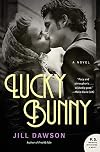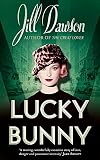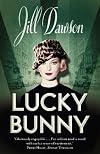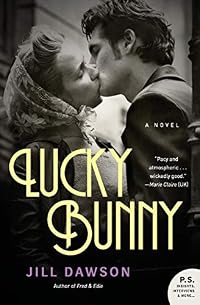
Lucky Bunny
by Jill Dawson
On This Page
Description
'Crime's a man's business. So they say. Who was that small figure then, slender enough to trot along the moonlit track, swift and low, virtually invisible? Who was it that covered the green signal with a glove to stop the train, while the two others took care of the driver and his mate? Could it have been one Queenie Dove, survivor of the Depression and the Blitz, not to mention any number of scrapes with the law?' Queenie Dove is a self-proclaimed genius when it comes to thieving and show more escape. Daring, clever and sexy, she ducked and dived through the streets of London from the East End through Soho to Mayfair, graduating from childhood shop-lifting to more glamorous crimes in the post-war decades. So was she wicked through and through, or more sinned against than sinning? Here she tells a vivacious tale of trickery and adventure, but one with more pain and heartbreak than its heroine cares to admit. Yes, luck often favoured her, but that is only part of the story. show lessTags
Recommendations















Member Reviews
Lucky Bunny is fiction, but it is presented as the memoir of a female criminal, from her birth in 1933 to the 1960s.
Queenie, as she has chosen to call herself, was born and brought up in London's East End. Her life of crime starts with stealing some milk, then she moves into shoplifting as a child, often working with older family friends. She has been brought up largely by her grandmother and her dad's girlfriends, most of them involved in various criminal activity.
I found Lucky Bunny a joy to read. Queenie is a vivid and memorable character, clever, tough, sharply observant and funny, soaking up all around her. She meets many of the famous, and infamous, Londoners of her day, and is witness to many real episodes in East End history. In show more some ways, her life has been a bit of a nightmare, with poverty, neglect and deprivation and several family tragedies. Queenie doesn't see it like that. She is no one's victim, but a great survivor. Or is she? I am not totally sure I can trust all of Queenie's statements about herself. Is she really as lucky as she proclaims?
I was also fascinated by the way Dawson takes up so many bits of London's social and women's history as well as criminal folklore and weaves them into a terrific yarn. I was amused by Queenie's namedropping of lots of real people and events, including Ruth Ellis and Christine Keeler. Queenie even suggests she might have been delivered at birth in 1933 by a young midwife called Jennifer, undertaking her training with the nuns, a reference to Jennifer Worth's Call the Midwife. In fact, Worth wasn't even born then and her book takes place more than 20 years later - is this a clue that some of Queenie's encounters with other real people are also her own inventions?
I received a review copy of this book through the Amazon Vine programme. show less
Queenie, as she has chosen to call herself, was born and brought up in London's East End. Her life of crime starts with stealing some milk, then she moves into shoplifting as a child, often working with older family friends. She has been brought up largely by her grandmother and her dad's girlfriends, most of them involved in various criminal activity.
I found Lucky Bunny a joy to read. Queenie is a vivid and memorable character, clever, tough, sharply observant and funny, soaking up all around her. She meets many of the famous, and infamous, Londoners of her day, and is witness to many real episodes in East End history. In show more some ways, her life has been a bit of a nightmare, with poverty, neglect and deprivation and several family tragedies. Queenie doesn't see it like that. She is no one's victim, but a great survivor. Or is she? I am not totally sure I can trust all of Queenie's statements about herself. Is she really as lucky as she proclaims?
I was also fascinated by the way Dawson takes up so many bits of London's social and women's history as well as criminal folklore and weaves them into a terrific yarn. I was amused by Queenie's namedropping of lots of real people and events, including Ruth Ellis and Christine Keeler. Queenie even suggests she might have been delivered at birth in 1933 by a young midwife called Jennifer, undertaking her training with the nuns, a reference to Jennifer Worth's Call the Midwife. In fact, Worth wasn't even born then and her book takes place more than 20 years later - is this a clue that some of Queenie's encounters with other real people are also her own inventions?
I received a review copy of this book through the Amazon Vine programme. show less
I loved this book, which is surprising because it has a current of domestic abuse which I really can't take because I'm such a weenie, but, ohemgee, I adored our anti-heroine/narrator, Queenie Dove.
Literally, from the first line, I was in love. Dawson's writing style -- casual, sharp, very Queenie -- is in present tense first person, but it so works for this story. Clever Queenie is cocky, arrogant, sure of herself -- and with good reason -- and the writing style has as much personality as Queenie does. It made the story bounce and race and gripped me.
This isn't a World War II novel, (the novel goes through 1930s to the 1960s), although Queenie was born in 1933 and experiences some of the most horrifying aspects of WWII London. (In show more addition to the other generally horrifying parts of her life!)
Born into squalor with an inattentive mother (that's being polite) and a criminal father, Queenie learns quickly what she needs to do to survive -- and not just that, but thrive. Caring for her beloved younger brother Bobby (who is 'a few currants short of a teacake', according to their Nan), they're set to the country with the other London children -- until Queenie decides that isn't in their best interest and wrangles herself and Bobby back into London. They survive the horror of the Bethnal Green Tube disaster (a claustrophobic part of the book that made me race to the front porch for fresh air) only to face more hardship -- which Queenie is determined to overcome.
During the Blitz, Queenie learns to be a thief, and she quickly proves herself the master of it. Embraced and cared for by a circle of other female thieves and prostitutes, Queen -- and Dawson - revealed a world unfamiliar to me, the glamor, seediness, and grasping need of post-war London. She finds some measure of sexual satisfaction in Tony, handsome and dangerous, but has to decide what sacrifices to make for herself -- and eventually, her daughter.
I suppose Queenie could be unlikable -- she's a criminal, and probably a bit of a liar -- but I was in love with her brash, vivacious, and unapologetic zest for survival. This was the only book that could help me ignore the drama of Hurricane Sandy: once I had Queenie in mind, I couldn't shake her! show less
Literally, from the first line, I was in love. Dawson's writing style -- casual, sharp, very Queenie -- is in present tense first person, but it so works for this story. Clever Queenie is cocky, arrogant, sure of herself -- and with good reason -- and the writing style has as much personality as Queenie does. It made the story bounce and race and gripped me.
This isn't a World War II novel, (the novel goes through 1930s to the 1960s), although Queenie was born in 1933 and experiences some of the most horrifying aspects of WWII London. (In show more addition to the other generally horrifying parts of her life!)
Born into squalor with an inattentive mother (that's being polite) and a criminal father, Queenie learns quickly what she needs to do to survive -- and not just that, but thrive. Caring for her beloved younger brother Bobby (who is 'a few currants short of a teacake', according to their Nan), they're set to the country with the other London children -- until Queenie decides that isn't in their best interest and wrangles herself and Bobby back into London. They survive the horror of the Bethnal Green Tube disaster (a claustrophobic part of the book that made me race to the front porch for fresh air) only to face more hardship -- which Queenie is determined to overcome.
During the Blitz, Queenie learns to be a thief, and she quickly proves herself the master of it. Embraced and cared for by a circle of other female thieves and prostitutes, Queen -- and Dawson - revealed a world unfamiliar to me, the glamor, seediness, and grasping need of post-war London. She finds some measure of sexual satisfaction in Tony, handsome and dangerous, but has to decide what sacrifices to make for herself -- and eventually, her daughter.
I suppose Queenie could be unlikable -- she's a criminal, and probably a bit of a liar -- but I was in love with her brash, vivacious, and unapologetic zest for survival. This was the only book that could help me ignore the drama of Hurricane Sandy: once I had Queenie in mind, I couldn't shake her! show less
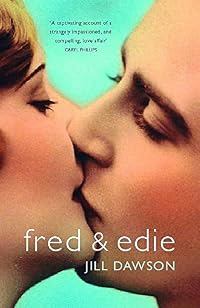
Jill Dawson is one of those authors who appears to write a different book every time, although when you look underneath, there are links. 'The Great Lover' tells the story of poet Rupert Brooke partly through the eyes of maid Nell; 'Watch me Disappear' explored the effects of a girl disappearing in a Fenland village in the 1970s and echoes contemporary child abductions and murders; 'Fred and Edie' tells the story of star-crossed lovers, executed for murdering Edie’s husband in 1923. All have a geographical base from South London through the East End into East Anglia and the Fens; but she also has a pre-occupation with working class roots and criminal underclasses. These elements, both geographical and sociological, are both well to show more the fore in her latest novel 'Lucky Bunny'.
Queenie Dove is an Eastender born before the war to a Irish Moll and her big bruiser and small time crook of a father, Tommy. Life is hard for Queenie and her younger brother Bobby – there’s never enough food, Dad in and out of the nick, and Moll slowly going mad and ending up in hospital; only her Nan has any sense. They get evacuated to Ely, but Queenie can’t hack it and returns to London where her Dad is now shacked up with Annie – formerly of the ‘Green Bottles’ – a group of goodtime girls, shoplifters and whores. With lead Green Bottle Gloria’s help, Queenie becomes good at hoisting – shoplifting, but even she gets caught and is sent to reform school where she meets Stella, who will become her best friend. The two go on to have many adventures, resulting in Queenie falling for Tony, the nephew of the Italian coffee-bar owner. Queenie and Tony have a tempestuous relationship – so similar in many ways to that of Moll and Tommy, but Queenie is determined to have a future with her daughter and eventually bails out after one beating too many.
You can’t help but warm to Queenie, however naughty she may be, as she is determined right from the start to aim for something better for herself. She sees herself as lucky; lucky that she survives everything that life throws at her. From outside the book though, it’s clear that she’s stuck in the same vicious circle as her parents were – at least until she leaves Tony and escapes her fate – then she’s lucky! There are questions of nature versus nurture too, growing up in poverty, Dad in jail, mother a dipso with post-natal depression, there’s little wonder that it affects the kids with them ending up in a mini-crime wave themselves.
Queenie’s adventures are grounded in rich period detail. Being evacuated, and the tragic events at Bethnal Green tube station in 1943 when hundreds died on the steps, (fictionalised in a recent novel, The Report), through to the world of Soho’s coffee bars in the 50s, Ruth Ellis, Diana Dors and culminating in the Great Train Robbery in 1963, when Queenie reaches thirty years old. That’s where Dawson leaves her, looking forward to the rest of her life.
I would have liked to have slightly less of childhood Queenie and more of the post-school teenager into twenty-something young woman – Queenie’s early years did take up nearly half the book which made for a slow start. Queenie tells her story how she wants to hear it, and she doesn’t ask for our sympathy or to understand her morals. It did leave me wondering though, what happened next to Queenie Dove? (ARC supplied by Amazon Vine) show less
Queenie Dove is an Eastender born before the war to a Irish Moll and her big bruiser and small time crook of a father, Tommy. Life is hard for Queenie and her younger brother Bobby – there’s never enough food, Dad in and out of the nick, and Moll slowly going mad and ending up in hospital; only her Nan has any sense. They get evacuated to Ely, but Queenie can’t hack it and returns to London where her Dad is now shacked up with Annie – formerly of the ‘Green Bottles’ – a group of goodtime girls, shoplifters and whores. With lead Green Bottle Gloria’s help, Queenie becomes good at hoisting – shoplifting, but even she gets caught and is sent to reform school where she meets Stella, who will become her best friend. The two go on to have many adventures, resulting in Queenie falling for Tony, the nephew of the Italian coffee-bar owner. Queenie and Tony have a tempestuous relationship – so similar in many ways to that of Moll and Tommy, but Queenie is determined to have a future with her daughter and eventually bails out after one beating too many.
You can’t help but warm to Queenie, however naughty she may be, as she is determined right from the start to aim for something better for herself. She sees herself as lucky; lucky that she survives everything that life throws at her. From outside the book though, it’s clear that she’s stuck in the same vicious circle as her parents were – at least until she leaves Tony and escapes her fate – then she’s lucky! There are questions of nature versus nurture too, growing up in poverty, Dad in jail, mother a dipso with post-natal depression, there’s little wonder that it affects the kids with them ending up in a mini-crime wave themselves.
Queenie’s adventures are grounded in rich period detail. Being evacuated, and the tragic events at Bethnal Green tube station in 1943 when hundreds died on the steps, (fictionalised in a recent novel, The Report), through to the world of Soho’s coffee bars in the 50s, Ruth Ellis, Diana Dors and culminating in the Great Train Robbery in 1963, when Queenie reaches thirty years old. That’s where Dawson leaves her, looking forward to the rest of her life.
I would have liked to have slightly less of childhood Queenie and more of the post-school teenager into twenty-something young woman – Queenie’s early years did take up nearly half the book which made for a slow start. Queenie tells her story how she wants to hear it, and she doesn’t ask for our sympathy or to understand her morals. It did leave me wondering though, what happened next to Queenie Dove? (ARC supplied by Amazon Vine) show less
Summary
Queenie Dove grows up in a criminal family in the East End slums of London. Stealing, "nicking" or "hoisting" is what she knows. She's praised for her skills while being sent away for her crimes is inevitable and even considered an expected part of life from time to time. There is no question of right or wrong, just doing what you can to survive in an unforgiving environment. Queenie is a survivor. Childhood, adolescence, and into her adult years, including becoming a mother herself, Queenie, an incredibly intelligent, cunning, brave young woman finds her way in a world so harsh that few truly make it to the good life.
What I Liked
Song lyrics - all throughout Lucky Bunny, Queenie's story is complimented by song lyrics from first show more children's rhymes and then popular tunes from the radio during Queenie's lifetime.
Dialect and vocabulary - gel (Cockney slang for girl...not the stuff you put in your hair), nicked, hoisting, cozzers, "leg it," Old Bill, shop walkers, borstal boys, rolling...not just the dialogue, but the entire story, told by Queenie is written this way...with Queenie from time to time explaining analytically what "modern day" psychologists would label particular patterns of her life, especially during her times "inside." I never felt left out though; I never felt confused; there is enough detail in Lucky Bunny that you can follow the patterns as well as hear the words being said. I found myself many times repeating phrases out loud...just to hear myself (like the goob that I am) talking like Queenie in my best Cockney Southern accent :p
Moll Flanders - Queenie's mother's name is Molly...Moll for short, but Queenie knows the story of Moll Flanders and compares her life to the professional "con" who also never reveals her real name.
The Green Bottles, Gloria, Stella - the stereotypical idea of women thieves and/or prostitutes leads us to believe that they were all cut-throats and/or out for themselves or from traditional "gangster" movies, always dressed up to please their fella. They don't really play a "part" in the crimes, probably due to the "birds are bad luck" belief. However, within the culture of women thieves in the early 1900's in London, Dawson presents them as more of a family than lone wolves. The cons, robberies, shoplifting, and even prostitution are just a part of their lives. Crime is what they know; it's survival of the fittest; there's no guilt, and many times, it's even a game. The Green Bottles take Queenie in after her mother is sent away. They don't purposely teach her how to steal...they teach her how to stay alive...in the only way they know. There's a serious support system here.
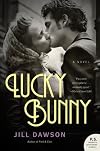
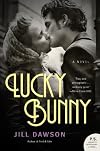
Tony in the beginning - unlike my initial jump to conclusions based on the cover photo, this isn't a "love story." Tony is one part of Queenie's life...definitely an important part...but Queenie never thinks of their relationship as lifelong...because nothing is. I think I wished for him to be her Knight in Shining Armour, but Queenie didn't really want to be saved from anything; she wanted to save herself, which makes their relationship that much more powerful.
The history - East End London 1930's-1960's, WWII, bombings in London, billeting of children during the war from the cities to rural areas in the hopes that they would be safe from bombings, East End slum culture, tube shelters, ARP officers...silence after the Bethnal Green tube station tragedy, kennel boys at the Greyhound races, Green Bottles, London gangs, Approved Schools, good time girls, Young Offenders place, underground clubs, Summer 1963 and the Profumo Scandal, The Great Train Robbery (Glasgow-to-London postal train), birth control, abortion, and birth, prostitution, etc. I could go on and on here...Lucky Bunny is packed with history and sociology.
What I Didn't Like
Tony at the end - no spoilers here, but Queenie does prepare us when she tells Stella, "Nothin's for keeps...especially not a fella."
Nothing else to see here folks; move along.
Overall Recommendation
Fans of Historical fiction, tough yet flawed heroines, alternate definitions of love and family, women's histories, etc. will love this book. Just like I did. show less
Queenie Dove grows up in a criminal family in the East End slums of London. Stealing, "nicking" or "hoisting" is what she knows. She's praised for her skills while being sent away for her crimes is inevitable and even considered an expected part of life from time to time. There is no question of right or wrong, just doing what you can to survive in an unforgiving environment. Queenie is a survivor. Childhood, adolescence, and into her adult years, including becoming a mother herself, Queenie, an incredibly intelligent, cunning, brave young woman finds her way in a world so harsh that few truly make it to the good life.
What I Liked
Song lyrics - all throughout Lucky Bunny, Queenie's story is complimented by song lyrics from first show more children's rhymes and then popular tunes from the radio during Queenie's lifetime.
Dialect and vocabulary - gel (Cockney slang for girl...not the stuff you put in your hair), nicked, hoisting, cozzers, "leg it," Old Bill, shop walkers, borstal boys, rolling...not just the dialogue, but the entire story, told by Queenie is written this way...with Queenie from time to time explaining analytically what "modern day" psychologists would label particular patterns of her life, especially during her times "inside." I never felt left out though; I never felt confused; there is enough detail in Lucky Bunny that you can follow the patterns as well as hear the words being said. I found myself many times repeating phrases out loud...just to hear myself (like the goob that I am) talking like Queenie in my best Cockney Southern accent :p
Moll Flanders - Queenie's mother's name is Molly...Moll for short, but Queenie knows the story of Moll Flanders and compares her life to the professional "con" who also never reveals her real name.
The Green Bottles, Gloria, Stella - the stereotypical idea of women thieves and/or prostitutes leads us to believe that they were all cut-throats and/or out for themselves or from traditional "gangster" movies, always dressed up to please their fella. They don't really play a "part" in the crimes, probably due to the "birds are bad luck" belief. However, within the culture of women thieves in the early 1900's in London, Dawson presents them as more of a family than lone wolves. The cons, robberies, shoplifting, and even prostitution are just a part of their lives. Crime is what they know; it's survival of the fittest; there's no guilt, and many times, it's even a game. The Green Bottles take Queenie in after her mother is sent away. They don't purposely teach her how to steal...they teach her how to stay alive...in the only way they know. There's a serious support system here.
Tony in the beginning - unlike my initial jump to conclusions based on the cover photo, this isn't a "love story." Tony is one part of Queenie's life...definitely an important part...but Queenie never thinks of their relationship as lifelong...because nothing is. I think I wished for him to be her Knight in Shining Armour, but Queenie didn't really want to be saved from anything; she wanted to save herself, which makes their relationship that much more powerful.
The history - East End London 1930's-1960's, WWII, bombings in London, billeting of children during the war from the cities to rural areas in the hopes that they would be safe from bombings, East End slum culture, tube shelters, ARP officers...silence after the Bethnal Green tube station tragedy, kennel boys at the Greyhound races, Green Bottles, London gangs, Approved Schools, good time girls, Young Offenders place, underground clubs, Summer 1963 and the Profumo Scandal, The Great Train Robbery (Glasgow-to-London postal train), birth control, abortion, and birth, prostitution, etc. I could go on and on here...Lucky Bunny is packed with history and sociology.
What I Didn't Like
Tony at the end - no spoilers here, but Queenie does prepare us when she tells Stella, "Nothin's for keeps...especially not a fella."
Nothing else to see here folks; move along.
Overall Recommendation
Fans of Historical fiction, tough yet flawed heroines, alternate definitions of love and family, women's histories, etc. will love this book. Just like I did. show less
I went into this novel with such high hopes. Audra of Unabridged Chick loved it, and I typically find that I agree with her on books. Unfortunately, my experience of this one was quite different, partly, I think, because of my prior reading history and because of the way the book was billed. For me, this book was slow and torturous, the characters utterly loathsome.
Your enjoyment of this book will likely hinge on how you feel about Queenie Dove. If you find her clever, cool and alluring, then everything will be copacetic. If, like me, you find her obnoxious and really don't care what happens to her, the book will drag on seemingly endlessly. In part, my distaste stemmed from her name, as I read another book with a Queenie at the lead show more earlier this year: Code Name Verity. That Queenie has so much personality, strength, intelligence and charisma that this one paled in comparison.
My other problem with regards to expectation was that I thought this was a novel about World War II. It's mentioned in the blurb and on the back of the book it's described as "a world war II-era narrative," which may technically be true, but is quite misleading. World War II doesn't matter too much in Queenie's life, though she lives through it. She was evacuated briefly toe the country and survived one tragic bombing, but that's pretty much the extent of it.
Of course, had I read the synopsis more closely, I would have noted what the book is actually about: hoisting, theft, in so much as it is about anything. You see, this book doesn't have a plot. AT ALL. I have liked plotless books in the past, because if the writing and ideas and characters are marvelous than I don't need a plot to pull me through to the end of the book. Without it in this instance, it was a struggle to get to the last page. I had similar difficulties with David Copperfield, another fictional biography. Perhaps that subset of fiction is not for me.
I will say that the book improved when Queenie got older. The first 150 pages or so, though, were so entirely boring to me. A large portion of the book is devoted to Queenie's tragic childhood, I guess to promote sympathy in me and make me care about her. Well, that didn't work. Yes, her life sucked (gambler dad, insane mother, etc.), but I still found Queenie off-putting.
Precisely why I disliked Queenie so much, aside from expecting her to be like that other literary Queenie, is a bit hard to place my finger on. I suspect that lies in her narrative style. The book is written in a style that simply didn't work for me, filled with odd slang and long sentences. I read a little selection of it to my parents, who found it pompous and said it sounded like she was 'trying too hard.' The cadence of the sentences just didn't come off particularly naturally. With a really good narrator, though, I imagine this could be a marvelous audiobook.
As much as there was one, the main conflict of the book regarded domestic abuse. Like her mother before her, Queenie settles down with a man who beats her. He first hits her in public and not just once, yet she stays. In the narrative, she considers how much other people blame the abused woman for allowing the abuse, for staying; she calls this victim blaming. She has a point, of course, but I still feel wholeheartedly that she should have kicked him to the curb the first time he slapped her.
Undoubtedly this book will work for others and I urge you to check out other reviews for another viewpoint. The whole book just rubbed me the wrong way. show less
Your enjoyment of this book will likely hinge on how you feel about Queenie Dove. If you find her clever, cool and alluring, then everything will be copacetic. If, like me, you find her obnoxious and really don't care what happens to her, the book will drag on seemingly endlessly. In part, my distaste stemmed from her name, as I read another book with a Queenie at the lead show more earlier this year: Code Name Verity. That Queenie has so much personality, strength, intelligence and charisma that this one paled in comparison.
My other problem with regards to expectation was that I thought this was a novel about World War II. It's mentioned in the blurb and on the back of the book it's described as "a world war II-era narrative," which may technically be true, but is quite misleading. World War II doesn't matter too much in Queenie's life, though she lives through it. She was evacuated briefly toe the country and survived one tragic bombing, but that's pretty much the extent of it.
Of course, had I read the synopsis more closely, I would have noted what the book is actually about: hoisting, theft, in so much as it is about anything. You see, this book doesn't have a plot. AT ALL. I have liked plotless books in the past, because if the writing and ideas and characters are marvelous than I don't need a plot to pull me through to the end of the book. Without it in this instance, it was a struggle to get to the last page. I had similar difficulties with David Copperfield, another fictional biography. Perhaps that subset of fiction is not for me.
I will say that the book improved when Queenie got older. The first 150 pages or so, though, were so entirely boring to me. A large portion of the book is devoted to Queenie's tragic childhood, I guess to promote sympathy in me and make me care about her. Well, that didn't work. Yes, her life sucked (gambler dad, insane mother, etc.), but I still found Queenie off-putting.
Precisely why I disliked Queenie so much, aside from expecting her to be like that other literary Queenie, is a bit hard to place my finger on. I suspect that lies in her narrative style. The book is written in a style that simply didn't work for me, filled with odd slang and long sentences. I read a little selection of it to my parents, who found it pompous and said it sounded like she was 'trying too hard.' The cadence of the sentences just didn't come off particularly naturally. With a really good narrator, though, I imagine this could be a marvelous audiobook.
As much as there was one, the main conflict of the book regarded domestic abuse. Like her mother before her, Queenie settles down with a man who beats her. He first hits her in public and not just once, yet she stays. In the narrative, she considers how much other people blame the abused woman for allowing the abuse, for staying; she calls this victim blaming. She has a point, of course, but I still feel wholeheartedly that she should have kicked him to the curb the first time he slapped her.
Undoubtedly this book will work for others and I urge you to check out other reviews for another viewpoint. The whole book just rubbed me the wrong way. show less
I have mixed feelings about Lucky Bunny. The concept is great and the book cover is beautiful (yes, I like good book cover), but I can't say that I enjoyed this as a read. Maybe I'm shallow, but the pacing of this was just too slow for my current need. You know how that is, right? Sometimes only a fast-paced novel will do.
Lucky Bunny tells the story of Queenie Dove, a woman who turns to crime for her survival in post-WWII London. I wish I'd liked Queenie more, although from a writing perspective she does embody the concept of the unreliable narrator. While trying earnestly to turn her life into one of glamour and derring-do, one can't be sure of the truth of anything she says and I left the book wondering what really happened and how show more Queenie (not her real name, by the way) really felt about anything. I couldn't sort out for myself whether or not to like her because I was never sure who I might like or dislike in her and this became a problem for me as a reader.
Lucky Bunny straddles the lines between historical fiction, women's fiction, and crime fiction, but doesn't settle comfortably anywhere. This disconnectedness added to the disconnectedness I felt from its main character left me feeling disconnected from the entire book. A decent read, but not a great one. show less
Lucky Bunny tells the story of Queenie Dove, a woman who turns to crime for her survival in post-WWII London. I wish I'd liked Queenie more, although from a writing perspective she does embody the concept of the unreliable narrator. While trying earnestly to turn her life into one of glamour and derring-do, one can't be sure of the truth of anything she says and I left the book wondering what really happened and how show more Queenie (not her real name, by the way) really felt about anything. I couldn't sort out for myself whether or not to like her because I was never sure who I might like or dislike in her and this became a problem for me as a reader.
Lucky Bunny straddles the lines between historical fiction, women's fiction, and crime fiction, but doesn't settle comfortably anywhere. This disconnectedness added to the disconnectedness I felt from its main character left me feeling disconnected from the entire book. A decent read, but not a great one. show less
Ratings
Members
- Recently Added By
Published Reviews
ThingScore 75
While some writers have a similar narrative tone from book to book, Jill Dawson reinvents herself each time while remaining recognisable. A spark fires throughout her work, [...] Her new novel, and new narrator, may be her most likable yet.
added by Nevov
Author Information

21+ Works 1,155 Members
Jill Dawson has taught at Amherst College, Massachusetts and is currently the Creative Writing Fellow at the University of East Anglia in Norwich.
Awards and Honors
Awards
Classifications
Statistics
- Members
- 49
- Popularity
- 612,671
- Reviews
- 6
- Rating
- (3.38)
- Languages
- English
- Media
- Paper, Audiobook, Ebook
- ISBNs
- 12
- ASINs
- 2