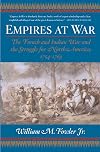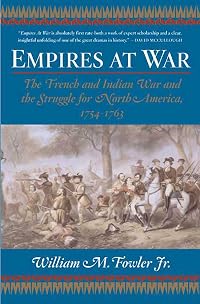
Empires at War: The French and Indian War and the Struggle for North America, 1754-1763
by William M. Fowler Jr.
On This Page
Description
On May 28, 1754, a group of militia and Indians led by 22-year-old major George Washington surprised a camp of sleeping French soldiers near present-day Pittsburgh. The brief but deadly exchange of fire that ensued, in Horace Walpole's memorable phrase, "set the world on fire." The resulting French and Indian War in North America escalated into a global conflict fought across Europe, Africa, and the East and West Indies. Before it ended, nearly one million men had died. This book captures show more the sweeping panorama of this first world war and the huge cast of characters who fought it, including the aristocratic French tactical genius Henry Montcalm and the gallant young Englishman James Wolfe, who both died on the field outside Quebec; Sir William Johnson, who sometimes painted his face and dressed like a warrior when he fought beside his Indian allies; and the "Great Commoner" William Pitt, who saw the world as a vast chessboard.--From publisher description. show lessTags
Recommendations







Member Reviews
When people think of the “first world war,” they normally think of what happened during the period of 1914 – 1918. That war was never called “The First World War” or “WWI” until the next world war came along in 1939. Up until World War II it was called “The Great War.” In the book Empires at War: The French and Indian War and the Struggle for North America, 1754 – 1763, William M. Fowler Jr. says that the series of struggles between 1754 and 1763 were truly the “first world war.” These small wars between England and France were not for who should succeed whom or who should control some small principality, or for that matter, who should dominate Europe. These wars were fought to see which country would dominate show more the other continents: Africa, America, India, and Asia. “Although the war was fought all over the world, its most decisive battles were in North America. The struggle for this continent among Indians, French, Canadians, British, and British colonials was the hinge upon which the outcome of the war swung.” Beginning with this introductory thesis, Mr. Fowler goes on to explain in detail the major parts of what is known in the United States as the French and Indian Wars.
Mr. Fowler begins with a comprehensive list of the major (and even some minor players) in the conflict, gives a chronology of the events of the war, and then begins the main part of his book by explaining who were allied with whom, both in North America and Europe. This is actually explained in language that it is easy to understand, and one does not need a scorecard to keep track of the belligerents. From this point onward the book follows the time-line of the war, beginning with George Washington’s escapade into the Ohio Valley that, as Sir Horace Walpole said, may well have “set the world on fire,” and ending with the departure of William Pitt from his position as Prime Minister, and his statement that he “will be responsible for nothing that I do not direct.” , and the expansion of the war into the Caribbean.
In the epilogue Mr. Fowler explains the changes in the landscape of North America and the division of the newly gained territory into “four distinct and separate Governments, styled and called by the names of Quebec, East Florida, West Florida and Grenada.”(1) In this first world war England was the victor, and its military leaders “laid at the feet of their sovereign vast new territories nearly twenty times the size of the British Isles. Not even Rome’s legions had conquered so well and so quickly. A war that had began accidentally, and without a plan, ended with grand consequences.”(2)
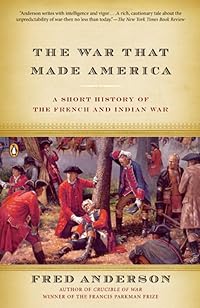
While this book does not go into great detail as other books do, notably Crucible of War: The Seven Years’ War and the Fate of Empire in British North America by Fred Anderson, Mr. Fowler does a more than credible job of explaining what happened and when, especially for the reader who is either just beginning their study of the Seven Years’ War or is just interested in an overview of the period. What Mr. Fowler has included that is interesting to anyone with an interest in the French and Indian War is a superb section of notes that include not only contemporary sources, but sources that one does not normally find, such as the Minutes of The Provincial Council of Pennsylvania, The New York Colonial Documents, and The Dictionary Of Canadian Biography.
Overall, Empires at War is a book that does more than just focus on the battles of the French and Indian War. The book tells the story from not only the perspective of the politicians in Europe, but the commanders in the field as well. It also describes the lack of supplies, brutal weather, and diseases that faced the armies of England and France in the mid-1700s – issues that armies have continued to face up to the present time.
References:
1. William M. Fowler, Jr., Empires at War: The French and Indian War and the Struggle for North America, 1754 – 1763, (New York, Walker & Company, 2005), 1.
2. Ibid., 1. show less
Mr. Fowler begins with a comprehensive list of the major (and even some minor players) in the conflict, gives a chronology of the events of the war, and then begins the main part of his book by explaining who were allied with whom, both in North America and Europe. This is actually explained in language that it is easy to understand, and one does not need a scorecard to keep track of the belligerents. From this point onward the book follows the time-line of the war, beginning with George Washington’s escapade into the Ohio Valley that, as Sir Horace Walpole said, may well have “set the world on fire,” and ending with the departure of William Pitt from his position as Prime Minister, and his statement that he “will be responsible for nothing that I do not direct.” , and the expansion of the war into the Caribbean.
In the epilogue Mr. Fowler explains the changes in the landscape of North America and the division of the newly gained territory into “four distinct and separate Governments, styled and called by the names of Quebec, East Florida, West Florida and Grenada.”(1) In this first world war England was the victor, and its military leaders “laid at the feet of their sovereign vast new territories nearly twenty times the size of the British Isles. Not even Rome’s legions had conquered so well and so quickly. A war that had began accidentally, and without a plan, ended with grand consequences.”(2)
While this book does not go into great detail as other books do, notably Crucible of War: The Seven Years’ War and the Fate of Empire in British North America by Fred Anderson, Mr. Fowler does a more than credible job of explaining what happened and when, especially for the reader who is either just beginning their study of the Seven Years’ War or is just interested in an overview of the period. What Mr. Fowler has included that is interesting to anyone with an interest in the French and Indian War is a superb section of notes that include not only contemporary sources, but sources that one does not normally find, such as the Minutes of The Provincial Council of Pennsylvania, The New York Colonial Documents, and The Dictionary Of Canadian Biography.
Overall, Empires at War is a book that does more than just focus on the battles of the French and Indian War. The book tells the story from not only the perspective of the politicians in Europe, but the commanders in the field as well. It also describes the lack of supplies, brutal weather, and diseases that faced the armies of England and France in the mid-1700s – issues that armies have continued to face up to the present time.
References:
1. William M. Fowler, Jr., Empires at War: The French and Indian War and the Struggle for North America, 1754 – 1763, (New York, Walker & Company, 2005), 1.
2. Ibid., 1. show less
Strategy for war is complicated
Ratings
Members
- Recently Added By
Lists

Best U.S. History Books (1754-1828)
363 works; 18 members
Author Information

22 Works 756 Members
William M. Fowler, Jr. is director of the Massachusetts Historical Society, consulting editor at The New England Quarterly, and honorary professor of history at Northeastern University.
Common Knowledge
- People/Characters
- General James Wolfe; Louis-Joseph de Montcalm-Gozon (General Montcalm); Edward Braddock
- Important places
- Québec, Canada
- Important events
- French and Indian War (1754 | 1763)
- Dedication
- To my father-- a member of the "Greatest Generation"
- Publisher's editor
- Gibson, George
- Blurbers
- Ketchum, Richard; Kenney, Michael; Voves, Ed; McCullough, David
Classifications
Statistics
- Members
- 242
- Popularity
- 132,179
- Reviews
- 2
- Rating
- (3.09)
- Languages
- English
- Media
- Paper, Ebook
- ISBNs
- 6
- ASINs
- 2