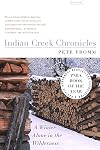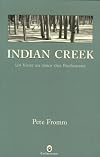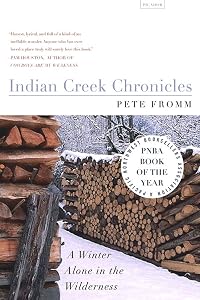
Indian Creek Chronicles: A Winter Alone in the Wilderness
by Pete Fromm
On This Page
Description
"The wardens climbed into their truck, ready to leave. 'You'll need about seven cords of firewood. Concentrate on that. You'll have to get it all in before the snow grounds your truck.'" "Though I didn't want to ask, it seemed important. 'What's a cord?'" So begins Pete Fromm's seven winter months alone in a tent in the Selway-Bitterroot Wilderness guarding salmon eggs. After blundering into this forbidding errand as a college lark, Fromm gradually come face to face with the blunt realities show more of life as a contemporary mountain man. Brutal cold, isolation, and fearful risks balance against the satisfaction of living a unique existence in modern America. This award-winning narrative is a gripping story of adventure, a rousing tale of self-sufficiency, and modern-day Walden. From either perspective, Fromm lives up to his reputation as one of the West's strongest new voices. show lessTags
Recommendations










Member Recommendations
Member Reviews
This is a long shot from a winter ALONE in the wilderness. Even from a winter in the WILDERNESS, I have to add. It's his encounters that shape the book, and there are plenty of them, just as there is infrastructure and outdoor activities all around, most of which try to kill off the very wilderness he's in. But there is still plenty of that.
While whole ranges of questions remain unaddressed (the cold, most noticeably, or an elemental guide to surviving a winter in a tent), the microstories of natural and human encounters make this book the opposite of what the title suggests - a very busy time, socially. This instead of introspection and motif is unexpected, but not unwelcome, once you adapt to what really goes on.
Foremost, this is show more about a time in the woods that shapes a person that was pretty much shapeless before, and this is made clear by Fromm in a way that seems to take him by surprise, and which he can understand and explain only by writing the book. show less
While whole ranges of questions remain unaddressed (the cold, most noticeably, or an elemental guide to surviving a winter in a tent), the microstories of natural and human encounters make this book the opposite of what the title suggests - a very busy time, socially. This instead of introspection and motif is unexpected, but not unwelcome, once you adapt to what really goes on.
Foremost, this is show more about a time in the woods that shapes a person that was pretty much shapeless before, and this is made clear by Fromm in a way that seems to take him by surprise, and which he can understand and explain only by writing the book. show less
A very disappointing book. A tale (and seemingly, a tall one), of a young, immature, naïve boy who decides college is too difficult, and on a whim, takes a position with Idaho Fish and Game. His job is to spend a winter alone in the wilderness, protecting a bed of salmon eggs. Never mind that the author has absolutely no experience in anything other than swimming and heavy drinking. He has no clue of how to survive in the wild, other than having read a few “old mountain man” books. Never cut wood, never camped in the cold, never even cooked before. Despite being entrusted by Fish and Game, he manages to break almost every game law in the book with his trusty homemade black powder rifle, including poaching a moose, grouse, show more squirrels, raccoons, etc. He single-handedly kills a bobcat with a stick, and chases after a wounded bear, armed with only a hatchet. A more foolhardy person would be difficult to find. And, to top it all off, at the end of his “adventure”, he abandons, without a second glance, his dog, the only true friend he had to see him through the winter.
It is said that God watches over and protects fools. Even He must have had his hands full with this character. show less
It is said that God watches over and protects fools. Even He must have had his hands full with this character. show less
A very disappointing book. A tale (and seemingly, a tall one), of a young, immature, naïve boy who decides college is too difficult, and on a whim, takes a position with Idaho Fish and Game. His job is to spend a winter alone in the wilderness, protecting a bed of salmon eggs. Never mind that the author has absolutely no experience in anything other than swimming and heavy drinking. He has no clue of how to survive in the wild, other than having read a few “old mountain man” books. Never cut wood, never camped in the cold, never even cooked before. Despite being entrusted by Fish and Game, he manages to break almost every game law in the book with his trusty homemade black powder rifle, including poaching a moose, grouse, show more squirrels, raccoons, etc. He single-handedly kills a bobcat with a stick, and chases after a wounded bear, armed with only a hatchet. A more foolhardy person would be difficult to find. And, to top it all off, at the end of his “adventure”, he abandons, without a second glance, his dog, the only true friend he had to see him through the winter.
It is said that God watches over and protects fools. Even He must have had his hands full with this character. show less
It is said that God watches over and protects fools. Even He must have had his hands full with this character. show less
Midway through his college career as a wildlife biology major at the University of Montana, Pete Fromm's life takes a little detour. Fueled by his love of exploring nature solo, and most of all, by his college roommate's books full of romanticized feats of mountain men, Fromm makes a spur of the moment decision to apply for a job guarding salmon eggs. For seven months. In an isolated wilderness. In the dead of winter. More than anything, Pete Fromm wanted some mountain man stories of his own to tell, and getting paid to guard a couple million salmon eggs seemed just the way to do it. So, after one thoughtless phone call, endless supply shopping, and a few too many booze-fueled going away parties, incredibly amateur mountain man Fromm show more found himself preparing for months of total isolation with nary a clue as to what surviving alone in the wilderness would entail.
It's nearly mind-blowing that a tale that has at its core the unbelievable isolation and boredom of an Idaho wilderness winter would be so captivating a read. Fromm's stories and his descriptions of the Selway-Bitterroot Wilderness capture the rawness and cruel beauty of its winter that oft goes unobserved. With revealing descriptions of the scenery accompanied by powerful tales of wildlife surviving a hostile environment where survival seems impossible, Fromm reveals the dangerous magnificence of this wintry landscape in a way that few, if any, others ever could. Fromm himself is a sympathetic narrator as he seems to get on-the-job training in "mountain manhood." We go along with him as he learns hard lessons about what works and what doesn't, what it looks and feels like to hunt for food for survival, and, of course, that being a mountain man isn't nearly as fantastic as it seems in all the books, not to mention that he probably should have brought a few more than six books along when he agreed to spend 7 months virtually alone.
Fromm's constant inner battle between loving and owning his untouched wilderness and his desperate desire to get out and see another human face is all too convincing. When spring comes and people start entering the place he has come to think of his own, it feels, even to us, like an invasion of sorts. Foolish though his endeavor may have seemed at the outset, in the end, Fromm certainly emerged with the great mountain man stories he was looking for and much more. show less
It's nearly mind-blowing that a tale that has at its core the unbelievable isolation and boredom of an Idaho wilderness winter would be so captivating a read. Fromm's stories and his descriptions of the Selway-Bitterroot Wilderness capture the rawness and cruel beauty of its winter that oft goes unobserved. With revealing descriptions of the scenery accompanied by powerful tales of wildlife surviving a hostile environment where survival seems impossible, Fromm reveals the dangerous magnificence of this wintry landscape in a way that few, if any, others ever could. Fromm himself is a sympathetic narrator as he seems to get on-the-job training in "mountain manhood." We go along with him as he learns hard lessons about what works and what doesn't, what it looks and feels like to hunt for food for survival, and, of course, that being a mountain man isn't nearly as fantastic as it seems in all the books, not to mention that he probably should have brought a few more than six books along when he agreed to spend 7 months virtually alone.
Fromm's constant inner battle between loving and owning his untouched wilderness and his desperate desire to get out and see another human face is all too convincing. When spring comes and people start entering the place he has come to think of his own, it feels, even to us, like an invasion of sorts. Foolish though his endeavor may have seemed at the outset, in the end, Fromm certainly emerged with the great mountain man stories he was looking for and much more. show less
Indian Creek Chronicles, A Winter Alone in the Wilderness, by Pete Fromm (pp 183). This is a wonderful book about the seven months the author spent alone and snowbound in backcountry Idaho tending to a Park Service fish breeding pond. He went in thoroughly green, the Park Service having been hard pressed to find anyone willing to do the $200 a month job. It’s the story of his adjusting to a semi-solitary existence, his interactions with bear and mountain lion hunters, his own subsistence hunting, and other adventures. It’s a book that either confirms one’s total disinterest in camping alone for months on end, or excites the imagination for doing something similar. Fromm is a remarkable young man, especially considering his then show more lack of backcountry experience. I found his story thoroughly enchanting and wishing for a similar adventure. (But don’t tell my wife!) show less
Pete Fromm was a 20-year-old college student in 1978 enamoured with the idea of being a modern day mountain man when he made a spur of the moment decision to spend the winter alone in the wilderness. A classmate at the University of Montana had just backed out of a job with Idaho Fish and Game to babysit two and a half million salmon eggs in Indian Creek and he made what he referred to as one of a “series of completely unconsidered decisions” that led to him spending October through May in a tent in the Selway-Bitterroot Wilderness. As an example of how unprepared he was, when the wardens were getting ready to leave him at the site, they had this exchange: ”You’ll need about seven cords of firewood. Concentrate on that. You’ll show more have to get it all in before the snow grounds your truck.” Though I didn’t want to ask, it seemed important. “What’s a cord?”
Luckily, Fromm is resourceful and even though he’s only brought six books(!) with him, they’re how-to books on outdoor survival. He teaches himself to cook the supplies he’s brought in, and eventually to trap and hunt, but his biggest challenge is loneliness and how to fill up all the time he has on his hands. Surprisingly, he’s not as alone as I expected. His dog is with him, the wardens come in monthly with his mail, his college buddies visit twice, and there are a good number of hunters who come through looking for elk, mountain lions and bears.
The blurb on the back of the book refers to it as a “modern-day Walden” but I don’t think that’s apt. He’s more of a doer and an observer than a thinker. Here’s a description of what he sees on one of his hikes:
“At one exposed bend of the river, where the wind had cleared the ice of all but the newest snow, I saw the trail of an elk that had run down the mountain and crossed the river. Its tracks showed how it leaped the last bit of riverbank, landing on what looked exactly like more snow. But on the ice, all hell had broken loose. The elk's front feet had shot to the left, while his back legs had done the splits. He held on for what must have been a long time, his feet making wild looping patterns on the ice, but then the snow had been wiped clean by the big broad side of the elk spinning over the ice.
I laughed, translating what must have occurred, and I wished I'd been just a few minutes earlier, that I could have seen the mighty, majestic elk take such a pratfall.
Walking on though, I thought of what a fragile thread held everything together out here. If the elk had broken something, dislocated a hip (which looked more probable than not), it would have been all over. There would have been nothing left but a ring of dirty snow and a pile of stomach grass centered in a haze of coyote tracks."
That’s basically the extent of the discussion on the fragility of life in the wilderness. But although this book wasn’t exactly what I was expecting, it grew on me. Fromm is a good writer and his descriptions of his adventures were fascinating at times. Even though I spent most of the book thinking I would never have done what he did, I came to respect him. He includes an afterword that catches the reader up on the next 20 years of his life and some more “unconsidered decisions” that led him to become a writer. I, for one, am glad he did and I’ll be looking for more of his books. show less
Luckily, Fromm is resourceful and even though he’s only brought six books(!) with him, they’re how-to books on outdoor survival. He teaches himself to cook the supplies he’s brought in, and eventually to trap and hunt, but his biggest challenge is loneliness and how to fill up all the time he has on his hands. Surprisingly, he’s not as alone as I expected. His dog is with him, the wardens come in monthly with his mail, his college buddies visit twice, and there are a good number of hunters who come through looking for elk, mountain lions and bears.
The blurb on the back of the book refers to it as a “modern-day Walden” but I don’t think that’s apt. He’s more of a doer and an observer than a thinker. Here’s a description of what he sees on one of his hikes:
“At one exposed bend of the river, where the wind had cleared the ice of all but the newest snow, I saw the trail of an elk that had run down the mountain and crossed the river. Its tracks showed how it leaped the last bit of riverbank, landing on what looked exactly like more snow. But on the ice, all hell had broken loose. The elk's front feet had shot to the left, while his back legs had done the splits. He held on for what must have been a long time, his feet making wild looping patterns on the ice, but then the snow had been wiped clean by the big broad side of the elk spinning over the ice.
I laughed, translating what must have occurred, and I wished I'd been just a few minutes earlier, that I could have seen the mighty, majestic elk take such a pratfall.
Walking on though, I thought of what a fragile thread held everything together out here. If the elk had broken something, dislocated a hip (which looked more probable than not), it would have been all over. There would have been nothing left but a ring of dirty snow and a pile of stomach grass centered in a haze of coyote tracks."
That’s basically the extent of the discussion on the fragility of life in the wilderness. But although this book wasn’t exactly what I was expecting, it grew on me. Fromm is a good writer and his descriptions of his adventures were fascinating at times. Even though I spent most of the book thinking I would never have done what he did, I came to respect him. He includes an afterword that catches the reader up on the next 20 years of his life and some more “unconsidered decisions” that led him to become a writer. I, for one, am glad he did and I’ll be looking for more of his books. show less
A very disappointing book. A tale (and seemingly, a tall one), of a young, immature, naïve boy who decides college is too difficult, and on a whim, takes a position with Idaho Fish and Game. His job is to spend a winter alone in the wilderness, protecting a bed of salmon eggs. Never mind that the author has absolutely no experience in anything other than swimming and heavy drinking. He has no clue of how to survive in the wild, other than having read a few “old mountain man” books. Never cut wood, never camped in the cold, never even cooked before. Despite being entrusted by Fish and Game, he manages to break almost every game law in the book with his trusty homemade black powder rifle, including poaching a moose, grouse, show more squirrels, raccoons, etc. He single-handedly kills a bobcat with a stick, and chases after a wounded bear, armed with only a hatchet. A more foolhardy person would be difficult to find. And, to top it all off, at the end of his “adventure”, he abandons, without a second glance, his dog, the only true friend he had to see him through the winter.
It is said that God watches over and protects fools. Even He must have had his hands full with this character. show less
It is said that God watches over and protects fools. Even He must have had his hands full with this character. show less
Members
- Recently Added By
Lists

Books Set in Idaho
11 works; 5 members
Author Information
Pete Fromm is the author, most recently, of Night Swimming. a critically-acclaimed collection of short stories. He has published over one hundred stories, earning nominations for the Pushcart Prize, among other honors. He lives with his family in Great Falls, Montana. (Bowker Author Biography)
Some Editions
Awards and Honors
Series
Belongs to Publisher Series
Work Relationships
Is abridged in
Common Knowledge
- Canonical title*
- Indian Creek
- Original title
- Indian creek chronicles
- Alternate titles*
- Indian Creek. Un hiver au coeur des Rocheuses
- Original publication date
- 2003-10-17 (1e édition originale américaine, Picador, New York) (1e édition originale américaine, Picador, New York); 2006 (1e traduction et édition française, Nature writing, Gallmeister) (1e traduction et édition française, Nature writing, Gallmeister); 2010-04-30 (Réédition française, Totem, Gallmeister) (Réédition française, Totem, Gallmeister); 2017 01-03 (Réédition française, Nature writing, Gallmeister) (Réédition française, Nature writing, Gallmeister)
- Important places
- Missoula, Montana, USA; Selway-Bitterroot Wilderness
- Dedication
- To Ellen for the books, and Big Dan and Paul for trying, and finally to Rader, my connection to the world.
- First words
- Once the game wardens left, the little tent we'd set up seemed even smaller.
- Last words
- (Click to show. Warning: May contain spoilers.)We stood up slowly and watched the water racing toward us, slick and smooth, and suddenly, very empty.
- Blurbers
- Houston, Pam; Bass, Rick; Dennis, Jerry
- Original language*
- Anglais (Etats-Unis) (Etats-Unis)
*Some information comes from Common Knowledge in other languages. Click "Edit" for more information.
Classifications
Statistics
- Members
- 421
- Popularity
- 73,564
- Reviews
- 22
- Rating
- (4.01)
- Languages
- 5 — English, French, German, Italian, Spanish
- Media
- Paper, Audiobook, Ebook
- ISBNs
- 22
- ASINs
- 4