On This Page
Description
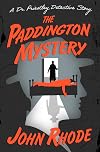
A night of revelry ends with a perplexing death in the first novel featuring one of the greatest detectives of the Golden Age of Mystery. In the early hours of a wintery morning, Harold Merefield returns home from a festive little party at The Naxos, a popular nightclub in Paddington. But just as he tries to get some much-needed sleep, he is startled by a gruesome discovery on his bed: a corpse. There is no way to identify the dead man or the cause of his death. At the inquest, the jury show more rules it a "Death from Natural Causes." But even if they are correct, how did this unfortunate stranger meet his end in Harold's home? Determined to uncover the whole truth, Harold seeks the help of Dr. Lancelot Priestley. A retired professor of applied mathematics, Dr. Priestley employs a simple but unusual method of logical reasoning to shed light on what proves to be a dark and exceedingly curious affair. show lessTags
Recommendations






















Member Reviews
I bought an omnibus of 20 Priestley novels. The first novel I read in it was the 4th novel published The Murders in Praed Street (1928). I had read something interesting about that book, so I read it first. Now I am doubling back to the first novel. Prof. Priestley is a mathematician who consults for the police. He already has this role at the beginning of this book. However, the police are not much involved in The Paddington Mystery. Instead, Priestley helps a young friend of the family (and former "almost fiance" of his daughter) get out of a sticky situation. The actions of this young ne'er do well are very coded, according to the times. He's drinking and gambling and sleeping around. The last one is the most coded.
Like Praed show more Street, I figured this one out really early. It was not until the end of the novel that I realized that Priestley almost never "investigated." He stayed in his study and people came to him, telling stories and giving him evidence. He uses logic to solve the crime. This means that there's a lot of talking and explaining. It gets a little boring. Also, as I said in my previous review, Priestley is a little boring, too. I want him to have more character and more idiosyncrasies. I will read the next two books, for certain, but after that I might look at the internet to see which books qualify as Rhode's "best." I know that Rhode wrote 70+ Priestley novels. I doubt that I will try to be a completionist, like I am with other writers
-- show less
Like Praed show more Street, I figured this one out really early. It was not until the end of the novel that I realized that Priestley almost never "investigated." He stayed in his study and people came to him, telling stories and giving him evidence. He uses logic to solve the crime. This means that there's a lot of talking and explaining. It gets a little boring. Also, as I said in my previous review, Priestley is a little boring, too. I want him to have more character and more idiosyncrasies. I will read the next two books, for certain, but after that I might look at the internet to see which books qualify as Rhode's "best." I know that Rhode wrote 70+ Priestley novels. I doubt that I will try to be a completionist, like I am with other writers
-- show less
The Paddington Mystery is a reprint of a Golden Age detective novel featuring Dr. Priestley. Dr. Priestley appears in 72 books published from 1925 to 1961. John Rhode (Cecil John Street) also published another 50+ series mystery novels under the pen name of Miles Burton. Both the Rhode and the Burton novels are being republished by the British Library, Poisoned Pen Press or Collins Crime Club.
I won't rehash the plot here, but this is classic Golden Age fare. Dr. Priestley is a mathematics professor who applies his specialty to many of life's problems. He is a detective who uses his brains to analyze the situation, theorizing and rejecting scenarios that don't fit the facts until he comes up with the solution to the mystery. In this show more story, others come to him with the clues/facts. Priestley is very likable and doesn't seem too full of himself as some other detectives do. I also liked his daughter, April, and the main character, Harold Merefield, and am hoping to see more of them in future novels. As with most Golden Age detective novels, the focus of the story is the mystery and not the characters, so those looking for well-developed characters may be disappointed.
I found the mystery to be original, although I must confess that I had a good idea about what was going on right at the beginning and kept thinking that there would be a plot twist that would prove me wrong. Even though I guessed the solution, I still enjoyed the book, as it was interesting to see how it all played out. The story and the clues played out little by little, and it was easy to follow Priestley's solution. Classically, Priestley brings everyone together at the end to resolve the mystery.
If you enjoy Golden Age detective fiction, I think you will enjoy this novel. I'm looking forward to reading more of Rhode's Dr. Priestley mysteries. show less
I won't rehash the plot here, but this is classic Golden Age fare. Dr. Priestley is a mathematics professor who applies his specialty to many of life's problems. He is a detective who uses his brains to analyze the situation, theorizing and rejecting scenarios that don't fit the facts until he comes up with the solution to the mystery. In this show more story, others come to him with the clues/facts. Priestley is very likable and doesn't seem too full of himself as some other detectives do. I also liked his daughter, April, and the main character, Harold Merefield, and am hoping to see more of them in future novels. As with most Golden Age detective novels, the focus of the story is the mystery and not the characters, so those looking for well-developed characters may be disappointed.
I found the mystery to be original, although I must confess that I had a good idea about what was going on right at the beginning and kept thinking that there would be a plot twist that would prove me wrong. Even though I guessed the solution, I still enjoyed the book, as it was interesting to see how it all played out. The story and the clues played out little by little, and it was easy to follow Priestley's solution. Classically, Priestley brings everyone together at the end to resolve the mystery.
If you enjoy Golden Age detective fiction, I think you will enjoy this novel. I'm looking forward to reading more of Rhode's Dr. Priestley mysteries. show less
Written in 1925, and the first of many (very many!) books to feature Lancelot Priestley, this is a welcome re-release of a Golden Age detective novel. Yes, it feels a bit dated and some of the stereotypes are perhaps a little questionable for a modern audience, but it was an interesting entry into the genre and I am looking forward to getting hold of more to see how the character develops. Rhode (who wrote under various pseudonyms) was a member of the Detection Club, and his creation Priestley, as an academic and mathematician, is interested in the facts, the logic, and working out the puzzles - justice is a vague thing that may or may not happen (at least going by this first novel). If you want to delve further into the 1920s detective show more genre, this is a nice little treat. show less
Ratings
Members
- Recently Added By
Lists

Books Read in 2018
4,360 works; 110 members

Haycraft Queen Cornerstones
181 works; 3 members
Author Information

85+ Works 1,180 Members
Awards and Honors
Notable Lists
Series

Belongs to Publisher Series
Common Knowledge
- Original title
- The Paddington Mystery
- Original publication date
- 1925
- People/Characters
- Dr. Priestley; April Priestley; Harold Merefield
- Important places
- London, England, UK
- First words
- 'Steady, sir!' exclaimed the taxi-driver sharply.
- Last words
- (Click to show. Warning: May contain spoilers.)'Well, you've been a fool, too. See that you don't do it again.'
Classifications
Statistics
- Members
- 73
- Popularity
- 430,044
- Reviews
- 3
- Rating
- (3.33)
- Languages
- English
- Media
- Paper, Audiobook, Ebook
- ISBNs
- 6
- ASINs
- 6