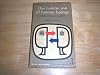
The Human Use of Human Beings: Cybernetics and Society
by Norbert Wiener
On This Page
Description
Only a few books stand as landmarks in social and scientific upheaval. Norbert Wiener's classic is one in that small company. Founder of the science of cybernetics--the study of the relationship between computers and the human nervous system--Wiener was widely misunderstood as one who advocated the automation of human life. As this book reveals, his vision was much more complex and interesting. He hoped that machines would release people from relentless and repetitive drudgery in order to show more achieve more creative pursuits. At the same time he realized the danger of dehumanizing and displacement. His book examines the implications of cybernetics for education, law, language, science, technology, as he anticipates the enormous impact--in effect, a third industrial revolution--that the computer has had on our lives. show lessTags
Recommendations








































Member Reviews
I was a brand new doctoral student, hoping one day to consider myself an expert in communication arts. I was enrolled in Wendell Johnson’s course in general semantics, doing well, poring over his People in Quandaries, listening to his every recommendation. Oh, I was also enrolled in a Thoreau seminar, a course in contemporary British literature, and something that I think may have been called Teaching Reading to College Students and Adults; and to pay my way, I was teaching eighth graders at University High School. But nothing challenged my thinking like general semantics. “You should read Norbert Wiener’s The Human Use of Human Beings,” he said to his auditorium class of more than a hundred students. So, dutiful young scholar show more that I was, I made my way to the Paper Place and picked up the 95¢ paperback (Doubleday, 1954).
I’m not sure how many times I read the first chapter, but by the time I finished I felt confident enough to label the last paragraph IMP SUMM, “important summary,” in my shorthand. (You must understand that I had never had a course in physics; I didn’t even know the meaning of the word cybernetics in the subtitle: Cybernetics and Society; and I had never understood entropy.)
“We have seen in this chapter the fundamental unity of a complex of ideas which until recently had not been sufficiently associated with one another, namely, the contingent views of physics that [Willard] Gibbs introduced as a modification of the traditional, Newtonian conventions, the Augustinian attitude toward order and conduct which is demanded by this view, and the theory of the message among men, machines, and in society as a sequence of events in time which, though it itself has a certain contingency, strives to hold back nature’s tendency toward disorder by adjusting its parts to various purposive ends.”
I suspect that this first chapter made me wonder if I didn’t need to be taking a course myself that would teach college students and adults how to read. But one or two messages I heard loud and clear, right away. Entropy, at least, I now understood:
“As entropy increases, the universe, and all closed systems in the universe, tend naturally to deteriorate and lose their distinctiveness, to move from the least to the most probable state, from a state of organization and differentiation in which distinctions and forms exist, to a state of chaos and sameness. In Gibbs’ universe order is least probable, chaos most probable.” (And after Gibbs, physics is concerned not about what is real or provable, but about what is probable.)
I recognized the biblical Leviathan, the monster underlying the surface of our world, threatening to unleash chaos at any moment. The sense of order, according to these prophets of antiquity, is just the crust of the earth, fragile, insubstantial, artificial. “In a very real sense we are shipwrecked passengers on a doomed planet.” In such a world, the idea of progress, e e cummings had taught me to say, “is a comfortable disease.” Wiener reminded me that to neither Catholic, Protestant, nor Jew was “this world” a happy, well-ordered, progressive place. The Communist, he said, “is just as skeptical of the Big Rock Candy Mountains of the Future as of the Pie in the Sky when you Die.” Neither are Islam or Buddhism any more receptive to ideal progress. To the latter, the hope is “for Nirvana and a release from the external Wheel of Circumstances.”
So the messages I heard clearly in the opening of Wiener’s book were clear. You can imagine my trepidation. (You must understand that I was also a fundamentalist Christian, having just recently decided not to enter my church’s ministry; I was a young husband and a brand new father.) But I recognized too, and gratefully, that the basis of all of Wiener’s work, of his cybernetic vision, was a modified hope: it is best to say “in connection with [new automated] machines that there is no reason why they may not resemble human beings in representing pockets of decreasing entropy in a framework in which the large entropy tends to increase.” Aha. Pockets of decreasing entropy. “Yet even in a shipwreck, human decencies and human values do not necessarily vanish, and we must make the most of them. We shall go down, but let it be in a manner to which we make look forward as worthy of our dignity.” Ah so. Human decencies and values. “We are not yet spectators at the last stages of the world’s death.”
But he does not place his hope in a naive idealism, nor does he express faith in the certainty of scientific progress. “An increased mastery over nature,” he asserts with astute prescience, “may prove in the long run to be an increased slavery to nature. For the more we get out of the world the less we leave, and in the long run we shall have to pay our debts at a time that may be very inconvenient for our own survival.” Then he continues with advice that will underlie his messages throughout the rest of the book: “We have modified our environment so radically that we must now modify ourselves in order to exist in this new environment. . . . Progress imposes not only new possibilities for the future but new restrictions.”
The remaining nine chapters of the book develop a science of information and the human value of communication. We must analyze and adapt to information that is new and unsettling, for only what is challenging embodies information that is useful. He uses an analogy to express this that warms an English teacher’s heart: “. . . the more probable the message, the less information it gives. Clichés, for example, are less illuminating than great poems.” With what pleasure I underlined that one. In fact, one of the features of Wiener’s writing that renders it so provocative is his facility in finding metaphors and verbal maxims that illuminate, helping the common reader to follow him into unfamiliar territory.
The thesis of his next chapter, “Rigidity and Learning: Two Patterns of Communicative Behavior,” is simply stated but infinitely complex in its potential impact: Man “has the physiological and hence intellectual equipment to adapt himself to radical changes.” As the son of a philologist, he writes a chapter on “The Mechanism and History of Language,” which he calls amateurish, but is insightful though it is familiar territory to students of language. Speaking of the history of, say, the Indo-European language group, he says, “Thus evolutionism in language antedates the refined Darwinian evolutionism in biology.” In his chapter on “Communication and the Law,” he insists that the first duty of law [and of legislation] is to know what it wants. Criminal law falls far short:
“Law seems to consider punishment, now as a threat to discourage other possible criminals, now as a ritual act of expiation on the part of the guilty man, now as a device for removing him from society and for protecting the latter from the danger of repeated misconduct, and now as an agency for the social and moral reform of the individual. These are four different tasks, to be accomplished by four different methods; and unless we know an accurate way of proportioning them, our whole attitude to the criminal will be at cross-purposes.” Anyone with any knowledge of the working of the USAmerican prison systems will say a hearty Amen! to that.
But perhaps the most sensitive and the most currently relevant chapter is the one entitled appropriately, “Communication, Secrecy, and Social Policy.” Listen, and reflect upon, just a few of his statements:
“Just as entropy tends to increase spontaneously in a closed system, so information tends to decrease; just as entropy is a measure of disorder, so information is a measure of order.”
“. . . a piece of information, in order to contribute to the general information of the community, must say something substantially different from the community’s previous common stock of information.”
“The idea that information can be [secretly] stored in a changing world without an overwhelming depreciation in its value is false.”
“Information is more a matter of process than of storage.”
“An over-all policy in matters of secrecy almost always must involve the consideration of many more things than secrecy itself.”
“The loyalty to humanity which can be subverted by a skillful distribution of administrative sugar plums will be followed by a loyalty to official superiors lasting just so long as we have the bigger sugar plums to distribute.”
Personally, I am fairly certain that today’s political elite are more interested in hiding the bigger sugar plums for themselves than they are in any “loyalty to humanity.”
Evangelists and politicians in this current milieu, scholars and educators, scientists and critics of science need to read the last page of this provocative book: “I have said that science is impossible without faith. . . . [for] without faith that nature is subject to law there can be no science. . . . ¶ Inductive logic, the logic of Bacon, is rather something on which we can act than something which we can prove, and to act on it is a supreme assertion of faith.” show less
I’m not sure how many times I read the first chapter, but by the time I finished I felt confident enough to label the last paragraph IMP SUMM, “important summary,” in my shorthand. (You must understand that I had never had a course in physics; I didn’t even know the meaning of the word cybernetics in the subtitle: Cybernetics and Society; and I had never understood entropy.)
“We have seen in this chapter the fundamental unity of a complex of ideas which until recently had not been sufficiently associated with one another, namely, the contingent views of physics that [Willard] Gibbs introduced as a modification of the traditional, Newtonian conventions, the Augustinian attitude toward order and conduct which is demanded by this view, and the theory of the message among men, machines, and in society as a sequence of events in time which, though it itself has a certain contingency, strives to hold back nature’s tendency toward disorder by adjusting its parts to various purposive ends.”
I suspect that this first chapter made me wonder if I didn’t need to be taking a course myself that would teach college students and adults how to read. But one or two messages I heard loud and clear, right away. Entropy, at least, I now understood:
“As entropy increases, the universe, and all closed systems in the universe, tend naturally to deteriorate and lose their distinctiveness, to move from the least to the most probable state, from a state of organization and differentiation in which distinctions and forms exist, to a state of chaos and sameness. In Gibbs’ universe order is least probable, chaos most probable.” (And after Gibbs, physics is concerned not about what is real or provable, but about what is probable.)
I recognized the biblical Leviathan, the monster underlying the surface of our world, threatening to unleash chaos at any moment. The sense of order, according to these prophets of antiquity, is just the crust of the earth, fragile, insubstantial, artificial. “In a very real sense we are shipwrecked passengers on a doomed planet.” In such a world, the idea of progress, e e cummings had taught me to say, “is a comfortable disease.” Wiener reminded me that to neither Catholic, Protestant, nor Jew was “this world” a happy, well-ordered, progressive place. The Communist, he said, “is just as skeptical of the Big Rock Candy Mountains of the Future as of the Pie in the Sky when you Die.” Neither are Islam or Buddhism any more receptive to ideal progress. To the latter, the hope is “for Nirvana and a release from the external Wheel of Circumstances.”
So the messages I heard clearly in the opening of Wiener’s book were clear. You can imagine my trepidation. (You must understand that I was also a fundamentalist Christian, having just recently decided not to enter my church’s ministry; I was a young husband and a brand new father.) But I recognized too, and gratefully, that the basis of all of Wiener’s work, of his cybernetic vision, was a modified hope: it is best to say “in connection with [new automated] machines that there is no reason why they may not resemble human beings in representing pockets of decreasing entropy in a framework in which the large entropy tends to increase.” Aha. Pockets of decreasing entropy. “Yet even in a shipwreck, human decencies and human values do not necessarily vanish, and we must make the most of them. We shall go down, but let it be in a manner to which we make look forward as worthy of our dignity.” Ah so. Human decencies and values. “We are not yet spectators at the last stages of the world’s death.”
But he does not place his hope in a naive idealism, nor does he express faith in the certainty of scientific progress. “An increased mastery over nature,” he asserts with astute prescience, “may prove in the long run to be an increased slavery to nature. For the more we get out of the world the less we leave, and in the long run we shall have to pay our debts at a time that may be very inconvenient for our own survival.” Then he continues with advice that will underlie his messages throughout the rest of the book: “We have modified our environment so radically that we must now modify ourselves in order to exist in this new environment. . . . Progress imposes not only new possibilities for the future but new restrictions.”
The remaining nine chapters of the book develop a science of information and the human value of communication. We must analyze and adapt to information that is new and unsettling, for only what is challenging embodies information that is useful. He uses an analogy to express this that warms an English teacher’s heart: “. . . the more probable the message, the less information it gives. Clichés, for example, are less illuminating than great poems.” With what pleasure I underlined that one. In fact, one of the features of Wiener’s writing that renders it so provocative is his facility in finding metaphors and verbal maxims that illuminate, helping the common reader to follow him into unfamiliar territory.
The thesis of his next chapter, “Rigidity and Learning: Two Patterns of Communicative Behavior,” is simply stated but infinitely complex in its potential impact: Man “has the physiological and hence intellectual equipment to adapt himself to radical changes.” As the son of a philologist, he writes a chapter on “The Mechanism and History of Language,” which he calls amateurish, but is insightful though it is familiar territory to students of language. Speaking of the history of, say, the Indo-European language group, he says, “Thus evolutionism in language antedates the refined Darwinian evolutionism in biology.” In his chapter on “Communication and the Law,” he insists that the first duty of law [and of legislation] is to know what it wants. Criminal law falls far short:
“Law seems to consider punishment, now as a threat to discourage other possible criminals, now as a ritual act of expiation on the part of the guilty man, now as a device for removing him from society and for protecting the latter from the danger of repeated misconduct, and now as an agency for the social and moral reform of the individual. These are four different tasks, to be accomplished by four different methods; and unless we know an accurate way of proportioning them, our whole attitude to the criminal will be at cross-purposes.” Anyone with any knowledge of the working of the USAmerican prison systems will say a hearty Amen! to that.
But perhaps the most sensitive and the most currently relevant chapter is the one entitled appropriately, “Communication, Secrecy, and Social Policy.” Listen, and reflect upon, just a few of his statements:
“Just as entropy tends to increase spontaneously in a closed system, so information tends to decrease; just as entropy is a measure of disorder, so information is a measure of order.”
“. . . a piece of information, in order to contribute to the general information of the community, must say something substantially different from the community’s previous common stock of information.”
“The idea that information can be [secretly] stored in a changing world without an overwhelming depreciation in its value is false.”
“Information is more a matter of process than of storage.”
“An over-all policy in matters of secrecy almost always must involve the consideration of many more things than secrecy itself.”
“The loyalty to humanity which can be subverted by a skillful distribution of administrative sugar plums will be followed by a loyalty to official superiors lasting just so long as we have the bigger sugar plums to distribute.”
Personally, I am fairly certain that today’s political elite are more interested in hiding the bigger sugar plums for themselves than they are in any “loyalty to humanity.”
Evangelists and politicians in this current milieu, scholars and educators, scientists and critics of science need to read the last page of this provocative book: “I have said that science is impossible without faith. . . . [for] without faith that nature is subject to law there can be no science. . . . ¶ Inductive logic, the logic of Bacon, is rather something on which we can act than something which we can prove, and to act on it is a supreme assertion of faith.” show less
Libro difficile, non lineare, eterogeneo. Eppure ricco di spunti sull'apprendimento, il lavoro e in generale lo sviluppo umano che vanno ben oltre quanto nel linguaggio comune si intende per "cibernetica". Wiener fa decisamente fatica a tenere i suoi molti spunti di riflessione in poche pagine.
«L’uomo trascorre circa il quaranta per cento della sua vita nella condizione di apprendista, per ragioni che hanno a che fare con la sua struttura biologica. È del tutto naturale che una società umana si fondi sulla capacità di apprendere, come all’opposto una comunità di formiche si basi su un modello ereditario».
Norbert Wiener
«L’uomo trascorre circa il quaranta per cento della sua vita nella condizione di apprendista, per ragioni che hanno a che fare con la sua struttura biologica. È del tutto naturale che una società umana si fondi sulla capacità di apprendere, come all’opposto una comunità di formiche si basi su un modello ereditario».
Norbert Wiener
Clearly, this book is not going to be my cup of tea, and unless you're interested in computers, technology, science, mathematics, or sociology as a serious academic study, you'll likely find it pretty dull.
However, Wiener's work is incredibly prescient: he makes claims about the dangers of technology and problems that will arise from the mechanization of society -- claims that are STILL relevant and unsolved today, over 50 years after this book's publication.
That his insight is still so sharp, especially in light of the realization of several of his predictions (such as the chess-playing computer), makes this an illuminating and thought-provoking read.
However, Wiener's work is incredibly prescient: he makes claims about the dangers of technology and problems that will arise from the mechanization of society -- claims that are STILL relevant and unsolved today, over 50 years after this book's publication.
That his insight is still so sharp, especially in light of the realization of several of his predictions (such as the chess-playing computer), makes this an illuminating and thought-provoking read.
I read it just to see if there was anything to be gained from returning to the horse’s mouth when it comes to cybernetics and information theory…but there’s not a great deal of interest today, given how much his ideas have permeated our society. It’s a mixum-gatherum of various observations and what he thinks are noteworthy implications of different ideas, a type of free-association of theory in the abstract to try bring it to bear on reality.
Decided to try this one as I read Possible Minds (another collection of essays compiled by John Brockman. This one uses Human Use of Human Beings as a launch pad for recent AI contemplations) as well as Gregory Bateson's Ecologies of Mind. Cybernetics will never make complete sense to me but this book filled in some gaps.
A brilliant and wide-ranging book that covers a huge variety of issues, most of which seem to have very little to do with either communications or information.
I totally agree with the review by "jaygheiser" although it relates a little to information and communication but this is on in 1954 there wasn't this amount of technology or break through that we have right now. It's a good book to see the way people thought of technology and communication at that time but an updated 3rd Edition would be even more interesting.
Members
- Recently Added By
Lists

Big Data
52 works; 2 members
Author Information

Norbert Wiener (1894-1964) served on the faculty in the Department of Mathematics at MIT from 1919 until his death. In 1963, he was awarded the National Medal of Science for his contributions to mathematics and the engineering and biological sciences. He was the author of many books, including Norbert Wiener-A Life in Cybernetics and the National show more Book Award-winning God Golem, Inc.: A Comment on Certain Points Where Cybernetics Impinges on Religion (both published by the MIT Press). show less
Some Editions
Awards and Honors
Distinctions
Series
Belongs to Publisher Series
Common Knowledge
- Canonical title
- The Human Use of Human Beings: Cybernetics and Society
- Quotations
- It is the pattern maintained by this homeostasis, which is the touchstone of our personal identity. ... We are but whirlpools in a river of ever-flowing water. We are not stuff that abides, but patterns that perpetuate the... (show all)mselves. [96]
I repeat, the prevalence of cliches is no accident, but inherent in the nature of information. [119]
Let us remember that the automatic machine [computer], whatever we think of any feelings it may or may not have, is the precise economic equivalent of slave labor. Any labor which competes with slave labor must accept the economic conditions of slave labor. [162]
The world of the future will be an even more demanding struggle against the limitations of our intelligence, not a comfortable hammock in which we can lie down to be waited upon by our robot slaves.
The sense of tragedy is that the world is not a pleasant little nest made for our protection, but a vast and largely hostile environment, in which we can achieve great things only by defying the gods; and that this defiance i... (show all)nevitably brings its own punishment.
as efficient as communications’ mechanisms become, they are still, as they have always been, subject to the overwhelming tendency for entropy to increase, for information to leak in transit, unless certain external agents a... (show all)re introduced to control it. I have already referred to an interesting view of language made by a cybernetically-minded philologist—that speech is a joint game by the talker and the listener against the forces of confusion.
What I have said about the newspapers and the movies applies equally to the radio, to television, and even to bookselling. Thus we are in an age where the enormous per capita bulk of communication is met by an ever-thinning s... (show all)tream of total bulk of communication. More and more we must accept a standardized inoffensive and insignificant product which, like the white bread of the bakeries, is made rather for its keeping and selling properties than for its food value.
This is fundamentally an external handicap of modern communication, but it is paralleled by another which gnaws from within. This is the cancer of creative narrowness and feebleness.
In the old days, the young man who wished to enter the creative arts might either have plunged in directly or prepared himself by a general schooling, perhaps irrelevant to the specific tasks he finally undertook, but which was at least a searching discipline of his abilities and taste. Now the channels of apprenticeship are largely silted up. Our elementary and secondary schools are more interested in formal classroom discipline than in the intellectual discipline of learning something thoroughly, and a great deal of the serious preparation for a scientific or a literary course is relegated to some sort of graduate school or other.
Classifications
- Genres
- Sociology, Technology, Nonfiction, Science & Nature, Philosophy, General Nonfiction
- DDC/MDS
- 303.483 — Society, government, & culture Social sciences, sociology & anthropology Social processes Social change Causes of change Development of science and technology
- LCC
- Q175 .W6517 — Science Science (General) General
- BISAC
Statistics
- Members
- 943
- Popularity
- 28,326
- Reviews
- 13
- Rating
- (3.85)
- Languages
- 9 — Catalan, English, Estonian, French, German, Italian, Portuguese, Spanish, Swedish
- Media
- Paper, Ebook
- ISBNs
- 17
- ASINs
- 32