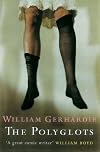
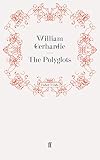
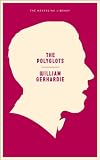
The Polyglots
by William Gerhardie
On This Page
Description
The Anglo-Russian author William Gerhardie was hailed by writers including Graham Greene, Edith Wharton, Evelyn Waugh and others as a "genius," and this, his long-out-of-print second novel, is generally acclaimed as his comic masterpiece--not to mention "the most influential English novel of the twentieth century," according to William Boyd. It tells the unforgettable tale of an eccentric Belgian family living in the Far East during the turbulent years just after the First World War, which show more displaced them, and the Russian Revolution, which impoverished them. Recounted by a conceited young English cousin who visits during a military mission, the story is filled with a host of fascinatingly idiosyncratic characters--depressives, obsessives, sex maniacs, and hypochondriacs--often forced to choose between absurdity and tragedy. Yet Gerhardie depicts them as both charming and poignant, as they each struggle for love and safety in tumultuous times . . . and the protagonist finds his conceit shredded as he falls head over heels in love with one of them. Gerhardie's portraits of Europeans in exile, attempting to escape from the era's upheavals, draws on his own experiences as an officer in the British Mission. He has summoned up a world adrift, where war and revolution have broken up the old order, but nothing has come to replace it. And he does it with unforgettable humor and a sharp eye for the absurd. Hilarious, poignant, panoramic in scope,nbsp;The Polyglotsnbsp;redeems, from the Babel of the interwar period, a stirring vision of love and human sympathy. show lessTags
Recommendations















Member Reviews
Flotsam of World War I, sloshing around in the aftermath and hoping to wash up on a friendly shore. Our somewhat unreliable — at least regarding himself — narrator, a British military liaison in Harbin during the chaos of the Russian revolution, gets entangled in his ludicrous, exiled, poverty-stricken extended family, falls vapidly in love with his cousin, and tries to forget the war. I've always liked this kind of (eccentric) character-driven story, and Gerhardie's cast of eccentrics is as entertaining as they come. Dispossessed White Russians, English people who've barely set foot in England, several bona fide lunatics, children and hangers-on make for my kind of comedy. Gerhardie has a special talent for writing children, whom show more he makes somehow adorable yet also believable and hardly irritating at all.
Diminishing returns after my previous reads in 2008 and 2013, but I still had a good time. show less
Diminishing returns after my previous reads in 2008 and 2013, but I still had a good time. show less
Some fiction is disappointing and leaves you wishing the author had never intruded on your mind. But some is disappointing in a way that makes you wish you'd read a different book by the same person; The Polygots is disappointing in this more optimistic way. Gerhardie starts out strong, with a fabulously weird narrator, nice social observation, and charming comedy. Then precisely nothing happens. There are events (particularly the uncle's death), and the book has an arc (Captain Georges Hamlet Alexander Diabologh arrives in Russified China, lives there for some time, goes back to England with his family) but it's hard to see any intellectual or emotional development in the characters, the narrative, or, for me at least, the reader.
Now, show more that's a real shame, because on a less high-falutin' level, this is an exciting novel. It's hovers somewhere between Evelyn Waugh, Tolstoy and Rene Leys. But a Waugh-length novel with little plot can't really contain a Tolstoyan cast, so many of the incidents are uninteresting. Captain GHAD's voice is by far the best part of the book: self-obsessed, ignorant, charmless, incompetent and immature, he replicates much of his second namesake's silliness, but is also quite wise in an 'out of the mouths of babes' kind of way. When he fades into the background and becomes a mere reporter of his family's discussions, the book bogs down fast.
So I'll keep an eye out for second hand Gerhardie, and recommend you do the same. Though it's disappointing, even this one is worth reading. show less
Now, show more that's a real shame, because on a less high-falutin' level, this is an exciting novel. It's hovers somewhere between Evelyn Waugh, Tolstoy and Rene Leys. But a Waugh-length novel with little plot can't really contain a Tolstoyan cast, so many of the incidents are uninteresting. Captain GHAD's voice is by far the best part of the book: self-obsessed, ignorant, charmless, incompetent and immature, he replicates much of his second namesake's silliness, but is also quite wise in an 'out of the mouths of babes' kind of way. When he fades into the background and becomes a mere reporter of his family's discussions, the book bogs down fast.
So I'll keep an eye out for second hand Gerhardie, and recommend you do the same. Though it's disappointing, even this one is worth reading. show less
Though Gerhardie's approach was certainly innovative, and though I often smiled and sometimes laughed, I can't see that he - or this novel - merits the level of praise lavished by contemporaries or more recently. The protagonist is the narrator (in autobiographical mode) and much is made by admirers of the profundity of his regular philosophical musings. I'm less convinced; they come across to me as somewhat child like meanderings (albeit in high flown language) of a self-centred know-all. I ploughed on and finished the book, but I wasn't captivated . . .
The Polyglots is becoming a neglected book. Great comic characters in tragic straits. Gerhardie was a master at handling characters in absurd circumstances
A wonderful novel, drawing from the author's Anglo-Russian childhood. I love the way he plays with the conventions of the novel.
Un oficial inglés destinado al extremo de la Rusia asiática nada más terminar la I Guerra Mundial, es decir, en plena guerra civil entre bolcheviques y rusos blancos. Se reúne allí con su familia más o menos lejana (y más o menos familia), de origen belga pero con amplios períodos de residencia en Japón, dominada por la peculiar y despótica tía Teresa. A ella (a la familia) se van acoplando diversos personajes al compás de los acontecimientos, casi todos huidos del avance bolchevique. Se enamora de una prima lejana, y van pasando cosas. Y nuestro oficial a veces las narra con clásico humor inglés, y otras veces divaga o filosofa, y otras veces se pone melancólico o incluso indignado. Depende del humor del momento. No show more siempre el autor ha conseguido que yo siga el ritmo de sus estados espirituales. Cuando no, pues me he aburrido un poco; cuando sí, lo he pasado muy bien. Dicen que este autor y esta novela son una especie de tesoro oculto de la literatura inglesa. Yo no creo que sea para tanto. Pero, aún así, es un buen libro. show less
Jun 11, 2015Spanish
Ratings
Members
- Recently Added By
Lists

The Guardian's 1000 Novels Everyone Must Read
1,005 works; 549 members

Classic British Humor
41 works; 8 members

William Gerhardie Ranked
8 works; 1 member

Schwob Nederland
207 works; 2 members

Canon de la narrativa universal del s. XX (cicutadry)
499 works; 3 members
Author Information

22+ Works 636 Members
Awards and Honors
Series
Belongs to Publisher Series
Common Knowledge
- Canonical title
- The Polyglots
- Original publication date
- 1925
- People/Characters
- Captain Georges Hamlet Alexander Diabologh
- First words
- I stood on board the liner halted midstream and looked upon Japan, my native land.
- Blurbers
- Snow, C. P.; Manning, Olivia; Boyd, William; Toynbee, Philip; Greene, Graham
Classifications
Statistics
- Members
- 201
- Popularity
- 161,922
- Reviews
- 6
- Rating
- (3.20)
- Languages
- Dutch, English, French, Spanish
- Media
- Paper, Ebook
- ISBNs
- 15
- ASINs
- 10