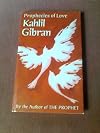
Prophecies of Love: Reflections From the Heart
by Kahlil Gibran
38 Members (3.30)
On This Page
Description
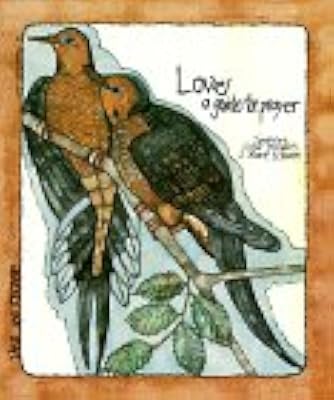
This book of poems takes a fresh look at common everyday occurrences. The author, noted for her keen observations of even the simplest things - such as acorns laying scattered across a road - paints a picture in the reader's mind that brings the poems to life. With these vivid images in mind, an emotional chord is struck between the reader and the author as she shares special moments that have touched her heart. The poems range from the light-hearted subjects of the antics of the author's show more beloved pets, to more reflective topics, as in the need for nature conservation, or thoughts about living life that is true to one's self, and to the needs of others. This book touches the inner core of all of us, and is a fun, and sometimes thought-provoking collection of poems. In a day and age where life is so technologically-oriented and fast-paced, it is nice to know that the art of poetry still exists...where the beauty and play of words can touch people and make them smile. show lessTags
Recommendations























Member Reviews
Members
- Recently Added By
Author Information

746+ Works 29,499 Members
Khalil Gibran, also known as Kahlil Gibran, was born on January 6, 1883 in Northern Lebanon. As a result of his family's poverty, he received no formal education as a small child but had regular visits from the local priest who taught him about the Bible as well as the Syrian and Arabic languages. After his father was imprisoned for embezzlement show more and his family's property was confiscated by the authorities, his mother decided to emigrate to the United States in 1895. They settled in Boston's South End. He attended public school and art school, where he was introduced to the artist, photographer, and publisher Fred Holland Day. A publisher used some of Gibran's drawings for book covers in 1898. His family forced him to return to Lebanon to complete his education and learn the Arabic language. He enrolled in Madrasat-al-Hikmah, a Maronite-founded school, which offered a nationalistic curriculum partial to church writings, history and liturgy. He learned Arabic, French, and exceled in poetry. He returned to the United States in 1902. In 1904, he hosted his first art exhibit, which featured his allegorical and symbolic charcoal drawings. During this exhibition, he met Mary Elizabeth Haskell, who would go on to fund Gibran's artistic development for nearly his entire life. Not only was he an artist, but he also wrote poetry and other works including The Madman, The Prophet, and Sand and Foam. He died of cirrhosis of the liver and tuberculosis on April 10, 1931. (Bowker Author Biography) show less
Classifications
- Genres
- Fiction and Literature, Poetry
- DDC/MDS
- 818.5 — Literature & rhetoric American literature in English American miscellaneous writings in English 20th Century
- LCC
- PJ7826 .I2 .A22 — Language and Literature Oriental languages and literatures Oriental philology and literature Arabic Arabic literature Individual authors or works
Statistics
- Members
- 38
- Popularity
- 766,348
- Rating
- (3.30)
- Languages
- English
- Media
- Paper, Ebook
- ISBNs
- 2
- ASINs
- 1