On This Page
Description
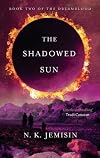
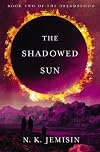
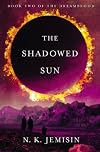
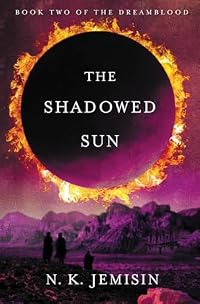
Gujaareh, the city of dreams, suffers under the imperial rule of the Kisuati Protectorate. A city where the only law was peace now knows violence and oppression. And nightmares: a mysterious and deadly plague haunts the citizens, dooming them to die screaming in their sleep.Tags
Recommendations
















Member Reviews
After The Killing Moon, it was pretty much inevitable that, my aversion to series be damned, I was going to pick up The Shadowed Sun. In fact, I'm currently feeling a little bit guilty that I checked this out at the library and didn't buy a copy of my own.
While I sometimes felt that the writing was a little bit less innovative than in the last volume, ultimately, I loved this one more. A good part of my affection was earned with one of the themes in this book -- a woman's role. In Gujaareh, women are goddesses, but in a familiar, on a pedestal, don't let them get their hands dirty way. Among the Banbarra, clans are held and ruled by women, who hold and manage their clan's wealth. But in the end, both peoples have very narrow show more conscriptions for what a woman can be, and Hanani, the first female Sharer, on a mission with the Banbarra that she does not understand, fits into none of them.
Hanani's struggle to find her place and her purpose was the most intriguing part of the story to me, though the greater story, that of Gujaareh's attempt to free itself of its Kisuati oppressors, was also quite good. I did sometimes feel that one of the other storylines, of Wanahomen, the exiled prince, was lacking a little something. In the previous book, Wana's father was revealed to be such a monster that Wana's continued reverence for him was often jarring. I wish there had been a little more establishment of Wana's view of both his father and his father's death, to justify his hatred of them men who (admittedly) killed his father to save the lives of thousands.
Still, I wanted a MAP. But still, I am love with this world and need to know if there are more books coming. show less
While I sometimes felt that the writing was a little bit less innovative than in the last volume, ultimately, I loved this one more. A good part of my affection was earned with one of the themes in this book -- a woman's role. In Gujaareh, women are goddesses, but in a familiar, on a pedestal, don't let them get their hands dirty way. Among the Banbarra, clans are held and ruled by women, who hold and manage their clan's wealth. But in the end, both peoples have very narrow show more conscriptions for what a woman can be, and Hanani, the first female Sharer, on a mission with the Banbarra that she does not understand, fits into none of them.
Hanani's struggle to find her place and her purpose was the most intriguing part of the story to me, though the greater story, that of Gujaareh's attempt to free itself of its Kisuati oppressors, was also quite good. I did sometimes feel that one of the other storylines, of Wanahomen, the exiled prince, was lacking a little something. In the previous book, Wana's father was revealed to be such a monster that Wana's continued reverence for him was often jarring. I wish there had been a little more establishment of Wana's view of both his father and his father's death, to justify his hatred of them men who (admittedly) killed his father to save the lives of thousands.
Still, I wanted a MAP. But still, I am love with this world and need to know if there are more books coming. show less
Ten years after the first book in this series, you get to see some of the old characters, as well as some new ones.
After the events in the first book, Gujaareh and Hananja suffer under the oppressive rule of Kisuati, and there is a new plague in the city - nightmares that are taking the rich and the poor, the noble and the servants, children, men and women - without discrimination.
N.K. Jemisin also introduces the Banbarra - a matriarchal, barbaric, nomadic tribe where Wanahomen took refuge with his mother (even if they were slaves initially). I really liked the Banbarra, they have their own ways and traditions and the author takes her time to let you see them.
You get to see Sunandi again, and Nijiri, now a respected Gatherer that has show more reined in his rebellious nature (for the most part), and I was so glad that he has made Ehiru proud with the man he has grown into. I was also glad to see they became good friends after the first book.
The two main characters of this book are practically outcasts - Hanani, the Sharer (healers), the first woman to be accepted in what is essentially a "brotherhood", and Wanahomen, the exiled prince. (Sidenote: I just love the names N.K. Jemisin comes up with!)
I was wary of this pairing because, if handled wrong, it could have turned out really cliche. But no, I ended up loving their story, it's different.
I loved Wanahomen! Gosh, I was crushing on him so bad. He has this honorable sense about him, the confidence because he knows and believes being the prince is his birthright, and even within the tribe he was living in, he never loses that - but he was humble at the same time. Incredibly smart. He is essentially a good man, but he has so many flaws - once again, it's all shades of gray with Jemisin - everyone is right, everyone is wrong, but Wana was just... he was dreamy and that added a lot to me picking his side and rooting for his cause (as shallow as that makes me, I love my alpha male heroes).
I also loved Hanani - when I say a strong female character, she comes to mind. She was happy with the path she was on, but in the end, she makes a choice on where that path will lead her. I liked that.
Unlike the first book which I felt lacked in the romance department, this one did have romance in it, and I really, really liked it because it was different, and I think some of the things about it, like the ending, step out of the norm. I need to write about it as a romance reader again - there's no insta-love, as a matter of fact these two are on two different sides, Hanani is his hostage, and she's practically celibate because she's a priestess, and he is so out of her league (because he's a prince, you know). It's not just a setup for romance, they really are on two opposing sides in a very serious situation and it's bigger than a prince falling in love with a priestess. They get to know and respect each other, and their relationship has nothing to do with physical attraction. I loved them.
Again, I loved the writing. It's very detailed and flowing nicely, and I liked the pace in The Shadowed Sun much more than in The Killing Moon. It was perfect and the book was un-put-downable :D.
The author deals with domestic, sexual abuse in this book, as well, and honestly, I felt the horror of Tiaanet's day-to-day basis. Also, be warned, you may not like the person who... takes part in this abuse, as mislead as he was. I was really disappointed.
Unlike the first book, there are sex scenes in this one, but they are...not graphic in the way you're used to. You know what's happening, but the author doesn't spell it out in detailed descriptions. I felt it worked with the book. And just be warned, there are scenes of abuse.
So yeah, I'd say this second book was just as good, if not better, than the first one. And I definitely recommend this series, I wish more people would read it. show less
After the events in the first book, Gujaareh and Hananja suffer under the oppressive rule of Kisuati, and there is a new plague in the city - nightmares that are taking the rich and the poor, the noble and the servants, children, men and women - without discrimination.
N.K. Jemisin also introduces the Banbarra - a matriarchal, barbaric, nomadic tribe where Wanahomen took refuge with his mother (even if they were slaves initially). I really liked the Banbarra, they have their own ways and traditions and the author takes her time to let you see them.
You get to see Sunandi again, and Nijiri, now a respected Gatherer that has show more reined in his rebellious nature (for the most part), and I was so glad that he has made Ehiru proud with the man he has grown into. I was also glad to see they became good friends after the first book.
The two main characters of this book are practically outcasts - Hanani, the Sharer (healers), the first woman to be accepted in what is essentially a "brotherhood", and Wanahomen, the exiled prince. (Sidenote: I just love the names N.K. Jemisin comes up with!)
I was wary of this pairing because, if handled wrong, it could have turned out really cliche. But no, I ended up loving their story, it's different.
I loved Wanahomen! Gosh, I was crushing on him so bad. He has this honorable sense about him, the confidence because he knows and believes being the prince is his birthright, and even within the tribe he was living in, he never loses that - but he was humble at the same time. Incredibly smart. He is essentially a good man, but he has so many flaws - once again, it's all shades of gray with Jemisin - everyone is right, everyone is wrong, but Wana was just... he was dreamy and that added a lot to me picking his side and rooting for his cause (as shallow as that makes me, I love my alpha male heroes).
I also loved Hanani - when I say a strong female character, she comes to mind. She was happy with the path she was on, but in the end, she makes a choice on where that path will lead her. I liked that.
“Demons and shadows, you truly are the strangest woman I’ve ever met! It makes no sense at all that I want you.”
Unlike the first book which I felt lacked in the romance department, this one did have romance in it, and I really, really liked it because it was different, and I think some of the things about it, like the ending, step out of the norm. I need to write about it as a romance reader again - there's no insta-love, as a matter of fact these two are on two different sides, Hanani is his hostage, and she's practically celibate because she's a priestess, and he is so out of her league (because he's a prince, you know). It's not just a setup for romance, they really are on two opposing sides in a very serious situation and it's bigger than a prince falling in love with a priestess. They get to know and respect each other, and their relationship has nothing to do with physical attraction. I loved them.
Again, I loved the writing. It's very detailed and flowing nicely, and I liked the pace in The Shadowed Sun much more than in The Killing Moon. It was perfect and the book was un-put-downable :D.
The author deals with domestic, sexual abuse in this book, as well, and honestly, I felt the horror of Tiaanet's day-to-day basis. Also, be warned, you may not like the person who... takes part in this abuse, as mislead as he was. I was really disappointed.
Unlike the first book, there are sex scenes in this one, but they are...not graphic in the way you're used to. You know what's happening, but the author doesn't spell it out in detailed descriptions. I felt it worked with the book. And just be warned, there are scenes of abuse.
So yeah, I'd say this second book was just as good, if not better, than the first one. And I definitely recommend this series, I wish more people would read it. show less
NK Jemisin is an epic world-builder. She crafts worlds that make so much internal sense that she can then write an entire book about what it means to live in the margins between the communities or not fit into them, and because we get the world so well it makes sense. As someone who loves interstitial spaces, I loved this book about people who are trying to figure out where they fit into the world when they don't quite fit into the previously made boxes
Jemisin's talent continues to impress. Epic in scope--the retaking of a city--and intimate in focus--faith and self doubt--The Shadowed Sun was a satisfying read. The second in the Dreamblood series, it starts some ten years after The Killing Moon and while three or four characters return, I would think it would work as a standalone book.
A quick sum-up isn't easy. It is at heart three stories: love between an unlikely pair, an internal values conflict, and a tale about retaking a city built on peace. Loosely based on Egyptian culture, the setting shifts between the city of Gujaareh and the desert cliffs of the semi-nomadic Banbarra tribe. Gujaareh has been made a protectorate of the Kausi people after the previous king was deposed by show more the priest-sect. Hanani is a farm-caste woman who was given to the priests, the Hetawa, and became the first woman Sharer, or healer. Prince Wanahomen has been exiled after his mad father was removed from the throne by the Hetawa, and he longs to retake the city. In a show of faith, Hanani and her mentor are given as hostages to the Prince and his allies, the Banbarra, as they plot to retake the city. Threading through these plots is the realm of dreams, and the strange dream that seems to transfer from one sleeper to the next, leaving the sleeper in pain until they die, lost in the dream.
Narrative shifts around between Hanani, the young female healer; the Prince; Sunandi, the Ambassador-become-governor; and a merchant woman, Tiaanet, whose father is attempting to play his own role in the city's politics. Narrative shifts done well enough to convey the many-layered plots of politics, and is especially useful when it can demonstrate opposing plans, and how conflict is created from different working assumptions and perspectives. Jemisin does interesting parallels between chapters, having her characters experience challenges at the same time.
Jemisin is an impressive writer and takes a number of interesting character risks. The Prince is a ruthless and an ass more than once, but she gives enough perspective that he doesn't become the man you love to hate. And while the word "love" is uttered, it is not in devotion, or the middle of passion, but as part of a discussion about comfort. There is a rape and incest. Then she raises questions of what it means to be a woman, from the priest-sect, to the nomadic tribes, to the city women, and it all means something different. Its woven into the story in a very harmonious way, and avoids moralizing or preaching.
I enjoy Jemisin's writing. Engrossing and detailed, I enjoy her wordsmithing and vision. It was exceedingly readable, with occasionally beautiful turns of phrase:
"In the wake of that, Sunandi could do nothing but allow a moment of proper Gujaareen silence. There was something to the custom, she had decided some years ago, of letting a brief passage of time cleanse the air, after dangerous words and thoughts had tainted it."
Challenges for me came from a need for a little more world-building, and a desire for a little more creativity. Though it hadn't been long since I read the first book in the series, I would have benefited from a little more context in the beginning, especially during narrative shifts. The narrative streamlines towards the middle, and it becomes much easier to read. Likewise, the denouncement at the end is not as satisfying, because therepresentatives of the Protectorate are minimally characterized and contextualized.
While I absolutely loved the first book in the series, the Killing Moon (review here: http://www.goodreads.com/review/show/334122217), I confess that this did not amaze me quite as deeply with its creativity. The plot of a challenge to personal faith is quite similar, so while the new angle was interesting, I felt Jemisin was capable of more. A second plot involves a rather standard opposites-attract romance; again, although she did it well, I wanted something more than her little twist at the end and her musings on womanhood. The last major plot line was the retaking of the city, and while it was interesting... I don't know. It reminded me of the occupation of the Dwarven city in one of the Shannara books. Stop! I know--it wasn't that bad. I'm just saying it wasn't remarkable. How not remarkable? On the second read, I was reminded more than a little of Robin McKinley's [b:The Blue Sword|407813|The Blue Sword (Damar, #1)|Robin McKinley|http://d.gr-assets.com/books/1286927812s/407813.jpg|2321296]. Lonely young woman--check. Desert--check. Occupiers--check. Young woman forced to join band of desert nomads--check. Impresses nomads while learning to appreciate their culture--check. However, the twist of the contagious dream was wonderful.
Overall, it's enjoyable, a cut above the average fantasy, and has enough sophistication that a reread was satisfying.
"There was no peace in continuing to do what had already proven unworkable. Sometimes tradition itself disrupted peace, and only newness could smooth the way."
Cross posted at http://clsiewert.wordpress.com/2013/04/07/the-shadowed-sun-by-n-k-jemisin/ show less
A quick sum-up isn't easy. It is at heart three stories: love between an unlikely pair, an internal values conflict, and a tale about retaking a city built on peace. Loosely based on Egyptian culture, the setting shifts between the city of Gujaareh and the desert cliffs of the semi-nomadic Banbarra tribe. Gujaareh has been made a protectorate of the Kausi people after the previous king was deposed by show more the priest-sect. Hanani is a farm-caste woman who was given to the priests, the Hetawa, and became the first woman Sharer, or healer. Prince Wanahomen has been exiled after his mad father was removed from the throne by the Hetawa, and he longs to retake the city. In a show of faith, Hanani and her mentor are given as hostages to the Prince and his allies, the Banbarra, as they plot to retake the city. Threading through these plots is the realm of dreams, and the strange dream that seems to transfer from one sleeper to the next, leaving the sleeper in pain until they die, lost in the dream.
Narrative shifts around between Hanani, the young female healer; the Prince; Sunandi, the Ambassador-become-governor; and a merchant woman, Tiaanet, whose father is attempting to play his own role in the city's politics. Narrative shifts done well enough to convey the many-layered plots of politics, and is especially useful when it can demonstrate opposing plans, and how conflict is created from different working assumptions and perspectives. Jemisin does interesting parallels between chapters, having her characters experience challenges at the same time.
Jemisin is an impressive writer and takes a number of interesting character risks. The Prince is a ruthless and an ass more than once, but she gives enough perspective that he doesn't become the man you love to hate. And while the word "love" is uttered, it is not in devotion, or the middle of passion, but as part of a discussion about comfort. There is a rape and incest. Then she raises questions of what it means to be a woman, from the priest-sect, to the nomadic tribes, to the city women, and it all means something different. Its woven into the story in a very harmonious way, and avoids moralizing or preaching.
I enjoy Jemisin's writing. Engrossing and detailed, I enjoy her wordsmithing and vision. It was exceedingly readable, with occasionally beautiful turns of phrase:
"In the wake of that, Sunandi could do nothing but allow a moment of proper Gujaareen silence. There was something to the custom, she had decided some years ago, of letting a brief passage of time cleanse the air, after dangerous words and thoughts had tainted it."
Challenges for me came from a need for a little more world-building, and a desire for a little more creativity. Though it hadn't been long since I read the first book in the series, I would have benefited from a little more context in the beginning, especially during narrative shifts. The narrative streamlines towards the middle, and it becomes much easier to read. Likewise, the denouncement at the end is not as satisfying, because the
While I absolutely loved the first book in the series, the Killing Moon (review here: http://www.goodreads.com/review/show/334122217), I confess that this did not amaze me quite as deeply with its creativity. The plot of a challenge to personal faith is quite similar, so while the new angle was interesting, I felt Jemisin was capable of more. A second plot involves a rather standard opposites-attract romance; again, although she did it well, I wanted something more than her little twist at the end and her musings on womanhood. The last major plot line was the retaking of the city, and while it was interesting... I don't know. It reminded me of the occupation of the Dwarven city in one of the Shannara books. Stop! I know--it wasn't that bad. I'm just saying it wasn't remarkable. How not remarkable? On the second read, I was reminded more than a little of Robin McKinley's [b:The Blue Sword|407813|The Blue Sword (Damar, #1)|Robin McKinley|http://d.gr-assets.com/books/1286927812s/407813.jpg|2321296]. Lonely young woman--check. Desert--check. Occupiers--check. Young woman forced to join band of desert nomads--check. Impresses nomads while learning to appreciate their culture--check. However, the twist of the contagious dream was wonderful.
Overall, it's enjoyable, a cut above the average fantasy, and has enough sophistication that a reread was satisfying.
"There was no peace in continuing to do what had already proven unworkable. Sometimes tradition itself disrupted peace, and only newness could smooth the way."
Cross posted at http://clsiewert.wordpress.com/2013/04/07/the-shadowed-sun-by-n-k-jemisin/ show less
Absolutely gripping. If anything, an improvement on the wonderful Killing Moon. The new protagonists, esp. Hanani and Wanahomen, are richly characterized and deeply complex in ways that make themselves, each other AND the readers uncomfortable at times. Jemisin has the knack of real-feeling world-building that in no way sacrifices suspense or plot movement; it never feels like an academic treatise or a brain dump of exposition, yet we learn so much about the cultures and peoples herein. The story itself is dark and a bit twisty, without the shocking reversals of the first book but, to my mind, all the more engrossing.
I devoured this with the same rapacity as The Killing Moon. Really I thought it was a more well-rounded story, blending action and romance and worldbuilding in a very pleasing way.
Hanani, the timid but determined Apprentice-Sharer who has broken through the Hetawa's glass ceiling, was a fabulous and very memorable protagonist. I so enjoyed watching her figure out her identity amid so many competing cultural messages.
I still find Jemisin's writing just a little distant, which isn't a bad thing, just a thing thing. While her characters have emotional complexity, she's restrained in how she portrays that depth on the page. In this book I felt like the characters' actions didn't have that "surprising but inevitable" feel that is so common show more in fiction; instead they were just surprising. Perhaps not unlike real life. show less
Hanani, the timid but determined Apprentice-Sharer who has broken through the Hetawa's glass ceiling, was a fabulous and very memorable protagonist. I so enjoyed watching her figure out her identity amid so many competing cultural messages.
I still find Jemisin's writing just a little distant, which isn't a bad thing, just a thing thing. While her characters have emotional complexity, she's restrained in how she portrays that depth on the page. In this book I felt like the characters' actions didn't have that "surprising but inevitable" feel that is so common show more in fiction; instead they were just surprising. Perhaps not unlike real life. show less
(Content warning: book contains both implied and explicit scenes of rape, attempted rape, and incest.)
I wanted to like The Shadowed Sun much more than I did. The world-setting continues to be complex and three-dimensional, and Jemisin's prose is mostly strong and fluid. I'm not sure if my lagging sense of engagement with the book as it progressed was primarily due to the scenes noted above—while I appreciate that Jemisin was making a point about how rape is weaponised during war, for a variety of personal reasons, it's not something I choose to read about in fiction very often, and I didn't think it was always handled well here—or if there's something about Jemisin's approach to characterisation that just fails to click with me. show more (Like when I read Neil Gaiman's work.)
Maybe it's that Jemisin knows her characters and their internal workings so well that she sometimes forgets that their emotional logic, their internal decisions, are not so apparent to the reader as they are to her? There were several things which Hanani in particular did in this book—both actions and reactions—which didn't quite make sense to me, or ring true to me. However, that all said, this is still a book which I feel like I'd want to discuss and mull over, regardless of whether or not I merely liked it, and I'm sure in a lot of ways that that's what Jemisin would want. show less
I wanted to like The Shadowed Sun much more than I did. The world-setting continues to be complex and three-dimensional, and Jemisin's prose is mostly strong and fluid. I'm not sure if my lagging sense of engagement with the book as it progressed was primarily due to the scenes noted above—while I appreciate that Jemisin was making a point about how rape is weaponised during war, for a variety of personal reasons, it's not something I choose to read about in fiction very often, and I didn't think it was always handled well here—or if there's something about Jemisin's approach to characterisation that just fails to click with me. show more (Like when I read Neil Gaiman's work.)
Maybe it's that Jemisin knows her characters and their internal workings so well that she sometimes forgets that their emotional logic, their internal decisions, are not so apparent to the reader as they are to her? There were several things which Hanani in particular did in this book—both actions and reactions—which didn't quite make sense to me, or ring true to me. However, that all said, this is still a book which I feel like I'd want to discuss and mull over, regardless of whether or not I merely liked it, and I'm sure in a lot of ways that that's what Jemisin would want. show less
Members
- Recently Added By
Lists

mom
729 works; 1 member

Books Read in 2014
2,341 works; 89 members
Talk Discussions
Past Discussions
The Dreamblood Group Read - August - The Shadowed Sun in The Green Dragon (September 2014)
Author Information

67+ Works 45,126 Members
N. K. Jemisin is an American author and blogger, born in 1972, and based in Brooklyn, New York. She earned a B.S. in Psychology from Tulane University and her Masters of Education from the University of Maryland College Park. Her work includes numerous short stories, a novella, a triptych, The Inheritance trilogy, Dreamblood series, and The Broken show more Earth trilogy. The Fifth Season is a book in The Inheritance trilogy for which she won the 2016 Hugo Award for Best Novel. Her other awards include Romantic Times Reviewers' Choice, Fantasy (for The Shadowed Sun); Sense of Gender Award, 2011 (for The Hundred Thousand Kingdoms, Japanese version); Romantic Times Reviewers' Choice, Fantasy (for The Broken Kingdoms); and the Locus Award, 2010 (First Novel, for The Hundred Thousand Kingdoms). She won the 2017 Nebula Award and the 2018 Hugo Award, Best Novel category for The Stone Sky. (Bowker Author Biography) show less

N. K. Jemisin is a LibraryThing Author, an author who lists their personal library on LibraryThing.
Some Editions
Awards and Honors
Series

Work Relationships
Is contained in
Common Knowledge
- Canonical title
- The Shadowed Sun
- Original title
- The Shadowed Sun
- Original publication date
- 2012-06-12
- People/Characters
- Hanani; Wanahomen; Nijiri; Sunandi Jeh Kalawe; Mni-inh; Yanassa (show all 9); Hendet; Charris; Unte
- Important places
- Gujaareh; Merik-ren-aferu
- Epigraph
- In the desert
I saw a creature, naked, bestial,
who, squatting upon the ground,
Held his heart in his hands,
And ate of it.
I said, "Is it good, friend?"
"It is bitter—bitter," ... (show all)he answered;
"But I like it
Because it is bitter
And because it is my heart."
—Stephen Crane,
The Black Riders and Other Lines - First words
- There were two hundred and fifty-six places where a man could hide within his own flesh.
- Last words
- (Click to show. Warning: May contain spoilers.)This was pleasing to Hananja, for even the smallest act of peace is a blessing upon the world.
- Original language
- English
Classifications
Statistics
- Members
- 936
- Popularity
- 28,197
- Reviews
- 41
- Rating
- (4.16)
- Languages
- 5 — English, Italian, Polish, Portuguese, Romanian
- Media
- Paper, Audiobook, Ebook
- ISBNs
- 14
- ASINs
- 10