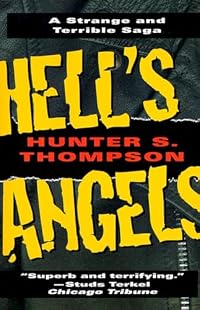
Hell's Angels: The Strange and Terrible Saga of the Outlaw Motorcycle Gangs
by Hunter S. Thompson
On This Page
Description
Gonzo journalist and literary roustabout Hunter S. Thompson flies with the angels—Hell’s Angels, that is—in this short work of nonfiction.“California, Labor Day weekend . . . early, with ocean fog still in the streets, outlaw motorcyclists wearing chains, shades and greasy Levis roll out from damp garages, all-night diners and cast-off one-night pads in Frisco, Hollywood, Berdoo and East Oakland, heading for the Monterey peninsula, north of Big Sur. . . The Menace is loose show more again.”
Thus begins Hunter S. Thompson’s vivid account of his experiences with California’s most notorious motorcycle gang, the Hell’s Angels. In the mid-1960s, Thompson spent almost two years living with the controversial Angels, cycling up and down the coast, reveling in the anarchic spirit of their clan, and, as befits their name, raising hell. His book successfully captures a singular moment in American history, when the biker lifestyle was first defined, and when such countercultural movements were electrifying and horrifying America. Thompson, the creator of Gonzo journalism, writes with his usual bravado, energy, and brutal honesty, and with a nuanced and incisive eye; as The New Yorker pointed out, “For all its uninhibited and sardonic humor, Thompson’s book is a thoughtful piece of work.” As illuminating now as when originally published in 1967, Hell’s Angels is a gripping portrait, and the best account we have of the truth behind an American legend. show less
Tags
Recommendations





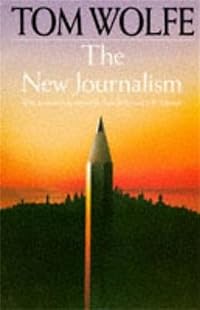
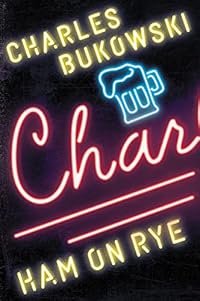
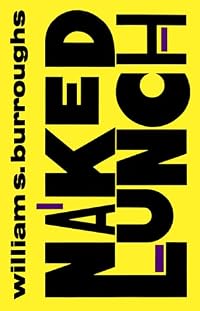
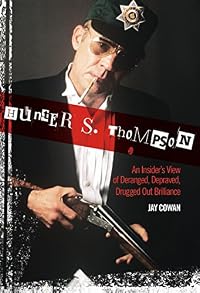
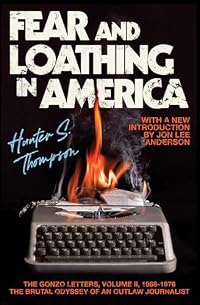
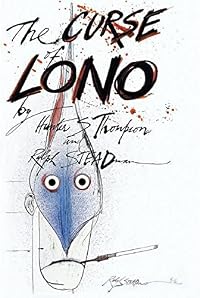
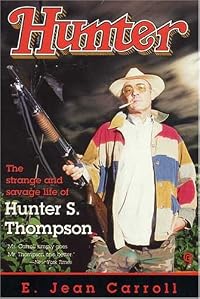
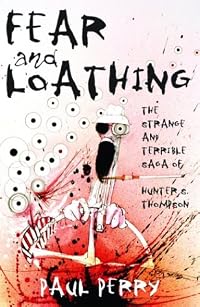


Member Recommendations
Member Reviews
The Hell's Angels is HST at his best, before the booze and the drugs and The Reputation got a hold of him. It made his reputation as the enfante terrible of New Journalism, and holds up today as a look at the fascinating all-American subculture of outlaw bikers. Thompson rode with the Hell's Angels for about two years, hanging out in their drinking holes, attending rallies in small California towns, and introducing them to Ken Kesey and the hip East Bay scene acid scene of 1965.
Thompson depicts the Hell's Angels as they are, crude violent outcasts who achieve a strange kind of grace behind the handlebars of a chopped Harley, and who are hopelessly oppressed by the world in any other situation. The Angels as they are just want to drink, show more fuck, do any drugs they can reach, and ride motorcycles. Sure, they wear ratty jeans literally soaked in motor oil and fight at the slightest provocation, but that's because the world cut them out, so fuck the world.
But where it went wrong is in the period when Thompson was writing this book, the Hell's Angels became famous, subject of the lurid Lynch Report and articles in Time, Newsweek, and the New York Times. They became automotive barbarians, destroying towns and raping innocent women. Cast in the mold of heroic celebrities, their aura of calculated menace curdled. The scene turned bad, with heavy heat from state and local cops, and weird conflicts. In the end, the Angels beat upThompson for some slight and kicked him out for good, but he got one hell of a book out of the whole weird journey. show less
Thompson depicts the Hell's Angels as they are, crude violent outcasts who achieve a strange kind of grace behind the handlebars of a chopped Harley, and who are hopelessly oppressed by the world in any other situation. The Angels as they are just want to drink, show more fuck, do any drugs they can reach, and ride motorcycles. Sure, they wear ratty jeans literally soaked in motor oil and fight at the slightest provocation, but that's because the world cut them out, so fuck the world.
But where it went wrong is in the period when Thompson was writing this book, the Hell's Angels became famous, subject of the lurid Lynch Report and articles in Time, Newsweek, and the New York Times. They became automotive barbarians, destroying towns and raping innocent women. Cast in the mold of heroic celebrities, their aura of calculated menace curdled. The scene turned bad, with heavy heat from state and local cops, and weird conflicts. In the end, the Angels beat upThompson for some slight and kicked him out for good, but he got one hell of a book out of the whole weird journey. show less
Elated to discover that Thompson was rather prolific - a whole career of musings and observations to devour! And so many intriguing literary references to track down. Fraternizing with the Angels whilst their popularity/notoriety dramatically increased, he... eloquently calls the media/police/politicians out on their rampant bullshit while refraining from romanticizing the dregs of society/humanity that make up Hell's Angels. Motorcycle clubs were on the verge of extinction before the general public became entranced following a widely publicized distortion of a run - he's conscious throughout of their simultaneous fascination and revulsion. Sooooooo goooooood.
"There is an important difference between the words 'loser' and 'outlaw'. One show more is passive and the other is active, and the main reasons the Angels are such good copy is that they are acting out the day-dreams of millions of losers who don't wear any defiant insignia and who don't know how to be outlaws. The streets of every city are thronged with men who would pay all the money they could get their hands on to be transformed - even for a day - into hairy, hard-fisted brutes who walk over cops, extort free drinks from terrified bartenders and thunder out of town on big motorcycles after raping the banker's daughter. Even people who think the Angels should all be put to sleep find it easy to identify with them. They command a fascination, however reluctant, that borders on psychic masturbation."
Anyone got a motorcycle I can borrow? His description of riding is still giving me cravings. show less
"There is an important difference between the words 'loser' and 'outlaw'. One show more is passive and the other is active, and the main reasons the Angels are such good copy is that they are acting out the day-dreams of millions of losers who don't wear any defiant insignia and who don't know how to be outlaws. The streets of every city are thronged with men who would pay all the money they could get their hands on to be transformed - even for a day - into hairy, hard-fisted brutes who walk over cops, extort free drinks from terrified bartenders and thunder out of town on big motorcycles after raping the banker's daughter. Even people who think the Angels should all be put to sleep find it easy to identify with them. They command a fascination, however reluctant, that borders on psychic masturbation."
Anyone got a motorcycle I can borrow? His description of riding is still giving me cravings. show less
Thompson's writing is not aging well; he thinks the Hell’s Angels are pathetic and have been made that way by the lack of room in America for anything but a certain square path to acceptable masculinity. But his empathy extends only so far. (Here there’s a lot of rape.) The narrative begins with the Hell’s Angels’ rise to national prominence when two gang rapes were reported at a meetup. Thompson then tells us that one victim was African-American and another was a pregnant white girl, both of which apparently mean that they didn’t get raped. And later, he explains that the charges were dropped, and that they probably consented to the first few men and then freaked out, which both also apparently mean that there was no rape. show more Later, he asserts that all women secretly are at least curious about what it would be like to be raped, and that it’s easy to convict a man for rape of a lower-class woman because she’s not ashamed to reveal the crime the way an upper-class woman is. Then he says that, though he didn’t see any rapes at his Hell’s Angels hangouts, he did see disturbing behavior, such as multiple men having sex with a woman who was too drunk to stand up. Women also appear in a few other roles, such as his hoity-toity neighbor who was scared by the presence of multiple Hell’s Angels in his apartment/on the sidewalk at all hours, which was silly of her because the one time his guests shot out the windows of his apartment (1) that wasn’t the Hell’s Angels and (2) they didn’t hit anything. show less
In the first act, I began to weary of the celebration of violence that seemed to exude from Hunter's paean to Hell's Angels. I either acclimated to the gonzo journalism or something, but I felt I was enjoying a perhaps inadvertant anthropological dimension as Hunter explored such phenonemenon like town takeovers and biker riots which seem as remote as lost Amazon tribes, now. Hell's Angel's seem like one of many criminal organization feature occasionally on Nat Geo Wild and it seems almost quaint to read about their fights and beer parties, insignia and even gang rapes which Hunter keeps returning to. The candid observations of Sonny Barger and disenchantment Hunter experiences until he is listerally stomped our of Hell's Angels show more companionship is a wild ride. show less
Hell’s Angels begins: California, Labor Day weekend . . . early, with ocean fog still in the streets, outlaw motorcyclists wearing chains, shades and greasy Levis roll out from damp garages, all-night diners and cast-off one-night pads in Frisco, Hollywood, Berdoo and East Oakland, heading for the Monterey peninsula, north of Big Sur… The Menace is loose again, the Hell’s Angels, the hundred-carat headline… With a start like that how could you help but be hooked? This is Hunter before Gonzo.
Hunter Thompson’s Hell’s Angels is a fantastically written profile of the outlaw motorcycle club from their postwar origins to their explosion on the public conscious in ’64-’65. It begins with the Angels gaining nation-wide attention show more via a fumbled rape trial and follows the surreal path that led to their interactions and then clashes with Ken Kesey and the counter-culture movement.
Hunter takes an odd stance here. He seems to oscillate between respecting their rebelliousness and really looking down on them as worthless losers. This sort of Yin-Yang of the Hell's Angels follows through the book. They are both repellent and attractive and Hunter does a very good job of sussing out why this is in writing that is compelling and often brilliant. Liberally sprinkled with quotes of contemporary articles, song lyrics and scraps of poetry that fit into the text without distracting.
Hell's Angels is a gritty, classic slice of reportage that manages to entertain in the way good fiction entertains with a gripping narrative and larger-than-life characters. show less
Hunter Thompson’s Hell’s Angels is a fantastically written profile of the outlaw motorcycle club from their postwar origins to their explosion on the public conscious in ’64-’65. It begins with the Angels gaining nation-wide attention show more via a fumbled rape trial and follows the surreal path that led to their interactions and then clashes with Ken Kesey and the counter-culture movement.
Hunter takes an odd stance here. He seems to oscillate between respecting their rebelliousness and really looking down on them as worthless losers. This sort of Yin-Yang of the Hell's Angels follows through the book. They are both repellent and attractive and Hunter does a very good job of sussing out why this is in writing that is compelling and often brilliant. Liberally sprinkled with quotes of contemporary articles, song lyrics and scraps of poetry that fit into the text without distracting.
Hell's Angels is a gritty, classic slice of reportage that manages to entertain in the way good fiction entertains with a gripping narrative and larger-than-life characters. show less
A comprehensive yet breezily-told account of the outlaw motorcycle gang. Thompson remains as objective as possible. The text is split between hard statistical facts, interviews and anecdotes (not in raw form), and sociological theory. These three elements are held together by direct, light prose, told in Thompson's distinctive tone.
There are overriding themes but this seems to be a work without a firm thesis statement -- beyond perhaps the simple "The Hell's Angels exist." Even so, this is an excellent book -- quick, informative, and entertaining.
There are overriding themes but this seems to be a work without a firm thesis statement -- beyond perhaps the simple "The Hell's Angels exist." Even so, this is an excellent book -- quick, informative, and entertaining.
I'd just read Jay Dobyn's extremely exciting and fully-involved
No Angel: My Harrowing Undercover Journey to the Inner Circle of the Hells Angels. Dobyn was an undercover cop whose total immersion in Angels' culture led to him substituting his real life for what was really a job. Because it was so involved, it took me a while to get into Hunter Thompson's cool, cynical, totally-detached own year-long involvement with the Angels, whose beer, drugs and addiction to speed he was happy to share, but the rest was left behind when he drove home to his wife and child.
Although 40 years separate these books there is an enjoyable synchronicity between them - some of Thompson's characters turn up in Dobyn's book, and the philosophy or politics of show more rejection by society's rejects remains the same.
Stunning writing. No padding, every word of every sentence adds to each developing story. Oh to write like that, like an angel....
Damn' good read. show less
No Angel: My Harrowing Undercover Journey to the Inner Circle of the Hells Angels. Dobyn was an undercover cop whose total immersion in Angels' culture led to him substituting his real life for what was really a job. Because it was so involved, it took me a while to get into Hunter Thompson's cool, cynical, totally-detached own year-long involvement with the Angels, whose beer, drugs and addiction to speed he was happy to share, but the rest was left behind when he drove home to his wife and child.
Although 40 years separate these books there is an enjoyable synchronicity between them - some of Thompson's characters turn up in Dobyn's book, and the philosophy or politics of show more rejection by society's rejects remains the same.
Stunning writing. No padding, every word of every sentence adds to each developing story. Oh to write like that, like an angel....
Damn' good read. show less
Members
- Recently Added By
Lists

Non-Fiction Worth Reading
1,015 works; 261 members

To read: Hunter S. Thompson
4 works; 1 member

California Cultural History
23 works; 4 members
Great American Authors
4 works; 1 member

Best of American Literature
146 works; 9 members

1960s, Best books published therein
254 works; 22 members

Books Read in 2024
4,623 works; 126 members

Weirdo Nonfiction
138 works; 3 members

The Complete Rory Gilmore Reading List
506 works; 5 members
Author Information

69+ Works 43,460 Members
Hunter S. Thompson was born on July 18, 1937 in Louisville, Kentucky. At the age of sixteen he was inducted into the Athenaeum Literary Association and wrote for the Athenaeum Journal. During his two years in the US Air Force, Thompson wrote a sports column for The Common Courier. After he was discharged, he moved to New York to work as a copy boy show more at Time Magazine and later moved to San Juan to write for a Puerto Rican bowling magazine. He also reported to the National Observer from South America. Upon his return to the US, Thompson wrote Hell's Angels: A Strange and Terrible Saga, which became a national bestseller and Fear and Loathing in Las Vegas, which was originally published in Rolling Stone magazine. Thompson wrote for Rolling Stone, Playboy, and Esquire. Both Bill Murray and Johnny Depp portrayed Hunter in feature film movies based on his books, Where the Buffalo Roam and Fear and Loathing in Las Vegas, respectively. Hunter S. Thompson committed suicide on February 20, 2005 at his home in Colorado. (Bowker Author Biography) show less
Some Editions
Awards and Honors
Notable Lists
Series
Belongs to Publisher Series
Speed17 (Humanoïdes associés)
Modern Library Giant (isbn)
Work Relationships
Is an expanded version of
Common Knowledge
- Canonical title
- Hell's Angels: The Strange and Terrible Saga of the Outlaw Motorcycle Gangs
- Original title
- Hell's Angels: A Strange and Terrible Saga
- Alternate titles
- Hell's Angels
- Original publication date
- 1966
- People/Characters
- Hunter S. Thompson; Sonny Barger; Tiny; Charger Charley the child molester; Big Frank; Little Jesus (show all 7); The Gimp
- Important places
- California, USA
- Epigraph
- In my own country I am in a far-off land
I am strong but have no force or power
I win all yet remain a loser
At break of day I say goodnight
When I lie down I have a great fear
Of falling.
FRANCOIS VILLON - Dedication
- To the friends who lent me money and
kept me mercifully unemployed. No
writer can function without them. Again,
thanks.
H.S.T. - First words
- California, Labour Day weekend...early, with ocean fog still in the streets, outlaw motorcyclists wearing chains, shades and greasy Levis roll out from damp garages, all-night diners and cast-off one-night pads in Frisco, Hol... (show all)lywood, Berdoo and East Oakland, heading for the Monterey peninsula, north of Big Sur.
- Last words
- (Click to show. Warning: May contain spoilers.)It seemed appropriate, if not entirely just ... but after getting such a concentrated jolt of reality I was not much concerned about justice.
- Original language
- English
- Canonical DDC/MDS
- 364.106609794
Classifications
- Genres
- General Nonfiction, Nonfiction, Biography & Memoir
- DDC/MDS
- 364.106609794 — Society, government, & culture Social problems and social services Crime Criminal offenses Organized Crime Gangsterism Standard subdivisions History, geographic treatment, biography California
- LCC
- HV6489 .C2 .T48 — Social sciences Social pathology. Social and public welfare. Criminology Social pathology. Social and public welfare. Criminology Crimes and offenses
- BISAC
Statistics
- Members
- 5,054
- Popularity
- 2,736
- Reviews
- 45
- Rating
- (3.89)
- Languages
- 14 — Czech, Dutch, English, Finnish, French, German, Hungarian, Italian, Norwegian (Bokmål), Polish, Russian, Spanish, Swedish, Portuguese (Portugal)
- Media
- Paper, Audiobook, Ebook
- ISBNs
- 56
- UPCs
- 1
- ASINs
- 35