
On This Page
Description
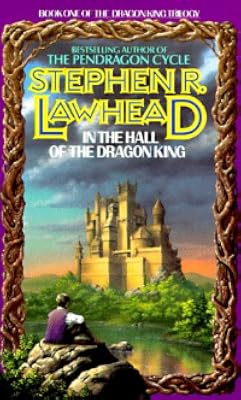
A kingdom hangs in the a young boy answers the call. Carrying a sealed message from the war-hero Dragon King to the queen, Quentin and his outlaw companion, Theido, plunge headlong into a fantastic odyssey and mystic quest. Danger lurks everywhere in the brutal terrain and particularly in the threats from merciless creatures, both human and not-so-human. While at the castle, the wicked Prince Jaspin schemes to secure the crown for himself and an evil sorcerer concocts his own monstrous plan. show more A plan that Quentin and Theido could never imagine. In the youth's valiant efforts to save the kingdom and fulfill his unique destiny, he will cross strange and wondrous lands; encounter brave knights, beautiful maidens and a mysterious hermit; and battle a giant, deadly serpent. show lessTags
Recommendations






Member Reviews
At first I rather liked the clunky attempts at high fantasy which reminded me of an unpolished Anne McCaffrey or Patricia McKillip, and the subtle Christian touches were okay too (after all mythology is mythology whether it's Celtic, Greco-Roman, or Judeo-Christian). But around the halfway mark the proselytizing began with an Epiphany scenario expounding the virtues of the one and only LORD THY GOD complete with heavenly visitations, a baptism, and the book's protagonist essentially being "born again"...and that's when I gave up. I don't really mind a bit of spiritual mumbo-jumbo but when the author almost breaks the fourth wall in order to preach the good news that's my signal to reach for something else to read. Since I didn't finish show more it I can't give it any stars. show less
** spoiler alert ** This book featured "clunky" writing and a rather heavy-handed religious subtext, but in spite of those issues, I enjoyed the story of Quentin and his comrades in their quest to find and free the Dragon King.
What I liked: The Jher, especially Toli, who accompanies Quentin and becomes both his servant and friend. The city of Dekra and the caretakers who are restoring it. Durwin, ex-priest, ex-sorcerer (who still has a few tricks up his sleeve), ever-seeking enlightenment and peace.
What I disliked: The Queen was a bit too unqueenly for me--she adapted to her circumstances marvelously well, but that was unrealistic, even for fantasy. And the revelation at the end, that Bria is her daughter, the Princess--totally show more unbelievable. She never once worried for her safety, nor did anyone else, yet she was left in the castle with Nimrood. I can't believe he would not have used her as a pawn in this power game. (OK, Lawhead never says that Bria is the Eskevar & Alinea's daughter, but she is a Princess of the realm, which would imply that.) show less
What I liked: The Jher, especially Toli, who accompanies Quentin and becomes both his servant and friend. The city of Dekra and the caretakers who are restoring it. Durwin, ex-priest, ex-sorcerer (who still has a few tricks up his sleeve), ever-seeking enlightenment and peace.
What I disliked: The Queen was a bit too unqueenly for me--she adapted to her circumstances marvelously well, but that was unrealistic, even for fantasy. And the revelation at the end, that Bria is her daughter, the Princess--totally show more unbelievable. She never once worried for her safety, nor did anyone else, yet she was left in the castle with Nimrood. I can't believe he would not have used her as a pawn in this power game. (OK, Lawhead never says that Bria is the Eskevar & Alinea's daughter, but she is a Princess of the realm, which would imply that.) show less
This book featured "clunky" writing and a rather heavy-handed religious subtext, but in spite of those issues, I enjoyed the story of Quentin and his comrades in their quest to find and free the Dragon King.
What I liked: The Jher, especially Toli, who accompanies Quentin and becomes both his servant and friend. The city of Dekra and the caretakers who are restoring it. Durwin, ex-priest, ex-sorcerer (who still has a few tricks up his sleeve), ever-seeking enlightenment and peace.
What I disliked: The Queen was a bit too unqueenly for me--she adapted to her circumstances marvelously well, but that was unrealistic, even for fantasy. And the revelation at the end, that Bria is her daughter, the Princess--totally unbelievable. She never once show more worried for her safety, nor did anyone else, yet she was left in the castle with Nimrood. I can't believe he would not have used her as a pawn in this power game. (OK, Lawhead never says that Bria is the Eskevar & Alinea's daughter, but she is a Princess of the realm, which would imply that.)
I liked the story well enough that I will definitely read the rest of the Dragon King trilogy. show less
What I liked: The Jher, especially Toli, who accompanies Quentin and becomes both his servant and friend. The city of Dekra and the caretakers who are restoring it. Durwin, ex-priest, ex-sorcerer (who still has a few tricks up his sleeve), ever-seeking enlightenment and peace.
What I disliked: The Queen was a bit too unqueenly for me--she adapted to her circumstances marvelously well, but that was unrealistic, even for fantasy. And the revelation at the end, that Bria is her daughter, the Princess--totally unbelievable. She never once show more worried for her safety, nor did anyone else, yet she was left in the castle with Nimrood. I can't believe he would not have used her as a pawn in this power game. (OK, Lawhead never says that Bria is the Eskevar & Alinea's daughter, but she is a Princess of the realm, which would imply that.)
I liked the story well enough that I will definitely read the rest of the Dragon King trilogy. show less
This is an early Lawhead book - I think maybe only his second ever. My feeling is that he las learned a great deal since writing this one. These days his descriptions are so much more vivid, his characterisation so much deeper, and he really understands how to put a story together. Another big difference is that these books are fantasy, whereas these days Lawhead writes mostly historical fiction.
The story in this book is not bad. Quentin, an acolyte of the god Ariel, leaves service at his monastry to take a vitally important and urgent message to the queen. This leads him into an adventure to seek out a lost king, and he finds out a good deal more on the way.
Even though the story is not bad, it is not brilliant either. As a story it show more does not compel you to keep reading, and the characters are just a little too wooden to really care about. Whereas much modern fantasy has its genesis in Middle Earth, this book seems to have had its genesis in Narnia. Not that this fnatasy world is at all like Narnia - but you can see the same story ideas in places.
A book for Stephen Lawhead completists only. show less
The story in this book is not bad. Quentin, an acolyte of the god Ariel, leaves service at his monastry to take a vitally important and urgent message to the queen. This leads him into an adventure to seek out a lost king, and he finds out a good deal more on the way.
Even though the story is not bad, it is not brilliant either. As a story it show more does not compel you to keep reading, and the characters are just a little too wooden to really care about. Whereas much modern fantasy has its genesis in Middle Earth, this book seems to have had its genesis in Narnia. Not that this fnatasy world is at all like Narnia - but you can see the same story ideas in places.
A book for Stephen Lawhead completists only. show less
It's been a long time since I've had to force myself to plod through a fantasy novel. I heard that Lawhead is a modern day Lewis and decided to take a chance. Unfortunately, I chose his first book and it really, really shows. From the setting, plot, characters and even dialogue is trite and retread. I began to notice this when I started rooting for the main character to fall into a pit and die a slow, horrible death. That didn't happen. I'll give Lawhead another try; I've heard he's since improved vastly.
The only plus is the reader is introduced to the notion of a god who is actively searching for us.
The only plus is the reader is introduced to the notion of a god who is actively searching for us.
Good if a little formulaic.
I normally like fantasy but did not really enjoy this very much. Plot was really predictable, and pace dragged. I actually had all three books in this series but could not bring myself to read the other two.
Members
- Recently Added By
Lists

CCE 1000 Good Books List
1,033 works; 12 members
Author Information

103 Works 33,828 Members
Novelist Stephen R. Lawhead was born in July 2, 1950 in Kearney, Nebraska. He graduated from Kearney State College. He wrote his first novel, In the Hall of the Dragon King (1982) to try to support his family. This launched his literary career. Many of Lawhead's works are based on Celtic history and Arthurian legend. He has also written children's show more books, adapting many of them from stories he told his children. Lawhead's various series include Bright Empires, The Pendragon Cycle, and the King Raven Trilogy. The second book in the King Raven Trilogy, Scarlet, won a Christy Award in the category of Visionary Fiction. (Bowker Author Biography) show less
Some Editions
Series

Belongs to Publisher Series
Serie Piper (2721)
Work Relationships
Is contained in
Common Knowledge
- Canonical title
- In the Hall of the Dragon King
- Original publication date
- 1982
- People/Characters
- Quentin
- Important places*
- Mensador
- Dedication*
- Für Ress, mein Goldstück, in Liebe
- First words*
- Unberührt funkelte der tiefe, frische Schnee im silbernen Schein des grauenden Himmels.
- Last words*
- (Click to show. Warning: May contain spoilers.)Die sollte, wünschte Quentin sich plötzlich, am besten nie zu Ende gehen.
*Some information comes from Common Knowledge in other languages. Click "Edit" for more information.
Classifications
- Genres
- Fiction and Literature, Fantasy, Christian Fiction
- DDC/MDS
- 813.54 — Literature & rhetoric American literature in English American fiction in English 1900-1999 1945-1999
- LCC
- PZ7 .L41847 .I — Language and Literature Fiction and juvenile belles lettres Fiction and juvenile belles lettres Juvenile belles lettres
- BISAC
Statistics
- Members
- 1,237
- Popularity
- 19,877
- Reviews
- 8
- Rating
- (3.46)
- Languages
- 6 — English, French, German, Hungarian, Italian, Portuguese
- Media
- Paper, Audiobook, Ebook
- ISBNs
- 29
- UPCs
- 4
- ASINs
- 11