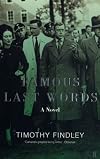
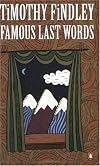
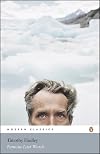
Famous Last Words
by Timothy Findley
On This Page
Description
In the final days of the Second World War, Hugh Selwyn Mauberley scrawls his desperate account on the walls and ceilings of his ice-cold prison high in the Austrian Alps. Officers of the liberating army discover his frozen, disfigured corpse and his astonishing testament -- the sordid truth that he alone possessed. Fascinated but horrified, they learn of a dazzling array of characters caught up in scandal and political corruption. The exiled Duke and Duchess of Windsor, von Ribbentrop, show more Hitler, Charles Lindbergh, Sir Harry Oakes -- all play sinister parts in an elaborate scheme to secure world domination. show lessTags
Recommendations




















Member Reviews
I gather book recommendations in a fairly indiscriminate fashion, from friends, family, acquaintances, strangers I’m introduced to at weddings, other books, libraries, social media, blogs, newspapers, etc. I’ve been doing so for many years. As a consequence, there are books on my To Read list that trigger no memory of why I ever intended to read them, let alone who recommended them to me. ‘Famous Last Words’ is one such mystery. I think it’s been on the list (in its various forms) for at least eight years. Then a few weeks ago I happened upon a copy in a charity shop. It is an odd novel, technically a conspiracy thriller told in a peculiar form of flashback. It begins in the closing weeks of the Second World War, as Allied show more soldiers reach a prestigious hotel to find the corpse of Hugh Selwyn Mauberly. He is known as a Fascist sympathiser and has left a detailed confession written across the walls of three hotel rooms. This tells the tale of a conspiracy involving the former King Edward VIII and his wife, von Ribbentrop, and Charles Lindbergh.
Given this flashback structure, the sense of tension in the novel is erratic. Various moments and events are extremely tense but, ultimately, the reader knows from the start what will happen to Mauberly. Moreover, the stakes regarding the Duke and Duchess of Windsor (who are central to the conspiracy) never seem hugely high in retrospect. Nonetheless, there is a well-developed air of paranoia about the whole thing. Wallis, Duchess of Windsor, is by far the most interesting character seen through Mauberly’s eyes. Mauberly himself does not come off well and his motivations are somewhat baffling. Similarly, the soldiers who find Mauberly’s testament display an interesting variety of perspectives, but Quinn, the other main narrator, remains enigmatic. I found his sympathy for Mauberly hard to understand.
‘Famous Last Words’ reminded me at times of [b:The Magus|16286|The Magus|John Fowles|https://images.gr-assets.com/books/1441323311s/16286.jpg|1816475] (the paranoia, confusion, and sense of events being manipulated by those much more powerful) and [b:Earthly Powers|8822|Earthly Powers|Anthony Burgess|https://images.gr-assets.com/books/1355598044s/8822.jpg|1282899] (the heavy atmosphere of dread and various elements of Mauberly's characterisation). Both are, I think, better structured and more powerful novels, though. (Especially [b:Earthly Powers|8822|Earthly Powers|Anthony Burgess|https://images.gr-assets.com/books/1355598044s/8822.jpg|1282899], which is sublime.) ‘Famous Last Words’ has a neat conceit and some very memorable imagery. However it cannot sustain tension when the reader already knows too much of the ending. Also, Mauberly’s motivations are not clear enough, nor the reader deep enough in his mind, to make him a truly compelling narrator. An unusual novel, though, and there is plenty to enjoy about it. show less
Given this flashback structure, the sense of tension in the novel is erratic. Various moments and events are extremely tense but, ultimately, the reader knows from the start what will happen to Mauberly. Moreover, the stakes regarding the Duke and Duchess of Windsor (who are central to the conspiracy) never seem hugely high in retrospect. Nonetheless, there is a well-developed air of paranoia about the whole thing. Wallis, Duchess of Windsor, is by far the most interesting character seen through Mauberly’s eyes. Mauberly himself does not come off well and his motivations are somewhat baffling. Similarly, the soldiers who find Mauberly’s testament display an interesting variety of perspectives, but Quinn, the other main narrator, remains enigmatic. I found his sympathy for Mauberly hard to understand.
‘Famous Last Words’ reminded me at times of [b:The Magus|16286|The Magus|John Fowles|https://images.gr-assets.com/books/1441323311s/16286.jpg|1816475] (the paranoia, confusion, and sense of events being manipulated by those much more powerful) and [b:Earthly Powers|8822|Earthly Powers|Anthony Burgess|https://images.gr-assets.com/books/1355598044s/8822.jpg|1282899] (the heavy atmosphere of dread and various elements of Mauberly's characterisation). Both are, I think, better structured and more powerful novels, though. (Especially [b:Earthly Powers|8822|Earthly Powers|Anthony Burgess|https://images.gr-assets.com/books/1355598044s/8822.jpg|1282899], which is sublime.) ‘Famous Last Words’ has a neat conceit and some very memorable imagery. However it cannot sustain tension when the reader already knows too much of the ending. Also, Mauberly’s motivations are not clear enough, nor the reader deep enough in his mind, to make him a truly compelling narrator. An unusual novel, though, and there is plenty to enjoy about it. show less
Wow! This was one terrific book. I have a new admiration for Findley's writing and I'm glad I've got Headhunter on the TBR pile.
In this book, Findley has an imaginary person (Hugh Selwyn Mauberley, a person named in a poem by Ezra Pound) tell a story about real people during World War II. The real people include: The Duke and Duchess of Windsor, Ezra Pound, German Foreign Minister van Ribbentrop, German Deputy Leader Rudolf Hess, Canadian millionaire Harry Oakes and the famous pilot, Charles Lindbergh. The premise is that a cabal of people from both sides of the war are planning a new order to rule the Western Hemisphere (at least) after the war. They want the Duke and Duchess of Windsor to be their King and Queen. Mauberley, a friend show more of the Duchess for 20 years, is delegated to get the Duchess on side and keep her there. We know this plot was not successful because at the book starts with Mauberley fleeing to an Austrian hotel towards the end of the war. He writes his story on the hotel walls with a silver pencil. When the Americans get to the hotel, Mauberley and everyone else has been killed although Mauberley still clasps his silver pencil. As you read his story, the details are so realistic that you can't help but wonder if there is some truth to it.
All of the characters, even minor ones, are exquisitely well-drawn. The Duchess is as bitchy as they come but you also can't help but feel sorry for her. Mauberley appears at first to be a dilettante, living on the edge of high society, but as the story progresses he is immersed in the cloak and dagger scheme.
It's a fascinating read and I would recommend it to anyone. show less
In this book, Findley has an imaginary person (Hugh Selwyn Mauberley, a person named in a poem by Ezra Pound) tell a story about real people during World War II. The real people include: The Duke and Duchess of Windsor, Ezra Pound, German Foreign Minister van Ribbentrop, German Deputy Leader Rudolf Hess, Canadian millionaire Harry Oakes and the famous pilot, Charles Lindbergh. The premise is that a cabal of people from both sides of the war are planning a new order to rule the Western Hemisphere (at least) after the war. They want the Duke and Duchess of Windsor to be their King and Queen. Mauberley, a friend show more of the Duchess for 20 years, is delegated to get the Duchess on side and keep her there. We know this plot was not successful because at the book starts with Mauberley fleeing to an Austrian hotel towards the end of the war. He writes his story on the hotel walls with a silver pencil. When the Americans get to the hotel, Mauberley and everyone else has been killed although Mauberley still clasps his silver pencil. As you read his story, the details are so realistic that you can't help but wonder if there is some truth to it.
All of the characters, even minor ones, are exquisitely well-drawn. The Duchess is as bitchy as they come but you also can't help but feel sorry for her. Mauberley appears at first to be a dilettante, living on the edge of high society, but as the story progresses he is immersed in the cloak and dagger scheme.
It's a fascinating read and I would recommend it to anyone. show less
As the Allies sweep through the Austrian Alps in the closing days of WW2, a group of American soldiers encounters a hotel strewn with corpses. One of these is Hugh Selwyn Mauberley, a noted writer later known for his friendship with figures such as the Duke and Duchess of Windsor, and others suspected or known to have fascist leanings. Mauberley has written his life’s story across the walls of the hotel, and it is a story of corruption and faded glamour, not to mention murder—the murder of Sir Harry Oakes.
I read this after reading Murdered Midas, Charlotte Gray’s biography of Harry Oakes, and this combination was interesting. The last couple of parts of the book, the ones with Harry Oakes in them, were more interesting to me for show more that reason. The rest of the book was pretty good, but it was hard going in places. I could of course attribute that to pandemic brain, so if you like the idea of this book, by all means check it out. show less
I read this after reading Murdered Midas, Charlotte Gray’s biography of Harry Oakes, and this combination was interesting. The last couple of parts of the book, the ones with Harry Oakes in them, were more interesting to me for show more that reason. The rest of the book was pretty good, but it was hard going in places. I could of course attribute that to pandemic brain, so if you like the idea of this book, by all means check it out. show less
Having recently completed a biography of Sir Harry Oakes, I decided to re-read this novel by Timothy Findlay in which Oakes plays a role.
Timothy Findlay is one of my favourite authors, and I've read everything he's written. This is a historical novel, looking at a WW2 plot to install the Duke and Duchess of Windsor as monarchy of a new world order. Lots of intrigue, and in Mr. Findlay's hand, a moving story about ambition, love and loyalty.
Timothy Findlay is one of my favourite authors, and I've read everything he's written. This is a historical novel, looking at a WW2 plot to install the Duke and Duchess of Windsor as monarchy of a new world order. Lots of intrigue, and in Mr. Findlay's hand, a moving story about ambition, love and loyalty.
the interplay between egotism and fascism is very well described by this Canadian Novelist. The ambiguous role played by Edward VIII is given the sinister twist and the chilling result is played out by principals and followers alike.
Findley is seriously underrated. This novel beautifully blends history and fiction, weaving together figures like Ezra Pound, the Duke of Windsor, Wallace Simpson, Charles Lindbergh, and Sir Harry Oakes. Moody, absorbing, clever; reading this book is like being submerged - and not wanting to come up for air.
I have read quite a few books about the despicable characters who have open season during a war for their nefarious activities, but this is one of the most notable for absolutely depraved human behaviour. Although the truth of the horror of war in other books is no less strong, somehow in Timothy Findley, it seems so much more direct and real, not remote and foreign.
Members
- Recently Added By
Author Information

34+ Works 7,329 Members
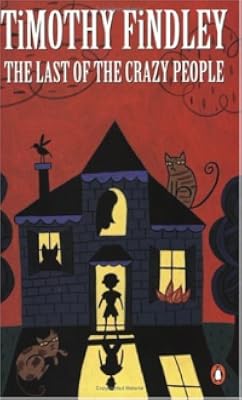
Timothy Findley was born in 1930. A native of Toronto, Canada, novelist and playwright Timothy Findley initially embarked upon an acting career. Findley worked for the Canadian Stratford Festival and later, after study at London's Central School of Speech and Drama, he toured Britain, Europe, and the United States as a contract player. While show more performing in The Matchmaker by Thornton Wilder, Findley was encouraged by the playwright to write fiction. Influenced by film techniques, Findley's first novel, The Last of the Crazy People (1967) is a penetrating look at a family of "emotional cripples" from a child's perspective. With his character Hooker, Findley captures the irrational logic of a child's mind without treating childhood sentimentally.The Butterfly Plague followed in 1969. The Wars (1978), Findley's most successful novel, has been translated into numerous languages and was made into a film. The Wars uses the device of a story-within-a-story to illustrate how a personality transcends elemental forces even while being destroyed by them. In 1981 Famous Last Words was published. This fictionalization of Hugh Selwyn Mauberley by Ezra Pound, a work that was already a "fictional fact," examines fascism. In Not Wanted on the Voyage (1984), Findley rewrites the story of Noah's Ark by giving voices to women, children, workers, animals, and folklore creatures, all of whom question Noah's authority. The novel turns into a parable that seems to challenge imperialism, eugenics, fascism, and any other force that endangers human survival. Again repeating an earlier text, Findley turns to Thomas Mann's Death in Venice to write The Telling of Lies (1986). This novel draws parallels between World War II atrocities and contemporary North America, which Findley sees as a metaphoric concentration camp. Findley died on June 20, 2002 in Provence, France (Bowker Author Biography) show less
Common Knowledge
- Canonical title
- Famous Last Words
- Original publication date
- 1981
- People/Characters
- Hugh Selwyn Mauberly; Wallis Simpson; Edward VIII, Duke of Windsor; Harry Oakes
- Important events
- World War II; Abdication of Edward VIII; Murder of Sir Harry Oakes
- Epigraph
- "... one does not know what one knows, or even what one wishes to know, until one is challenged and must lay down a stake."
Thornton WIlder, The Ides of March - Dedication
- For: Phyllis Webb and
William Whitehead;
Alec McCowen and
Margaret Laurence;
and
in memory of
Thornton Wilder - First words
- When Mauberley was twelve years old, his father took him onto the roof of the Arlington Hotel in Boston and said to him; "I've always loved the view from here. Cambridge across the river. The red bricks of Harvard. . . .The... (show all) Swan Boats in the public garden. The gilded dome on Beacon Hill and all the people walking on the grass. . . ."
- Last words
- (Click to show. Warning: May contain spoilers.)And Quinn dated it: May, 1945.
- Disambiguation notice
- Note that the French translation of this work is titled Le Grand Elysium Hôtel.
Classifications
- Genres
- General Fiction, Fiction and Literature, Historical Fiction
- DDC/MDS
- 813.54 — Literature & rhetoric American literature in English American fiction in English 1900-1999 1945-1999
- LCC
- PR9199.3 .F52 .F3 — Language and Literature English English Literature English literature: Provincial, local, etc.
- BISAC
Statistics
- Members
- 533
- Popularity
- 55,927
- Reviews
- 12
- Rating
- (3.90)
- Languages
- 7 — Dutch, English, Finnish, French, German, Italian, Swedish
- Media
- Paper, Ebook
- ISBNs
- 21
- ASINs
- 2