On This Page
Description
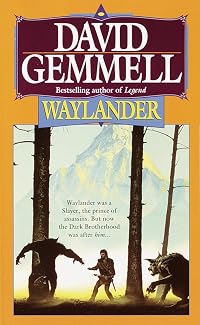
All of Waylander's instincts had screamed at him to spurn the contract from Kaem the cruel, the killer of nations. But he had ignored them. He had made his kill. And even as he went to collect his gold, he knew that he had been betrayed.Now the Dark Brotherhood and the hounds of chaos were hunting him, even as Kaem's armies waged war on the Drenai lands, intent on killing every man, woman, and child. The Drenai soldiers were doomed to ultimate defeat, and chaos would soon reign.
Then a show more strange old man told Waylander that the only way to turn the tide of battle would be for Waylander himself to retrieve the legendary Armor of Bronze from its hiding place deep within a shadow-haunted land. He would be hunted. He was certain to fail. But he must try, the old man commanded--commanded in the name of his son, the king, who had been slain by an assassin...
Waylander was the most unlikely of heroes--for he was a traitor, the Slayer who had killed the king...
. show less
Tags
Recommendations

Member Reviews
One of the best things about Gemmell's books is that the heroes, no matter how flawed, have doubts and fears. They aren't invincible and often they don't think they are heroes, they just do what they do to the best of their ability. This is the 3rd of the Drenai saga, which is my favorite of Gemmell's series. Desperate times call for desperate solutions and Waylander has to go on a quest. Great stuff, great characters.
Substance: Basically, this is a fantasy variation on the military trope that features individual soldiers as "representatives" of particular personalities, although it is both more subtle and more expansive than the usual Hollywood fare. Amid the profane is found the profound, generally argued by the priest-turned-warrior, Dardalion. The protagonist Waylander and others also personify the philosophical question "Can an evil man make restitution with a single unselfish heroic act?" generally resulting in his death, but not always (there is an authorial dispensation for the lead character). Even more, does a good person (pacifist religious in this case) destroy his soul by defending others by killing the wicked? Gemmel answers both show more affirmatively (but see the sequel), but his evil and good are presented in stark, unmistakable characters, which relieves the dilemmas of some of their force. Contains true romance.
Style: More terse than Gemmel's other works in the series, almost in the form of an archetypal tale rather than the more common novelistic narrative, but which fits his subject admirably.
NOTES:
IMO, one good deed does not cancel the lifetime of evil, but allows entry (through the Atonement of Christ) to the post-mortal "reform school" for resurrected souls, so that terminal works of repentance are not "wasted" at the end of life.
Waylander gets more chances than others to demonstrate virtu, as in his choices to (finally) help others and in the companions he willingly chooses.
In re, what difference does it make if the heroes hold the fort (epilogue shows how often those deeds are "cancelled" politically), it doesn't really matter which army or faction wins a particular battle or war (except to the noncombatant populace, since the evil side is much more dangerous to those who survive to live under it), but whether each individual engaged in the fight wins his personal battle against becoming evil (as opposed to practical) in the method of defeating the enemy).
p. ---: Miracles are things that happen when you need them most, and aren't always big or obvious, as shown several times by events, such as the entire sequence of "happenstance" meetings. Waylander complains that the Source doesn't strike down the wolf-men but "only" leads him to a ferry to escape them. show less
Style: More terse than Gemmel's other works in the series, almost in the form of an archetypal tale rather than the more common novelistic narrative, but which fits his subject admirably.
NOTES:
IMO, one good deed does not cancel the lifetime of evil, but allows entry (through the Atonement of Christ) to the post-mortal "reform school" for resurrected souls, so that terminal works of repentance are not "wasted" at the end of life.
Waylander gets more chances than others to demonstrate virtu, as in his choices to (finally) help others and in the companions he willingly chooses.
In re, what difference does it make if the heroes hold the fort (epilogue shows how often those deeds are "cancelled" politically), it doesn't really matter which army or faction wins a particular battle or war (except to the noncombatant populace, since the evil side is much more dangerous to those who survive to live under it), but whether each individual engaged in the fight wins his personal battle against becoming evil (as opposed to practical) in the method of defeating the enemy).
p. ---: Miracles are things that happen when you need them most, and aren't always big or obvious, as shown several times by events, such as the entire sequence of "happenstance" meetings. Waylander complains that the Source doesn't strike down the wolf-men but "only" leads him to a ferry to escape them. show less
David Gemmell's work needs no introduction. He has made an everlasting mark on the fantasy genre with tightly woven tales and outstanding chracterisation. In Waylander Gemmell creates the ultimate antihero. An assassin, a killer of women and children, who uncharacteristically saves the life of a priest. From there onwards his life is thrown in to disarray, and he cannot understand why. Waylander is a story of forgiveness, love and redemption, set in the midst of a chaotic war. The dialogue is outstanding, with Waylander's repartee never deviating from the dry, dark humour he uses from the first chapter. A clever tale of good vs. evil in which the reader will enjoy the journey of several men and women as they traverse the line that show more divides them from the forgiveness of the Source, or everlasting torment in Hell. Thoroughly recommended. show less
Waylander (f/k/a Dakeyras), an apparently heartless assassin, saves a peace-loving Source priest (Dardalion), who is being tortured by some ruffians. Each seems to benefit from the influence of the other as Waylander saves a women and her young charges, rediscovering his humanity along the way whereas Dardalion decides to take up the battle. Together, they help thwart the plans of Kaem to permanently rid the lands of the Drenai forever. Waylander then embarks on a hopeless mission to retrieve a symbolic set of bronze armor to help rally the Drenai. The book does not shy away from depicting the horrors of war and man at his worst (and best.)
This review is written with a GPL 4.0 license and the rights contained therein shall supersede all TOS by any and all websites in regards to copying and sharing without proper authorization and permissions. Crossposted at WordPress, Blogspot & Librarything by Bookstooge’s Exalted Permission
Title: Waylander
Series: Drenai Saga #3
Author: David Gemmel
Rating: 3 of 5 Stars
Genre: Fantasy
Pages: 321
Format: Digital Edition
Synopsis:
The Drenai Empire, forged by an Iron King, is now under the hand of his son. Said son is soft and would rather play at court than make the hard decisions that a King must. The Vagraim have invaded though, just after the King disbanded the Drenai army. The Vagraim hire an assassin who kills the king thus depriving the show more country of one leader to rally around.
The assassin, Waylander, goes to collect his money but is double crossed. In retaliation he kills the son of the Vagraim's most important general. The Vagraim General, Kaem, sends the dark brotherhood after Waylander. At the same time various Drenai forces are after Waylander as well once Kaem releases the fact that Waylander assassinated the king.
Waylander rescues a priest and then a young woman and several children. He is also sent on a mission to find the Armor of Bronze to give to one of the Drenai generals so that said General will become a rallying point. The priest becomes the First of the 30 and Waylander finds the armor. He gets it into the hands of the young woman he rescued and she gets it to the General.
The Vagraim are shattered and Waylander fades into obscurity.
My Thoughts:
This takes place before Legend and is how the Duke of Brass came into being (the Duke of Brass being the General that the armor was delivered to).
Waylander was supposed to be this soulless mercenary but right off the bat he doesn't act like and he and everyone who knows him comments on it. In fact, this book is filled with people suddenly not acting like themselves. There is a lot of pseudo-philosophy talk about the Source and Gemmell even goes so far as to introduce an agent of Chaos that goes by the name Son of the Morning Star, the Arch Deceiver. But all the talk boils down to “I'm the center of the Universe and I have to decide what is right and what is wrong”. If you've never thought about some of the issues raised, then this might appear to be brilliant stuff but once you've done a bit of research into the real philosophy you'll realize how shallow this actually is.
Gemmell definitely has a thing for writing about sieges and multi-walled cities. That idea played a big part here as it has in the previous 2 books.
It has been cemented in my brain now that I would have liked this a lot more 10-15 years ago, even 25. But the time for this series and this author has pretty much passed for me. I've read enough fantasy that was almost exactly like this that I don't need to read more like this. I “can” read more like this, but there is no need.
I'm going to read the next book and if my feelings are exactly the same as this I'll probably be done with Gemmell. Not bad, just no longer good enough for me.
★★★☆☆ show less
Title: Waylander
Series: Drenai Saga #3
Author: David Gemmel
Rating: 3 of 5 Stars
Genre: Fantasy
Pages: 321
Format: Digital Edition
Synopsis:
The Drenai Empire, forged by an Iron King, is now under the hand of his son. Said son is soft and would rather play at court than make the hard decisions that a King must. The Vagraim have invaded though, just after the King disbanded the Drenai army. The Vagraim hire an assassin who kills the king thus depriving the show more country of one leader to rally around.
The assassin, Waylander, goes to collect his money but is double crossed. In retaliation he kills the son of the Vagraim's most important general. The Vagraim General, Kaem, sends the dark brotherhood after Waylander. At the same time various Drenai forces are after Waylander as well once Kaem releases the fact that Waylander assassinated the king.
Waylander rescues a priest and then a young woman and several children. He is also sent on a mission to find the Armor of Bronze to give to one of the Drenai generals so that said General will become a rallying point. The priest becomes the First of the 30 and Waylander finds the armor. He gets it into the hands of the young woman he rescued and she gets it to the General.
The Vagraim are shattered and Waylander fades into obscurity.
My Thoughts:
This takes place before Legend and is how the Duke of Brass came into being (the Duke of Brass being the General that the armor was delivered to).
Waylander was supposed to be this soulless mercenary but right off the bat he doesn't act like and he and everyone who knows him comments on it. In fact, this book is filled with people suddenly not acting like themselves. There is a lot of pseudo-philosophy talk about the Source and Gemmell even goes so far as to introduce an agent of Chaos that goes by the name Son of the Morning Star, the Arch Deceiver. But all the talk boils down to “I'm the center of the Universe and I have to decide what is right and what is wrong”. If you've never thought about some of the issues raised, then this might appear to be brilliant stuff but once you've done a bit of research into the real philosophy you'll realize how shallow this actually is.
Gemmell definitely has a thing for writing about sieges and multi-walled cities. That idea played a big part here as it has in the previous 2 books.
It has been cemented in my brain now that I would have liked this a lot more 10-15 years ago, even 25. But the time for this series and this author has pretty much passed for me. I've read enough fantasy that was almost exactly like this that I don't need to read more like this. I “can” read more like this, but there is no need.
I'm going to read the next book and if my feelings are exactly the same as this I'll probably be done with Gemmell. Not bad, just no longer good enough for me.
★★★☆☆ show less
He is a cold-blooded assassin ready to kill whoever it is needed (but no women and children mind you) for a hefty price. After accepting a job offered by the nation bent on total annihilation of his people (after all, money was good) everything changes: ancient enemy invades, his people are hunted and killed on spot, their cities and villages burned to the ground. There is only one hope left but to achieve the goal he has to embark on a [what looks like at the time] suicide mission. Series of events are triggered that will echo through the years and centuries to follow.
Great story and great characters. If you like heroic fantasy (or fantasy at all) read this one.
Highly recommended
Great story and great characters. If you like heroic fantasy (or fantasy at all) read this one.
Highly recommended
Pre09:
Been a long time. Need to read again, but seemed good at the time.
Oct09:
Read again. Yes, it's still awesome.
Characters: There are more than just Waylander. But of course he's the awesome sauce. Really, the guys in the siege are probably more fleshed out.
Plot: It's there. It's important, and yet it's not. As so many of the characters point out, what they do will only matter for a handful of years. And yet you care about them.
Style: This is a book full of people trying to figure out why they are doing the right thing. A lot of them never figure it out, but that's not really what matters. The actual writing is brief and to the point. It doesn't slow down but it also skims a lot of detail. The ending plays out like a war movie with show more the epilogue just saying what happened to each character. And yet, with all that, it's still an endearing book. show less
Been a long time. Need to read again, but seemed good at the time.
Oct09:
Read again. Yes, it's still awesome.
Characters: There are more than just Waylander. But of course he's the awesome sauce. Really, the guys in the siege are probably more fleshed out.
Plot: It's there. It's important, and yet it's not. As so many of the characters point out, what they do will only matter for a handful of years. And yet you care about them.
Style: This is a book full of people trying to figure out why they are doing the right thing. A lot of them never figure it out, but that's not really what matters. The actual writing is brief and to the point. It doesn't slow down but it also skims a lot of detail. The ending plays out like a war movie with show more the epilogue just saying what happened to each character. And yet, with all that, it's still an endearing book. show less
Members
- Recently Added By
Author Information

85+ Works 31,213 Members
Some Editions
Awards and Honors
Notable Lists
Series


Work Relationships
Common Knowledge
- Canonical title
- Waylander
- Original title
- Waylander
- Original publication date
- 1986-08
- People/Characters
- Waylander / Dakeyras; Dardalion; Orien; Kaem; Dalnor
- Important places*
- Dros Delnoch
- Dedication*
- Dit boek wordt met veel liefde opgedragen aan Dennis en Audrey Ballard, mijn schoonouders, uit dank voor twee decennia vriendschap.
En aan hun dochter Valerie, die mijn wereld op 22 december 1965 voorgoed heeft veranderd. - First words*
- Vanuit de schaduwen keek het monster toe hoe de gewapende mannen met hoog geheven toortsen de duisternis van de bergen binnendrongen.
- Last words*
- (Click to show. Warning: May contain spoilers.)"Laat niemand me zo zien."
- Blurbers*
- McCaffrey, Anne
*Some information comes from Common Knowledge in other languages. Click "Edit" for more information.
Classifications
Statistics
- Members
- 1,567
- Popularity
- 14,589
- Reviews
- 18
- Rating
- (4.05)
- Languages
- 12 — Czech, Dutch, English, French, German, Greek, Hungarian, Italian, Lithuanian, Polish, Spanish, Swedish
- Media
- Paper, Audiobook, Ebook
- ISBNs
- 34
- ASINs
- 13