On This Page
Description
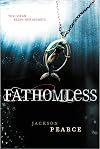
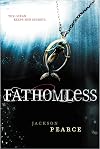
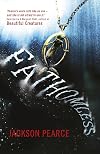
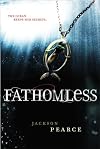
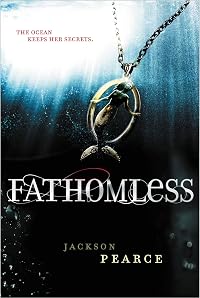
Celia, who shares mental powers with her triplet sisters, finds competition for a handsome boy with Lo, a sea monster who must persuade a mortal to love her and steal his soul to earn back her humanity.Tags
Recommendations



Member Reviews
Lo and Celia are both not normal girls. Lo is a soulless ocean girl with no memory of her previous human life as Naida. She and her ocean sisters wait for the time when the angels will come and take them away. In the meantime, they can try to make human boys love them and drown them to return to get their souls back and return human form, but it has never worked, as far as any of them can remember. Celia and her two sisters are triplets, which is uncommon, but they also have special powers that allow them to see into various aspects of people's lives through touch. Celia considers her power to see into the past is basically useless, but finds purpose when she and Lo meet. They work together to save a boy from drowning. Celia, curious show more about Lo, looks for her later and works to help her remember her human self and how she came to be an ocean girl. They find themselves building relationships with the boy, Jude, and working against each other. Celia wants love, but Lo wants her soul back.
I love fairy tale retellings and Jackson Pearce's have been the best in the genre so far. Fathomless lives up to the rest of her novels and puts a new, dark spin on my favorite fairy tale, The Little Mermaid. The original tale by Hans Christian Andersen has some very dark elements, including the stabbing pain every time the mermaid steps in human form, her option to kill the prince to become a mermaid once again, and the unhappy, weirdly religious ending. Fathomless makes great use of these elements by slightly altering them instead of entirely omitting them like many other retellings. My favorite example of this is the ocean girls waiting to become angels. After they forget who they were and transform into cold ocean beings, an angel comes to free them and makes them into angels. Instead of being something beautiful and redemptive like in the original story, where the mermaid becomes an air spirit to earn her soul after she dies, this transformation is revealed to be something much more nefarious.
The characters and the plot are much more fleshed out than in the original tale. Lo is kind of like two people in one. The Lo personality is a soulless ocean girl, inhuman, cold, and dangerous. The Naida personality tries to hold on to every single human memory discovered with Celia's help. She is desperate to get her life back and return to human form. Celia is my favorite character. She has never really had an identity of her own and lives beneath her sisters' shadows. Lo presents her with a unique opportunity to use her special power to see into people's pasts, which she has always found to be patently useless. Jude became her first friend separate from her sisters and her first date. The romance is organic and sweet and also didn't overpower the story as is typical in YA books. These multidimensional characters really elevate the story and bring it into the modern age.
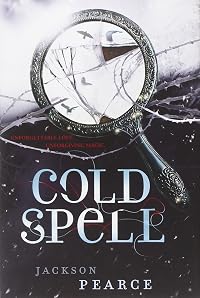
Fathomless is the best retelling of The Little Mermaid I have ever read. I love that Jackson Pearce chose to embrace the darkness of the original story while adding her own spin to it. I also like how it relates to both Sweetly and Sisters Red. I can't wait to read the next book in the series, Cold Spell, a retelling of the Snow Queen. show less
I love fairy tale retellings and Jackson Pearce's have been the best in the genre so far. Fathomless lives up to the rest of her novels and puts a new, dark spin on my favorite fairy tale, The Little Mermaid. The original tale by Hans Christian Andersen has some very dark elements, including the stabbing pain every time the mermaid steps in human form, her option to kill the prince to become a mermaid once again, and the unhappy, weirdly religious ending. Fathomless makes great use of these elements by slightly altering them instead of entirely omitting them like many other retellings. My favorite example of this is the ocean girls waiting to become angels. After they forget who they were and transform into cold ocean beings, an angel comes to free them and makes them into angels. Instead of being something beautiful and redemptive like in the original story, where the mermaid becomes an air spirit to earn her soul after she dies, this transformation is revealed to be something much more nefarious.
The characters and the plot are much more fleshed out than in the original tale. Lo is kind of like two people in one. The Lo personality is a soulless ocean girl, inhuman, cold, and dangerous. The Naida personality tries to hold on to every single human memory discovered with Celia's help. She is desperate to get her life back and return to human form. Celia is my favorite character. She has never really had an identity of her own and lives beneath her sisters' shadows. Lo presents her with a unique opportunity to use her special power to see into people's pasts, which she has always found to be patently useless. Jude became her first friend separate from her sisters and her first date. The romance is organic and sweet and also didn't overpower the story as is typical in YA books. These multidimensional characters really elevate the story and bring it into the modern age.
Fathomless is the best retelling of The Little Mermaid I have ever read. I love that Jackson Pearce chose to embrace the darkness of the original story while adding her own spin to it. I also like how it relates to both Sweetly and Sisters Red. I can't wait to read the next book in the series, Cold Spell, a retelling of the Snow Queen. show less
She did it. Jackson Pearce accomplished what no one else could - a mermaid book that I absolutely loved. It is extremely dark and suffocating, adjectives that I use in the best way possible.
Fathomless switches perspectives between Celia, the youngest in a set of triplets who feels like she doesn't belong with the other two, and Lo who now lives in the ocean and cannot remember her past life on land. Once the novel gets going, however, a third point of view is added. I will not spoil who it is, but I will say that even though it confused me at first, I began to love the internal battle that the third POV adds to the story.
The author completely switches around the happy-go-lucky Ariel type of creature that mermaids are often associated show more with. These girls live in the sea, yes, but there are something very different from that colorful image. For one, they do not have tails, and they do not sing and dance with the other sea creatures. The all came from the land, but they don't care about that any more, they can't even remember it. They are wasting time until they become old and can finally drift away and join the angels who made them this way... but what if the eternal life they always believed in is not what is waiting for them at the other side?
Celia, her sisters, and her new relationship with Jude are all very interesting and I liked reading about it, but they are really just a vessel to learn more about Lo. As Celia's relationship progresses with Jude, Lo's personality splits in two: one side who is friends with Celia and the other who is dangerous and blood thirsty.
I also loved how closely this installment connected to Sweetly. Although these novels are companions and do not have to be read together, I would strongly recommend reading Sweetly before Fathomless. The connections to Sweetly made me happy and got me very interested in where the plot was going. however, if I were to read Fathomless before Sweetly, I feel that some of the plot points in Sweetly would have been ruined. Fathomless definitely connects to Sweetly more than Sweetly connected to Sisters Red.
If you have also be slighted by the lack of interesting and well-written mermaid novels, I would love to meet you so I could shove this novel into your hands. Seriously, read it. I tried to explain it here, but I feel like I failed to express how much I loved this novel. show less
Fathomless switches perspectives between Celia, the youngest in a set of triplets who feels like she doesn't belong with the other two, and Lo who now lives in the ocean and cannot remember her past life on land. Once the novel gets going, however, a third point of view is added. I will not spoil who it is, but I will say that even though it confused me at first, I began to love the internal battle that the third POV adds to the story.
The author completely switches around the happy-go-lucky Ariel type of creature that mermaids are often associated show more with. These girls live in the sea, yes, but there are something very different from that colorful image. For one, they do not have tails, and they do not sing and dance with the other sea creatures. The all came from the land, but they don't care about that any more, they can't even remember it. They are wasting time until they become old and can finally drift away and join the angels who made them this way... but what if the eternal life they always believed in is not what is waiting for them at the other side?
Celia, her sisters, and her new relationship with Jude are all very interesting and I liked reading about it, but they are really just a vessel to learn more about Lo. As Celia's relationship progresses with Jude, Lo's personality splits in two: one side who is friends with Celia and the other who is dangerous and blood thirsty.
I also loved how closely this installment connected to Sweetly. Although these novels are companions and do not have to be read together, I would strongly recommend reading Sweetly before Fathomless. The connections to Sweetly made me happy and got me very interested in where the plot was going. however, if I were to read Fathomless before Sweetly, I feel that some of the plot points in Sweetly would have been ruined. Fathomless definitely connects to Sweetly more than Sweetly connected to Sisters Red.
If you have also be slighted by the lack of interesting and well-written mermaid novels, I would love to meet you so I could shove this novel into your hands. Seriously, read it. I tried to explain it here, but I feel like I failed to express how much I loved this novel. show less
4.75ish.
This was one of my more highly anticipated books of last year (because hello? Fairy tale freak. This is not news to anyone.), and it's sort of shameful that I am just not posting a written review. (Though yes, I did have a mini vlogged one here: http://youtu.be/D4shoOJPOZs?t=7m4s. But still.) I feel like I've talked about this book a lot, but nothing's all official-like until I write about it. So.
This was my favorite Jackson Pearce book to date. I've enjoyed everything I've read by her, but there's always been something a teensy bit off for me, especially in her endings. As short as her books are, they seem to lose steam a bit at the end, which is disappointing on its own, of course, but more so considering how much I enjoy show more them up to the steam-loss. But while Fathomless isn't perfect by any means, its come the closest to being exactly what I wanted from it. It has this really good dark streak that is perfectly suited to both the original tale and to the world Pearce has set up in her retellings series. There's this quality of a car crash in remarkably slow motion, a great sense of foreboding over the whole story, that creates excellent tension, and Pearce uses that to get at the unhappiness and emptiness at the core of The Little Mermaid - and is it weird to say I was so very happy to see that? This aspect is one of the things I potentially love most about a fairy tale retelling (especially one as dark as TLM(1)), but it's also often one of the most disappointing and neglected aspects. Modern audiences are so out of touch with original fairy tales that retellings that make use of the actual endings and tones are considered novel and creative, rather than traditional. We've been Disneyfied, and I'm on a tangent, so I'm going to rein myself in and just wrap that up by saying, I love it when a retelling is more traditionally bleak(2)... Fortunately Pearce capitalizes on it, to which I say THANK GOD. This is what I wanted from a TLM retelling. It's a little off. It's a little disturbing. Perfect.
A big part of what makes this work is the characters. The sisters and the romance are means to an end, but the "3" main characters (one of them being a 2-in-1 deal...) are what make this story what it is. How they interact with/react to each other and their colliding worlds, and how they use each other to make sense of their lives - and in a desperate attempt to break away from the things holding them back - is what gives this story that car-crash feeling. It's impossible for them to all get what they want, to all have their HEA(3), but you're made to care for each of them, damaged as they are. And so you know pain is coming, and it's simply a matter of degrees... It leaves you a little conflicted(4) because you both see flaws and feel sympathy for each of them, which makes things excellently ambiguous. Add to this an overall dark tone and sort of desperate, lonely, magical atmosphere with not all of the loose ends tied up, and you've got a book nicely calculated to make for Happy Mistys.(5)
This complements the rest of the series very well, but can also be read completely as a standalone, which is excellent for readers wanting who've been wanting to pick these up, or even just Fathomless specifically, but weren't sure about making a series committment. Though all of the stories are linked, and they will expand the readers understanding of the rest, they work perfectly as potential companion novels to be read on their own. You don't have to feel tied down by them, or obligated to read them (to know what's going on or to have closure), which is something I really like from a series of this type. So if you've liked Pearce in the past or have been wanting to give her a try, I think you can't really go wrong with Fathomless.
1. Originally, of course. I love me some Alyssa Milano-Ariel as much as the next 80s kid, but in case you didn't know, Disney changed the story a whole lot. Like, it's actually a real bummer...
2. Ok, nothing's going to keep me from sounding weird, so whatever. I like the sad, tortured feels.†
3. Happily Ever After.
4. Unless you don't root for non-humans, maybe? I'm not always Team Human.
5. 1 out of 1 Mistys agree.
† What's this? A note within a note? Yeah, I only like those feels in fairy tales. Add 'em to some YA PNR and I might have to cut you. show less
This was one of my more highly anticipated books of last year (because hello? Fairy tale freak. This is not news to anyone.), and it's sort of shameful that I am just not posting a written review. (Though yes, I did have a mini vlogged one here: http://youtu.be/D4shoOJPOZs?t=7m4s. But still.) I feel like I've talked about this book a lot, but nothing's all official-like until I write about it. So.
This was my favorite Jackson Pearce book to date. I've enjoyed everything I've read by her, but there's always been something a teensy bit off for me, especially in her endings. As short as her books are, they seem to lose steam a bit at the end, which is disappointing on its own, of course, but more so considering how much I enjoy show more them up to the steam-loss. But while Fathomless isn't perfect by any means, its come the closest to being exactly what I wanted from it. It has this really good dark streak that is perfectly suited to both the original tale and to the world Pearce has set up in her retellings series. There's this quality of a car crash in remarkably slow motion, a great sense of foreboding over the whole story, that creates excellent tension, and Pearce uses that to get at the unhappiness and emptiness at the core of The Little Mermaid - and is it weird to say I was so very happy to see that? This aspect is one of the things I potentially love most about a fairy tale retelling (especially one as dark as TLM(1)), but it's also often one of the most disappointing and neglected aspects. Modern audiences are so out of touch with original fairy tales that retellings that make use of the actual endings and tones are considered novel and creative, rather than traditional. We've been Disneyfied, and I'm on a tangent, so I'm going to rein myself in and just wrap that up by saying, I love it when a retelling is more traditionally bleak(2)... Fortunately Pearce capitalizes on it, to which I say THANK GOD. This is what I wanted from a TLM retelling. It's a little off. It's a little disturbing. Perfect.
A big part of what makes this work is the characters. The sisters and the romance are means to an end, but the "3" main characters (one of them being a 2-in-1 deal...) are what make this story what it is. How they interact with/react to each other and their colliding worlds, and how they use each other to make sense of their lives - and in a desperate attempt to break away from the things holding them back - is what gives this story that car-crash feeling. It's impossible for them to all get what they want, to all have their HEA(3), but you're made to care for each of them, damaged as they are. And so you know pain is coming, and it's simply a matter of degrees... It leaves you a little conflicted(4) because you both see flaws and feel sympathy for each of them, which makes things excellently ambiguous. Add to this an overall dark tone and sort of desperate, lonely, magical atmosphere with not all of the loose ends tied up, and you've got a book nicely calculated to make for Happy Mistys.(5)
This complements the rest of the series very well, but can also be read completely as a standalone, which is excellent for readers wanting who've been wanting to pick these up, or even just Fathomless specifically, but weren't sure about making a series committment. Though all of the stories are linked, and they will expand the readers understanding of the rest, they work perfectly as potential companion novels to be read on their own. You don't have to feel tied down by them, or obligated to read them (to know what's going on or to have closure), which is something I really like from a series of this type. So if you've liked Pearce in the past or have been wanting to give her a try, I think you can't really go wrong with Fathomless.
1. Originally, of course. I love me some Alyssa Milano-Ariel as much as the next 80s kid, but in case you didn't know, Disney changed the story a whole lot. Like, it's actually a real bummer...
2. Ok, nothing's going to keep me from sounding weird, so whatever. I like the sad, tortured feels.†
3. Happily Ever After.
4. Unless you don't root for non-humans, maybe? I'm not always Team Human.
5. 1 out of 1 Mistys agree.
† What's this? A note within a note? Yeah, I only like those feels in fairy tales. Add 'em to some YA PNR and I might have to cut you. show less
Imagine you couldn’t decide between pizza, Chinese food, or burritos for dinner. Would you just give in and have some of all three or would you decide to have one on each of three separate occasions? In this young adult paranormal fantasy, it seems as if the author has analogously opted to have everything at once.
There are at least three separate paranormal plots going on in this book and they don't really don’t seem to go together at all. We have a sisterhood of girls who live underwater, we have a set of triplets each with a different extrasensory skill, and we have a third (and the most bizarre plot line of all) group of beings that I won’t discuss much because it may be spoilery.
The story is told in alternate chapters by Lo show more (one of the sea sisters) and Celia (one of the triplets). Both of them are attracted to a boy Jude for no apparent reason except they like his eyes. In between trying to make time with Jude, the girls tell their stories – at least to the extent they know them, which isn’t a lot. Lo has no idea who she used to be or how she got to be a sea sister, but believes in the legend decreeing that she needs to kill a boy who loves her in order to return to human form and retrieve her soul:
"Make him love you, kiss him, drown him. Earn his soul, and you get your humanity back – the escape from the ocean that the older girls told her about on her very first day.”
(In all other respects, these sea sisters aren’t dumb. But here, they are convinced that grabbing a boy and asking this total stranger as they try to drown him “Do you love me?”, will inspire the boy to do so. This seems unbelievably silly, even for sea nymphs without the power to check Wikipedia for verification.…)
Celia has the power to see a person’s past. This gift has always made her feel useless, especially vis-à-vis her other two sisters’ gifts, but now Lo’s need to know who she used to be offers her a chance to redeem herself.
The third plot line, involving a mysterious scarred man who may or may not be an angel, is not as central, but always looms over the other two.
The author seems to want to be saying something about sisters, but the story is so contradictory I can’t tell what it is. Are sisters the ultimate good or the ultimate evil? Lo herself is a huge contradiction, with a personality that flips as much as a mermaid tail (which the sea sisters do not have, by the way). Some of that flipping is part of the plot, but some of it seems like the author herself got confused. And Jude is a nobody. He provides nothing whatsoever to the plot except to be a focal point for Celia and Lo.
Evaluation: This story is definitely intended as a dark retelling of "The Little Mermaid" by Hans Christian Andersen but that’s about the only “definite” thing I can say about this book. On the author’s website, I learned that this book is a “companion book” to Sisters Red and Sweetly, but there is absolutely no indication of that anywhere on or in the book itself. Maybe this book would have made more sense to me had I read the earlier books, but I just thought this book was a bit of a mess. The different segments don’t mesh, and we get only the barest of explanations about what happened to one character in one aspect of her life, but not any whys or wherefores for the whole paranormal mishmash generally. show less
There are at least three separate paranormal plots going on in this book and they don't really don’t seem to go together at all. We have a sisterhood of girls who live underwater, we have a set of triplets each with a different extrasensory skill, and we have a third (and the most bizarre plot line of all) group of beings that I won’t discuss much because it may be spoilery.
The story is told in alternate chapters by Lo show more (one of the sea sisters) and Celia (one of the triplets). Both of them are attracted to a boy Jude for no apparent reason except they like his eyes. In between trying to make time with Jude, the girls tell their stories – at least to the extent they know them, which isn’t a lot. Lo has no idea who she used to be or how she got to be a sea sister, but believes in the legend decreeing that she needs to kill a boy who loves her in order to return to human form and retrieve her soul:
"Make him love you, kiss him, drown him. Earn his soul, and you get your humanity back – the escape from the ocean that the older girls told her about on her very first day.”
(In all other respects, these sea sisters aren’t dumb. But here, they are convinced that grabbing a boy and asking this total stranger as they try to drown him “Do you love me?”, will inspire the boy to do so. This seems unbelievably silly, even for sea nymphs without the power to check Wikipedia for verification.…)
Celia has the power to see a person’s past. This gift has always made her feel useless, especially vis-à-vis her other two sisters’ gifts, but now Lo’s need to know who she used to be offers her a chance to redeem herself.
The third plot line, involving a mysterious scarred man who may or may not be an angel, is not as central, but always looms over the other two.
The author seems to want to be saying something about sisters, but the story is so contradictory I can’t tell what it is. Are sisters the ultimate good or the ultimate evil? Lo herself is a huge contradiction, with a personality that flips as much as a mermaid tail (which the sea sisters do not have, by the way). Some of that flipping is part of the plot, but some of it seems like the author herself got confused. And Jude is a nobody. He provides nothing whatsoever to the plot except to be a focal point for Celia and Lo.
Evaluation: This story is definitely intended as a dark retelling of "The Little Mermaid" by Hans Christian Andersen but that’s about the only “definite” thing I can say about this book. On the author’s website, I learned that this book is a “companion book” to Sisters Red and Sweetly, but there is absolutely no indication of that anywhere on or in the book itself. Maybe this book would have made more sense to me had I read the earlier books, but I just thought this book was a bit of a mess. The different segments don’t mesh, and we get only the barest of explanations about what happened to one character in one aspect of her life, but not any whys or wherefores for the whole paranormal mishmash generally. show less
A loose retelling of The Little Mermaid. Lo lives in the water but doesn't remember how she got there. Legend states that if she or her mermaid sisters can make someone love them and take their soul, they'll become human again. Celia and her sisters (triplets) have the power to see a person's past, present, or future. When Lo saves a boy from drowning with help from Celia, Celia "reads" Lo's past and sees that she was once a human named Naida. As Lo/Naida starts to remember more of her human self with Celia's help, she starts to long to become human again, but doesn't like her options for doing so.
I love mermaids. I love murderous mermaids even more, but this book fell flat somewhere for me. I read all 3 of Pearce's fairy tale retellings right in a row, and while I genuinely enjoyed all of them, each one left me disappointed and feeling as if something were missing. The fact that I don't know what the missing bit is bothers me a lot. I honestly don't know what would have made it feel more like a fairy tale, feel more.....full? I don't know the best word. Just that something (for me) was lacking. This one more so than the other two, which with my love for mermaids, might have added to my disappointment. I liked this the least of the three, Sweetly was my favorite, Sisters Red next and than this one. I think part of what I didn't show more enjoy in this one was the way she wrote the triplets. In the other two books, she wrote sibling relationships better, or we saw more of their relationships. In this novel, we only saw Celia and barely saw her interact with her sisters in a way that showed much of substance. The way they grew up really only with each other could have been explored more. I get that it wasn't the crux of the novel, but it made it feel slightly superficial and cliche.
I did enjoy both Nadia and Lo's POVs and liked the differences of their mind working against each other. The ocean girls/mermaids mythology that Pearce created was interesting.
I did like the book, I sped right through it, I was invested in knowing what happened to the characters, but it didn't speak to my soul or whatever. The problem, why I think I feel more disappointed in it than I normally would, is that all the books I've been reading lately have been just that, average. I enjoy them, but I'm not getting wrapped up in them. I need to get wrapped up in a story again. JFC do I ever.
I don't want this to sound too negative, its well written, and an interesting take on mermaids, and a nice quick read. show less
I did enjoy both Nadia and Lo's POVs and liked the differences of their mind working against each other. The ocean girls/mermaids mythology that Pearce created was interesting.
I did like the book, I sped right through it, I was invested in knowing what happened to the characters, but it didn't speak to my soul or whatever. The problem, why I think I feel more disappointed in it than I normally would, is that all the books I've been reading lately have been just that, average. I enjoy them, but I'm not getting wrapped up in them. I need to get wrapped up in a story again. JFC do I ever.
I don't want this to sound too negative, its well written, and an interesting take on mermaids, and a nice quick read. show less
This story had so much potential...
Inspired by 'The Little Mermaid,' but with a contemporary setting, I hoped the book would have something to say about cruelty and love... I felt that it started out promising; but quickly degenerated into an aggravating teen romance.
There are two main characters:
Celia is a human girl, one of an orphaned set of triplets. She and her sisters have psychic powers, which they mainly use to tease and torment local boys. Celia wants to assert her own identity, but her sisters pressure her to think of herself as part of a unit.
Naida, aka Lo, is a mermaid. However, she and the other mermaids in her group are not a natural phenomenon. Although they all seem to suffer from amnesia, it's hinted quite early on that show more they all used to be human girls, until something happened to them. (Don't hold your breath waiting to find out what exactly happened to them, or why, because you will not find out.)In the very last scene of the book, there's a sort of half-explanation rushed in, which seems to have something to do with EVIL WEREWOLVES(?) creating the mermaids as a sort of transition stage to them becoming shapeshifters? Eh, what? Why? It was very random.
When a teen boy trips and falls into the water, nearly drowning, both Celia and Lo rush to save him (well, with a few complications), and they meet. Celia hopes to help Lo recover her lost memories, and they strike up a sort of friendship.
They also both develop a totally inexplicable fascination with the nearly-drowned boy (who is boring and has nothing I can see going for him to warrant a crush) and a dull teenage love triangle develops.
I wanted more heartless cruelty, more exploration of all the complex issues raised by the original 'Little Mermaid' story, and more logic. show less
Inspired by 'The Little Mermaid,' but with a contemporary setting, I hoped the book would have something to say about cruelty and love... I felt that it started out promising; but quickly degenerated into an aggravating teen romance.
There are two main characters:
Celia is a human girl, one of an orphaned set of triplets. She and her sisters have psychic powers, which they mainly use to tease and torment local boys. Celia wants to assert her own identity, but her sisters pressure her to think of herself as part of a unit.
Naida, aka Lo, is a mermaid. However, she and the other mermaids in her group are not a natural phenomenon. Although they all seem to suffer from amnesia, it's hinted quite early on that show more they all used to be human girls, until something happened to them. (Don't hold your breath waiting to find out what exactly happened to them, or why, because you will not find out.)
When a teen boy trips and falls into the water, nearly drowning, both Celia and Lo rush to save him (well, with a few complications), and they meet. Celia hopes to help Lo recover her lost memories, and they strike up a sort of friendship.
They also both develop a totally inexplicable fascination with the nearly-drowned boy (who is boring and has nothing I can see going for him to warrant a crush) and a dull teenage love triangle develops.
I wanted more heartless cruelty, more exploration of all the complex issues raised by the original 'Little Mermaid' story, and more logic. show less
Members
- Recently Added By
Lists

Little Mermaid Retellings, Variations, and Adaptations
32 works; 3 members
Author Information

20+ Works 3,702 Members
Awards and Honors
Awards
Series

Common Knowledge
- Canonical title
- Fathomless
Classifications
Statistics
- Members
- 212
- Popularity
- 154,453
- Reviews
- 14
- Rating
- (3.63)
- Languages
- English
- Media
- Paper, Ebook
- ISBNs
- 7
- ASINs
- 3