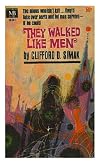
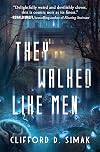
They Walked Like Men
by Clifford D. Simak
On This Page
Description
A reporter uncovers a terrifying conspiracy, in this thrilling classic from a Science Fiction Grand Master. After a night out on the town, Parker Graves returns home to life-threatening danger. The science reporter for the local newspaper barely misses a bear trap sitting on his doorstep. Then, the object transforms into what looks like a bowling ball and rolls off into the night all by itself. He begins to obsess over the question-Who put the trap there? And why? The following day, there is show more strange news floating around at the newspaper office. Someone with limitless funds is buying up hundreds of homes and businesses, only to close them up and tear them down. People are running out of places to live and to work. Suddenly, Parker finds himself in the middle of a story nobody will believe . . . Aliens? Dolls that walk like people? Talking dogs? With a little help from a fellow reporter and an unusual visitor, Parker just might be able to put a stop to this mess-if he survives. "Some surprising jolts of violence and mayhem and a goodly dollop of cosmic paranoia." -Fantasy Literature During his fifty-five-year career, CLIFFORD D. SIMAK produced some of the most iconic science fiction stories ever written. Born in 1904 on a farm in southwestern Wisconsin, Simak got a job at a small-town newspaper in 1929 and eventually became news editor of the Minneapolis Star-Tribune, writing fiction in his spare time. Simak was best known for the book City, a reaction to the horrors of World War II, and for his novel Way Station. In 1953 City was awarded the International Fantasy Award, and in following years, Simak won three Hugo Awards and a Nebula Award. In 1977 he became the third Grand Master of the Science Fiction and Fantasy Writers of America, and before his death in 1988, he was named one of three inaugural winners of the Horror Writers Association's Bram Stoker Award for Lifetime Achievement. show lessTags
Recommendations














Member Reviews
3.25
"'Have you noticed, mister,' said the cabby, by way of starting conversation, 'how the world has gone to hell?'"
The core premise is scary in an unusually grounded way for an alien invasion novel. The aliens invade, but on man's terms. Disguising themselves as human, "legally" buying up all the land, and forcing people out of their homes; monopolising earth to a point that man has nowhere to go and the planet can eventually be sold off to a third party.
Economic abnormalities are also the inciting incident in another Simak book, Ring Around the Sun, although they take a different form and the source and motive of it all is very different. I prefer Ring Around the Sun, but it works well here too. Simak has a few tropes he often show more revisits (benevolent aliens, parallel universes, time travel, strange events disrupting small-town comfort), and I think sometimes it can make his novels predictable. Only a couple of those can be found here though, and (relatively uncommon for him) the alien force is sinister, which is refreshing.
Our protagonist is a newspaperman, as was Simak. Considering the latter is not known for his characters, I feel like his occupation maybe had a part to play in the tangibility of the faces on display here. No, they are not three-dimensional pillars of depth, but there are a handful with characteristics that make them... characters. More than just names on a page. Which is unfortunately rare in the sci-fi genre (of course, there are plenty of cardboard cutouts to accompany them as well). I also think that when Simak is writing in the environment of a paper office, it feels real. There is an atmosphere, a vibe. I credit the tangibility here to the experience he must have drawn from.
It's not his best writing, but very readable. During the first half, the prose and dialogue is snappy and pulpy. A little dry sometimes, but it carries the narrative at a relatively good pace.
The middle act felt a bit dragged out at points, but the setup is intriguing. The third act becomes a bit exposition-heavy, but also has more of Simak's token pastoral style coming through, which I enjoyed. The ending is on the cusp of Deus Ex Machina but narrowly dodges that criticism by dropping in sufficient foreshadowing earlier on. Still, it comes across as very convenient and less than satisfying.
Overall, not Simak's best or most engrossing, but far from his worst and certainly worth reading. Most of its strengths lie in the ideas at play and the initial build-up before our enemy is fully unmasked. As soon as things start to get a bit more whimsical, I think it loses its way a bit. I was never bored though, and the writing made for a pleasant read regardless.
I backed away across the room from the terror that writhed behind the door, with horror welling in me - the bubbling, effervescent horror that can only come when a man's own home develops fangs against him.
And even as the horror chilled me, I argued with myself - for this was the sort of thing that simply could not happen. A man's chair may develop fangs and snap him up as he bends to sit in it; his scatter rugs may glide treacherously from beneath his feet; his refrigerator may lie in ambush to topple over on him; but the closet is the place where nothing of the sort can happen. For the closet is a part of the man himself. It is the place where he hangs up his artificial pelts, and as such it is closer to him, more intimate with him than any room within his dwelling place.
But even as I told myself that it could not happen, even as I charged it all against an upset imagination, I could hear the rustling and the sliding and the frantic stealth that was going on behind the closet door. show less
"'Have you noticed, mister,' said the cabby, by way of starting conversation, 'how the world has gone to hell?'"
The core premise is scary in an unusually grounded way for an alien invasion novel. The aliens invade, but on man's terms. Disguising themselves as human, "legally" buying up all the land, and forcing people out of their homes; monopolising earth to a point that man has nowhere to go and the planet can eventually be sold off to a third party.
Economic abnormalities are also the inciting incident in another Simak book, Ring Around the Sun, although they take a different form and the source and motive of it all is very different. I prefer Ring Around the Sun, but it works well here too. Simak has a few tropes he often show more revisits (benevolent aliens, parallel universes, time travel, strange events disrupting small-town comfort), and I think sometimes it can make his novels predictable. Only a couple of those can be found here though, and (relatively uncommon for him) the alien force is sinister, which is refreshing.
Our protagonist is a newspaperman, as was Simak. Considering the latter is not known for his characters, I feel like his occupation maybe had a part to play in the tangibility of the faces on display here. No, they are not three-dimensional pillars of depth, but there are a handful with characteristics that make them... characters. More than just names on a page. Which is unfortunately rare in the sci-fi genre (of course, there are plenty of cardboard cutouts to accompany them as well). I also think that when Simak is writing in the environment of a paper office, it feels real. There is an atmosphere, a vibe. I credit the tangibility here to the experience he must have drawn from.
It's not his best writing, but very readable. During the first half, the prose and dialogue is snappy and pulpy. A little dry sometimes, but it carries the narrative at a relatively good pace.
The middle act felt a bit dragged out at points, but the setup is intriguing. The third act becomes a bit exposition-heavy, but also has more of Simak's token pastoral style coming through, which I enjoyed. The ending is on the cusp of Deus Ex Machina but narrowly dodges that criticism by dropping in sufficient foreshadowing earlier on. Still, it comes across as very convenient and less than satisfying.
Overall, not Simak's best or most engrossing, but far from his worst and certainly worth reading. Most of its strengths lie in the ideas at play and the initial build-up before our enemy is fully unmasked. As soon as things start to get a bit more whimsical, I think it loses its way a bit. I was never bored though, and the writing made for a pleasant read regardless.
I backed away across the room from the terror that writhed behind the door, with horror welling in me - the bubbling, effervescent horror that can only come when a man's own home develops fangs against him.
And even as the horror chilled me, I argued with myself - for this was the sort of thing that simply could not happen. A man's chair may develop fangs and snap him up as he bends to sit in it; his scatter rugs may glide treacherously from beneath his feet; his refrigerator may lie in ambush to topple over on him; but the closet is the place where nothing of the sort can happen. For the closet is a part of the man himself. It is the place where he hangs up his artificial pelts, and as such it is closer to him, more intimate with him than any room within his dwelling place.
But even as I told myself that it could not happen, even as I charged it all against an upset imagination, I could hear the rustling and the sliding and the frantic stealth that was going on behind the closet door. show less
It’s the early nineteen sixties and some very peculiar things are going on. Newspaper reporter Parker Graves comes home one night to discover a strange semicircular patch cut out of the carpet in front of his apartment door. When he gets down to examine it he finds a thin piece of paper the color of the carpet is there and when be picks it up he sees a trap beneath it. Astonished he jumps back, but even as he does he sees its jaws wilting then something like a bowling ball comes out of the hole that’s opened up and rolls right towards him. Fortunately, the black ball misses him and goes tumbling down the staircase towards the first floor. The whole incident is so bizarre, that he wonders if he had a bit too much to drink at the bar show more after work that evening.
But the next morning the semicircular cut in the carpet is still there. Graves goes to work and the talk is all about a press conference that’s been called by the largest department store in the city, and some odd story about middle class people searching for a new home for months and not finding anything, not even a vacant motel room. The shock is that the large family owned department store has been sold, and the new owner plans to close the business and leave the building vacant. Something strange is happening in the real estate market. Sales are being made all over the area at good prices, but when the former owners leave with cash in hand, no one else is moving in.
When Parker investigates these purchase, what he discovers is an extraterrestrial takeover of the city and the planet is in progress, of course, no one but his fellow report Joy believes him, and she only after the aliens start circling her home to intimidate her. This time the invaders insist that they are doing everything legally in their hostile takeover of the planet. They’ve paid good money to purchase U.S. Steel and everything else they’ve been buying. It’s not an invasion, it’s just legitimate real estate. Legitimate, aside from getting rid of some nosey people that get in their way.
A newspaper man himself, Simak starts out with something like a horror tale as the characters discover the inhuman plot and their frustration at their inability to get anyone to believe them. Then when frantic attempts to confront the aliens, interrupted by several exciting chase scenes, fail the ending resolves into a pastoral escape and a spectacular if stinky conclusion. show less
But the next morning the semicircular cut in the carpet is still there. Graves goes to work and the talk is all about a press conference that’s been called by the largest department store in the city, and some odd story about middle class people searching for a new home for months and not finding anything, not even a vacant motel room. The shock is that the large family owned department store has been sold, and the new owner plans to close the business and leave the building vacant. Something strange is happening in the real estate market. Sales are being made all over the area at good prices, but when the former owners leave with cash in hand, no one else is moving in.
When Parker investigates these purchase, what he discovers is an extraterrestrial takeover of the city and the planet is in progress, of course, no one but his fellow report Joy believes him, and she only after the aliens start circling her home to intimidate her. This time the invaders insist that they are doing everything legally in their hostile takeover of the planet. They’ve paid good money to purchase U.S. Steel and everything else they’ve been buying. It’s not an invasion, it’s just legitimate real estate. Legitimate, aside from getting rid of some nosey people that get in their way.
A newspaper man himself, Simak starts out with something like a horror tale as the characters discover the inhuman plot and their frustration at their inability to get anyone to believe them. Then when frantic attempts to confront the aliens, interrupted by several exciting chase scenes, fail the ending resolves into a pastoral escape and a spectacular if stinky conclusion. show less
A highly entertaining novel with a very unique alien invasion. (A gentle satire on slavish devotion to capitalism.) The story moved quickly. As usual, Simak does an excellent job of portraying his desperate, doubting protagonist. The usual Simak touches are there: the lovely rural settings, the gentle animal characters, and the strange aliens. As usual, science and technology are not crucial to the story. Simak barely gives an explanation for his bowling ball aliens’ mode of transportation. Here, his aliens are harder edged than usual. They actually kill people here.
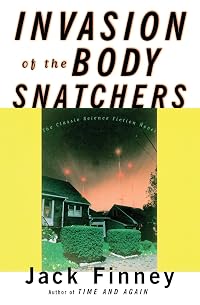
This is good old fashion "aliens among us" fun. Well written as you expect from Simak. If you liked The Body Snatchers by Jack Finney, you will probably like this one. As usual there is Simak oddness to the story. I really liked this one.
Excellent book. Extremely funny (not sure if that was his intention or not, but it was). I love the way Simak took ordinary things, like bowling balls and dolls and dogs, and turned them into things not so ordinary. The book flows completely from beginning to end (although the end is rather abrupt). Parker and Joy almost made alien hunting seem fun!
http://iamagirldork.livejournal.com/17351.html
http://iamagirldork.livejournal.com/17351.html
First book of 2007! Very good book. The ending was typical of the early 60's, and could have been better, but iIf you like this era of SciFi, I wholdhartedly recommend it.
Simak and encounters with aliens, what fun.
Members
- Recently Added By
Author Information

389+ Works 25,408 Members
Series
Belongs to Publisher Series
Work Relationships
Common Knowledge
- Canonical title
- They Walked Like Men
- Original title
- They Walked Like Men
- Alternate titles*
- Eux qui marchent comme des hommes
- Original publication date
- 1962 - Penguin edition [1962]
- Blurbers
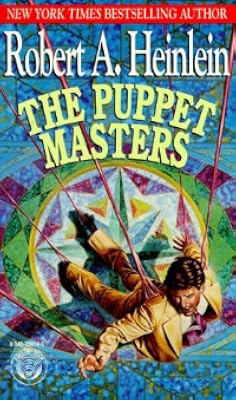
- Heinlein, Robert A.
*Some information comes from Common Knowledge in other languages. Click "Edit" for more information.
Classifications
Statistics
- Members
- 471
- Popularity
- 64,819
- Reviews
- 11
- Rating
- (3.55)
- Languages
- 9 — Bulgarian, Dutch, English, French, German, Italian, Portuguese, Russian, Swedish
- Media
- Paper, Ebook
- ISBNs
- 16
- ASINs
- 28