On This Page
Description
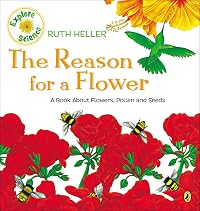
Brief text and lavish illustrations explain plant reproduction and the purpose of a flower and present some plants which don't seem to be flowers but are.Tags
Recommendations





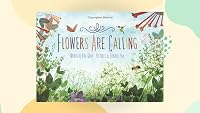
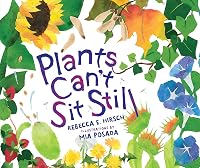

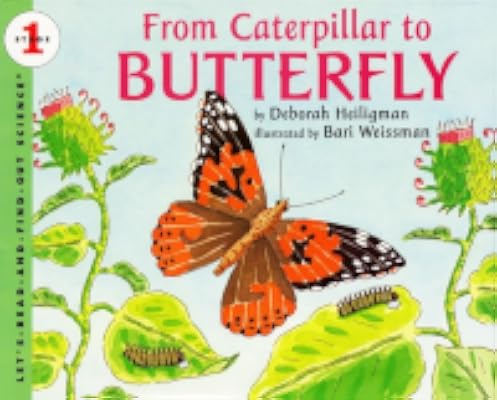
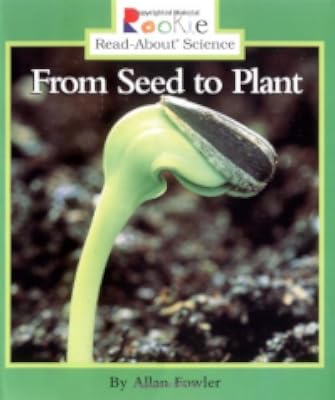





Member Reviews
The illustrations in this book are phenomenal and Heller very gently intorduces the reader to the concepts of the plant life cycle. Every page has the ability to generate multiple questions and launch many discussions, from science to artwork. The text is written as a poem and in itself can be worth a study.
I liked this book for a few reasons. There were very few words on each page, making it easy for young readers to get through this book. This book is written so that the last lines on a page, or every few pages depending on how much text is on the page, rhyme. This adds a playful vibe that young readers will really enjoy and can even help students remember the information they are learning. I also really liked that the key vocabulary words, like anther, pistil, seeds, flower, nectar, and many others were written in all capital letters to point out their importance. Herbivorous, carnivorous, and angiosperm were written in capital letters and broken apart by syllables for easier pronunciation. This book also features many beautiful show more illustrations of different kinds of flowers, insects, animals, and trees that aid in the discussion of how flowers are important in our world. My only complaints are that the font is a little small, making it hard to see with so few words with large pictures on the page and I wish there was a glossary in the back to define terms. Overall, this book provides a great explanation to what makes a flower important to the world while still being enjoyable to read. show less
The author combines fun, fact and even a few surprises about all kinds of flower and seeds, and takes an insightful look as well at where animals fit in- including animals that eat the plant and the plants that eat animals.
It's the amazing and detailed drawn vegetation that truly makes this book come alive to a child. It's all too real and keenly drawn as an observer would, which inspires a child to use their best lens of observing their natural world. Simply said without the illustrations, in this book the book would flop. I believe a child will come to respect their surround environment of nature from the detailed art that guides them to do so, off the pages.
The Reason for a Flower is a great informational book for young children. The words are rhyme and the illustrations are beautiful. The book dicusses different animals that eat plants, pollen, seeds, roots, and various plants and what they use for food. I read this book to my K boys during our spring theme as a beginning discussion for author's purpose. They remarked that the author wrote this "to teach us about flowers in a fun way." We were able to search through the text and pick out information inside to confirm that Heller wrote this to inform young readers (in a fun way).
The reason for a flower is to manufacture seeds, but Ruth Heller shares a lot more about parts of plants and their functions in her trademark rhythmic style. "[An] extravagantly beautiful creation. It is unusual in its ingenious way of teaching botany and interesting words to the littlest of readers." -- Publishers Weekly "Ms. Heller's colors and drawings are as electrifying as ever."
Nice early book to learn about flowers. Ruth Heller’s illustrations are splendid.
Members
- Recently Added By
Author Information

82+ Works 20,295 Members
Series

Work Relationships
Has as a commentary on the text
Common Knowledge
- Original publication date
- 1983
Classifications
Statistics
- Members
- 2,549
- Popularity
- 7,480
- Reviews
- 28
- Rating
- (4.07)
- Languages
- English, French, Spanish
- Media
- Paper
- ISBNs
- 20
- UPCs
- 1
- ASINs
- 7