On This Page
Description
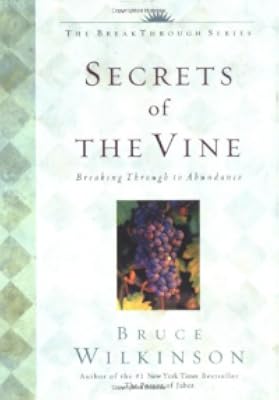
In this powerful follow-up to his bestseller The Prayer of Jabez, Dr. Bruce Wilkinson explores John 15 to show readers how to make maximum impact for God. Wilkinsondemonstrates how Jesus is the Vine of life, discusses four levels of "fruit-bearing" (doing the good work of God), and reveals three life-changing truths that will lead readers to new joy and effectiveness in His kingdom. Secrets of the Vine opens reader's eyes to the Lord's Hand in their lives and uncovers surprising insights show more that will point them toward a new path of consequence for God's glory. show lessTags
Recommendations





























Member Reviews
Similar to Wilkinson's previous book "The Prayer of Jabez," this book ("Secrets of the Vine") is short and to the point. Reading the entire book in one sitting, I felt it read like a sermon -- a study on the text and its application on John 15.
Throughout the book, Wilkinson presents clearly on how to achieve an abundant life as taught by Jesus. The author talks frankly and shares his (and others') life experiences. Indeed, God deals with his children progressively based on the season of the child's life. I believe the book is theologically sound with a strong sense of evangelicalism.
If you are "chart" person, you will probably find the chart in chapter 5 (compare and contrast of disciplining and pruning) is surprisingly helpful.
Throughout the book, Wilkinson presents clearly on how to achieve an abundant life as taught by Jesus. The author talks frankly and shares his (and others') life experiences. Indeed, God deals with his children progressively based on the season of the child's life. I believe the book is theologically sound with a strong sense of evangelicalism.
If you are "chart" person, you will probably find the chart in chapter 5 (compare and contrast of disciplining and pruning) is surprisingly helpful.
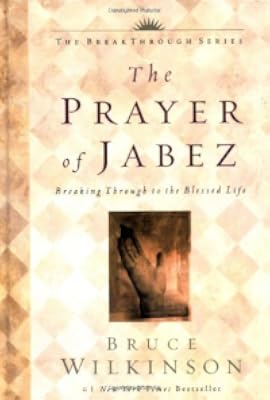
Eipphany-OviedoELCA library section 5: Devotions and Prayer. This book explores John 15, explaining why Jesus is the vine of life, and the four levels of "fruit-bearing," or doing the good work of God. It's a helpful analogy. I find it makes more religious sense than Wilkinson's other book, The Prayer of Jabez.
As much as I don't want to recomend the Jabez series, I thought this book had something healthy to offer.
Jim Hatchet: An amazing story of Jesus teaching his Disciples in the Garden of Gethsemane. Would recommend to anyone seeking inspiration. 2022-09-04
Are you ready to break through to the abundant life? Is it time to trade in mediocrity for a life of consequence? Do you want to experience the joy of making maximum impact for God? Join Bruce Wilkinson for a journey through John 15. Find out why Jesus is the Vine of life and explore the four levels of "fruit bearing." You'll learn three surprising secrets that will open your eyes to your unrealized potential in Him...starting today!
Bruce Wilkinson examines John 15 in the New Testament of the Bible and interprets the chapter as a promise from Jesus to his followers of physical, emotional, and spiritual abundance.
The author explores the four levels of "fruit bearing" found in John 15, which enable believers to open their eyes to the unrealized potential of in a life hid in Christ.
Members
- Recently Added By
Author Information

227+ Works 18,886 Members
Dr. Bruce H. Wilkinson is the founder and president of Walk Thru the Bible Ministries C. Michael Dudash is a freelance artist and illustrator. His oil paintings have won him a national reputation and numerous awards from The Society of Illustrators (NYC and LA), The Society of Publication Designers, Communication Arts, Art Direction, and How show more magazines show less
Some Editions
Awards and Honors
Series

Classifications
Statistics
- Members
- 2,525
- Popularity
- 7,653
- Reviews
- 16
- Rating
- (3.41)
- Languages
- English, French, German, Spanish
- Media
- Paper, Audiobook, Ebook
- ISBNs
- 23
- ASINs
- 13