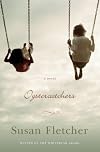
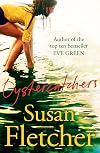
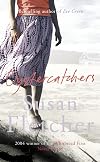
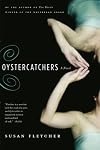
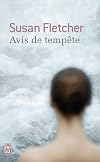
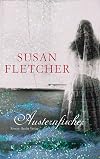
Oystercatchers
by Susan Fletcher
On This Page
Description
The second novel from highly acclaimed young writer Susan Fletcher, author of the award-winning 'Eve Green' Amy lies in a coma. Her older sister, Moira, comes to her in the evenings, sits beside her in a green-walled hospital room. Here, Moira confesses. She admits to her childhood selfishness which deeply hurt her family and to the self-imposed exile from the dramatic Welsh coast that had dominated and captivated her childhood; to her savagery at boarding school; to the wild, bitter and show more destructive heart that she carried into her adult life. Moira knows this: that she's been a poor daughter, and a deceptive wife. But it is as Amy lies half-dying that she sees the real truth: she's been a cruel sister, and it is this cruelty that has led them both here, to this hospital bed. A novel about trust, loss and loneliness, 'Oystercatchers' is a love story with a profound darkness at its core. show lessTags
Recommendations




















Member Reviews
I stretched the reading of this book over almost a month, grabbing a chapter while doing the laundry, resting between the packing of boxes, or trying to forget how long the wait has been for my furniture to arrive at my new home. It deserved so much more. It deserved a slow, consistent read and a mind clear of all that jingle-jangling. Still, even in these adverse reading circumstances, it was magic every time I opened the covers.
If I haven’t already told you, I am in love with the poetic, lyrical sorcery of Susan Fletcher. She rates among the best writers I know. She was a gift from my friend Candi, and one I took far too much time to open. I am always grateful that I finally did.
Now about show more [b:Oystercatchers|1216100|Oystercatchers|Susan Fletcher|https://i.gr-assets.com/images/S/compressed.photo.goodreads.com/books/1356445092l/1216100._SY75_.jpg|1204565]. When the book begins, we find Moira Stone sitting at the bedside of her younger sister, Amy, who is in a coma from an accident, and there is the immediate sense that there is something troubling in this sibling relationship that will be revealed and that the accident will be more than just that to Moira herself. What ensues is a life story, Moira’s.
I found Moira quite unlikeable at times, and so vulnerable and alone at others that I could not help understanding and loving her. She is all too human, and all too afraid of her own emotions and those of others; she is virtually unknown to everyone who should know her best, including her younger sister, who only sees and worships her from a distance. The story is mesmerizing, and since it is Moira’s and told by her, we must read between the lines and try to follow her bouncing thoughts to places she doesn’t really mean to lead us.
One of Fletcher’s themes, for me, would be betrayal of trust. How easily it is damaged, how hard to rebuild, and once we lose trust in one person, how difficult to establish it with someone else. And, it does not matter if that trust is damaged by an intentional act, for we often betray others without knowing we have done so and with the kindest of intentions.
And I did trust him. I trusted him like I trusted the sky to stay about my head, and the kettle to sing, and everything he ever told me was true, because why should I doubt him? I believed that starfish could grow new limbs, and gannets swam like white fishes, and mermaids were real, and babies were gifts, and pirates sailed in splintery boats, and that moonlight survived in a jar.
Along with serious themes and infinite quotable passages, there is just the absolute loveliness of Fletcher’s language.
Have you seen an evening sea, at high tide, as snow is coming? Stood on a cliff with that strange, slow light and the gulls that wheel, but do not call, as if they sense it, too, and have you looked down to the sea, where waves are ghostly-looking, with an Arctic blueness to them, and the cove is full of white, hissing water, and their foam scuds on beaches, and you can smell it--the snow? You feel aware. You know the sea’s power, and your own, an evening like this.
Finally, this is a book about loss, about memory, about the quality of a life and its briefness.
The tinsel, and the lollipop she gave to every Curie girl on their birthdays--me included. Did I ever tell you that? Swirled, red-and-white. These things have gone, and will not be remembered for long. A generation keeps such things alive. But who will know these things in a century’s time? Who knows them now?
And, about the wisdom of living it well.
I believe the world is as we choose to view it. Simple as that. Our happiness is, in the end, up to us, and no one else. show less
If I haven’t already told you, I am in love with the poetic, lyrical sorcery of Susan Fletcher. She rates among the best writers I know. She was a gift from my friend Candi, and one I took far too much time to open. I am always grateful that I finally did.
Now about show more [b:Oystercatchers|1216100|Oystercatchers|Susan Fletcher|https://i.gr-assets.com/images/S/compressed.photo.goodreads.com/books/1356445092l/1216100._SY75_.jpg|1204565]. When the book begins, we find Moira Stone sitting at the bedside of her younger sister, Amy, who is in a coma from an accident, and there is the immediate sense that there is something troubling in this sibling relationship that will be revealed and that the accident will be more than just that to Moira herself. What ensues is a life story, Moira’s.
I found Moira quite unlikeable at times, and so vulnerable and alone at others that I could not help understanding and loving her. She is all too human, and all too afraid of her own emotions and those of others; she is virtually unknown to everyone who should know her best, including her younger sister, who only sees and worships her from a distance. The story is mesmerizing, and since it is Moira’s and told by her, we must read between the lines and try to follow her bouncing thoughts to places she doesn’t really mean to lead us.
One of Fletcher’s themes, for me, would be betrayal of trust. How easily it is damaged, how hard to rebuild, and once we lose trust in one person, how difficult to establish it with someone else. And, it does not matter if that trust is damaged by an intentional act, for we often betray others without knowing we have done so and with the kindest of intentions.
And I did trust him. I trusted him like I trusted the sky to stay about my head, and the kettle to sing, and everything he ever told me was true, because why should I doubt him? I believed that starfish could grow new limbs, and gannets swam like white fishes, and mermaids were real, and babies were gifts, and pirates sailed in splintery boats, and that moonlight survived in a jar.
Along with serious themes and infinite quotable passages, there is just the absolute loveliness of Fletcher’s language.
Have you seen an evening sea, at high tide, as snow is coming? Stood on a cliff with that strange, slow light and the gulls that wheel, but do not call, as if they sense it, too, and have you looked down to the sea, where waves are ghostly-looking, with an Arctic blueness to them, and the cove is full of white, hissing water, and their foam scuds on beaches, and you can smell it--the snow? You feel aware. You know the sea’s power, and your own, an evening like this.
Finally, this is a book about loss, about memory, about the quality of a life and its briefness.
The tinsel, and the lollipop she gave to every Curie girl on their birthdays--me included. Did I ever tell you that? Swirled, red-and-white. These things have gone, and will not be remembered for long. A generation keeps such things alive. But who will know these things in a century’s time? Who knows them now?
And, about the wisdom of living it well.
I believe the world is as we choose to view it. Simple as that. Our happiness is, in the end, up to us, and no one else. show less
In the interview with Susan Fletcher at the back of my copy, she says that she worried about creating an unlikable character in Moira in Oystercatchers. She tells us Moira is, 'complex, bitter and self-absorbed' and yes she is. This is a book about sibling rivalry and Moira is almost a teenager when her younger sister is born. Having been an only child for so long it is not surprising that she chose to punish her parents for bringing another child into her perfect world on the south coast of Wales. This novel is Moira's tale, at boarding school and later living in Norfolk with her husband. Moira is bullied at school and is very much alone but isn't without feelings. She is a troubled teenager. Susan Fletcher makes much of how Moira show more shunned her family and generally gives her a hard time, I feel more sympathetic to her and think much of her behaviour is understandable. Susan Fletcher does push the reader though and Moira's actions become less excusable. Much of the novel is Moira talking to her younger sister, telling her story. At different times she uses the first and third person to add to the confusion. It took a long time for oystercatchers to turn up in this novel but they did! show less
The story is told within the framework of Moira filling in Amy, her sister, on her life while Amy is in a coma. Amy has been in a coma for over four years. For most of the book, one isn't sure how her fall on to the rocks occurred but I leaned towards thinking it was intentional instead of accidental. We're never really told exactly what happens or how it happens. When we get up to the time in Moira's telling of the fall, the fall seemed decidedly accidental to me then. Reading the book, I didn't keep waiting for Amy to wake from her coma because the story is more in Moira's reflecting on her life than the story of what happened to Amy.
So why is Moira telling Amy, who is her sister, the story of her life? Amy was born when Moira was 11 show more years old and Moira views Amy as a betrayal of her already completed family unit. Moira goes away to boarding school, which changes the course of her life, and rarely writes, talks to, or sees her family. She cannot stand her sister. The coma brings about change.
Moira sees herself as so different, in a bad way, a wrong way, from the others. She is shocked at someone falling in love with her. In the end, she finds she can answer to herself how someone could love her as she is.
The writing is detail worded and picture-able. I think I read somewhere that the author was still in her 20s when she wrote this, which increased my view of the book in some ways. A major theme is water and it's imagery. And water and light. Also, imagery of nature and the country side.
I did not expect to like this book but I did. There was one flaw for me. Something occurred in the last part of the book which I didn't like. But thinking about it as I moved on in the book, I could see it was in character of Moira and it furthered her. Fletcher wrote one other book before this one and I plan on reading it. show less
So why is Moira telling Amy, who is her sister, the story of her life? Amy was born when Moira was 11 show more years old and Moira views Amy as a betrayal of her already completed family unit. Moira goes away to boarding school, which changes the course of her life, and rarely writes, talks to, or sees her family. She cannot stand her sister. The coma brings about change.
Moira sees herself as so different, in a bad way, a wrong way, from the others. She is shocked at someone falling in love with her. In the end, she finds she can answer to herself how someone could love her as she is.
The writing is detail worded and picture-able. I think I read somewhere that the author was still in her 20s when she wrote this, which increased my view of the book in some ways. A major theme is water and it's imagery. And water and light. Also, imagery of nature and the country side.
I did not expect to like this book but I did. There was one flaw for me. Something occurred in the last part of the book which I didn't like. But thinking about it as I moved on in the book, I could see it was in character of Moira and it furthered her. Fletcher wrote one other book before this one and I plan on reading it. show less
Much of this book covers the period in a girl's life when she leaves home in Wales and goes to boarding school in south east England. But I don't think this is so much a coming of age book as it is a book about relationships, betrayal and guilt. The school years 'merely' give us the background and context for the significant events that follow. I liked the book for its recognition of the complexity of relationships - marriage relationships, relationships between siblings, and adult-child relationships. Fletcher writes in what I (in my ignorance) would call a poetic style. Thoughtful, contemplative, deep. This was a random pick from my library's shelves. I had never heard of Susan Fletcher before, but now I'd like to read more of her work.
Sixteen-year-old Amy is in a coma. Her sister, Moira, sits beside her telling her about how sorry she is to not have been a better person, or sister, and is seeking forgiveness. She feels it's her fault that Amy is in hospital and is seeking redemption through her conversations with her. Moira talks about how unkind she has been in her life and the cruelties that she has committed. However, life hasn't always been good to her either and she has suffered at the hands of other people. Moira was an only child until the age of 11, and felt abandoned when Amy came into her life. Shut away at boarding school her resentment grew. She had to cope with the torments of her roommates and led a lonely life until she met the guy who was to become show more her husband. We also meet Aunt Matilda, who is another lonely character, who is filled with a sense of false happiness and is desperate for love but never quite finding it.
This is a dark tale of envy, loss, loneliness and betrayal, with love and trust being the most desired of all the emotions.
Susan Fletcher spins a story so fluidly that she makes me feel as if I am sitting beside her listening, rather than reading the words from a page. She has a wonderful way of drawing the reader in with her opening sentences and leaving them unable to put the book down. show less
This is a dark tale of envy, loss, loneliness and betrayal, with love and trust being the most desired of all the emotions.
Susan Fletcher spins a story so fluidly that she makes me feel as if I am sitting beside her listening, rather than reading the words from a page. She has a wonderful way of drawing the reader in with her opening sentences and leaving them unable to put the book down. show less
This is a beautifully written, lyrical book. Unfortunately, the writing is also so slow and deliberate that I almost couldn't stand it. What little drama or action there was in the book was almost completely overwhelmed by the ponderous writing.
This is a great book about loss and guilt and in a slow and lovely language that is poetic and warm. When you read it, you can smell the sea and you can almost touch the persons in the book. Even when I did not read, I was completely 'living' in the book. I never have read a book like this before, it is fantastic.
Members
- Recently Added By
Lists

Best Books With Sisters
130 works; 30 members
Author Information

8 Works 1,939 Members
Susan Fletcher is a British novelist who was born in 1979 in Birmingham. She attended the University of York where she earned her BA in English. She later went to the University of East Anglia where she earned her MA in Creative Writing. In 2004 she published her first novel, Eve Green, which is a story about an eight year old girl who is sent to show more Wales to start a new life. It won the 2004 Whitbread First Novel Award, the Authors' Club Award and the Betty Trask Prize. Her novel Witch Light won the Saint Maur en Poche award 2013 in France. In 2018 she released her seventh novel, Hour of Glass. (Bowker Author Biography) show less
Common Knowledge
- Canonical title
- Oystercatchers
- Original publication date
- 2007-08-06
- People/Characters
- Moira Stone-Cole; Ray Cole; Miriam Stone; George Stone; Amy Stone; Til Stone
- Important places
- Stackpole, Pembrokeshire, Wales, UK; Locke School, Norfolk, England, UK; Cley-next-the-sea, Norfolk, England, UK
- Dedication
- For Guy
- First words
- I dream of water, even now.
- Last words
- (Click to show. Warning: May contain spoilers.)I think of you.
- Blurbers
- Berg, Elizabeth; Briscoe, Joanna
Classifications
Statistics
- Members
- 237
- Popularity
- 137,917
- Reviews
- 12
- Rating
- (3.62)
- Languages
- 5 — English, Finnish, French, German, Italian
- Media
- Paper, Ebook
- ISBNs
- 22
- ASINs
- 3