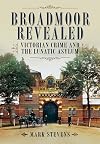
Broadmoor Revealed: Victorian Crime and the Lunatic Asylum
by Mark Stevens
On This Page
Description
A fascinating introduction to the history of Broadmoor: Kate Summerscale, author of The Suspicions of Mr Whicher.On 27 May 1863, three coaches pulled up at the gates of a new asylum, built amongst the tall, dense pines of Windsor Forest. Broadmoors first patients had arrived.In Broadmoor Revealed, Mark Stevens writes about what life was like for the criminally insane, over one hundred years ago. From fresh research into the Broadmoor archives, Mark has uncovered the lost lives of patients show more whose mental illnesses led them to become involved in crime.Discover the five women who went on to become mothers in Broadmoor, giving birth to new life when three of them had previously taken it. Find out how several Victorian immigrants ended their hopeful journeys to England in madness and disaster. And follow the numerous escapes, actual and attempted, as the first doctors tried to assert control over the residents.As well as bringing the lives of forgotten patients to light, this thrilling book reveals new perspectives on some of the hospital's most famous Victorian residents: Edward Oxford, the bar boy who shot at Queen Victoria. Richard Dadd, the brilliant artist and murderer of his own father. William Chester Minor, veteran of the American Civil War who went on to play a key part in the first Oxford English Dictionary. Christiana Edmunds, The Chocolate Cream Poisoner and frustrated lover from Brighton.Broadmoor Revealed became the most popular history e-book of 2011, and now this new expanded and revised edition celebrates the Hospital's 150th anniversary. show lessTags
Recommendations





















Member Recommendations

Member Reviews
While this is just a cursory glance at Broadmoor lunatic asylum patients, this is still a fascinating read. Dr. Miner is included, but of course his life and involvement with OED is better detailed in its own book. Here we have details on would-be assassins, mother infanticides, a chronology of detailed escapes, and the birth and fate of various babies born at Broadmoor. A good history of the "pleasure men" and "pleasure women" found criminally insane and held by the crown until the majesty's "pleasure" be known.
My first ever Kindle read – and what a cracking one! I love books that deal with social history and I love the Victorian period so what’s not to love! Stevens writes about cases using Broadmoor’s archive. Cases include those of Victorian artist Richard Dabb and ‘the chocolate poisoner’, Christiana Edmunds.
Dabb was featured on a programme Jeremy Paxman did on BBC1 a few years ago called 'The Victorians' about artists and art of that period, which was an excellent series, so it was nice to read a bit more about him. Dadd, thought now to be suffering from paranoid schizophrenia, murdered his father and fled to France, where he was quickly captured. He remained institutionalised for the remainder of his life.
Christiana Edmunds show more turned poisoner after the married doctor she was having a relationship with broke off that relationship – first she tried poisoning the doctor’s wife and then began buying chocolates from a shop in Brighton where she lived, lacing them with poison and then returning them as ‘unwanted’. They were then bought by unsuspecting members of the public. She was eventually discovered and she, like Dadd, spent the rest of her life locked up.
The book also explores other lesser-known, but equally interesting cases, and also examines women in the asylum and various escape bids. Thoroughly interesting and really recommended. It is currently only available for download – over Christmas it was one of the most downloaded titles from Amazon, which might mean Stevens gets a paper deal – he certainly deserves one! show less
Dabb was featured on a programme Jeremy Paxman did on BBC1 a few years ago called 'The Victorians' about artists and art of that period, which was an excellent series, so it was nice to read a bit more about him. Dadd, thought now to be suffering from paranoid schizophrenia, murdered his father and fled to France, where he was quickly captured. He remained institutionalised for the remainder of his life.
Christiana Edmunds show more turned poisoner after the married doctor she was having a relationship with broke off that relationship – first she tried poisoning the doctor’s wife and then began buying chocolates from a shop in Brighton where she lived, lacing them with poison and then returning them as ‘unwanted’. They were then bought by unsuspecting members of the public. She was eventually discovered and she, like Dadd, spent the rest of her life locked up.
The book also explores other lesser-known, but equally interesting cases, and also examines women in the asylum and various escape bids. Thoroughly interesting and really recommended. It is currently only available for download – over Christmas it was one of the most downloaded titles from Amazon, which might mean Stevens gets a paper deal – he certainly deserves one! show less
I was absolutely fascinated by some of the stories in this book. Most of the time when you think of Lunatic Asylums in the Victorian Age you think of corrupt doctors and horrible living conditions, however this book gives the reader a glimpse into what it really was like. I enjoyed the stories in the beginning about certain patients. I liked reading about their crimes and how they got to Broadmoor and what eventually happened to them. I also enjoyed reading about the babies born in Broadmoor. I do have to say that there was way too much written about escape attempts and successful escapes. The part about escapes just seemed to drag on and on. Personally I would have only really wanted to hear about the successful escapes. Overall I show more thought this was a great glimpse inside of Broadmoor. I would recommend this to others. show less
As one could deduce from the page count, Mark Stevens' Broadmoor Revealed: Victorian Crime and the Lunatic Asylum is only a brief glimpse into one of England's Victorian-era asylums. Idyllic in setting and home to as many sane criminals as deranged artists, Broadmoor is an interesting subject for study, but by no means unique. Although a number of crimes are discussed in relation to the patients, what I found most interesting were the details of the escapes attempts, and how the Board responded - or failed to, as was frequently the case. Although I would have preferred greater depth, Broadmoor Revealed is a nice snack for those interested in Victorian crime or mental institutions.
Stevens is an archivist, and this very competent 'brief history' of Broadmoor is really an archivist's book. He has trawled out some genuinely interesting stories, and given them context in a very concise narrative history of the UK's premier institute for the criminally insane. It's the sort of book you'd select if you were going to go on a tour there, except there are no tours because it still operates as a high security 'hospital'. If you knew nothing about it you'd know more about it after reading this book, but you wouldn't really know much about the debate between disease and criminality that has been going on since Broadmoor was established in 1863. You'd also miss out on a potentially interesting discussions about how this show more category of patient has been dealt with in other countries, and about the problems of managing and staffing such institutions. For that sort of information you have to go to the texts referred to in Stevens excellent bibliography, and it's a measure of the success of his book that I am actually inspired to do so. Short(ish) and sweetly done, with some fine photographs, I'd recommend this as an introduction to the subject, and an attractive addition to any collection of books on penology and/or mental health institutions. show less
A really excellent book. The stories are well told and illuminate not only the history of the institution, but also the societal values and circumstances surrounding crime, mental illness, medicine, and to some degree philanthropy. Kindled my interest in the topic. I'll be looking for more, definitely!
An engaging, if not completely absorbing, read. Nice bibliography at the end. Stevens does a nice job evoking what the daily life of the typical Broadmoor patient was like during the Victorian era. It seems they were treated not only humanely, but well -- much different than the impressions I had for that time. I guess my impressions were derived from Moore's FROM HELL, or something. It seems Broadmoor was a benevolent place that often did its patients good. It couldn't cure everyone, of course, but the directors (particularly Orange) clearly cared about the patients.
Members
- Recently Added By
Author Information

2 Works 260 Members
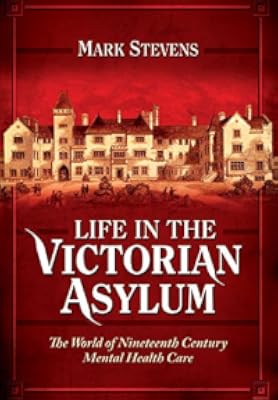
Mark Stevens is a professional archivist who works at the Berkshire Record Office. He looks after the Broadmoor and Fair Mile Hospital archives and writes and talks extensively about Victorian mental health. Life in the Victorian Asylum is his second book, and acts as a companion to Broadmoor Revealed: Victorian Crime and the Lunatic Asylum (Pen show more Sword, 2013). show less
Common Knowledge
- Canonical title
- Broadmoor Revealed: Victorian Crime and the Lunatic Asylum
- Original publication date
- 2011-07-04
- People/Characters
- Edward Oxford; Richard Dadd; William Chester Minor; Christiana Edmunds; Mary Ann Parr; James Hadfield (show all 73); Margaret Nicholson; John Firth; Sir Joshua Jebb; Daniel McNaughten; John Meyer; William Orange; Henry Dodwell; David Nicholson; James Lyon; William Douglas; Henry Leest; John Isaac; Richard Brayn; Dr Thomas Hodgkin; Dr John Conolly; Dr William Dingle Chowne; Dr James Fernandez Clarke; Gathorne Hardy; Roderick MacLean; Robert Dadd; Sir Thomas Phillips; Osiris; Charles Hood; Edmund Dainty; Sir James Murray; Dr Charles Beard; Emily Beard; Charles Miller; Sidney Barker; John Maynard; Adam May; Isaac Garrett; Dr Charles Lochhart Robertson; Catherine Dawson; Mary Meller; Mary Cattermole; William Cattermole; Margaret Crimmings; Margaret Davenport; Joseph Davenport; Elizabeth Davenport; Catherine Jones; Broadmoor Babies; Harriet Hunt; Mary McBride; George Haye; John Philport; Timothy Grundy; Richard Elcombe; John Thompson; Thomas Douglas; Richard Walker; Peter Waldie; William Bunch; William Smith; Peter O'Donnell; Patrick Lyndon; William Watkinson; William Heaps; Thomas Cathie Wheeler; John Batts; William Bisgrove; Allan Mason; George Cornish; John Walker; Thomas Hart; Charles Weldrick
- Important places
- Bracknell Forest; Bethlem Hospital; Brighton, East Sussex, England, UK; Broadmoor Hospital
Classifications
- Genres
- Nonfiction, History, General Nonfiction
- DDC/MDS
- 365.46094229 — Society, government, & culture Social problems and social services Punishment Institutions for specific classes of inmates Institutions for the criminally insane
- LCC
- HV8742 .G72 .B77 — Social sciences Social pathology. Social and public welfare. Criminology Social pathology. Social and public welfare. Criminal justice administration Penology. Prisons. Corrections
- BISAC
Statistics
- Members
- 216
- Popularity
- 151,245
- Reviews
- 11
- Rating
- (3.52)
- Languages
- English
- Media
- Paper, Ebook
- ISBNs
- 4
- ASINs
- 3